
Table of Contents >> Show >> Hide
- What "microdosing" a GLP-1 drug usually means
- The short answer: safer under supervision, risky as DIY
- Why people want to try it in the first place
- Why doctors are cautious about GLP-1 microdosing
- When a lower-dose GLP-1 plan can make sense
- Who should be especially careful
- What patients should ask before changing the dose
- What real-life experiences around GLP-1 microdosing often look like
- Bottom line
GLP-1 drugs have gone from endocrinology offices to dinner-table conversation at record speed. One minute people are asking what semaglutide is, and the next minute social media is full of hot takes about taking "just a tiny bit" of Ozempic, Wegovy, or Zepbound to curb cravings, dodge nausea, and stretch a very expensive prescription. Welcome to the age of GLP-1 microdosing, where the internet says, "Maybe less is more," and doctors say, "Please do not turn your medication plan into freestyle jazz."
So, is it safe to microdose a GLP-1 drug? The most honest answer is: not as a do-it-yourself experiment. Doctors generally agree that self-adjusting to ultra-low, unofficial doses without medical supervision is not a proven, studied, or standardized strategy. That does not mean every patient must race to the highest dose on the label. In real-world care, clinicians often move more slowly, pause dose increases, or tailor treatment when side effects are a problem. But that is very different from social-media microdosing, where the dose is often guessed, improvised, or borrowed from someone else's experience.
If you are trying to understand whether a smaller GLP-1 dose is safer, smarter, or just cheaper, here is what doctors want you to know before you start playing pharmacist in your own kitchen.
What "microdosing" a GLP-1 drug usually means
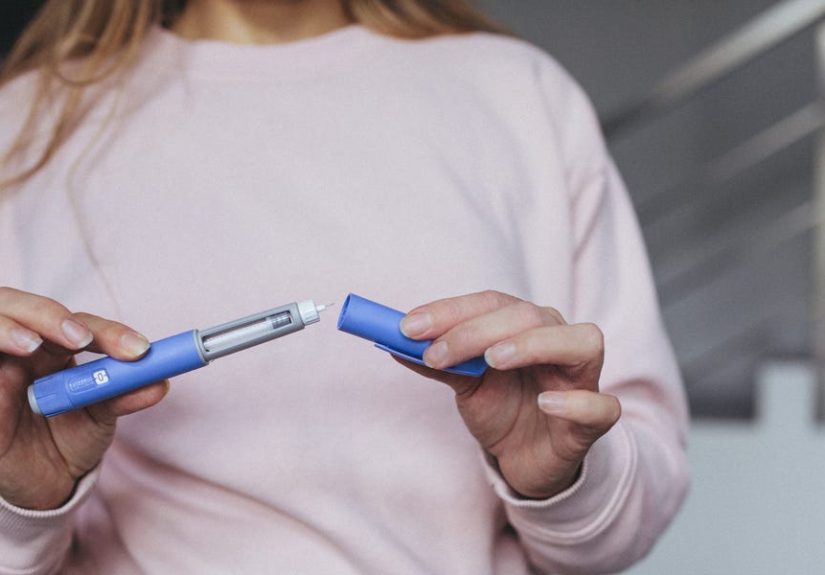
In this conversation, microdosing a GLP-1 drug usually means taking less than the standard prescribed amount, often far below the FDA-approved maintenance dose. People may do this by staying on a starter dose longer than usual, taking only part of a dose, spacing doses farther apart, or using compounded vials and measuring out smaller amounts on their own.
That last part is where the record scratch usually happens. Many people assume microdosing is simply a gentler, more affordable way to use the medication. But from a medical standpoint, the term is fuzzy. There is no official microdosing protocol for weight loss GLP-1 drugs, no widely accepted safety guideline, and no solid body of published evidence proving that tiny, unofficial doses deliver reliable benefits with fewer risks.
And here is the important distinction: approved GLP-1 treatment already starts low and goes slow. Semaglutide products such as Wegovy and Ozempic begin at low weekly doses and increase gradually to reduce gastrointestinal side effects. Tirzepatide products such as Zepbound do the same. In other words, the legitimate medical system already built a careful ramp-up plan into the prescription. What many people call microdosing is often a confusion between doctor-guided dose titration and off-label self-experimentation.
The short answer: safer under supervision, risky as DIY
If a clinician intentionally keeps someone on a lower dose for a while because nausea, vomiting, constipation, bloating, or poor appetite are making life miserable, that can be a reasonable medical decision. A lower dose may be part of a personalized treatment plan, especially when the goal is improving tolerability, protecting hydration, and helping the patient actually stay on therapy.
But if "microdosing" means eyeballing a smaller amount, stretching one prescription into extra weeks, or using compounded medication without close medical oversight, doctors are much more cautious. That version is not well studied, it may not be effective, and it adds new risks that have nothing to do with the drug itself and everything to do with inconsistent dosing, product quality, and missed follow-up care.
So the doctor-approved version is not really microdosing in the internet sense. It is individualized prescribing. And yes, that difference matters.
Why people want to try it in the first place
The logic behind GLP-1 microdosing is easy to understand. These medications can work well, but they are not famous for being subtle when side effects hit. Nausea, vomiting, diarrhea, constipation, stomach pain, bloating, dizziness, and fatigue are common, especially when treatment starts or the dose goes up. Plenty of people would love the appetite control without the "why does a saltine cracker feel like a major life event?" phase.
Cost is another major reason. GLP-1 medications can be expensive, and not every insurance plan covers them for weight management. Some people hope that taking less will make the prescription last longer. Others are not looking for major weight loss at all. They may want to lose a smaller amount of weight, reduce food noise, or maintain weight loss without escalating to a higher dose.
From a human perspective, that all makes sense. From a medical perspective, however, wanting a simpler plan does not automatically create a safe one.
Why doctors are cautious about GLP-1 microdosing
1. There is no standard definition and no proven protocol
Doctors like specifics. The internet likes vibes. That is part of the problem. One person's "microdose" may mean staying on a starter dose longer. Another person may mean taking a fraction of an injection. Someone else may mean injecting less often than prescribed. Those are not the same strategy, and they have not been studied in the same way.
Without a standard protocol, it is hard to predict results, side effects, and long-term outcomes. That makes safety a moving target.
2. Starter doses are not designed to be the full treatment
With semaglutide and tirzepatide, the lowest doses are generally intended to help the body adjust, not to deliver the full expected weight-loss effect. That is why official prescribing schedules gradually escalate the dose over time. If a person stays at an ultra-low dose indefinitely, they may experience less nausea, but they may also get weaker appetite suppression and less meaningful metabolic benefit.
That does not mean a lower dose never works. It means the effect may be smaller, less reliable, and less studied than people hope.
3. Side effects do not magically disappear just because the dose is lower
Yes, lower doses may reduce the odds or intensity of side effects for some people. But "lower risk" does not mean "no risk." GLP-1 drugs still affect digestion, appetite, and hydration. If someone is sensitive to the medication, even a smaller amount can still trigger nausea, poor intake, dehydration, constipation, or vomiting.
That matters because ongoing vomiting or diarrhea can lead to kidney problems, malnutrition, and a pretty miserable week. Severe abdominal pain, persistent GI symptoms, or signs of dehydration are not things to shrug off and blame on "getting used to it."
4. Compounded products introduce another layer of risk
This is one of the biggest concerns. A lot of GLP-1 microdosing discussion revolves around compounded medication in multi-dose vials, where patients measure the dose themselves. The FDA has warned about dosing errors with compounded semaglutide and tirzepatide, including cases involving serious adverse events and hospitalization.
That means the danger is not only whether the dose is medically smart. It is also whether the dose is measured correctly, whether the product is what it claims to be, and whether the patient is using it the way the prescriber intended. A lower dose taken inaccurately is not a safer dose. It is just a smaller mystery.
5. Microdosing can delay proper treatment
Sometimes people who really need evidence-based obesity treatment end up stuck in an awkward in-between zone. They are taking enough medication to feel like they are doing something, but not enough to achieve the clinical benefit that justified starting the drug in the first place. Meanwhile, they may not be addressing nutrition, exercise, sleep, protein intake, or follow-up monitoring.
Doctors worry that this creates false reassurance. The scale may budge a little, appetite may soften a little, but the overall treatment plan may still be underpowered.
When a lower-dose GLP-1 plan can make sense
Now for the nuance, because medicine loves nuance almost as much as the internet hates it.
A lower-dose approach can make sense when it is part of a clinician-directed plan. For example, a doctor may decide to:
- keep a patient on a starting dose longer because side effects are strong,
- delay dose escalation for several weeks,
- use a lower maintenance dose if the patient is getting useful benefit and cannot tolerate more,
- reassess other factors such as hydration, constipation, calorie intake, protein intake, and muscle loss before increasing the dose.
That is not reckless. That is careful prescribing. The goal is not to win an imaginary prize for taking the highest dose. The goal is to find the lowest effective dose that is both safe and sustainable for the individual patient.
Still, even in that setting, it is not a free-for-all. The person may need monitoring for symptoms, medication interactions, blood sugar issues if they have diabetes, hydration problems, and whether the drug is still doing anything meaningful.
Who should be especially careful
GLP-1 drugs are not a casual wellness accessory. They are prescription medications with real contraindications and precautions. Doctors are especially cautious if a patient:
- is pregnant, trying to become pregnant, or breastfeeding,
- has a personal or family history of medullary thyroid carcinoma or MEN 2,
- has severe gastroparesis or significant digestive disease,
- has a history of pancreatitis, gallbladder problems, dehydration, or kidney issues,
- uses insulin or certain diabetes medications that may increase hypoglycemia risk,
- is losing weight quickly and may be losing muscle mass along with fat.
For these patients, casually reducing, stretching, or improvising doses is even less wise. The safer move is to let a clinician decide whether the medication, the dose, or even the entire treatment plan needs to change.
What patients should ask before changing the dose
If you are tempted to microdose a GLP-1 medication, skip the group chat and ask your prescriber these questions instead:
- Am I having a normal adjustment period, or are my side effects too severe?
- Should I stay at my current dose longer instead of increasing it on schedule?
- Am I eating enough protein, drinking enough fluids, and protecting muscle mass?
- Would a slower titration plan make sense for me?
- Is this product FDA-approved, or is it compounded?
- What symptoms mean I should stop the medication and call right away?
Those questions are far more useful than asking the internet whether your syringe "looks about right."
What real-life experiences around GLP-1 microdosing often look like
In real life, the experience people describe around GLP-1 microdosing is usually less dramatic than the social media version. It is not all effortless weight loss and zero side effects. More often, it sounds like this: "I wanted something gentler," "I was scared of nausea," "I couldn't afford to waste a dose," or "I only wanted help taking the edge off my appetite." Those are understandable goals, and doctors hear them all the time.
One common experience is that a smaller amount can feel easier at first. People may notice milder appetite suppression, fewer stomach issues, and less of that heavy, overfull feeling that sometimes shows up early in treatment. For someone who had a rough start on a standard escalation schedule, a slower pace may feel like a relief. Meals may become more manageable instead of turning into a negotiation with three bites of yogurt and a very disappointed stomach.
But there is another side to the story. Many people also report that lower, unofficial doses can feel inconsistent. Hunger may be quieter for a few days and then come roaring back. Weight loss may be slow, stall out, or become hard to separate from regular diet changes. Some people start wondering whether the medication is doing enough to justify the cost, the hassle, and the mental energy they are spending on it.
Doctors also point out that the emotional experience matters. A person may feel safer taking less medication, but also more anxious because they are no longer sure whether they are following an evidence-based plan. That uncertainty can create a weird cycle: take less to avoid side effects, worry the dose is too low, consider taking more, then back off again after reading another alarming post online. It is not exactly a recipe for peace of mind.
Another real-world pattern is that lower-dose use often exposes the bigger issue underneath: people do not just want weight loss. They want a treatment plan they can live with. They want fewer cravings, steadier energy, less shame about eating, and a way to lose weight without feeling sick, weak, or obsessed with every bite. When those needs are not addressed, microdosing can become a workaround for a broader support problem rather than a true solution.
There is also the day-to-day nutrition piece. Some people on GLP-1 drugs, especially when appetite drops fast, accidentally under-eat protein and fluids. They may feel fine for a while, then notice fatigue, constipation, dizziness, headaches, or muscle loss. In that situation, the problem is not always "the dose is too high" or "the dose is too low." Sometimes the issue is that the body is running on fumes, and no clever dosing trick can replace basic medical follow-up and solid nutrition.
That is why clinicians tend to be much calmer about supervised dose adjustments than about internet microdosing. A thoughtful, lower-dose strategy can absolutely be part of good care. But the best experiences usually happen when the patient is not guessing. They are checking in, adjusting carefully, watching symptoms, protecting muscle, and using the medication as one tool in a bigger plan. That version may be less flashy than the viral posts, but it is also far more likely to end with better outcomes and fewer regrets.
Bottom line
Is it safe to microdose a GLP-1 drug? Not as a self-directed trend, and especially not when it involves improvised dosing or compounded products without careful supervision. Doctors do not view social-media GLP-1 microdosing as a proven shortcut to safer weight loss. They see it as an experimental practice with too many unknowns.
What is reasonable is a slower, individualized plan created by a licensed clinician who understands your medical history, your side effects, your goals, and the difference between tolerable discomfort and a problem that needs intervention. Sometimes the best dose is not the highest one. But the safest dose is the one chosen deliberately, monitored properly, and adjusted for the right reasons.
If your current GLP-1 dose feels too rough, do not quit in frustration and do not freelance with the syringe. Talk to your doctor. The right answer may be slower escalation, more time at a lower dose, a different medication, better side-effect management, or a broader weight-care plan. In other words, you do not need internet bravery. You need actual medical guidance.






 Close
Close