
Table of Contents >> Show >> Hide
- Quick Verdict: Which One Should You Buy?
- Nintendo Switch Lite vs Nintendo Switch OLED: The Core Differences
- Display Quality: The OLED Wins, and It Is Not Close
- Portability and Comfort: The Lite Fights Back
- Flexibility: The OLED Is the Better All-Rounder
- Performance and Game Library: Basically a Draw
- Battery Life and Storage: Small Wins That Add Up
- Value for Money: This Depends on What “Value” Means to You
- Who Should Buy the Nintendo Switch Lite?
- Who Should Buy the Nintendo Switch OLED?
- Final Thoughts: Nintendo Switch Lite vs Nintendo Switch OLED
- Extended Experience: What Living With Both Actually Feels Like
Note: This first-person-style comparison is a synthesized review based on current specs, retailer listings, and hands-on reporting from major U.S. publications. In other words, no made-up nonsense, no robot confetti, and no “this changed my life” just because a handheld has a shiny screen.
If you are stuck choosing between the Nintendo Switch Lite and the Nintendo Switch OLED, welcome to the most Nintendo problem possible: both are charming, both play a fantastic library, and both make you think, “Maybe I only need one more game.” Then suddenly you own Mario Kart, Zelda, Hades, Stardew Valley, and a carrying case you definitely did not budget for.
After comparing the two in the ways that actually matter, not just on a spec sheet but in daily use, the answer is surprisingly simple. The Nintendo Switch Lite is the better pick for people who want a cheaper, lighter, handheld-only machine. The Nintendo Switch OLED is the better choice for anyone who cares about screen quality, flexibility, tabletop play, and TV mode. Neither one gives you a magical performance boost, but one of them definitely feels more premium the second you pick it up.
Quick Verdict: Which One Should You Buy?
Buy the Nintendo Switch Lite if you want the most affordable way into Nintendo’s ecosystem, mainly play on the go, love the idea of a smaller handheld, or want a real D-pad for retro games, platformers, and fighters.
Buy the Nintendo Switch OLED if you want the best overall Switch experience, especially if you switch between handheld and TV play, care about a richer display, want more storage, or plan to use tabletop mode without balancing the console like a nervous waiter carrying soup.
My blunt take? If your budget can handle it, the OLED is the more satisfying system to live with. But if your gaming life is mostly solo, portable, and casual, the Lite is still a genuinely smart buy.
Nintendo Switch Lite vs Nintendo Switch OLED: The Core Differences
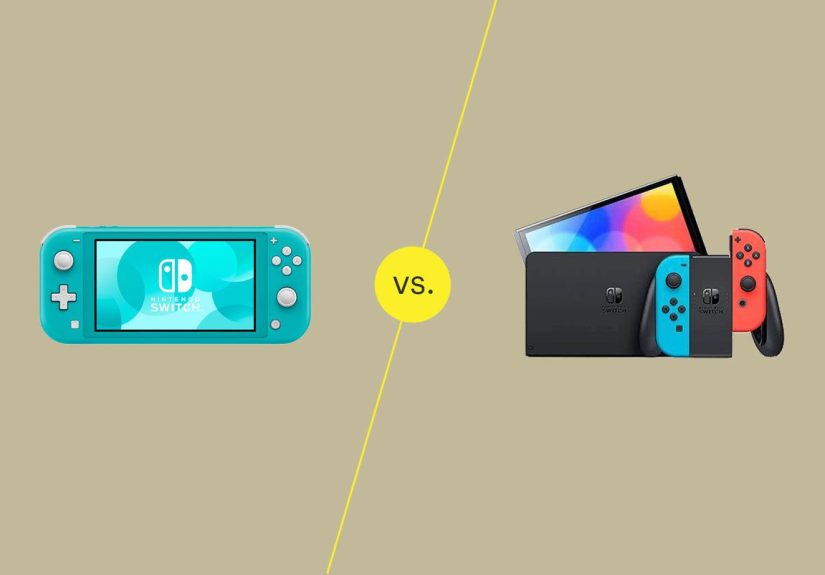
| Feature | Nintendo Switch Lite | Nintendo Switch OLED |
|---|---|---|
| Display | 5.5-inch LCD | 7-inch OLED |
| Resolution | 720p handheld | 720p handheld, up to 1080p on TV |
| Storage | 32GB | 64GB |
| Play Modes | Handheld only | Handheld, tabletop, and TV mode |
| Controllers | Built in | Detachable Joy-Con |
| Kickstand | No built-in stand | Wide adjustable stand |
| Battery Estimate | About 3 to 7 hours | About 4.5 to 9 hours |
| Weight | Lighter and easier to carry | Heavier, but more versatile |
| Price at the time of writing | $229.99 | $399.99 |
Display Quality: The OLED Wins, and It Is Not Close
Let’s start with the obvious reason people lust after the Nintendo Switch OLED: the screen. The 7-inch OLED panel is bigger, punchier, richer, and more dramatic than the 5.5-inch LCD on the Switch Lite. Blacks look deeper. Colors look more vivid. Games with stylized art direction, like The Legend of Zelda: Tears of the Kingdom, Super Mario Bros. Wonder, or Metroid Dread, gain that extra pop that makes you pause for half a second and think, “Oh. That looks nice.”
The Lite’s display is not bad. In fact, it is perfectly respectable. It is sharp enough at its size, and Nintendo’s games are colorful enough that they still look lively. But the Lite’s screen feels more functional than luxurious. Put the two systems side by side and the OLED looks like it had a good night’s sleep and drank enough water, while the Lite looks like it is doing its best after a long week.
If handheld play is your priority, the display alone gives the OLED a huge edge. This is the upgrade you notice every single session, not just on launch day.
Portability and Comfort: The Lite Fights Back
This is where the Nintendo Switch Lite becomes extremely compelling. It is smaller, lighter, easier to toss into a bag, and just more “grab-and-go” than the OLED. It feels like a true handheld rather than a hybrid console pretending it still remembers its portable roots.
The built-in controls also make the Lite feel sturdier. There is no rail wobble, no detachable parts, and no sense that you are holding a mini entertainment system with accessories attached. It feels like one solid piece. That matters more than people think, especially if you are playing on a commute, while traveling, or while curled up somewhere you should probably be answering emails.
The Lite also gets bonus points for its proper D-pad. If you play retro collections, 2D platformers, puzzle games, or fighting games, that D-pad is a small but meaningful quality-of-life win. It is one of those features that sounds nerdy until you use it for a week and then suddenly directional buttons feel like an insult.
That said, players with larger hands may find the Lite a little cramped over long sessions. The OLED is bigger and roomier, which can be more comfortable if you regularly play for hours at a time.
Flexibility: The OLED Is the Better All-Rounder
The Switch Lite is straightforward: it is for handheld gaming. That simplicity is part of its charm. But it also means you are giving up a lot. There is no TV mode, no dock in the box, no detachable Joy-Con, and less convenience for instant multiplayer.
The Switch OLED, on the other hand, is the full Swiss Army knife. You can play on the couch with the console docked, pop it out for handheld use, or set it on a table with the improved kickstand for tabletop mode. That wider adjustable stand is not a glamorous feature, but it is one of the most practical improvements on the whole system. Unlike older Switch stands, this one feels like it was designed by someone who has actually used a table before.
The OLED model also includes a dock with a wired LAN port, which is a nice perk if you play online and want a more stable connection. Is that feature going to transform your Mario Kart destiny? Probably not. But it is still better than relying on Wi-Fi and blaming your loss entirely on “lag” when the truth is much funnier.
Performance and Game Library: Basically a Draw
Here is the part where some buyers expect a dramatic twist. There isn’t one. The Switch Lite and Switch OLED play the same core Nintendo Switch library, and neither gives you a major leap in raw performance. The OLED does not suddenly turn every game into a high-frame-rate miracle. The Lite does not secretly become weak sauce just because it costs less.
What matters more is compatibility with play styles. The Lite works with games that support handheld mode. Many games do, so for most players this is not a huge issue. But certain titles and features can require separate Joy-Con if handheld support is limited or if you want specific motion functionality. In plain English: the Lite is easy until a game reminds you it was designed with the regular Switch family in mind.
If you want the least complicated ownership experience, the OLED is safer. It is the more complete version of the platform.
Battery Life and Storage: Small Wins That Add Up
The Switch OLED has another practical advantage: more storage and longer estimated battery life. With 64GB of internal storage, it gives you more room before the inevitable microSD card conversation starts. The Lite’s 32GB is workable, but if you buy digital games, that space disappears fast. Nintendo file sizes are not as outrageous as some other platforms, but they are still very capable of eating your free space like a bag of chips at midnight.
Battery life also tilts in favor of the OLED. In real life, your mileage varies based on brightness, wireless use, and what game you are running, but the OLED generally has a more forgiving range than the Lite. If you play mostly shorter sessions, that may not matter. If you play long travel sessions, it absolutely does.
Value for Money: This Depends on What “Value” Means to You
The Switch Lite is cheaper by a wide enough margin that it cannot be dismissed. If your goal is simple access to Nintendo games, it delivers excellent value. It is affordable, charming, durable-feeling, and ideal for players who never planned to dock their console anyway.
The Switch OLED, however, gives you better value per experience. That sounds like suspicious marketing language, but it is true. You are paying for a better screen, better flexibility, better tabletop design, more storage, detachable controllers, TV support, enhanced audio, and a more premium feel. If you use those features regularly, the extra money makes sense.
So the real question is not “Which one is cheaper?” It is “Which one will match how I actually play?” If you buy the Lite and later wish you could dock it, the savings stop feeling clever. If you buy the OLED and only ever play handheld in bed for 30 minutes at a time, you may realize you bought the deluxe sandwich when a perfectly good grilled cheese would have done the job.
Who Should Buy the Nintendo Switch Lite?
Choose the Lite if:
- You want the lowest price of entry.
- You mainly play solo and in handheld mode.
- You travel a lot or want a smaller bag-friendly console.
- You like the sturdier one-piece design.
- You care about having a real D-pad.
- You are buying for a younger player who does not need TV mode.
Who Should Buy the Nintendo Switch OLED?
Choose the OLED if:
- You want the best-looking handheld screen in the Switch family.
- You want TV mode and tabletop mode.
- You often play multiplayer or local co-op.
- You prefer a more premium build and better kickstand.
- You buy digital games and want the extra storage.
- You want the most complete, least compromised Switch experience.
Final Thoughts: Nintendo Switch Lite vs Nintendo Switch OLED
After weighing the Nintendo Switch Lite vs Nintendo Switch OLED from every practical angle, here is the honest conclusion: the Switch Lite is the smarter budget buy, but the Switch OLED is the better console.
The Lite is lovable because it knows exactly what it is. It is compact, affordable, handheld-focused, and refreshingly uncomplicated. It does not try to be everything. It just wants to play Nintendo games in a small, colorful shell and get out of the way.
The OLED is the one I would recommend to most people. The screen is meaningfully better, the flexibility is far greater, the tabletop experience is improved, and it simply feels more satisfying day after day. It is not revolutionary, but it is polished in all the right places.
If you are deciding between the two, think less about abstract specs and more about your habits. Where do you play? How often do you dock? Do you buy digital games? Do you care about image quality? Do you want a machine that feels like a dedicated handheld or one that can do a little bit of everything?
Answer those honestly, and the right Switch choice gets much easier.
Extended Experience: What Living With Both Actually Feels Like
What surprised me most in comparing the Nintendo Switch Lite and the Nintendo Switch OLED is how differently they fit into a routine. On paper, they seem like siblings separated mostly by a nicer screen and a few feature upgrades. In practice, they create two very different habits. The Lite is the console I would instinctively grab when leaving the house. The OLED is the one I would choose when I actually want to settle in and enjoy a game.
The Lite wins on spontaneity. It is easier to pick up with one hand, easier to slide into a backpack, and easier to treat like a constant companion. It feels less precious. That makes it weirdly liberating. You do not overthink whether to bring it. You just bring it. On a train, in a waiting room, at a coffee shop, or during those stolen 20-minute windows that somehow become 90 minutes because one more run in Hades sounds reasonable, the Lite feels perfectly at home.
The OLED, though, wins on pleasure. The moment a game loads, you see where the extra money went. Menus look cleaner, colorful worlds feel richer, and darker scenes have more depth. It makes familiar games feel fresher without changing the actual performance. That sounds like a small thing, but it is not. A better screen changes your relationship with a handheld because the display is the thing you stare at the entire time. It is like upgrading from a decent apartment window to a panoramic one. The room is technically the same, but the vibe absolutely is not.
I also found the OLED easier to recommend to households rather than just individuals. If you ever hand a controller to someone else, want to prop the console up for tabletop play, or move from handheld to TV mode without thinking about it, the OLED makes life easier. The Lite is personal. The OLED is social. The Lite says, “This is my little gaming corner.” The OLED says, “Sure, let’s put Mario Kart on the TV and ruin a friendship before dinner.”
Another difference is psychological. The Lite feels like a dedicated handheld from Nintendo’s old-school lineage. It has that Game Boy and 3DS energy. The OLED feels like a premium version of a hybrid system designed to be your main Nintendo machine. Neither feeling is wrong, but they are distinct. Some players want nostalgia and simplicity. Others want convenience and versatility. That is really the heart of this comparison.
If I were buying for a kid, a traveler, or someone who mostly plays cozy games, indies, platformers, and portable RPGs, I would not hesitate to consider the Lite. If I were buying one Switch for a home, or for someone who wants the fullest experience with the fewest compromises, I would lean hard toward the OLED. The Lite is easier to justify. The OLED is easier to fall in love with.
That is the best way I can sum it up. The Nintendo Switch Lite is practical. The Nintendo Switch OLED is delightful. And when you are choosing between them, that difference matters more than any bullet point on a retailer page.







 Close
Close