
Table of Contents >> Show >> Hide
- Why Birds and Mickey Mouse Hats Weirdly Work Together
- Turning a Silly Idea Into a Real Photo Project
- Ethics First: No Birds Were Harmed in the Making of This Project
- Meet the Mickey-Hatted Bird Cast
- What Funny Bird Photos Really Give Us
- Bonus: Behind-the-Scenes Lessons From Photographing Birds in Mickey Hats
If you’ve ever looked at a grumpy pigeon and thought, “You know what this needs? Mouse ears,”
welcome to your new favorite corner of the internet. This whole project started as a joke: a
mash-up between my love of bird watching, my camera, and the iconic Mickey Mouse hat that has
ruled souvenir shops since the 1950s. Somewhere between the first sketch of a tiny pair of
ears and the hundredth outtake of a bird flying away, it turned into a full-blown photo series
that looks like it was made to live on Bored Panda.
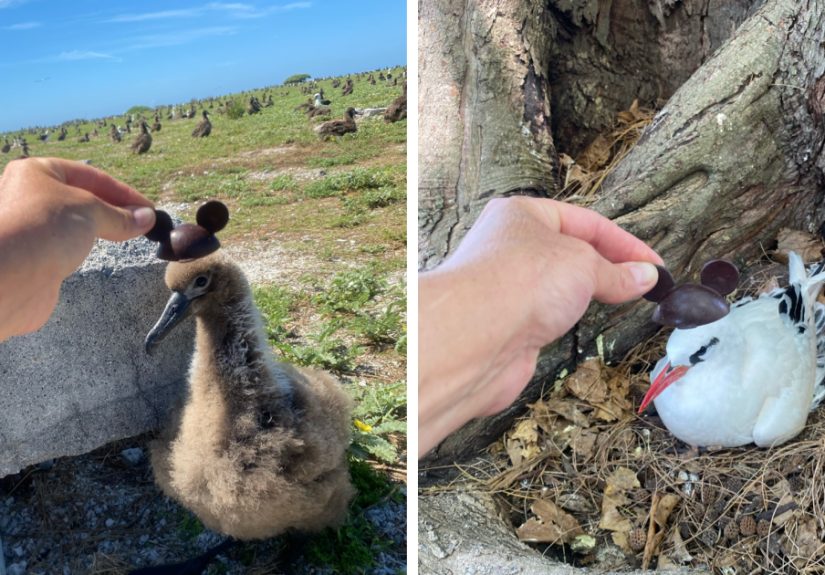
The concept is simple: real birds, tiny Mickey-style hats, and a camera that’s just fast
enough to catch the moment before the bird decides it has better things to do. The result?
Photos that feel like character posters for a cartoon that doesn’t exist yet: a sulking crow
in “park ranger chic,” a sparrow that clearly has main-character energy, and a blue jay who
looks like he’s late for his shift at a theme park.
But behind every silly frame is a lot of planning, an annoying amount of patience, and a very
real commitment to keeping the birds safe, wild, and unbothered. Let’s dive into how this
goofy idea turned into a carefully staged, ethically minded, joy-sparking project.
Why Birds and Mickey Mouse Hats Weirdly Work Together
Mickey Mouse ears are one of the most recognizable fashion accessories on Earth. Since the
early days of the Mickey Mouse Club, those black circles on a simple cap have become a symbol
of childhood, nostalgia, and unapologetic silliness. They’ve evolved into a whole industry of
themed, limited-edition earsfrom glitter and rhinestones to Halloween villians and park
anniversary designsand Disney fans proudly wear them like badges of honor.
Birds, on the other hand, are nature’s drama queens. They already come equipped with wild
silhouettes, bold colors, and over-the-top personalities. Put those two worlds together and
you get a visual punchline that lands instantly: the familiar outline of a Mickey hat perched
above a tiny beak and two suspicious eyes. It looks wrong in the most satisfying way.
What really sells the joke is contrast. Mickey ears scream “theme park vacation.” Most of the
birds I photographed were in very ordinary settings: city parks, backyards, neighborhood
trees, or quiet wetland trails. The hats don’t make the birds look domesticated; they make
the everyday background feel like a stage. Suddenly, that boring wooden fence becomes a
red-carpet step-and-repeat. That bird feeder? Basically a VIP lounge.
Turning a Silly Idea Into a Real Photo Project
The Spark of the Idea
The seed was planted after scrolling through page after page of funny bird photos online:
blurry “crap bird photography,” memes of birds being jerks, and close-up front-facing
portraits that make them look like grumpy little managers. I kept thinking, “These birds
already look like characters. What if I just leaned into that?”
Instead of waiting for an accidentally funny pose, I wanted to create a series with a clear
visual themesomething that tied each photo together but still left room for surprise. That’s
where the Mickey hats came in. They’re simple, iconic, and instantly readable, even when they
’re tiny in the frame. The moment you see those ears, you know exactly what they are.
Designing the Tiny Mickey Hats (Without Annoying Any Birds)
Important note: no, I did not strap hats onto wild birds. That would be stressful for them,
dangerous, and completely against every ethical wildlife photography guideline out there.
Instead, I created miniature Mickey-style hats out of lightweight craft foam and felt, then
attached them to props and perchesbranches, fence posts, and feeder poles. In some shots,
the hats are mounted a little higher than the perch so that when the bird lands in just the
right spot, the ears line up perfectly above its head. In others, the hat is on a separate
stand, and I line things up using perspective: the bird in the foreground, the hat slightly
blurred behind, and the camera angle doing all the magic.
For a few of the more surreal shots, I used two exposures: one of the bird, one of the tiny
hat in the same light, and then blended them in post-processing. The rule I set for myself
was simpleno manipulation of the bird itself. The bird stays wild, free, and unedited.
Everything else, from hats to backgrounds, is fair game for creativity.
Camera Gear, Light, and the Not-So-Glamorous Reality
To pull this off, I leaned heavily on a telephoto lenstypically in the 300–400mm rangeso I
could keep my distance while still filling the frame. Fast shutter speeds were non-negotiable
because birds have two speeds: statue and rocket. Anything slower and the only thing wearing
a hat in the photo would be motion blur.
Most sessions happened during golden hour, when the light is soft and warm. Front lighting
helped keep the details in the feathers and the hat crisp, but I also experimented with
backlighting and side lighting to create rim light around the ears and a dreamy glow behind
the birds. When the sun hit just right, the little hats looked strangely majesticlike the
bird had just been crowned.
Of course, behind the polished final images is the chaos the internet never sees: missed
focus, empty perches, wind knocking hats off, and me whispering “please land there” like a
bargain-bin Disney fairy godparent. For every keeper, there were dozens of frames where the
bird turned away, hopped out of the shot, or decided that the only appropriate pose was
“butt directly to camera.”
Ethics First: No Birds Were Harmed in the Making of This Project
Funny animal photos are great, but not if they come at the expense of the animals themselves.
Birds are particularly sensitive to stress, especially during nesting and feeding. So from
day one, I decided this project would follow ethical bird photography principles:
-
No physical contact. I never touched, trapped, or tried to put anything on
a bird’s body. All hats are on perches, stands, or added digitally. -
No baiting or harassment. If a bird didn’t want to land where I hoped, I
let it go. No calling, no chasing, no loud noises, no food bribes designed just for the
shot. -
Short sessions. If birds showed signs of stress, I backed off and wrapped
up early. The photo is never more important than the animal. -
Respecting habitats. I stayed on paths, avoided nests, and worked from a
distance with a long lens.
The irony is that following these rules actually made the images better. Because I wasn’t
forcing anything, every shot feels like a lucky coincidence. The birds are doing their normal
bird thing, completely unaware that they’ve accidentally become the lead character in a
ridiculous cross-over between nature and theme-park merch.
Meet the Mickey-Hatted Bird Cast
Every project like this naturally develops its own cast of characters. By the end, I had a
little “cinematic universe” of recurring bird personalities:
1. The Blue Jay Who Knows He’s Famous
This jay had zero fear and 100% attitude. He’d land right on the main perch, tilt his head,
and stare straight into the lens. With the hat framing that intense gaze, he looked like the
world’s most overqualified theme park security guard. If any bird was going to demand a
rider in his contract, it was this one.
2. The Sparrow With Main-Character Energy
Sparrows usually blend into the background, but this little one kept landing in perfect
symmetry with the hat stand. In one photo, the pose is so straight and centered it looks like
a passport photo for “Small Bird Who Is About to Change the World.”
3. The Crow in Full Villain Mode
Crows already look like they have secret plots. Add a Mickey hat and suddenly you’ve got a
villain who got promoted to park manager. One of my favorite shots shows the crow mid-caw,
wings slightly open, the hat’s ears silhouetted behind its head. It looks like he’s delivering
a monologue about raising popcorn prices.
4. The Pigeon Who Just Wanted Snacks
This pigeon wasn’t interested in art. He was interested in crumbs. But his timing was
impeccable. In a cluster of shots, he waddles perfectly underneath the hat, staring at the
camera like someone who just realized they’re in the wrong Zoom meetingbut is rolling with
it anyway.
What Funny Bird Photos Really Give Us
On the surface, photos of birds with Mickey hats are just that: a visual joke. Scroll, chuckle,
share, move on. But something surprisingly wholesome happens when people see these images.
The reaction is rarely just “lol.” It’s more like, “Okay, I needed that today.”
Animal humor online has become a kind of shared language. When life feels heavy, a silly
snapshot of a bird looking accidentally human reminds us that not everything has to be so
serious. These photos don’t make fun of the birds; if anything, they celebrate their
stubbornness and unpredictability. The birds are always in control of the scene. If they’re
not into it, they fly away and the “session” ends.
There’s also something quietly powerful about mixing pop culture and wildlife. The Mickey hat
is familiar, commercial, and human-made. The bird is wild, free, and absolutely not reading
our copyright laws. The photo becomes a conversation between two worlds: the carefully
curated fantasy of theme parks and the unpredictable, zero-chill reality of nature.
For many people who aren’t typical “birders,” this kind of playful imagery is a gateway.
They stumble across a meme, laugh at the ridiculous crow in mouse ears, and then realize,
“Wait, that’s actually a cool bird.” If a silly hat is what it takes to get someone to care a
little more about the living world outside their window, I’m okay with that.
Bonus: Behind-the-Scenes Lessons From Photographing Birds in Mickey Hats
After spending a lot of early mornings and late afternoons chasing this idea, I came away
with more than just a memory card full of ridiculous images. Here are some of the biggest
lessons this project taught meabout creativity, patience, and not taking myself too
seriously.
Lesson 1: The Best Ideas Sound Slightly Ridiculous at First
If I had pitched this project in a formal meeting, I’m pretty sure someone would have
responded with, “I’m sorry, you want to do what?” But that’s part of the magic. Creative
breakthroughs often start as ideas that feel a little too weird, a little too whimsical, or a
little too impractical. The point isn’t that every wild idea will work; it’s that if you only
chase “serious” concepts, you miss out on the projects that make people light up.
Once I committed to the bitsketching hat shapes, cutting foam, testing anglesthe “silly”
concept suddenly turned into a structure I could build around. I had a visual anchor (the
hats), a subject (the birds), and a mood (playful, slightly absurd). From there, the project
practically directed itself.
Lesson 2: Patience Is a Superpower (And So Is Letting Go)
Wildlife photography is already an exercise in patience. Add a tiny prop and a very specific
composition to the mix, and you’re signing up for a lot of “almost” moments. I’d set up a
perch, frame the shot, lock focus on where I hoped the bird would landand then wait.
Sometimes a bird would land perfectly, and I’d get the shot in seconds. Other times I’d wait
for half an hour and get nothing but a squirrel who clearly did not understand the assignment.
The trick was learning to see every “failed” session as scouting: I learned which perches
birds liked, what times they visited feeders, and how the light shifted through the trees.
Letting go of control was huge. I could design the hat, choose the lens, and set the
exposurebut I could never force the bird to play along. The moment I accepted that, the
project became a lot more fun and a lot less stressful.
Lesson 3: People Love Being Let In on the Joke
Sharing the images online was almost as entertaining as making them. People wanted to know
everything: “Are the hats real?” “Did you put that on the bird?” “How did you line that up?”
Once they heard that the birds were never touched and the hats were either on props or added
in post-processing, they relaxed and enjoyed the absurdity guilt-free.
What surprised me most was how quickly people started assigning personalities to the birds.
Comments rolled in like, “That pigeon definitely works retail,” or “The crow knows where the
bodies are buried.” The photos became a starting point for micro-stories in the comments
section, which made the whole series feel like a collaborative comedy project between me and
the audience.
Lesson 4: Pop Culture Can Be a Bridge, Not a Distraction
Using something as iconic as a Mickey hat is risky. If you lean too far into the branding, it
can feel like an ad. But when you use it as a playful referenceone visual ingredient among
manyit can help people connect faster with what they’re seeing. Everyone recognizes those
round ears, so they don’t have to work hard to “decode” the image. That leaves more mental
space for enjoying the details: the feathers, the posture, the expression.
And here’s the unexpected side effect: several people told me the series made them pay more
attention to the birds in their own neighborhoods. They started noticing regular visitors to
their balconies or yards and imagining what kind of “character” each bird would be if it had
its own tiny hat. That’s the best outcome I could hope formore curiosity about the very real,
very hatless birds we share space with every day.
Lesson 5: Joy Is a Completely Valid Creative Goal
It’s easy to feel like every creative project has to be profound, political, or life-changing.
This one isn’t. It’s about joy. It’s about scrolling past a wall of stressful headlines and
suddenly seeing a crow in Mickey ears glaring at you like you’re late for your shift at the
popcorn stand. It’s about laughing, even for a second.
And that’s enough. If a series of birds in Mickey hats can make someone smile, brighten a dull
afternoon, or spark a little curiosity about the wildlife outside their window, then every
cold morning, every missed shot, every fallen foam ear was absolutely worth it.
Will I keep adding to the series? Almost definitely. There are still plenty of birds who
haven’t had their accidental audition yet. Somewhere out there is a cardinal who was born for
the spotlightand I’m pretty sure I’ve already got the perfect hat.





 Close
Close