
Table of Contents >> Show >> Hide
- Why Boyfriend Tests Feel Tempting in the First Place
- What This Viral Story Really Reveals
- Why Secret Relationship Tests Usually Backfire
- What Healthy Relationship Behavior Looks Like Instead
- Better Alternatives to Boyfriend Tests
- When “Testing” Is Actually Just Paying Attention
- The Bigger Cultural Problem With Boyfriend Tests
- The Real Lesson From “I Failed Because I Didn’t Visit Her”
- More Experiences That Echo This Story
- Conclusion
Modern dating already comes with enough plot twists. There are read receipts, vague Instagram stories, TikTok “theories,” and that one friend who thinks every relationship problem can be solved with a loyalty test and a screenshot. So when one woman decided that secretly testing her boyfriend was a smart way to measure love, the result was less “romantic breakthrough” and more “well, that escalated quickly.”
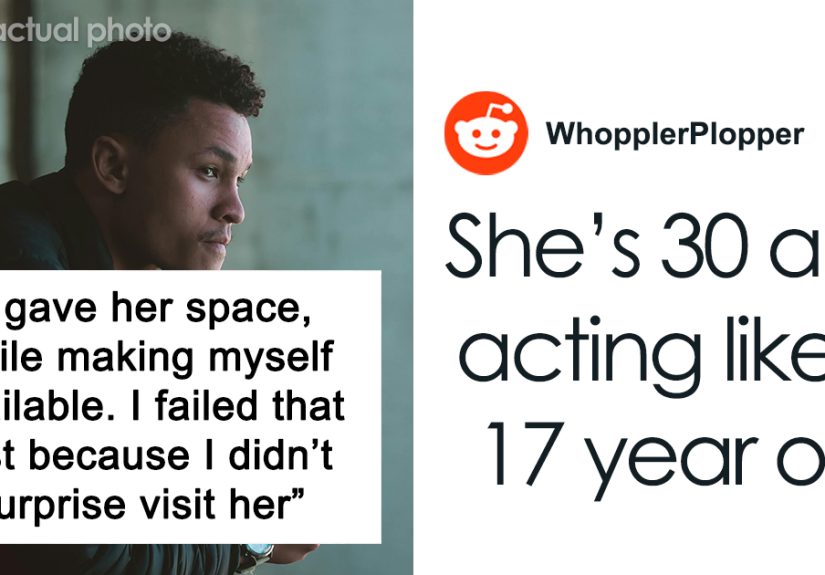
The story hit a nerve because it felt painfully familiar. A boyfriend was told his girlfriend wanted space for a weekend. He respected that. Later, he learned he had “failed” because he did not surprise-visit her. In the same account, the tests became even more dramatic, including a fake pregnancy scare designed to judge his reaction. In another widely discussed version of the same relationship-test trend, a woman posted a vague social media story and expected her boyfriend to instantly decode it as a distress signal. He did not. He failed that “test” too. At that point, the message was clear: he was not being asked to love her. He was being asked to pass hidden exams with no study guide.
And that is exactly why this headline lands so hard. The phrase “I failed because I didn’t visit her” sounds ridiculous on its face, but it points to something serious underneath: a lot of people still confuse unspoken expectations with intimacy. They think a good partner should just know. A great partner should somehow sense. A soulmate, apparently, should have the tracking instincts of a detective and the emotional reflexes of a seasoned therapist. That may sound poetic in a rom-com, but in real life it is a fast way to turn a relationship into an obstacle course.
Why Boyfriend Tests Feel Tempting in the First Place
To be fair, most people who test a partner are not cartoon villains twirling a mustache over candlelight. More often, they are anxious, insecure, disappointed, or scared of asking directly for what they need. A test can feel safer than honesty. If you ask for reassurance and do not get it, that stings. But if you set up a secret scenario and your partner “fails,” you can tell yourself the answer revealed itself naturally. No vulnerability required. Convenient, right? Also wildly destructive.
There is also the social media effect. Relationship culture online has turned ordinary moments into dramatic pass-or-fail rituals. Does your partner peel an orange for you? Do they walk on the outside of the sidewalk? Do they rush to reply to a cryptic post? Do they notice your mood shift with zero context? Suddenly, normal human behavior gets scored like Olympic gymnastics. The problem is that these trends make people evaluate care through performance, not communication. A partner can be loyal, kind, emotionally available, and still fail a test they did not know they were taking.
Then there is the fantasy of mind reading. It shows up all the time in dating. “If he cared, he would know.” “If she loved me, I would not have to ask.” “If we are really close, I should not need to explain.” It sounds romantic, but it is actually lazy communication dressed in fancy clothes. Healthy relationships are not built on telepathy. They are built on clarity, trust, and a willingness to be specific even when being specific feels awkward.
What This Viral Story Really Reveals
At the center of this story is not a bad weekend or one strange argument. It is a broken model of connection. The woman believed boyfriend tests were a smart shortcut to truth. In her mind, these setups probably offered proof. If he visits without being asked, he cares. If he panics the right way, he is committed. If he sees a vague post and rushes in, he is attentive. But those tests do not actually measure love. They measure guesswork.
That distinction matters. Love is not proven by correctly decoding mixed signals. Emotional maturity is not the same thing as hypervigilance. A good partner is not someone who becomes an expert in managing traps. A good partner is someone who responds with care when needs are expressed honestly and respectfully.
The boyfriend’s response in the viral account also explains why secret tests eventually blow up. He did not just feel misunderstood. He felt manipulated. There is a huge difference between disappointing someone and being set up to disappoint them. One invites repair. The other invites exhaustion.
Why Secret Relationship Tests Usually Backfire
1. They punish trust instead of rewarding it
If someone says, “I want a weekend alone,” the healthy response is to respect that. But in this story, doing the respectful thing became evidence that he did not care enough. That creates a toxic double bind. Believe your partner, and you fail. Question your partner and ignore what they asked for, and maybe you pass. That is not intimacy. That is chaos with a cute label.
2. They create lose-lose dynamics
Most hidden tests are built so the tester gets to stay disappointed. If you do not react, you fail because you “didn’t notice.” If you do react in the “wrong” way, you fail because you “didn’t say the right thing.” If you question the test itself, you fail because you are “defensive.” In other words, the game is often rigged before it begins.
3. They replace direct needs with emotional theater
There is nothing wrong with wanting more reassurance, more affection, more initiative, or more check-ins. Those are normal relationship needs. The problem begins when those needs are hidden behind stunts, silence, or social media breadcrumbs. The issue is no longer the need itself. It is the method.
4. They slowly erode trust
Once a partner realizes they are being evaluated through secret scenarios, the entire relationship changes tone. Everyday interactions begin to feel loaded. A missed text becomes a possible trap. A quiet evening becomes suspicious. A sincere statement becomes something to fact-check. Trust cannot grow where everyone feels watched.
5. They reward performance instead of character
A partner might pass a trendy test and still be a terrible long-term match. Someone can peel an orange, buy flowers, send a fast text, and still be dismissive, selfish, or unreliable when life gets real. Meanwhile, a wonderful partner can fail a silly test simply because they took your words at face value. Secret tests often tell you less about a person’s character than honest conversations do.
What Healthy Relationship Behavior Looks Like Instead
If you strip away the drama, the lesson here is refreshingly simple: say what you mean. If you want company, ask for company. If you feel disconnected, say that. If you are wondering how your partner would react to a major life topic like children, commitment, or support during a rough week, bring it up like an adult instead of staging a social experiment in yoga pants.
Healthy relationships usually share a few boring but powerful traits. And yes, “boring” is good here. Mutual respect. Open communication. Trust. Emotional safety. Accountability. The freedom to ask for something without fear of mockery or retaliation. The ability to listen without immediately turning the conversation into a courtroom drama. None of that is flashy enough for TikTok, but it is how stable love tends to work.
Assertiveness also matters more than people think. Many relationship blowups begin with someone being too afraid to sound needy, too resentful to stay calm, or too proud to ask plainly. So they hint. Then they test. Then they interpret silence as proof. A direct sentence such as “I wanted you to check in on me this weekend” may feel less dramatic, but it is infinitely more useful than “You should have known.”
Better Alternatives to Boyfriend Tests
If a person feels tempted to run a loyalty check, an attention trap, or an emotional ambush, there is usually a better option sitting right there in plain sight.
Instead of: “I want space, but I secretly want you to show up.”
Try: “Part of me wants quiet time, but part of me would also love it if you checked in later. Could you call me tonight?”
Instead of: posting a vague story and waiting for panic
Try: “I had a rough day and I need support. Are you free to talk?”
Instead of: pretending to be pregnant to test commitment
Try: “We should talk about how each of us feels about pregnancy, parenthood, and what support would look like in a crisis.”
Instead of: counting tiny acts to decide whether someone loves you
Try: “Acts of service make me feel loved. Small things matter to me. What makes you feel cared for?”
That kind of communication does two useful things at once. First, it gives the other person a fair chance to respond well. Second, it reveals something far more meaningful than a hidden test ever could: whether they can meet an expressed need with respect.
When “Testing” Is Actually Just Paying Attention
There is an important distinction here. Observing how someone behaves is not the same as setting a trap. If you communicate clearly and your partner routinely dismisses you, forgets your feelings, mocks your needs, or disappears when things get hard, that is not you “testing” them. That is you gathering information. And information matters.
In other words, you do not need a stunt to learn whether someone is thoughtful. Watch how they handle disappointment. Notice whether they follow through. Pay attention to whether they make room for your emotions. See how they respond when you speak plainly. A healthy relationship does not require detective work, but it does require observation. The key is to observe real behavior, not manufacture fake emergencies.
The Bigger Cultural Problem With Boyfriend Tests
What makes this topic especially interesting is that hidden relationship tests are often framed as empowering. They are sold as a clever way to “find out who someone really is.” But the truth is less glamorous. A lot of these tests are not about wisdom. They are about fear. Fear of rejection. Fear of asking. Fear of being disappointed by the direct answer. So people build a maze and then act shocked when the relationship gets lost inside it.
There is also a weird cultural admiration for emotional guessing games. Some people still treat confusion like chemistry. They mistake anxiety for passion and instability for depth. But peace is underrated. Predictability is underrated. Being able to trust the words coming out of your partner’s mouth is underrated. The boyfriend in this story did not leave because he was incapable of caring. He left because he was tired of feeling like every ordinary moment came with a hidden grading rubric.
The Real Lesson From “I Failed Because I Didn’t Visit Her”
The lesson is not that men are clueless or women are manipulative. That kind of broad, lazy takeaway misses the point. The real lesson is that relationships crack when one person turns needs into riddles. Anyone can do that. And once it becomes a pattern, even a caring partner starts to feel less like a lover and more like an unpaid intern trying to pass probation.
Love does involve effort. It involves noticing, adjusting, apologizing, and showing up. But it does not require psychic powers. A partner should not have to solve an emotional escape room to prove devotion. If you want tenderness, ask for tenderness. If you want reassurance, say that. If you want someone who naturally checks in more often, say so and see if your styles match. That conversation may be uncomfortable, but it is still healthier than secretly grading someone on criteria they never agreed to.
More Experiences That Echo This Story
This headline also resonates because the hidden-test pattern shows up in so many ordinary dating experiences. Maybe not always with fake pregnancy scares or dramatic breakups, but in quieter ways that wear people down over time.
There is the classic “I said I was fine, but I was obviously not fine” scenario. One partner expects the other to push harder, ask better questions, or refuse to accept the surface answer. When that does not happen, resentment begins. The person who wanted care feels ignored. The person who answered honestly feels punished for respecting boundaries. Nobody feels loved, and everyone leaves the conversation annoyed.
Then there is the social media version. Someone posts a sad lyric, a black screen, a cryptic meme, or a quote about disappointment and waits to see who notices. Maybe a partner sees it hours later. Maybe they assume it is about work, family, or just random internet gloom. Suddenly they are accused of not caring, even though no direct request was ever made. In that moment, social media stops being self-expression and turns into a booby-trapped customer service portal for romantic anxiety.
Another familiar experience involves loyalty tests through third parties. A friend messages the boyfriend. A fake account flirts. Someone deliberately engineers jealousy to “see what happens.” Even when the result seems useful, the relationship often comes out dirtier than it went in. Why? Because now the connection includes surveillance, performance, and a weird hunger for proof that no amount of proof can fully satisfy.
And then there is the emotional aftermath that almost never gets enough attention. The tester may feel briefly justified, but rarely reassured for long. One passed test simply creates the urge for another. The partner who was tested becomes more cautious, less spontaneous, and less trusting. They start wondering which moments are real and which ones are secretly being recorded in someone’s mind as evidence. That is how affection gets replaced by tension.
Ironically, many of these relationships do not end because of one “failed” test. They end because repeated tests drain the fun out of love. The laughter gets thinner. The ease disappears. Every conversation feels like it has a hidden subtext. That is why the boyfriend’s reaction in the viral story felt so relatable to so many readers. He was not just responding to one odd incident. He was responding to accumulated exhaustion. Plenty of people have had that same realization: “I do not want to keep proving I care in increasingly bizarre ways. I want a relationship where words mean what they say.”
That is the experience angle that gives this story staying power. Hidden tests may look small from the outside, but inside a relationship they can create a climate of second-guessing. And once second-guessing becomes the norm, peace usually walks out the door long before either partner officially does.
Conclusion
The woman in this story thought boyfriend tests were a clever shortcut to emotional truth. Instead, she found out what many people eventually learn the hard way: a relationship built on secret quizzes does not feel romantic for long. It feels unstable. The boyfriend did not fail because he did not visit her. The relationship failed because honesty had been replaced by traps, hints, and impossible expectations.
If there is one takeaway worth stealing from this headline, it is this: the strongest relationships are not the ones where your partner always guesses correctly. They are the ones where both people can speak clearly, listen seriously, and repair conflict without turning love into a scavenger hunt. That may not be as dramatic as a viral test. But it is a whole lot better for actual happiness.







 Close
Close