
Table of Contents >> Show >> Hide
- First Things First: Should You Pee in the Ocean?
- The Golden Rule: Never Expose Yourself in Public
- How to Urinate in the Ocean Discreetly: Step-by-Step
- Where You Should Never Urinate
- Ocean Safety Matters More Than Discretion
- Health and Hygiene Tips for Beach Days
- Discretion Tips That Actually Work
- What About Wetsuits?
- What If You Are at a Crowded Beach?
- Common Mistakes to Avoid
- A Quick Decision Checklist
- of Real-Life Experience: The Unofficial Beach Bladder Survival Guide
- Conclusion
Let’s be honest: the ocean is majestic, mysterious, and occasionally inconveniently far from the nearest restroom. You paddle out, the waves sparkle, the breeze is perfect, and suddenly your bladder files an urgent complaint. The question is not exactly dinner-table material, but it is surprisingly common: how do you urinate in the ocean discreetly without being rude, unsafe, unhygienic, or the person everyone side-eyes for the rest of the beach day?
The quick answer is simple: use a restroom first whenever one is available. If you are already in open ocean water and truly need to go, keep your swimsuit on, stay safely covered by the water, move away from crowds, avoid reefs and protected areas, do not make a spectacle of it, and never pee in pools, hot tubs, tide pools, small enclosed waters, or near other swimmers. Think “quiet bladder logistics,” not “public performance art.”
This guide covers the practical, polite, and environmentally aware way to handle the situation. It also explains when not to do it, how to protect your dignity, and why ocean safety matters more than any bathroom emergency. Your bladder may be impatient, but rip currents are not known for their sense of humor.
First Things First: Should You Pee in the Ocean?
From a chemistry perspective, urine in the open ocean is mostly water, plus small amounts of urea, salts, and other compounds that become extremely diluted in a huge, moving body of seawater. In other words, one person quietly peeing in open surf is not the same as dumping waste into a pond, pool, or coral lagoon. Marine animals also release waste into the ocean naturally, because apparently the sea has been running its own bathroom policy long before humans invented beach umbrellas.
However, that does not mean every situation is appropriate. Public health guidance still encourages swimmers to take bathroom breaks and avoid adding waste to recreational water. The best practice is always to use a restroom before swimming, especially at crowded beaches, family beaches, resort pools, swim zones, and anywhere with posted water-quality rules.
So the practical rule is this: if there is an accessible restroom, use it. If you are already in the open ocean, away from others, safely within your swimming ability, and not in a sensitive ecosystem, discreet ocean urination is generally less concerning than public urination on the sand, boardwalk, dunes, rocks, or parking lot.
The Golden Rule: Never Expose Yourself in Public
Discreet does not mean sneaky, dramatic, or legally risky. It means private, respectful, and invisible to other beachgoers. Public urination on land can violate local ordinances and may be treated as disorderly conduct, public nuisance, or, in more serious cases, indecent exposure. Beaches are public places, and families, children, lifeguards, and local authorities may be nearby.
That is why the safest approach is to keep your swimsuit on at all times. Do not loosen, lower, remove, or rearrange clothing in a way that exposes your body. If you cannot urinate without exposing yourself, head to the restroom. Your future self will thank you, and so will everyone else trying to enjoy a peaceful beach day without unexpected anatomy lessons.
How to Urinate in the Ocean Discreetly: Step-by-Step
1. Use the Bathroom Before You Swim
The easiest way to pee discreetly in the ocean is to not need to. Before entering the water, take a quick restroom break. This is especially smart if you plan to swim, surf, paddleboard, snorkel, or float around for a long time. It is also the polite choice at crowded beaches where swimmers are packed together like sunscreen-scented sardines.
2. Choose Open, Moving Ocean Water
If nature calls after you are already swimming, only consider going in open, moving seawater. Avoid calm, enclosed, or heavily crowded spots where water circulation is poor. Do not pee in tide pools, lagoons, shallow children’s areas, protected coves, small bays, marinas, pools, hot tubs, splash pads, or anywhere water is treated with chlorine or bromine. Pools are especially bad candidates because urine compounds can react with disinfectants and contribute to irritating byproducts.
3. Move Away From People, But Stay Safe
Distance is polite, but safety comes first. Move a reasonable distance away from nearby swimmers, not so far that you leave the lifeguarded area or exceed your swimming ability. You are aiming for privacy, not a heroic solo expedition toward international waters. If the surf is rough, the current is strong, or you feel tired, forget the mission and return to shore.
4. Keep Your Body Underwater
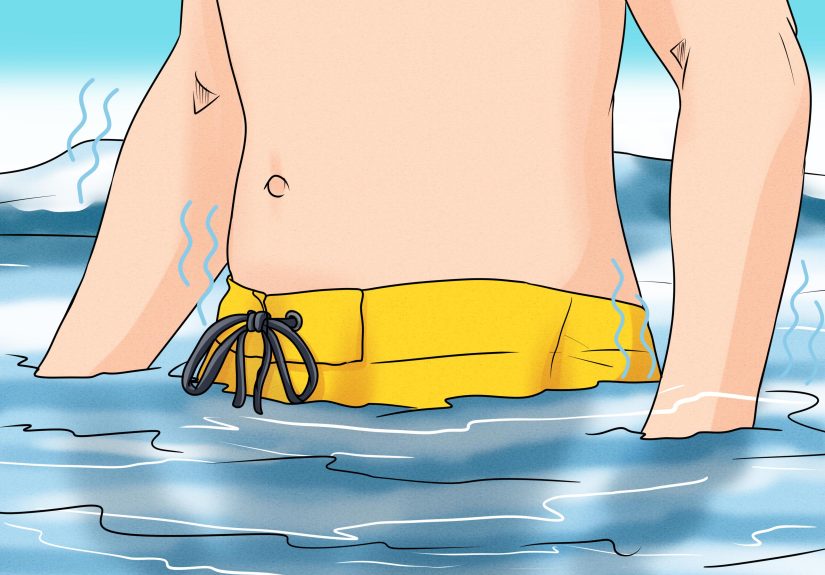
Stay covered by the water from the waist down. Keep your swimsuit on. Stand if the water is shallow enough and safe, or float calmly if you are in deeper water and comfortable doing so. Do not squat dramatically, bend over awkwardly, or create movements that scream, “Something suspicious is happening over here.” The less choreography, the better.
5. Relax and Act Normal
This is the part most people overthink. Urinating while swimming can feel psychologically weird because your brain is used to bathroom rules. Take a breath, relax your legs and stomach, and let your body do what it needs to do. Look at the horizon. Pretend you are admiring a pelican. Do not announce it, laugh uncontrollably, or make eye contact with your friend like you are sharing state secrets.
6. Let the Water Move Around You
Afterward, remain in moving water for a moment before heading back toward the group. You do not need to thrash, splash, or perform a personal rinse cycle like a confused washing machine. The ocean is already moving. Just give it a little space and time.
7. Wash Your Hands Before Eating
Once you return to shore, wash your hands before touching snacks, drinks, beach toys, or your face. Beach sand and recreational water can contain germs, especially after rain or near storm drains, outfalls, or crowded areas. Soap and water are best. Hand sanitizer is helpful when your hands are not visibly dirty or sandy.
Where You Should Never Urinate
Some places are a hard no. Do not urinate in swimming pools, hot tubs, splash pads, fountains, or any chlorinated recreational water. Do not urinate on the sand, behind lifeguard towers, in dunes, on rocks, near beach showers, beside changing rooms, on boats where waste rules apply, or anywhere visible to the public. Also avoid coral reefs, marine protected areas, tide pools, and shallow habitats where nutrients and pollution can stress delicate ecosystems.
Coral reefs are especially sensitive. Extra nutrients can encourage algae growth and contribute to ecological imbalance. Even if one swimmer’s urine seems tiny, reef-friendly behavior is about reducing every avoidable stressor. If you are snorkeling over coral, swimming in a protected marine sanctuary, or visiting a fragile tropical reef, use the restroom before entering and follow local conservation rules.
Ocean Safety Matters More Than Discretion
No bathroom emergency is worth getting caught in a rip current. Before entering the water, check beach flags, posted advisories, lifeguard instructions, and local forecasts. Swim near a lifeguard when possible. Never swim alone, and do not move away from your group into deeper or rougher water just to be discreet.
Rip currents can form even on sunny, calm-looking days. If you are caught in one, do not fight directly against it. Stay calm, float, signal for help, and swim parallel to shore when you can. The ocean is beautiful, but it is not a bathroom stall with waves painted on the wall. Treat it with respect.
Health and Hygiene Tips for Beach Days
A little planning prevents awkward decisions later. Hydrate steadily, but do not chug a giant iced coffee right before a long swim unless you enjoy making your bladder do CrossFit. Take children on regular bathroom breaks. Avoid swimming if you have diarrhea, open wounds that cannot be covered with waterproof bandages, or signs of illness that could spread germs to others.
Check beach-water advisories, especially after heavy rain. Runoff can carry bacteria, chemicals, animal waste, and other contaminants into swim areas. If the water looks unusually cloudy, smells bad, has visible pipes draining nearby, or is posted as closed, stay out. No article about discreet ocean peeing should outrank a public health warning sign.
Discretion Tips That Actually Work
The best way to be discreet is to avoid drawing attention. Do not discuss it loudly. Do not gather your friends for a committee meeting. Do not make weird faces. Stay relaxed, keep your posture natural, and continue floating or standing like a normal beachgoer enjoying normal beachgoer activities.
If you are wearing tight swimwear, give yourself time to relax. Do not tug at your suit or attempt risky adjustments. For many people, simply standing calmly in waist-deep water while facing the waves is enough. If you are in a group, drift a little to the side while staying within safe depth. If someone swims close, pause and move away politely. Privacy is not a race.
What About Wetsuits?
Surfers and divers sometimes joke about peeing in wetsuits. It happens, especially during long cold-water sessions. But it is not ideal if you can avoid it. Urine trapped inside neoprene can smell, irritate skin, and make gear less pleasant for everyone within nose range. If you do pee in a wetsuit, flush it thoroughly with seawater during the session and rinse the suit properly with fresh water afterward. Your wetsuit deserves better than becoming a portable soup container.
What If You Are at a Crowded Beach?
If the beach is packed, use the restroom. Crowded swim zones are not the place for “quick and easy” bladder strategy. Too many people are nearby, water circulation may be limited close to shore, and the chance of making someone uncomfortable is higher. Walk back to the facilities, even if the sand is hot enough to make you question every life choice that led you there.
Parents should be especially mindful with children. Kids need regular bathroom breaks, and swim diapers should be checked and changed away from the water in a proper restroom or changing area. The goal is not just discretion; it is keeping recreational water healthier for everyone.
Common Mistakes to Avoid
The biggest mistake is peeing on land because you think it is more discreet than going in the water. It is usually not. Sand, dunes, rocks, parking lots, and public walkways are visible, shared spaces and may be regulated by local rules. Another mistake is moving too far from shore or outside the lifeguarded area. Privacy does not help if you need rescue.
Also avoid making jokes in front of strangers, peeing near friends as a prank, or treating the ocean like a personal restroom. The polite approach is quiet, rare, and situational. The beach is a shared space, not your backyard with seagulls.
A Quick Decision Checklist
Before you decide what to do, ask yourself five questions. Is there a restroom nearby? Is the water open, moving ocean water? Am I away from other swimmers but still safe? Am I keeping my swimsuit on and staying covered? Am I outside reefs, tide pools, protected areas, and small enclosed waters? If the answer to any of these is no, use a restroom instead.
of Real-Life Experience: The Unofficial Beach Bladder Survival Guide
Anyone who spends enough time at the beach eventually learns that bladder timing is a skill. The first lesson usually arrives after a heroic mistake: you drink a huge lemonade, sprint into the waves, and ten minutes later realize the restroom is approximately three sand dunes, one snack stand, and a thousand lava-hot grains of sand away. At that moment, your confidence disappears faster than a flip-flop in shore break.
The most practical beachgoers develop a routine. They arrive, choose a spot, apply sunscreen, locate the restroom, and use it before swimming. This sounds boring until you are waist-deep in cold water with a full bladder and a group of relatives waving from shore. A pre-swim bathroom break is not glamorous, but neither is the awkward penguin-walk back to the boardwalk while trying not to step on a shell, a crab hole, or someone’s abandoned juice box.
Another useful experience: crowded water changes everything. At an empty beach with rolling surf, privacy is easy. At a busy summer beach, the water can feel like a floating farmers market. There are kids with goggles, adults with noodles, teenagers throwing footballs, and one person who always seems to be swimming directly toward you no matter where you move. In that situation, discretion is nearly impossible, and the restroom is the only civilized answer.
Cold water adds another twist. Many swimmers notice they need to urinate more urgently after getting into chilly ocean water. This is normal enough that experienced surfers, divers, and open-water swimmers plan for it. They avoid overdoing caffeine before long sessions, use the bathroom first, and accept that comfort in the ocean is partly about preparation. The sea may be wild, but your bladder schedule does not have to be.
Wetsuit users learn the smell lesson quickly. Peeing in a wetsuit might feel warm for three seconds, but later the suit can punish you with an odor best described as “haunted aquarium.” If it happens, rinse the suit thoroughly, turn it inside out, and dry it properly. Better yet, use the restroom before zipping yourself into neoprene armor.
The most respectful beach habit is simple: be invisible about private body functions. Do not joke loudly, do not make others uncomfortable, and do not treat the ocean like a dare. The goal is to solve a human problem quietly while protecting other people’s experience, local rules, and the marine environment. Done correctly, nobody notices, nobody cares, and your beach day continues without drama. That is the real art of discreet ocean urination: not being clever, not being bold, just being considerate.
Conclusion
Learning how to urinate in the ocean discreetly is really about common sense, courtesy, and safety. Use a restroom first whenever possible. If you are already in open ocean water and truly need to go, stay covered, keep your swimsuit on, move away from people without leaving safe swim areas, avoid sensitive habitats, and act normal. Never pee in pools, hot tubs, tide pools, coral reefs, protected areas, or on public land.
The ocean can handle many natural processes, but beach etiquette still matters. A good beachgoer protects personal dignity, respects other swimmers, follows local rules, and pays attention to water safety. Handle the situation quietly, wash your hands before eating, and get back to enjoying the waves. Your bladder does not need a spotlight.







 Close
Close