
Table of Contents >> Show >> Hide
- First Rule: Stop Before You Do Anything Dramatic
- How to Survive a Snake Encounter on a Hiking Trail
- What to Do If a Snake Is in Your Yard
- What to Do If a Snake Gets Inside the House
- How to Recognize Risk Without Playing Snake Detective
- If a Snake Bites You: What to Do Immediately
- What Not to Do After a Snakebite
- How to Avoid Snake Encounters in the First Place
- When a Snake Encounter Becomes an Emergency
- Experience-Based Lessons: What Real Snake Encounters Teach Us
- Conclusion: Give Snakes Space and Give Yourself Better Odds
There are many moments in life when staying calm is useful: meeting your in-laws, parallel parking with an audience, and realizing the “stick” on the trail has eyes. A snake encounter can feel dramatic, but most of the time, survival comes down to one very unglamorous skill: doing less. Do not poke. Do not sprint. Do not turn into a backyard action hero with a shovel. The safest move is usually to pause, give the snake space, and let it leave.
In the United States, snakes are a normal part of outdoor life, from desert hiking trails and wooded campsites to gardens, woodpiles, lakeshores, and suburban yards. Most snakes are not interested in people. They do not see you as lunch, a rival, or a compelling conversational partner. Bites typically happen when a snake is surprised, stepped on, cornered, handled, or attacked. That means your behavior matters more than your bravery.
This guide explains how to survive an encounter with a snake, what to do if you see one while hiking or at home, how to avoid snakebites, and what first aid really helps if a bite happens. It also clears up a few dangerous myths that need to slither off into retirement.
First Rule: Stop Before You Do Anything Dramatic
If you spot a snake, freeze for a moment. That pause gives your brain time to catch up with your feet. Many snakebites happen because someone jumps, reaches, runs blindly, or tries to get closer for a better look. The snake is probably already more nervous than you are, even if it has a better poker face.
Stand still, locate the snake, and slowly step backward. Keep your movements smooth and boring. Snakes usually prefer escape over confrontation, but they may defend themselves if trapped. Give the animal a clear path away from you. If it is on a trail, wait from a safe distance until it moves. If it refuses to leave, turn around or take a wide detour when it is safe to do so.
How Far Away Is Far Enough?
A practical rule is simple: more distance is better. Stay several feet away at minimum, and more if the snake is coiled, rattling, raising its head, or positioned where you cannot easily move around it. Do not test a snake’s striking range. This is not a carnival game, and the prize is not worth it.
Snakes can strike quickly, and some can reach a surprising distance compared with their body length. Even a dead snake should not be handled because reflexive movement can still create danger. If you need to identify the snake, take a photo only from a safe distance. Zoom exists for a reason.
How to Survive a Snake Encounter on a Hiking Trail
Trail encounters are common because snakes use warm rocks, open paths, and sunny patches to regulate body temperature. Your goal is to avoid surprising them and avoid putting your hands or feet where your eyes have not checked first.
Look Before You Step or Reach
Scan the trail ahead, especially near rocks, logs, tall grass, leaf litter, and shady edges. Step on top of logs instead of blindly stepping over them; a snake may be resting on the other side. Before sitting on a rock or reaching into a crevice, inspect the area. “I wonder what’s in there?” is not a survival strategy.
Stay on Marked Trails
Designated trails are not just for protecting plants and preventing lost hikers from starring in rescue reports. They also help reduce surprise wildlife encounters. Bushwhacking through tall grass, brush, and rocky piles increases your chance of accidentally stepping near a snake.
Wear the Right Gear
Closed-toe shoes, hiking boots, long pants, and thick socks provide more protection than sandals. In snake-heavy areas, gaiters can add another layer of defense. Your outfit does not need to scream “professional wilderness guide,” but it should not whisper “bare ankle buffet.”
Keep Dogs Leashed
Dogs are curious, fast, and not always blessed with excellent judgment. Keep pets on a leash and away from brush, rock piles, and any snake you spot. If your dog is bitten, seek veterinary care immediately. Do not waste time trying home remedies.
What to Do If a Snake Is in Your Yard
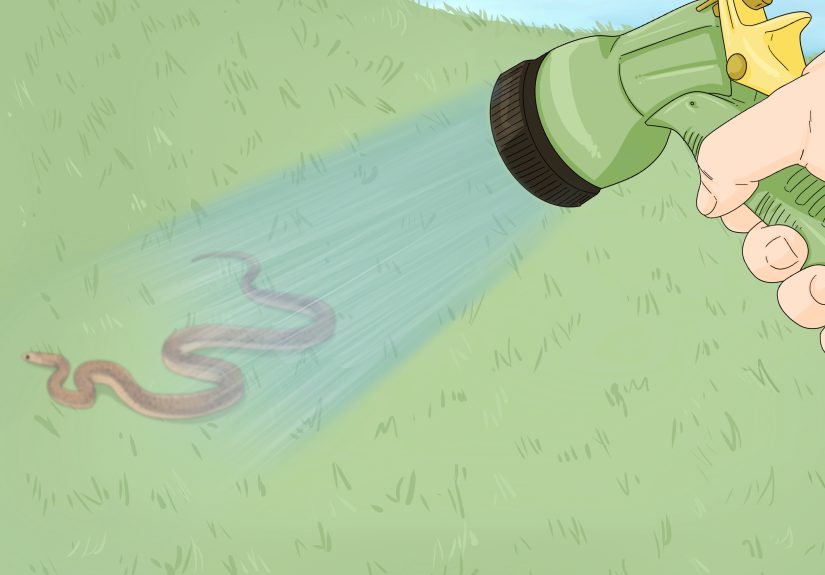
A snake in the yard can make even the calmest homeowner suddenly remember every horror movie ever made. Still, the same rule applies: leave it alone and create distance. Most outdoor snake visits end when the snake moves on by itself.
Bring children and pets indoors. Watch the snake from a safe location if you need to know where it goes. If it is clearly venomous, trapped, near a doorway, inside a garage, or in a place where people or pets could be harmed, call animal control or a professional wildlife removal service. Do not try to kill or capture it. That is one of the fastest ways to turn a manageable situation into a bite.
Make Your Yard Less Snake-Friendly
Snakes are attracted to shelter and food. Reduce hiding spots by mowing grass, clearing brush, stacking firewood away from the house, removing debris piles, and sealing gaps under porches, sheds, and foundations. Control rodents because mice and rats are basically the all-you-can-eat buffet that brings snakes to the neighborhood.
Also be careful around garden beds, hoses, tarps, outdoor storage, and woodpiles. Use a tool to move items before reaching with your hands. A little caution beats a surprise handshake with a reptile.
What to Do If a Snake Gets Inside the House
First, do not panic. Close interior doors to contain the snake in one area if you can do so safely. Keep people and pets away. Place a towel under the door gap if needed. Then call animal control, a licensed wildlife professional, or local nonemergency services for guidance.
Do not chase the snake with a broom through the living room like you are auditioning for a chaotic wildlife documentary. You may lose track of it, injure it, or get bitten. A professional can remove it more safely and help identify how it entered.
How to Recognize Risk Without Playing Snake Detective
In the U.S., venomous snakes include rattlesnakes, copperheads, cottonmouths, and coral snakes. However, identification can be tricky. Color patterns vary, juvenile snakes can look different from adults, and harmless snakes are often mistaken for dangerous ones. The safest approach is to treat every unknown snake with respect and distance.
Do not move closer to inspect pupils, head shape, or markings. Many online identification tips are oversimplified, and getting close enough to use them defeats the purpose. If you need help identifying a snake on your property, use a distant photo and contact a local wildlife agency, extension office, or professional remover.
If a Snake Bites You: What to Do Immediately
A snakebite is a medical emergency unless a qualified medical professional says otherwise. Even if the bite seems minor, do not wait for symptoms to become dramatic. Some venom effects develop over time, and early treatment can prevent serious tissue damage, bleeding problems, shock, or other complications.
Step 1: Move Away From the Snake
Get out of striking range to prevent a second bite. Do not try to catch, kill, or carry the snake to the hospital. Medical teams do not need you to arrive with a live snake, a dead snake, or a dramatic story involving a Tupperware container.
Step 2: Call 911
Call emergency services right away. If you are in a remote area with poor cell service, send someone for help or use an emergency beacon if available. If you can safely call Poison Control at 1-800-222-1222, they can also provide guidance. The key is fast medical care.
Step 3: Stay Calm and Still
Keep the bitten person as calm and still as possible. Movement can increase circulation and may spread venom more quickly. Sit or lie down. Avoid walking unless absolutely necessary for safety or rescue.
Step 4: Remove Tight Items
Take off rings, watches, bracelets, tight socks, and restrictive clothing near the bite area before swelling begins. Swelling can happen quickly, and jewelry can become dangerously tight.
Step 5: Position and Cover the Bite
Keep the bitten limb still. Many U.S. first-aid sources recommend keeping the bite at or below heart level while waiting for care. Wash gently with soap and water if it does not delay emergency help, then cover the wound with a clean, dry dressing.
What Not to Do After a Snakebite
Snakebite myths are stubborn. Unfortunately, many old “remedies” make things worse. Avoid these mistakes:
- Do not apply a tourniquet. It can damage tissue and worsen injury.
- Do not cut the wound. You are not removing venom; you are adding trauma.
- Do not suck out venom. This does not work and can introduce infection.
- Do not apply ice. It may worsen tissue damage.
- Do not drink alcohol or caffeine. These can complicate the situation.
- Do not take aspirin or anti-inflammatory pain relievers unless directed by a medical professional. Some can increase bleeding risk.
- Do not chase the snake for identification. A photo from a safe distance is helpful but not required.
The best snakebite kit is not a suction device from a dusty camping drawer. It is a charged phone, transportation, calm decision-making, and fast access to emergency care.
How to Avoid Snake Encounters in the First Place
Prevention is less exciting than rescue, but it is much more comfortable. Whether you are hiking, camping, gardening, fishing, or doing yardwork, a few habits can dramatically reduce your risk.
Use Light at Night
Many snakes are active in warmer evening hours. Use a flashlight when walking outside at night, especially in rural areas, campsites, or places with rocks, brush, or water nearby. Look before stepping off a porch, opening a gate, or walking to the trash can.
Be Careful Around Water and Wood
Snakes may shelter near ponds, creek banks, logs, firewood, and cool shaded spaces. Wear gloves when moving wood or debris, but remember gloves are not magical armor. Use tools first and keep your face and hands away from hidden gaps.
Teach Children the Simple Rule
Children do not need a full herpetology lecture to stay safe. Teach them: “Stop, back away, and tell an adult.” Make it clear that they should never pick up snakes, even small ones, pretty ones, or “dead” ones. A small snake can still bite, and a brightly colored snake is not automatically a toy from nature’s gift shop.
When a Snake Encounter Becomes an Emergency
Call 911 immediately if someone is bitten or if they develop severe pain, swelling, weakness, trouble breathing, dizziness, nausea, vomiting, numbness, unusual bleeding, or signs of shock. Also seek emergency help if the bite is from a known or suspected venomous snake, even before symptoms appear.
People with allergies, children, older adults, pets, and those far from medical care may face added risk. Do not try to “wait and see” after a suspected venomous bite. Waiting is not toughness; it is a gamble with bad odds.
Experience-Based Lessons: What Real Snake Encounters Teach Us
Experience has a funny way of making simple advice feel very real. Ask hikers, gardeners, park rangers, farmers, or homeowners who have had a close snake encounter, and the lessons are usually not complicated. They almost always sound like this: “I should have looked first,” “I’m glad I backed away,” or “I really did not need to get that close.”
One common trail scenario goes like this: a hiker rounds a sunny bend and notices a coiled rattlesnake near the edge of the path. The first instinct may be to jump backward, yell, or grab a phone and move closer for the perfect photo. The safer response is much quieter. Stop. Tell the people behind you. Back up slowly. Give the snake the trail. After a few minutes, it may move into the brush. If it does not, the group can turn around or pass only if there is a wide, safe route. The experience feels intense, but the solution is almost boring. Boring is excellent when venom is involved.
Another familiar story happens in the yard. Someone reaches near a hose, planter, or woodpile and suddenly sees movement. The lesson here is not “never garden again.” It is “use your eyes and tools before your hands.” Tap the area with a rake. Move boards with a shovel. Wear shoes instead of walking barefoot through tall grass. These habits take seconds, but they prevent the kind of surprise that makes both people and snakes react badly.
Campers learn similar lessons. A campsite with food scraps, messy gear, and open trash can attract rodents, and rodents can attract snakes. Keeping a clean campsite is not just about manners; it is pest control with a side of self-preservation. Shake out boots before putting them on. Zip tents fully. Use a flashlight after dark. Do not wander into brush to find firewood in sandals unless your life goal is to become a cautionary tale with mosquito bites.
People who work outdoors often develop the best habits because they repeat them daily. Landscapers, farmers, utility workers, and park staff learn to check before lifting objects, avoid placing hands into blind spaces, wear protective footwear, and keep job sites clear of debris. They know that snakes are not villains; they are wildlife responding to cover, food, heat, and threat. Respecting that makes encounters safer.
The biggest experience-based lesson is emotional: panic makes people clumsy. You do not need to be fearless. You only need to be deliberate. A calm retreat, a safe photo from a distance, a quick call for help after a bite, and refusal to try folk remedies can turn a frightening moment into a survivable one. The snake does not need to lose, and neither do you.
Conclusion: Give Snakes Space and Give Yourself Better Odds
Surviving an encounter with a snake is mostly about respecting boundaries. Stop, back away slowly, keep children and pets away, and never try to handle, kill, or capture the snake. On trails, watch where you step and reach. At home, reduce hiding places and food sources. If a bite happens, call 911, stay still, remove tight items, and avoid dangerous myths like tourniquets, ice, cutting, or suction.
Snakes play an important role in the ecosystem by controlling pests, and most want nothing to do with humans. Treat them like the introverts of the animal kingdom: give them space, avoid sudden drama, and everyone gets to continue their day with dignity.






 Close
Close