
Table of Contents >> Show >> Hide
- First, Identify What You’re Storing (Because Not All Fondant Decor Wants the Same Thing)
- The Big Three Rules of Fondant Decoration Storage
- How to Store Soft Fondant Decorations (So They Don’t Dry Out)
- How to Store Fully Dried Fondant Decorations (Toppers, Figures, Cutouts)
- How to Store Gum Paste or Fondant Flowers Without Crushing Them
- Should You Refrigerate Fondant Decorations? The Honest Answer
- How Long Do Fondant Decorations Last?
- Troubleshooting: Common Storage Problems (and Fixes That Actually Work)
- A Simple Storage Setup for Busy Bakers
- Quick Checklist: Do This, Not That
- Real-World Experiences: What Actually Happens When You Store Fondant Decor (and What You Learn Fast)
- Conclusion
Fondant decorations are basically tiny, edible sculptures. And like any good work of art, they have one mortal enemy:
moisture. (Okay, and heat. And sunlight. And sometimes your own curiosity when you “just want to check” the box
for the tenth time.)
Whether you’ve made delicate fondant flowers, chunky fondant toppers, or a fondant figure with a personality and tiny eyebrows,
storing them correctly is what keeps them crisp, colorful, and ready to shine on cake day.
This guide breaks down exactly how to store fondant decorations based on what they are (soft vs. dry), how soon you’ll use them,
and what kind of climate you’re working inbecause “cool and dry” means something different in Arizona than it does in Florida.
First, Identify What You’re Storing (Because Not All Fondant Decor Wants the Same Thing)
Before you grab a container and declare victory, figure out which category your decorations fall into:
1) Soft fondant decorations (meant to stay flexible)
- Ribbons, bows, plaques, drapes, and cutouts you need to curve around a cake
- Letters/numbers you plan to shape at the last minute
- Pieces you want to attach while still pliable
2) Fully dried fondant decorations (meant to be firm)
- Fondant toppers you made ahead
- 3D figures, characters, animals, and anything with a face
- Flat cutouts that you dried hard
- Gum paste flowers (or fondant mixed with tylose/CMC) intended to set stiff
These two groups have different storage needs, and mixing them up is how you end up with either (a) limp toppers or (b) a bow that
snaps like a potato chip.
The Big Three Rules of Fondant Decoration Storage
Rule #1: Dry means dry
If a piece isn’t completely dry, sealing it up can trap moisture. That’s when you get stickiness, weird soft spots, or colors bleeding
like a sad watercolor painting. Always dry decorations thoroughly before “long-term storage.”
Rule #2: Room temperature wins most of the time
Fondant is famously dramatic around cold environments. Refrigerators can cause condensation (“sweating”), softening, and color bleeding
especially when the cake/decor returns to warmer air. So unless you’re using a special protocol (we’ll cover it), most fondant decorations
should live at room temp.
Rule #3: Protect from humidity, light, and smells
Fondant and gum paste can absorb moisture and odors. Translation: store decorations away from sunlight, steamy kitchens, spice cabinets,
and anything that might make your sugar roses smell like last night’s garlic bread.
How to Store Soft Fondant Decorations (So They Don’t Dry Out)
Soft pieces should stay soft. Your goal is to limit air exposure and prevent crusting.
Step-by-step: short-term (1–7 days)
- Let the surface set briefly (5–15 minutes) so it’s not tacky to the touch.
- Lightly coat with shortening if the surface seems dry-prone (especially edges).
- Wrap tightly in plastic wrap or press-n-seal, making sure there are no air pockets.
- Place in an airtight container or zip-top bag for an extra layer of protection.
- Store at cool room temperature (think: pantry, not on top of the microwave).
Pro tips for soft storage
- Flat pieces: store between parchment sheets on a tray so they don’t warp.
- Curved pieces: store on the form you shaped them on (a foam dummy, bottle, or curved mold), then wrap the whole setup.
- Label everything: color, date made, and what it’s forfuture-you deserves kindness.
Can you freeze soft fondant decorations?
Some decorators do freeze well-sealed soft pieces for longer storage, then thaw sealed and gently re-knead if needed.
The key is airtight wrapping so you don’t get freezer odors or condensation during thawing. If you try it, thaw slowly and
keep pieces covered until they reach room temp.
How to Store Fully Dried Fondant Decorations (Toppers, Figures, Cutouts)
Dried decorations should stay firm and dry. Your job is to keep them safe from humidity, sunlight, and accidental crushing.
Step 1: Dry completely (seriously)
Drying time depends on thickness, humidity, and whether you used gum paste or tylose/CMC. As a rough guide:
- Thin cutouts: 24–48 hours
- Medium toppers: 2–5 days
- 3D figures: several days to a week (sometimes longer for chunky pieces)
If a figure still feels cool/soft underneath, it’s not fully curedgive it more time before packing it away.
Step 2: Choose the right container (and why “airtight” is complicated)
Here’s the truth: both breathable boxes and lidded containers can workwhat matters is your climate and how dry the pieces are.
- Low-humidity homes: A lidded plastic container (lid not snapped super tight) can protect from dust and pests while still avoiding trapped moisture.
-
Humid climates: Either a cardboard cake box or a sealed container with a food-safe desiccant (like silica gel) works well.
The desiccant is the difference-maker. - Never pack damp pieces: If they’re not fully dry, sealing is how you get softening and color bleed.
Step 3: Cushion and separate
Dried fondant is sturdy… until it isn’t. Use padding so nothing bumps into anything else.
- Line the bottom with parchment paper.
- Use tissue paper, paper towels, or foam to cushion fragile shapes.
- Do not stack 3D figures. Ever. (Gravity is patient. Gravity always wins.)
- For flat pieces, stack only when fully hard, with parchment between layers.
Step 4: Keep it cool, dark, and boring
“Boring” is good in storage. Aim for a cabinet or pantry away from:
- Direct sunlight (colors can fade)
- Heat sources (ovens, stovetops, warm appliances)
- Steam and humidity (dishwashers, kettles, rice cookers)
- Strong odors (spices, onions, coffee, etc.)
How to Store Gum Paste or Fondant Flowers Without Crushing Them
Sugar flowers are gorgeous and fragilelike butterflies made of sugar and ambition.
Best-practice flower storage
- Dry the flowers wellovernight at minimum, longer for thick centers or large petals.
- Use a container that protects shape (a plastic tub or sturdy box).
- Add padding (foam or tissue) so blooms don’t rattle around.
- Fight humidity with a food-safe desiccant pack, or a slice of white bread as a short-term moisture absorber.
- Store in a cool, dry place to preserve color and structure.
Avoid chilling flowers in the fridge/freezer if you can. Thawing can create condensation that wilts petals, and flowers can absorb nearby food odors.
In extreme cases, prolonged cold storage can cause sugar work to soften or become syrupy.
Should You Refrigerate Fondant Decorations? The Honest Answer
Most of the time: no. Refrigerators are humid places, and fondant is hygroscopic (it pulls in moisture). When cold fondant meets warm air,
condensation formsaka “fondant sweat”which can ruin a smooth finish, soften details, or bleed colors.
When refrigeration might be necessary
If you have a cake that truly must be refrigerated (perishable fillings like fresh fruit, cream cheese frosting, mousse, etc.), you may need the fridge.
In that case, focus on controlling condensation.
The “Emergency Fridge Protocol” for fondant (best chance of success)
- Put the cake in a cardboard box (cardboard helps buffer moisture and absorb condensation).
- Seal the box well so fridge humidity hits the cardboard first, not the fondant.
- Chill without touching the fondant once it’s cold.
- To bring back to room temp: keep it boxed while it warms up, ideally in an air-conditioned space.
- Do not wipe sweat. Let it evaporate on its own. Wiping can smear color and leave marks.
If you just need to firm up sticky fondant while working, a short chill (around 10–15 minutes) can helplonger refrigeration risks drying or cracking.
How Long Do Fondant Decorations Last?
“Last” depends on whether you mean “still edible” or “still looks perfect.” Those are not always the same thing.
Unused rolled fondant
- Commercial fondant can keep for a couple weeks at room temperature when stored properly (wrapped airtight and kept from drying out).
-
Marshmallow fondant is often stored tightly wrapped in a sealed container; some guidance allows cool-room storage and short-term refrigeration,
but refrigeration is still risky for finished decorations due to condensation.
Dried decorations (toppers, figures, flowers)
- Appearance: months to years if kept dry, dark, and protected from humidity.
- Edibility: they may be technically edible for a long time, but texture and flavor can degrade. If you want people to actually eat them,
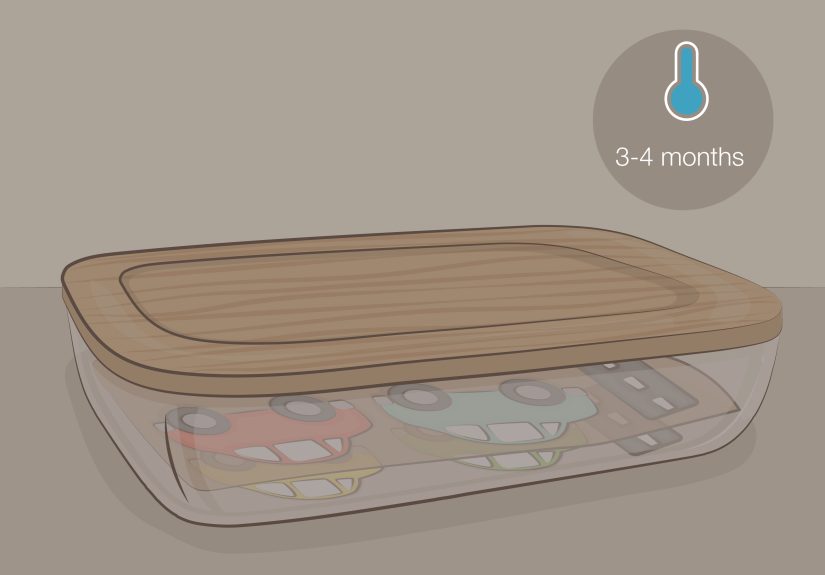
aim to use within a few months and store carefully.
Signs you should toss or remake
- Sticky surface that won’t dry back out
- Color bleeding or weeping
- Off smell (fondant can absorb odors)
- Visible mold or fuzzy growth (rare if stored dry, but not impossible)
Troubleshooting: Common Storage Problems (and Fixes That Actually Work)
“My decorations went sticky in the container.”
- Likely cause: packed before fully dry, or stored in trapped humidity.
- Fix: remove from container, air-dry in a cool, dry room. Add a desiccant to the container before re-storing.
“My colors faded.”
- Likely cause: sunlight or bright kitchen lighting over time.
- Fix: store in a dark cabinet; wrap boxes or use opaque containers.
“My flower petals cracked.”
- Likely cause: too-dry environment or overly thin petals without support.
- Fix: cushion flowers in foam and avoid vibrations; consider a slightly more humid storage area (but never damp).
“My fondant topper smells like my pantry.”
- Likely cause: storage near spices/coffee/onion zone.
- Fix: move to a neutral cabinet and use a sealed secondary barrier (wrapped + container).
A Simple Storage Setup for Busy Bakers
If you decorate often, set up a “fondant decor drawer” that makes storage automatic.
- One bin for soft pieces: plastic wrap + airtight container ready to go.
- One bin for dried pieces: sturdy boxes, parchment, tissue, and a few food-safe desiccant packs.
- Label tape + marker: date, color, event, fragile notes.
- A “no steam” zone: store away from your dishwasher/kettle/rice cooker lineup.
Quick Checklist: Do This, Not That
Do
- Dry decorations fully before long-term storage
- Store at cool room temperature, away from heat and sunlight
- Use padding and separators to prevent breakage
- Use desiccant packs in humid climates
- Keep strong food smells far away
Don’t
- Don’t refrigerate dried fondant decorations unless absolutely necessary
- Don’t seal damp pieces in airtight containers
- Don’t stack 3D figures (unless you enjoy sugar heartbreak)
- Don’t store near steam, sunlight, or spice cabinets
Real-World Experiences: What Actually Happens When You Store Fondant Decor (and What You Learn Fast)
Bakers don’t learn fondant storage from one neat rulethey learn it from the moment something goes wrong at the worst possible time.
And if you’ve ever whispered “please don’t melt” at a cake box like it’s a living creature, welcome to the club.
One common scenario: you make gorgeous toppers early (because you’re responsible and future-oriented), then you store them in a sealed plastic container
while they’re almost dry. “Almost” is the villain here. A day later, the details look slightly softer. Two days later, the red and black accents
start bleeding into the white areas like a tiny edible crime scene. The lesson: if you want airtight storage, you need fully cured piecesor you need a
desiccant pack to keep humidity from building up inside the container.
Another classic is the “fridge panic.” The cake needs refrigeration because the filling is perishable, but it’s covered in fondant and decorated with
fondant flowers. You refrigerate it anyway (because food safety matters), pull it out, and suddenly the fondant looks like it ran a 5K in a rain jacket.
That’s condensation. The best fix isn’t rubbing it (that usually makes marks); it’s patience. Keep the cake boxed while it warms up and let the moisture
evaporate naturally. People who do this regularly swear by cardboard boxes because cardboard absorbs some of the moisture and buffers temperature shifts.
Then there’s the “humidity surprise.” You store sugar flowers in a cake box thinking airflow is good (and it is), but your home is humid, and the flowers
slowly soften over time. Petals sag. Centers droop. It’s like watching a slow-motion flower wilt. That’s when bakers discover the magic of food-safe
desiccants (silica gel packs) or other moisture absorbers. In a humid environment, controlling moisture matters more than the container type.
Storage isn’t only about moisturelight is sneaky too. Decorations left near a window or under bright kitchen lights can fade, especially deeper colors.
Bakers learn to store pieces in a dark cabinet, inside opaque containers, or even wrapped boxes. It feels overprotective until you compare “before” and
“after” on a bright pink topper that turns into “pastel-ish regret.”
And finally: physical damage is heartbreak you can prevent. Many bakers learn to treat fondant figures like ornamentspadding, separation, and no stacking.
A figure can be perfectly dry and still snap if it bumps around in transit. The simplest win is lining the container, adding tissue or foam, and storing
pieces so they don’t touch. The “extra” five minutes you spend cushioning decorations is nothing compared to the hour you’ll spend remaking a tiny fondant
hand that broke offand yes, fondant hands always break off first. It’s science.
If you take one real-world takeaway: storage works best when it matches your timeline and climate. Soft pieces want airtight protection. Dried pieces want
dryness, darkness, and physical safety. And refrigeration is a last resortwith a plan. Once you build a simple system (wrap, box, cushion, label),
fondant storage stops being stressful… and starts being the reason you can confidently say, “Yep, I made that topper last week.”
Conclusion
Learning how to store fondant decorations isn’t about buying fancy containersit’s about understanding what fondant hates (moisture and temperature swings)
and what it loves (cool, dry, dark, and undisturbed peace).
Keep soft decorations airtight so they stay pliable. Let firm decorations dry completely, then protect them from humidity and breakage with smart boxing,
padding, and (in humid areas) a little help from desiccant packs. Do that, and your fondant toppers will be ready when you areno last-minute sugar drama required.






 Close
Close