
Table of Contents >> Show >> Hide
- Start With the Two Decisions That Save the Most Headaches
- Equipment Checklist: What You Actually Need (and What You Can Skip)
- Step-by-Step: Setting Up the Tank (The “Don’t Flood Your Living Room” Edition)
- The Most Important Part: Cycling Your Tropical Freshwater Aquarium
- Stocking Your Tank: Build a Peaceful Tropical Community
- Adding Fish the Right Way: Acclimation and Quarantine
- Maintenance: The Routine That Keeps Your Tank Gorgeous
- Troubleshooting: Common Problems and Quick Fixes
- First-Month Experiences: What It Usually Feels Like to Set Up a Tropical Freshwater Aquarium
- Conclusion: A Stable Tank Is a Happy Tank
Setting up a tropical freshwater aquarium is basically like building a tiny, watery city where the citizens poop constantly and the sanitation department has to be hired before anyone moves in. Do that part right, and your tank becomes a calm, glowing slice of the rainforest. Do it wrong, and you’ll invent new swear words while staring at cloudy water.
This guide walks you through a smart, beginner-friendly setupequipment, step-by-step assembly, fishless cycling, stocking examples, and a maintenance routine that won’t eat your weekends. The goal is simple: stable water, healthy fish, and an aquarium that looks good enough to brag about.
Start With the Two Decisions That Save the Most Headaches
1) Pick a tank size that forgives beginner mistakes
Bigger tanks are more stable because waste and temperature changes get diluted in more water. A 20-gallon “long” is a classic beginner sweet spot: enough room for a peaceful community, not so huge that water changes feel like cardio.
If space is tight, a 10-gallon can workbut it’s less forgiving. Think of it as the difference between steering a cruise ship (slow to change direction) and steering a shopping cart with one wobbly wheel (fast, chaotic, hilarious… until it isn’t).
2) Choose the vibe: fish-only or planted
A planted tropical freshwater aquarium can be more stable because plants use nitrogen compounds, but it also adds lighting and plant nutrition choices. If you’re new, “easy plants” is the cheat code: hardy species that don’t demand a graduate degree in botany.
Equipment Checklist: What You Actually Need (and What You Can Skip)
The essentials
- Aquarium + sturdy stand (level, stable, and sized for the tank)
- Filter (hang-on-back, sponge, or canistermore on this below)
- Heater + thermometer (tropical usually lives happily around the mid-to-upper 70s °F)
- Lid/cover (reduces evaporation, prevents jumpers, keeps cats from “helping”)
- Light (basic is fine for fish-only; stronger/more consistent for live plants)
- Substrate (gravel or sand)
- Water conditioner (neutralizes chlorine/chloramine in tap water)
- Test kit for ammonia, nitrite, nitrate (and pH if possible)
- Bucket + siphon/gravel vacuum (aquarium-onlydon’t cross it with household cleaners)
- Fish net, algae scraper, and a simple fish food
Filter choices, explained like you’re hiring staff
Your filter is not just a “water mover.” It’s prime real estate for beneficial bacteriathe biological cleanup crew that makes fishkeeping possible.
- Hang-on-back (HOB): easy to install, great for beginners, good oxygenation. Watch flow strength for small fish.
- Sponge filter: gentle flow, fantastic biological filtration, cheap, ideal for shrimp and smaller fish. Needs an air pump.
- Canister filter: quiet, powerful, lots of media space. Best once you’re comfortable (or if you love tidy setups).
Heater and temperature basics
Tropical fish generally like consistent warmth more than a “perfect number.” Stability beats perfection. Use a heater sized for your tank, place it where water flows (near the filter intake/outflow), and always verify temperature with a thermometer.
Lighting without accidentally farming algae
For most tropical community tanks, a consistent day/night rhythm matters more than fancy features. A timer is your friend. If you keep plants, match light strength to plant difficultystart low and simple. If algae shows up, it’s usually a balance issue (too much light + too many nutrients), not a moral failing.
Substrate and decor: function first, fancy second
Gravel is beginner-friendly and easy to vacuum. Sand looks sleek and works well for bottom-dwellers, but needs gentler cleaning technique.
Add decor that creates hiding spots without turning your tank into an obstacle course. Fish like “cover + open swimming lanes,” just like people like “cozy corners + hallways.”
Easy live plants that don’t bully beginners
- Anubias (don’t bury the rhizomeattach to rock/wood)
- Java fern (same rhizome rule)
- Crypts (root feeders; may “melt” then recover)
- Amazon sword (bigger, root tabs help)
- Floating plants (great nutrient sponges; keep surface agitation in mind)
Step-by-Step: Setting Up the Tank (The “Don’t Flood Your Living Room” Edition)
- Pick a location. Avoid direct sun, heat vents, and drafty doors/windows. Make sure you have nearby outlets and the floor can support the weight.
- Level the stand. A tank that isn’t level is a long-term stress machinefor you and the silicone seams.
- Rinse substrate and decor. Use plain water. No soap. Ever. (Soap residue + fish = tragedy.)
- Add substrate, hardscape, and plants. Build your layout now while the tank is empty and your sleeves are still dry.
- Fill slowly. Pour onto a plate or bowl to avoid creating a sandstorm. Fill about one-third first, check for leaks, then continue.
- Dechlorinate. Add water conditioner based on total water volume or the amount of new water you’re adding.
- Install equipment. Set up filter (but follow its priming rules), place heater and thermometer, and use a drip loop for cords.
- Power upand wait. Run everything 24–48 hours to stabilize temperature and clear any initial cloudiness before cycling and stocking.
The Most Important Part: Cycling Your Tropical Freshwater Aquarium
Cycling is how you grow beneficial bacteria that convert toxic ammonia (fish waste/rotting food) into nitrite, then into relatively safer nitrate.
Skipping this step is the #1 reason “new tank syndrome” happens.
Fishless cycling (recommended): the humane, low-drama route
Fishless cycling means you feed the bacteria firstusing an ammonia sourceso fish aren’t exposed to dangerous spikes. Here’s a practical method:
- Add an ammonia source (a measured aquarium-safe ammonium chloride product is easiest).
- Optionally add bottled beneficial bacteria to speed up colonization.
- Test daily or every other day for ammonia and nitrite at first.
- Keep it in a workable range. If ammonia/nitrite gets too high, it can slow the processdo a partial water change if needed.
- You’re cycled when: you can add a controlled amount of ammonia and, within about 24 hours, both ammonia and nitrite test at (or near) zero, with nitrate present.
- Do a partial water change to lower nitrate, then you’re ready for the first fish.
Fish-in cycling (not ideal, but sometimes unavoidable)
If you already have fish (or you made an impulsive purchase because the guppies winked at you), you can still cyclejust very slowly and carefully:
stock lightly, feed lightly, test frequently, and do water changes whenever ammonia or nitrite shows up. It’s doable, but it’s more work and more risk.
Stocking Your Tank: Build a Peaceful Tropical Community
The “bioload budget” (simple analysis that prevents chaos)
Every fish adds waste. Your bacteria and plants process that waste. Your filter and maintenance routine support the whole system.
Problems happen when the “waste input” outpaces the “cleanup capacity.” That’s why slow stocking is so powerful:
it gives the biological filter time to scale up like a well-run restaurant, not a surprise dinner party.
Beginner-friendly stocking examples
Example A: 20-gallon long (classic community)
- 8–12 small schooling fish (neon tetras, ember tetras, harlequin rasboras)
- 6 bottom-dwellers (corydoraskeep them in groups)
- 1 centerpiece fish (honey gourami or a small, peaceful gourami species)
Example B: 10-gallon (small but charming)
- 1 betta or a small group of nano fish (like ember tetras) depending on temperament and layout
- Optional: a small clean-up crew like snails (if compatible)
- Plants strongly recommended for stability
Example C: 29-gallon (more room, more options)
- 10–15 schooling fish
- 6 corydoras or similar peaceful bottom group
- 1–2 centerpiece fish (depending on species and temperament)
Always confirm adult size, temperament, and water preferences. “Cute at the store” can turn into “why is my tank suddenly a wrestling match?” when fish mature.
Adding Fish the Right Way: Acclimation and Quarantine
Acclimation (temperature + water adjustment)
The goal is to avoid shock from sudden changes. A simple approach:
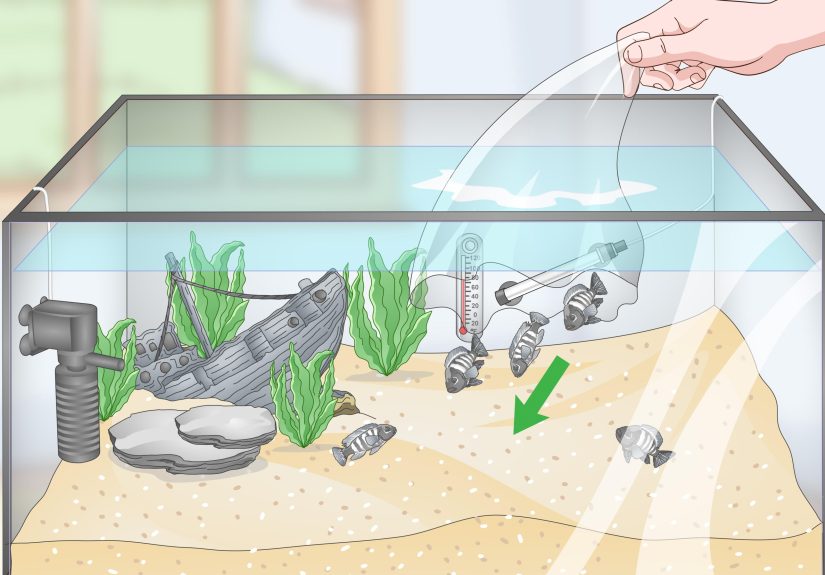
- Float the sealed bag for 15–20 minutes to equalize temperature.
- Gradually mix small amounts of tank water into the bag over 20–30 minutes.
- Net the fish into the tank and discard the shipping water (don’t pour it in).
For sensitive species (or if store water is very different), a slow drip acclimation is a safer upgrade.
Quarantine (optional, but extremely smart)
A small quarantine tank lets you observe new fish for a couple of weeks before adding them to your display. It reduces the chance of introducing disease and saves you from treating the entire main tank later. Future You will be grateful.
Maintenance: The Routine That Keeps Your Tank Gorgeous
Weekly (or every 1–2 weeks): water changes
A steady rhythm of partial water changes keeps nitrate and dissolved waste from creeping up. Many tanks thrive with
roughly 15–25% changed every week or two (more if heavily stocked, less if lightly stocked and planted).
Use a gravel vacuum to remove debris, then refill with temperature-matched, dechlorinated water.
Filter care: clean gently, not aggressively
Your filter media is where your beneficial bacteria live. Rinse sponges or media in removed tank water (not chlorinated tap water),
and avoid replacing all media at once. If something must be replaced, do it in stages so you don’t wipe out your biofilter.
Feeding: less is more (especially at the beginning)
Overfeeding is the fastest way to turn a peaceful aquarium into a chemistry experiment.
Feed small amounts fish can finish quickly, and remove uneaten food if it lingers. If you want a simple rule:
fish would rather beg than bloat.
Troubleshooting: Common Problems and Quick Fixes
“My water is cloudy!”
New tanks often get a bacterial bloom during cycling. If fish aren’t in the tank yet, patience is usually the fix.
If fish are present, test water immediately and do partial water changes as needed.
“Algae is taking over.”
Reduce light duration, avoid overfeeding, and keep up with water changes. Add easy plants to compete for nutrients.
Algae is less a villain and more a symptom: it shows up when there’s extra fuel.
“My fish are acting stressed.”
Test ammonia and nitrite first. If either is detectable, do a partial water change and improve aeration.
Also check temperature stability and whether anyone is being bullied. In aquariums, drama is usually a parameter problem or a roommate problem.
First-Month Experiences: What It Usually Feels Like to Set Up a Tropical Freshwater Aquarium
The first month with a new tropical freshwater aquarium is a mix of excitement, curiosity, and the sudden realization that you’ve adopted an invisible science project.
On day one, you’ll probably stand in front of the tank longer than you’ll admit to anyone. The water looks crisp, the hardscape looks intentional,
and you’ll start imagining the exact moment your future fish will glide through the plants like they pay rent.
Thenoften right on schedulesomething “weird” happens. The water may turn slightly cloudy, especially as cycling gets underway.
This is when many beginners get the urge to change everything at once: swap the filter, rinse the gravel, scrub the decor, and do a giant water change
like you’re trying to erase the tank’s browser history. But the better move is usually slower and calmer: test the water, keep the filter running,
and let the biological filter develop. The aquarium is learning how to be an ecosystem, and ecosystems don’t like being interrupted mid-sentence.
You’ll also learn that test kits are emotional. One day you’ll get a reading that looks “fine” and feel like a professional aquarist.
The next day nitrite appears and you’ll stare at the color chart like it’s a life-or-death exam. This is normal.
Those shifting numbers are the cycle doing its jobammonia shows up first, then nitrite, then nitrate.
The trick is not to chase perfection with constant changes, but to aim for consistency and safe ranges.
Another common experience: the “equipment personality reveal.” Some filters are quiet angels; others develop a mysterious gurgle that only happens at 2:00 a.m.
Heaters can be perfectly steadyor slightly offso you’ll likely start trusting your thermometer more than the heater dial.
Many new fishkeepers also discover evaporation is real. The water line drops, and suddenly you’re topping off the tank and feeling weirdly proud of it,
like you’ve joined an exclusive club that owns buckets on purpose.
If you chose live plants, you might see a little “plant drama” too. Some plants melt back when moved, then rebound.
You may get a few algae patches early on, especially if the light is on too long or nutrients accumulate.
Most people find that once they shorten the photoperiod, keep feeding modest, and settle into water changes,
algae calms down and plants start looking healthier. It’s less about winning a war and more about balancing a budget.
When fish finally arrive, the experience is almost always: joy, followed by responsibility. You’ll watch them closely,
notice every new behavior, and probably Google “is my fish sleeping or judging me” at least once.
The best first-month lesson is that the tank rewards patience. Slow stocking, gentle maintenance, and regular testing
build a stable aquarium that practically runs itself. And once it does, you’ll catch yourself doing the funniest thing:
relaxing while staring at a box of water. Which is, honestly, the whole point.
Conclusion: A Stable Tank Is a Happy Tank
The best tropical freshwater aquariums aren’t built by rushingthey’re built by setting up solid equipment,
cycling properly, stocking slowly, and sticking to a simple maintenance routine. If you focus on stability
(temperature, water parameters, and consistent care), your fish will look better, behave more naturally, and live longer.
And you’ll get the real reward: an aquarium that feels peaceful instead of stressful.






 Close
Close