
Table of Contents >> Show >> Hide
- Introduction: The Star-Shaped Race That Looks Calm Until It Isn’t
- What Is Chinese Checkers?
- The Objective of Chinese Checkers
- How to Set Up Chinese Checkers
- How to Play Chinese Checkers
- Important Chinese Checkers Rules Beginners Should Know
- Basic Strategy: How to Get Better at Chinese Checkers
- Common Mistakes to Avoid
- Chinese Checkers Variations
- Experience-Based Tips for Playing Chinese Checkers
- Conclusion
Note: This article is written for web publishing in standard American English and is based on verified, commonly accepted Chinese Checkers rules, gameplay conventions, and beginner strategy guidance.
Introduction: The Star-Shaped Race That Looks Calm Until It Isn’t
Chinese Checkers is one of those board games that looks peaceful on the table: colorful marbles, a pretty star-shaped board, and players politely taking turns. Then someone makes a five-hop move across half the board and suddenly the room goes quiet. That is the charm of Chinese Checkers. It is simple enough for beginners to learn in minutes, yet strategic enough to keep competitive players leaning over the board like tiny marble generals.
Despite the name, Chinese Checkers is not a traditional Chinese game, and it is not really checkers either. It is a classic abstract strategy game played on a six-pointed star board. The goal is straightforward: move all your marbles or pegs from your starting triangle to the opposite triangle before your opponents do. The trick is figuring out how to travel efficiently, use jumps wisely, and avoid trapping your own pieces in a traffic jam that feels suspiciously like a parking lot after a concert.
This guide explains how to play Chinese Checkers step by step, including the setup, objective, legal moves, jumping rules, gameplay flow, winning conditions, common mistakes, and practical strategy tips. Whether you are teaching kids, hosting family game night, or trying to settle a rules debate before Aunt Linda declares herself “the marble queen,” this complete guide will help you play with confidence.
What Is Chinese Checkers?
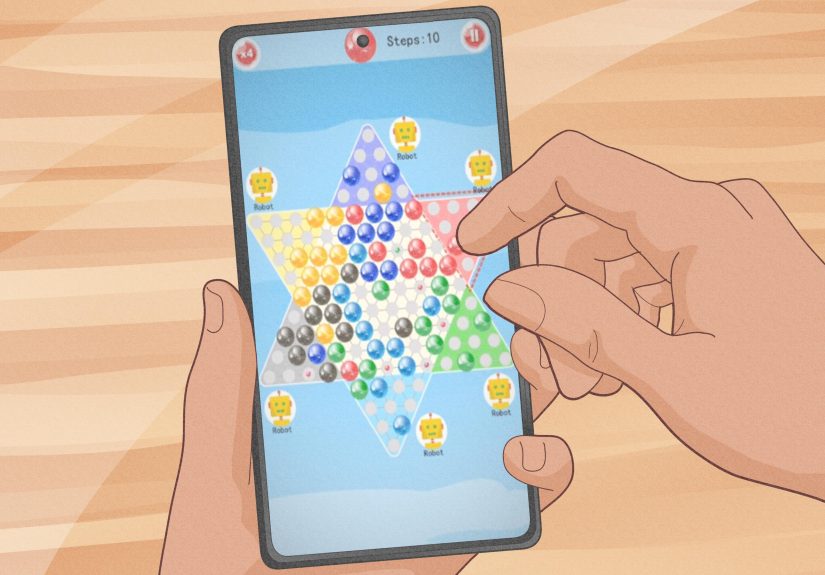
Chinese Checkers is a race-style strategy board game for 2, 3, 4, or 6 players. Some casual sets also mention 5-player play, but the most balanced versions use player counts that allow fair opposite-side movement. The game board is shaped like a six-pointed star, with a hexagon in the center and six triangular points around the outside. Each player controls a set of 10 marbles, pegs, or pieces in one color.
The game is often recommended for ages 7 and up because the rules are easy to understand, but the strategy requires planning. There is no dice rolling, no card drawing, and no random luck once the game begins. Every move matters. If your opponent glides across the board like a marble-powered rocket, you cannot blame the dice. You can only stare at the board and whisper, “I should have seen that coming.”
Chinese Checkers Equipment
A standard Chinese Checkers set usually includes:
- One star-shaped game board with holes or spaces
- Six sets of marbles or pegs, usually 10 pieces per color
- Enough spaces for up to six players
- A rule sheet, if it has not mysteriously vanished into the same dimension as missing socks
Some boards use marbles that sit in small pits, while others use pegs inserted into holes. Both styles work the same way. Peg boards are a little safer around excited elbows, while marble boards deliver that classic rolling sound that makes every move feel dramatic.
The Objective of Chinese Checkers
The objective of Chinese Checkers is to be the first player to move all 10 of your pieces from your starting triangle into the triangle directly opposite yours. That opposite triangle is often called your “home” or “target triangle.”
For example, if you begin in the red triangle at the bottom of the board, your goal is to fill the red destination triangle at the top. Every player is trying to do the same thing from their own starting point. The first player to occupy all 10 spaces in their target triangle wins.
Unlike traditional checkers, you do not capture or remove pieces by jumping over them. In Chinese Checkers, jumping is transportation, not destruction. Think of the other marbles as stepping-stones, not enemies to be eliminated. Although, to be fair, they may still feel like enemies when they block your perfect route.
How to Set Up Chinese Checkers
Setting up Chinese Checkers is quick once you understand the board. Each player chooses one color and places all 10 matching pieces in one triangular point of the star. The target is always the triangle directly across the board.
Setup for 2 Players
In a two-player game, players sit directly opposite each other. Each player fills one triangle with 10 pieces. Their goal is to move all pieces into the opposite triangle, which is initially occupied by the other player. This creates a fun head-to-head race where both players must pass through the center and may interfere with each other’s movement.
Some variations allow each player to control two or three sets of pieces in a two-player game. This makes the board busier and the game longer. Beginners should start with one set each before upgrading to marble rush hour.
Setup for 3 Players
In a three-player game, players usually choose every other triangle so that each player’s target triangle is empty. This setup gives everyone a clear destination across the board. Three-player games can be fast and tactical because the center of the board opens and closes quickly as players build jump chains.
Setup for 4 Players
In a four-player game, four triangles are occupied and two opposite triangles are left empty. Many players consider this one of the most enjoyable setups because the board has enough activity to create exciting jumps without becoming completely crowded.
Setup for 6 Players
In a six-player game, every triangle is filled. This version is lively, chaotic, and perfect for family game night. It also requires patience because the board can become packed in the early turns. The center may look like a marble convention, but smart players can still find useful routes.
Can 5 Players Play Chinese Checkers?
Some casual rule sheets allow 5-player Chinese Checkers, but it is generally less balanced because one player may have an empty target triangle while others are aiming toward occupied triangles. If you play with 5 players, treat it as a friendly house-rule version rather than the most competitive format. In other words, do not use it to decide who gets the last slice of pizza.
How to Play Chinese Checkers
Once the board is set up, players choose who goes first. You can decide by youngest player, coin toss, rock-paper-scissors, or whoever can say “star-shaped marble strategy” three times without sounding suspicious. Play usually continues clockwise around the board.
Basic Turn Rules
On your turn, you move exactly one piece. You may either:
- Move one piece to an adjacent empty space, or
- Jump one piece over another piece into an empty space beyond it
You cannot combine a regular single-step move and a jump in the same turn. Your move must be one type or the other. After you complete your move, your turn ends and play passes to the next player.
Single-Step Moves
A single-step move means moving one piece into an adjacent empty hole. On most boards, each piece can move in up to six directions, following the lines of the board. This move is simple but not always powerful. Single steps are useful when you need to reposition a piece, open a path, or move a marble out of your starting triangle.
Beginners often rely too heavily on single-step moves. That works for learning the game, but if your opponent is using long jumps, you may quickly feel like you brought a bicycle to a rocket race.
Jumping Rules
Jumping is the heart of Chinese Checkers gameplay. A piece may jump over one adjacent piece, whether it belongs to you or an opponent, and land in the empty space directly beyond it in the same straight line.
Here are the key jumping rules:
- You may jump over your own pieces or your opponents’ pieces.
- The piece being jumped must be adjacent.
- The landing space immediately beyond the jumped piece must be empty.
- Pieces are not captured or removed after being jumped.
- You may make multiple jumps with the same piece in one turn if each jump is legal.
- You may change direction between separate jumps, but each individual jump must follow a straight line.
Multiple jumps are what make Chinese Checkers exciting. A well-placed chain can move a piece from your starting area deep into the board in one turn. Advanced players look for these chains constantly and sometimes create them intentionally by arranging their own pieces like stepping-stones.
Example of a Legal Jump
Suppose your blue marble is next to a red marble, and there is an empty hole directly behind the red marble in the same line. Your blue marble may jump over the red marble and land in that empty hole. The red marble stays where it is. No one gets captured. No one needs to gasp dramatically, though some players will anyway.
Example of a Multiple Jump
Imagine your marble jumps over one piece, lands in an empty space, then sees another adjacent piece with an empty space beyond it. You may continue jumping with that same marble. If the chain continues, you may keep going. A single turn can include two, three, four, or even more jumps if the board position allows it.
You are not always required to take the longest possible jump sequence. Sometimes stopping early is smarter because it blocks an opponent, protects your formation, or positions the piece for a stronger move next turn.
Important Chinese Checkers Rules Beginners Should Know
There Is No Capturing
This is one of the biggest differences between Chinese Checkers and regular checkers. In traditional checkers, jumping usually means capturing. In Chinese Checkers, jumping simply helps your piece travel. The jumped piece remains on the board exactly where it was.
You Move Only One Piece Per Turn
Even if you have several exciting moves available, you choose one piece and move only that piece. If you are making a jumping move, all jumps in that turn must be made by the same piece.
You Cannot Jump Over Empty Spaces
In standard Chinese Checkers, a jump requires an adjacent piece and an empty landing space immediately beyond it. You cannot jump over a gap, a cluster of two pieces, or an empty hole. Some house-rule variations allow longer jumps, but those are not part of the basic game.
You Cannot Land on an Occupied Space
Every move must end in an empty hole. If another marble is already there, you must choose a different move. Marbles may be friendly, but they do not share seats.
Your Goal Triangle Must Be Filled Completely
You win only when all 10 of your pieces occupy the 10 spaces in your target triangle. Getting one heroic marble across the board is nice, but the game rewards the full team. No marble left behind.
Basic Strategy: How to Get Better at Chinese Checkers
Chinese Checkers is easy to learn, but strong play comes from planning efficient routes. The best players do not move randomly. They build paths, open lanes, and keep their pieces working together.
1. Build Jump Chains
The fastest way across the board is through multiple jumps. Try to position your pieces so they create stepping-stones for each other. A good jump chain can save several turns and put pressure on your opponents.
2. Move Your Back Pieces Early
Beginners often advance the front pieces and forget the marbles stuck in the back row. This creates a late-game problem: your leaders are already near home, but your rear pieces are still sipping lemonade in the starting triangle. Move back pieces early so your whole group advances together.
3. Keep Your Pieces Connected
A connected group creates more jumping opportunities. If your pieces spread out too much, they may lose the ability to help each other. Think of your marbles as a team crossing a river by hopping across stones. If one stone wanders off to start a solo career, the route falls apart.
4. Use the Center Wisely
The center of the board is usually the fastest route to the opposite triangle. Controlling central lanes gives you more movement options. However, the center can also become crowded, especially in games with four or six players. Watch for open diagonals and do not be afraid to take a side route if the middle looks like rush-hour traffic.
5. Do Not Block Your Own Home Triangle
As you approach your target triangle, plan how each piece will fit. A common mistake is filling the front of the triangle too early, making it difficult for later pieces to enter. Leave room for your remaining marbles to move into place.
6. Watch Opponents’ Jump Lines
Every move you make may create a path for someone else. Before placing a marble, ask: “Does this help me more than it helps them?” Sometimes your perfect bridge becomes your opponent’s freeway. Rude? Yes. Legal? Absolutely.
7. Balance Speed and Blocking
Chinese Checkers is mainly a race, but blocking can matter. You can slow opponents by occupying key spaces, especially near the center or their destination triangle. Just be careful: if you focus too much on blocking, your own pieces may fall behind.
Common Mistakes to Avoid
Moving One Marble Too Far Ahead
It feels great to send one marble flying across the board, but a single advanced piece rarely wins the game by itself. If the rest of your pieces lag behind, your early leader may sit in the target triangle waiting for backup like a tour guide with no tourists.
Ignoring Multiple Jumps
New players sometimes take one jump and stop, even when more jumps are available. Always scan the board before ending a jumping move. A longer route may be hiding in plain sight.
Clogging the Starting Triangle
You must empty your starting triangle efficiently. If your back pieces cannot escape, they will cost you turns later. Create openings early and avoid bunching everything into a knot.
Forgetting the Destination Layout
Late-game placement matters. Do not simply rush into the target triangle without a plan. Try to fill deeper spaces first and leave flexible entry points for the pieces still coming.
Chinese Checkers Variations
Most families play standard Chinese Checkers, but there are several variations. Some allow longer jumps, team play, or scoring across multiple rounds. Before starting, make sure everyone agrees on the rules. This prevents the classic mid-game argument: “That’s how we played at my cousin’s house!”
Team Chinese Checkers
In a six-player game, players can form three teams of two. Teammates usually sit opposite each other or coordinate according to the house rules. The team wins when both partners complete their target triangles. Team play adds cooperation, planning, and the occasional whispered strategy that is not nearly as subtle as players think it is.
Scored Rounds
For longer sessions, you can play several rounds and award points. A simple method is to give the winner 10 points and give other players 1 point for each piece already in their destination triangle. After a set number of rounds, the highest total wins.
Fast-Hop House Rules
Some groups allow pieces to jump over marbles from farther away if the landing space is symmetrical on the other side. This creates faster games and longer jumps, but it is not the standard beginner rule. Use it only if everyone understands the variation before play begins.
Experience-Based Tips for Playing Chinese Checkers
After playing Chinese Checkers with different groupskids, adults, casual players, and those suspiciously intense relatives who treat every board game like a national championshipyou start noticing patterns. The first lesson is that beginners usually understand the rules quickly, but they often underestimate the value of patience. Chinese Checkers rewards players who think two or three moves ahead. It is not just about moving forward; it is about moving forward in a way that creates more options next turn.
One useful experience is to watch the board from the perspective of pathways rather than individual pieces. At first, players tend to ask, “Where can this marble go?” A stronger question is, “What route am I building?” When you see a row of pieces lined up through the center, you can use them as a ladder. When your pieces are scattered with no connection, each move becomes slow and isolated. The difference between those two approaches is huge.
Another practical tip is to teach new players the value of moving back-row pieces early. In many beginner games, someone proudly launches the front marbles across the board, only to discover later that the last three pieces are stuck at home like they missed the bus. A balanced opening is usually better. Move pieces from the back and sides so your starting triangle opens up cleanly. When your pieces flow out together, you create more jumps and fewer blockages.
It also helps to slow down before entering the target triangle. Many players rush into home and accidentally block their own final spaces. The best approach is to fill the deepest holes first when possible, then work outward. Think of it like loading groceries into a car trunk. If you toss the bread in first and then drop a watermelon on it, the final result may be technically complete but emotionally disappointing.
When playing with children, keep the first game relaxed. Let them experiment with single moves and simple jumps before introducing advanced strategy. Chinese Checkers is excellent for teaching planning, spatial thinking, and flexible problem-solving. Kids quickly learn that one exciting move can create opportunities for another player, which is basically life advice disguised as marbles.
For adults, the game becomes more interesting when everyone agrees not to rush. Look for clever multi-jump routes. Watch how your opponents use your pieces. Try a game where you focus on building bridges, then another where you focus on blocking central lanes. You will discover that Chinese Checkers has more depth than its cheerful board suggests.
One of the best experiences with Chinese Checkers is how social it feels. Even though it is a strategy game, it rarely becomes as silent or intimidating as chess. People laugh when a marble unexpectedly travels across the board. They groan when they miss an obvious jump. They celebrate when a chain works perfectly. It is a game that invites conversation, friendly teasing, and just enough competition to make victory satisfying.
If you want to improve, review the board after each game. Ask yourself where you got stuck, which pieces moved too slowly, and whether you helped an opponent by accident. Over time, you will start spotting jump chains earlier and setting up stronger routes. The game becomes less about reacting and more about shaping the board. That is when Chinese Checkers really clicks.
Conclusion
Chinese Checkers is a classic board game because it combines simple rules with surprisingly clever strategy. The setup is easy: choose a color, fill your starting triangle with 10 pieces, and race toward the opposite triangle. The objective is clear: be the first to move all your pieces home. The gameplay is smooth: move one piece per turn, either by stepping to an adjacent space or jumping over other pieces to create longer routes.
The real fun begins when you start seeing the board as a network of opportunities. Every marble can become a stepping-stone. Every jump can lead to another. Every move can help you, hurt you, or accidentally give your opponent the best turn of their life. That mix of accessibility and strategy is why Chinese Checkers remains a favorite for families, classrooms, casual players, and board game fans.
Learn the basic rules, practice building jump chains, keep your pieces connected, and remember to move your back-row marbles before they become tiny forgotten citizens of your starting triangle. With a little planning and a sense of humor, you will be playing smarterand maybe winning fasterin no time.





 Close
Close