
Table of Contents >> Show >> Hide
- Can You Really Grow Garlic Indoors?
- Choose the Right Garlic Before You Plant
- What You Need to Grow Garlic Indoors in a Pot
- How to Plant Garlic Indoors in a Pot
- Best Light and Temperature for Indoor Garlic
- How to Care for Garlic in a Pot
- Garlic Greens vs. Garlic Bulbs: What to Expect
- Do You Need to Remove Garlic Scapes?
- When to Harvest Garlic Indoors
- How to Cure and Store Garlic
- Common Problems When Growing Garlic Indoors
- Indoor Garlic Growing Tips That Actually Help
- How Long Does Garlic Take to Grow Indoors?
- Experience: What Growing Garlic Indoors in a Pot Really Feels Like
- Conclusion
- SEO Tags
Note: HTML body only, ready for copy/paste publishing.
Growing garlic indoors in a pot sounds a little like trying to turn your kitchen into a tiny farm. Good news: it can absolutely be done. Better news: your home can smell faintly like victory and pasta night at the same time.
If you want to grow garlic greens, indoor pot growing is wonderfully easy. If you want full garlic bulbs, it takes more planning, more patience, and a bit of “let’s pretend this closet is winter” energy. Garlic is a cool-season crop that likes loose, well-drained soil, steady moisture, bright light, and a cold period before it bulks up into proper heads. In other words, it is not dramatic, but it is picky enough to keep you humble.
This guide covers the whole process: how to choose the right cloves, how to plant garlic in a pot indoors, how to care for it, when to harvest it, and what to do if your garlic starts acting more like grass than dinner. You’ll also find practical growing tips, realistic expectations, and a longer personal-style experience section at the end to help make the process feel less mysterious and more doable.
Can You Really Grow Garlic Indoors?
Yes, but there are two different goals, and they are not equally easy.
Option 1: Grow garlic greens
This is the fast, low-stress route. Plant a clove, give it light and moisture, and harvest the green tops like a garlicky chive substitute. These greens are great in eggs, soups, stir-fries, and anything that needs a little edible swagger.
Option 2: Grow full bulbs
This is the ambitious route. Full bulbs need more root room, stronger light, and the right chill cycle to encourage bulbing. You can do it indoors in a pot, but the results are usually better if you mimic outdoor conditions as closely as possible. Think bright sun, cool temperatures when possible, and a container that does not feel like a tiny teacup prison.
If you are a beginner, start with garlic greens once, then graduate to full bulbs. That way, your confidence grows along with your dinner options.
Choose the Right Garlic Before You Plant
The biggest mistake people make is grabbing a random bulb from the grocery store and assuming it will thrive. Sometimes it works. Sometimes it sulks. Sometimes it was treated for storage or simply is not the best fit for growing.
For the best results, buy seed garlic from a reputable grower or garden supplier. Seed garlic is usually healthier, better suited for planting, and more likely to produce strong growth.
Hardneck vs. softneck garlic
- Hardneck garlic produces scapes, usually has fewer but larger cloves, and is loved for flavor. It tends to need that winter-like chill more clearly.
- Softneck garlic usually stores longer, often produces more cloves, and can be a practical choice for pot growing if you want easier storage later.
If your main goal is indoor bulb production, softneck garlic is often the more forgiving option. If your goal is flavor, edible scapes, and a proud gardener’s grin, hardneck is a strong contender.
What You Need to Grow Garlic Indoors in a Pot
- A pot at least 12 inches deep with drainage holes
- High-quality potting mix
- Compost or organic matter
- Seed garlic cloves
- A sunny window or grow light
- A balanced fertilizer, then a nitrogen boost early in growth if needed
- A small trowel and a little patience
Do not use heavy garden soil from outside. In a container, that stuff can compact, drain poorly, and turn into a root-suffocating brick. Garlic likes loose, fertile, well-drained soil with a slightly acidic to neutral pH.
How to Plant Garlic Indoors in a Pot
1. Prepare the container
Choose a container that is deep enough for root growth and wide enough to avoid crowding. Garlic cloves should usually sit about 4 to 6 inches apart. In practical terms, a 12-inch-wide pot can comfortably hold 2 or 3 cloves for bulb production. If you cram in six, your harvest may look more like garlic’s underpaid interns than full executives.
2. Fill with potting mix
Fill the pot with loose potting soil and mix in a little compost. Leave an inch or so at the top so watering does not turn into an indoor mud event.
3. Break apart the bulb
Separate the garlic bulb into individual cloves right before planting. Keep the papery wrapper on each clove if possible. Choose the biggest, healthiest cloves because large cloves usually produce the biggest bulbs.
4. Plant the cloves correctly
Place each clove pointed side up and root end down. Plant it about 1 to 3 inches deep, then cover with soil. Water gently after planting so the soil settles around the clove.
5. Give it a cold period if growing bulbs
If you want full bulbs, do not ignore garlic’s need for chill. Garlic usually forms bulbs best after a period of cold exposure. Some indoor growers start with pre-chilled seed garlic or simulate a winter rest before active growth. If you skip this step, you may still get greens, but the bulbs can stay small or fail to divide properly.
Best Light and Temperature for Indoor Garlic
Garlic is not a low-light houseplant. It wants bright light, and lots of it.
Sunlight
A south-facing window is your best natural-light option. If your home gets weak winter light, add a grow light. For indoor bulb production, strong supplemental light often makes the difference between “look, tiny garlic” and “look, actual garlic.”
Temperature
Garlic prefers cool growing conditions, especially early on. Very warm indoor rooms can encourage leaf growth without helping the bulbs size up well. Cooler bright spaces are usually better than warm dim ones.
How to Care for Garlic in a Pot
Watering
Keep the soil evenly moist, not waterlogged. Garlic hates soggy roots. Think “wrung-out sponge,” not “swamp creature habitat.” Let the top layer dry slightly before watering again, but do not let the whole pot go bone-dry for long stretches.
Fertilizing
Garlic is a fairly hungry plant. Start with fertile soil, then feed lightly as it grows. Early in the season, nitrogen helps support leafy growth, which later supports bulb development. Once bulbing begins, avoid overdoing fertilizer. You want healthy plants, not leafy divas that never finish the job underground.
Air circulation
Indoor plants appreciate moving air more than many people realize. Good airflow helps reduce disease pressure and keeps growth sturdier. You do not need a wind tunnel, just a room that is not stale and stuffy.
Rotate the pot
If your garlic grows near a window, rotate the container every few days so the plants do not lean like they are trying to escape toward the sun.
Garlic Greens vs. Garlic Bulbs: What to Expect
If you are growing for greens, you can begin trimming once the shoots are several inches tall. Snip a little at a time and let the plant keep growing. Do not scalp it completely unless your plan is basically “one haircut and we’re done here.”
If you are growing for bulbs, leave the foliage mostly intact. Those leaves are solar panels. The more healthy leaf growth the plant maintains during the growing cycle, the more energy it can push into the developing bulb.
Do You Need to Remove Garlic Scapes?
If you are growing hardneck garlic, yes, usually. A scape is the curly flower stalk that appears before harvest. Most growers remove it while it is still tender because doing so helps the plant redirect energy into bulb growth.
And here is the fun part: garlic scapes are edible. They taste like garlic’s greener, more cheerful cousin. Toss them into pesto, sauté them, or add them to stir-fries and omelets.
When to Harvest Garlic Indoors
Garlic does not send a formal invitation when it is ready, so you have to read the leaves.
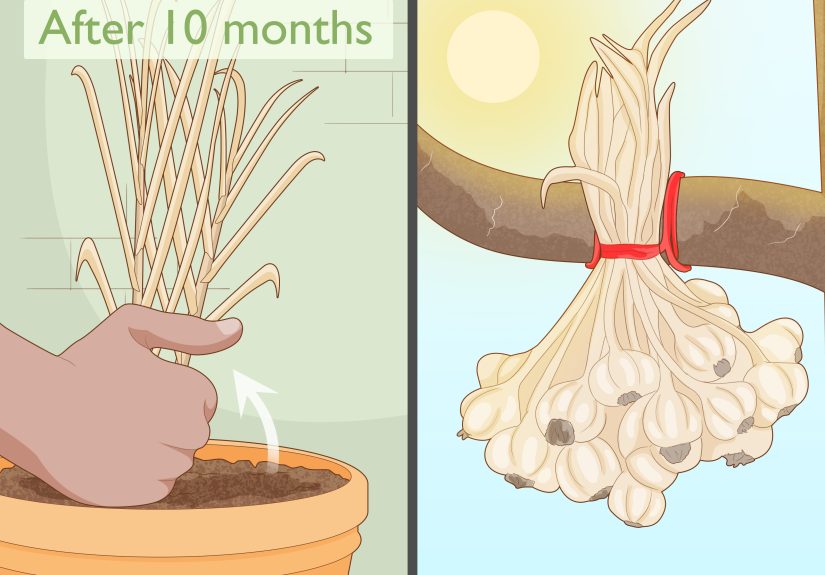
For full bulbs, harvest when the lower leaves have browned and roughly half the upper leaves are still green. Too early, and the bulbs may be small. Too late, and the wrappers can split, which hurts storage quality.
How to harvest
- Stop heavy watering as harvest approaches.
- Loosen the soil gently with your hands or a small tool.
- Lift the bulb carefully rather than yanking the stem like you are starting a lawn mower.
- Brush off excess soil, but do not wash the bulbs right away.
If you are only growing garlic greens, harvest whenever the tops are big enough to use.
How to Cure and Store Garlic
Curing is what turns freshly harvested garlic into garlic that stores well instead of garlic that quietly gives up in a corner.
Keep the leaves and roots attached after harvest. Lay or hang the plants in a dry, shaded, well-ventilated place for about 10 to 14 days, or until the skins are papery and the neck tightens. After curing, trim the roots and tops, then store the bulbs in a cool, dry place with airflow.
Do not store garlic in a sealed plastic bag. That is less “smart storage” and more “science experiment.”
Common Problems When Growing Garlic Indoors
Problem: Thin, floppy growth
Cause: Not enough light.
Fix: Move the pot to brighter light or use a grow light.
Problem: Tiny bulbs
Cause: Crowded cloves, weak light, lack of chill, or harvesting too early.
Fix: Give each clove more room, improve light, and make sure the garlic gets a proper cold period before bulbing.
Problem: Rotting cloves
Cause: Poor drainage or overwatering.
Fix: Use a pot with drainage holes and let the soil stay moist, not soggy.
Problem: Great greens, no real bulbs
Cause: Garlic behaved like a leafy houseplant because conditions favored top growth but not bulb formation.
Fix: Increase light, respect the chill requirement, and choose seed garlic suited for bulb production.
Indoor Garlic Growing Tips That Actually Help
- Plant the biggest cloves for the best chance at large bulbs.
- Do not crowd the pot just because you are feeling optimistic.
- Use a grow light if your winter window is more decorative than productive.
- Start with garlic greens if you want quick success.
- Grow hardneck if you want scapes; grow softneck if you want longer storage.
- Be patient. Garlic is not a microwavable crop.
How Long Does Garlic Take to Grow Indoors?
Garlic greens can be ready in a matter of weeks. Full bulbs take much longer, often several months. This is not a fast crop, but it is satisfying. There is something wonderfully old-fashioned about planting one clove and waiting while it quietly turns into a whole new bulb.
Experience: What Growing Garlic Indoors in a Pot Really Feels Like
The first time I grew garlic indoors, I expected magic. I planted a few cloves in a pot, set them near a window, watered them faithfully, and basically waited for a tiny Italian restaurant to emerge from the soil. What I got first was a lesson in expectations. The greens came up quickly and looked fantastic. They were upright, cheerful, and suspiciously confident for something I had almost forgotten to label.
Then came the second lesson: garlic will absolutely remind you that “indoors” is not the same thing as “ideal.” The plants nearest the brightest part of the window grew sturdier. The ones farther from the light leaned dramatically, as if auditioning for a role as exhausted Victorian fainting victims. Once I added stronger light and rotated the pot regularly, the difference was obvious. The growth became more even, and the plants stopped looking like they were trying to crawl toward the sun one blade at a time.
The biggest surprise was how different the process felt depending on the harvest goal. Growing garlic greens felt easy, almost generous. Snip a little, cook a little, admire yourself a little. Growing full bulbs, though, felt more like a slow negotiation. The garlic wanted room, patience, bright light, steady moisture, and a believable version of winter before it agreed to make real bulbs. It was not impossible, but it definitely was not a “set it and forget it” project.
I also learned that container size matters more than beginners think. Small pots made cute plants but underwhelming bulbs. Larger pots gave the roots room to do their thing, and the harvest improved. Not overnight, of course, because garlic enjoys taking its sweet time. But eventually the plants looked stockier, the bulbs developed better, and the whole project started to feel less like an experiment and more like actual gardening.
Watering turned out to be another balancing act. Too little, and the leaves lost vigor. Too much, and the soil stayed soggy in a way garlic clearly considered offensive. The sweet spot was consistency. Once I stopped treating the watering can like either a weapon or a decoration, the plants settled down and grew better.
Harvest day was oddly satisfying. Garlic does not leap from the soil with fireworks, but there is a quiet thrill in loosening the potting mix and finding a real bulb underground. Even when the bulbs were smaller than outdoor-grown garlic, they felt earned. Homegrown garlic has that effect. It turns you into the kind of person who casually says things like, “These came from my indoor container setup,” and then waits for the applause that may or may not arrive.
If I had to sum up the indoor garlic experience, I would say this: it is half gardening project, half character-building exercise, and fully worth doing at least once. Start simple, do not crowd the pot, give the plants more light than you think they need, and accept that garlic operates on garlic time. Once you do, the process becomes less frustrating and much more fun. And if all else fails, at least the greens are delicious.
Conclusion
If you want a practical, rewarding edible crop for indoor container gardening, garlic deserves a spot near the top of the list. It is easy to start, useful in the kitchen, and surprisingly fun to grow once you understand what it needs. A deep pot, well-drained soil, bright light, steady watering, and patience are the big ingredients. Add the right seed garlic and a proper chill period for bulb production, and you are well on your way.
For beginners, garlic greens are the quick win. For determined gardeners, full bulbs are the long game. Either way, growing garlic indoors in a pot is one of those projects that makes your home feel a little greener, your cooking a little better, and your gardening skills a little sharper.







 Close
Close