
Table of Contents >> Show >> Hide
- Why Switch Plates Matter More Than You Think
- Start With the Style Direction, Not the Craft Supplies
- The Best Ways to Decorate Your Switch Plates
- Room-by-Room Switch Plate Decorating Ideas
- A Simple Step-by-Step Method That Actually Works
- Common Mistakes to Avoid
- What Looks Best Right Now
- Final Thoughts
- Real-Life Experiences Decorating Switch Plates
There are two kinds of people in this world: the ones who notice switch plates, and the ones who think they do not notice switch plates. But the truth is, everyone sees them. They are the tiny punctuation marks on your walls. And when they are cracked, yellowed, mismatched, or still wearing that sad builder-grade plastic from 2007, they quietly drag down the whole room like a bad haircut under a great hat.
The good news is that decorating your switch plates is one of the easiest ways to make a room feel more finished, more intentional, and a lot less “the contractor picked everything in one afternoon.” It is affordable, surprisingly fun, and perfect for people who want a design win without remodeling a kitchen or selling a kidney for custom millwork.
In this guide, you will learn how to decorate your switch plates in a way that looks polished, not crafty-in-a-panic. We will cover paint, wallpaper, fabric, metals, wood tones, renter-friendly tricks, room-by-room ideas, and the common mistakes that can make your walls look worse instead of better.
Why Switch Plates Matter More Than You Think
Switch plates sit at eye level, shoulder level, and “somehow always in the photo” level. They interrupt paint colors, wallpaper patterns, tile backsplashes, and carefully chosen finishes. That means they can either blend beautifully into the room or stick out like a plastic apology.
Well-decorated switch plates help create visual continuity. In a modern room, that might mean clean screwless covers in a matte finish. In a traditional home, it could mean beaded brass, antique bronze, or a painted cover that melts into the wall color. In a playful space, it might mean patterned paper, color-blocking, or a whimsical finish that feels intentional rather than accidental.
Think of switch plates the way you think about jewelry. They are not the whole outfit, but they absolutely affect the final look.
Start With the Style Direction, Not the Craft Supplies
Before you grab a paintbrush and unleash your inner DIY raccoon, decide what role you want the switch plates to play in the room. There are three smart directions:
1. Blend In
This works well when your walls already have a strong moment, like wallpaper, dramatic paint, textured plaster, or statement tile. The goal is for the switch plate to disappear as much as possible.
2. Coordinate
This is the sweet spot for most homes. Your switch plates do not need to vanish, but they should connect to something else in the room: cabinet hardware, faucet finishes, door levers, lighting, picture frames, or wood tones.
3. Stand Out on Purpose
If the room is simple, neutral, or a little too polite, decorative switch plates can become tiny accents that add character. Think vintage brass in a plain hallway, floral decoupage in a powder room, or fun patterned covers in a kid’s bedroom.
The Best Ways to Decorate Your Switch Plates
Paint Them for a Seamless Look
Painting switch plates is the classic move, but it only looks good when it is done neatly. If your walls are painted in a rich color, matching the plate can make the whole wall look smoother and more expensive. This is especially effective with moody greens, navy blues, warm taupes, charcoal, and soft off-whites.
Use a plate removed from the wall, clean it well, lightly scuff it if needed, and apply a primer that works with the plate material. Then paint in thin coats instead of one dramatic blob of optimism. A finish that matches the wall usually looks best. If your walls are eggshell, a very glossy plate can look like it came from a different planet.
This technique works beautifully in bedrooms, dining rooms, hallways, and home offices where you want calm visual flow.
Use Wallpaper or Decoupage for Pattern
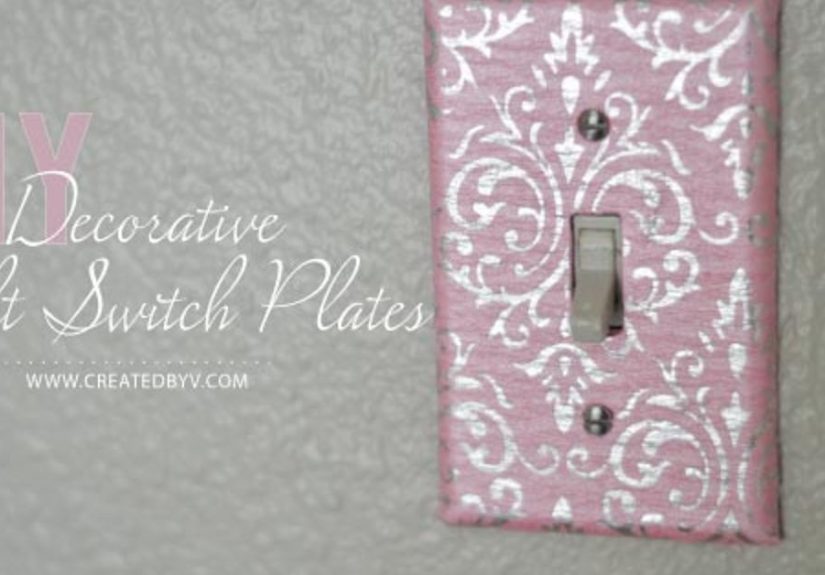
If you have leftover wallpaper scraps, wrapping a switch plate in the same pattern is one of the chicest little upgrades you can make. It helps the plate disappear into the wall while still feeling custom. This is a favorite move in powder rooms, reading nooks, laundry rooms, and anywhere else you can justify a little decorative mischief.
You can also use decorative paper, napkins with pretty motifs, vintage maps, botanical prints, or lightweight wrapping paper for a decoupage effect. The trick is to cut carefully, smooth wrinkles as you go, and keep the pattern placement deliberate. A crooked rose or sideways stripe will haunt you every time you turn on the light.
Floral paper works well in cottage and traditional interiors. Geometric prints suit mid-century and contemporary spaces. Grasscloth-look patterns can make an ordinary switch plate feel much more elevated.
Try Fabric for Soft Texture
Fabric-covered switch plates can look charming, especially in bedrooms, nurseries, craft rooms, and feminine or vintage-inspired spaces. Linen, ticking stripe, small florals, and block prints work especially well. The finished look is softer than paint and warmer than plastic.
Choose thin fabric so the edges do not look bulky, and wrap it cleanly so the face of the cover stays smooth. This method is best when the style of the room already embraces softness and layered texture. In an ultra-modern kitchen full of sharp lines and polished surfaces, floral chintz on the switch plate may look like it wandered in from another zip code.
Upgrade to Decorative Metal Plates
Sometimes the best DIY decision is knowing when not to DIY. If you want something timeless, polished, and durable, buy decorative switch plates in metal finishes that coordinate with the room. Brass, antique bronze, satin nickel, black, pewter, and iron-style finishes can instantly make a home look more intentional.
This is especially smart in kitchens, bathrooms, entryways, and older homes where a more architectural look feels right. A beaded or cast-metal plate can add quiet charm. A smooth screwless plate can make a room feel sleeker. Either way, the plate starts looking like a design choice instead of an afterthought.
Bring in Wood or Faux Wood Tones
If your room has warm wood furniture, exposed beams, cane accents, or earthy styling, wood-look switch plates can tie everything together. They are particularly good in studies, cabins, mudrooms, rustic spaces, and mid-century-inspired rooms.
Real wood versions feel richer, while faux wood can be more budget-friendly and easier to maintain. Keep the tone in the same family as your furniture or trim. If your room is full of white oak and you install a red-toned cherry-looking plate, the clash will be tiny but mighty.
Use the Frame Trick for Instant Personality
One of the most charming ideas is to visually “frame” a plain switch plate. This can be done with a tiny decorative frame around it, a painted border, or a trim detail that makes the switch feel like part of the wall styling. In eclectic, vintage, and maximalist interiors, this can be downright adorable.
It works best when the detail is proportionate. You want “clever design moment,” not “my light switch is cosplaying as museum art.”
Go Playful in Kids’ Rooms and Creative Spaces
Switch plates are perfect mini canvases in children’s rooms, playrooms, and hobby spaces. You can use stars, stripes, polka dots, comic-book-style graphics, chalkboard paint, rainbow colors, or themes that echo the room’s decor. A space-themed room might get navy plates with tiny constellations. A craft room might get color-blocked covers that match storage bins and supplies.
Keep the execution neat. Cute does not have to mean chaotic.
Make It Renter-Friendly
If you rent, do not assume you are doomed to live with sad beige switch plates forever. Washi tape, removable vinyl, peel-and-stick wallpaper scraps, or replacement covers you can swap back later are all smart options. Keep the original plates in a labeled bag so you can reinstall them before moving out.
This is one of the cheapest high-impact rental decor ideas because it changes the details everyone touches every day. And yes, those details count.
Room-by-Room Switch Plate Decorating Ideas
Kitchen
Coordinate switch plates with cabinet hardware, faucet finishes, or backsplash tones. In a modern kitchen, black or screwless plates can look crisp. In a farmhouse kitchen, aged brass or softly painted covers can feel warmer. If your backsplash is bold, choose plates that blend rather than compete.
Bathroom
Bathrooms are great places for a slightly more dressed-up switch plate because the square footage is small and the details matter more. Think polished nickel, warm brass, or wallpaper-wrapped plates that match a powder room wall treatment. Just keep the finish appropriate for moisture and easy cleaning.
Living Room
In the living room, switch plates should support the overall style rather than shout for attention. Painted-to-match covers, subtle metal finishes, and wood tones work especially well. If you are layering vintage decor, decorative cast-metal plates can add charm without much effort.
Bedroom
Bedrooms benefit from quieter choices. Fabric, paint-matched plates, and soft matte finishes feel restful. If the room has wallpaper, matching the plates can make the walls look more custom and less interrupted.
Entryway and Hallway
These are small but high-visibility spots. Decorative plates can make an ordinary passage feel finished. This is a great place to splurge a little on beautiful hardware, because a few upgraded covers can set the tone for the entire home.
A Simple Step-by-Step Method That Actually Works
Step 1: Remove the Plate Carefully
Take the cover off before decorating it. This helps you work more neatly and protects the wall. Keep the screws somewhere safe, because hunting for one tiny screw on the floor is a humbling experience.
Step 2: Clean and Prep
Dust, grease, and mystery grime will ruin paint and adhesives. Wipe the plate clean and let it dry fully.
Step 3: Decorate With Intention
Paint, paper, fabric, or apply your chosen finish carefully. Trim edges neatly. Keep openings clean. Do not let decorative materials interfere with the fit or the switch operation.
Step 4: Let It Cure Completely
This is where impatience ruins perfectly good projects. If paint or adhesive is still tacky, fingerprints, dents, and shifting materials can undo your hard work.
Step 5: Reinstall and Evaluate
Put it back on the wall, tighten gently, and step back. Does it suit the room? Does it match the scale, style, and finish of the nearby elements? If not, tweak now before you decorate twelve more and regret your life choices.
Common Mistakes to Avoid
Too Much Decoration
Not every switch plate needs to be the star. If your room already has strong wallpaper, bold art, or busy tile, choose subtle covers.
Mismatched Finishes
If your room mixes metals, do it intentionally. A random shiny chrome plate in a room full of warm brass and matte black hardware looks accidental, not collected.
Ignoring Scale and Plate Type
Double switches, dimmers, GFCI outlets, rocker switches, and combination plates all need the correct cover. Measure and buy the right type. Decorative confidence is not a substitute for fit.
Messy Edges and Visible Bumps
Most DIY switch plate disasters come down to impatience. Ragged cuts, thick fabric, lumpy glue, and drippy paint can turn a clever idea into a very tiny tragedy.
Forgetting Safety and Function
Do not decorate in a way that blocks screws, interferes with switches, traps moisture, or compromises how the plate sits against the wall. Pretty is nice. Functional pretty is better.
What Looks Best Right Now
If you want your switch plates to look current, a few design directions are especially strong: screwless modern covers, aged brass and bronze finishes, paint-matched plates, wood tones, and subtle vintage-inspired detailing. In other words, the best switch plate decor is not usually louder. It is smarter.
The most beautiful rooms often get the small details right. And switch plates are one of those details that quietly separate “nicely decorated” from “why does this room feel so finished?”
Final Thoughts
Decorating your switch plates is a small project with an outsized payoff. It helps a room feel cohesive, cared for, and a little more custom. You can go sleek, playful, vintage, colorful, natural, or nearly invisible. The real goal is not to make every switch plate dramatic. It is to make them belong.
So the next time you are refreshing a room, do not stop at the paint, pillows, wallpaper, or hardware. Look at the wall plates too. They may be tiny, but they are mighty. And frankly, they are tired of being the least dressed part of the room.
Real-Life Experiences Decorating Switch Plates
The first time I paid attention to switch plates, I was helping refresh a small guest bedroom that had nice paint, decent curtains, and a perfectly respectable thrifted lamp. But the room still looked unfinished. It took a while to figure out why. Then there it was: a bright white plastic switch plate on a warm greige wall, sitting next to an antique brass lamp like it had shown up to the wrong party. We painted the cover to match the wall, and the room instantly looked calmer. Not bigger. Not fancier. Just more intentional. It was the decorating equivalent of finally steaming a shirt.
In another room, a laundry room that needed all the charm it could get, leftover wallpaper saved the day. The walls had a cheerful botanical print, but the standard plates chopped the pattern into awkward little interruptions. Covering the switch plates with matching paper made the wall treatment feel custom. It was one of those tiny projects that delivered a wildly smug level of satisfaction. Suddenly, even folding socks felt slightly more glamorous. Slightly.
I have also seen what not to do. A friend once tried to cover every switch plate in thick fabric with too much glue, and the results were, let us say, textural. The plates bulged. The corners frayed. One switch felt like it needed emotional support before turning on the hallway light. The idea was good; the execution was not. That experience taught us both that thin materials, sharp trimming, and patience matter more than enthusiasm alone.
One of the smartest makeovers happened in a rental apartment with strict rules and very little personality. The tenant swapped out the basic covers for inexpensive black screwless plates and stored the originals in a kitchen drawer. That was it. No paint. No wallpaper. No grand DIY montage. But the apartment suddenly felt more modern and more edited, especially against crisp white walls. It proved that decorating switch plates does not have to mean crafting. Sometimes it just means choosing a better-looking version of a thing you already need.
The most charming switch plate project I have seen was in a child’s reading nook. The room had stars painted on the ceiling, soft blue walls, and built-in shelves. Instead of buying novelty decor everywhere, the homeowner added a simple navy switch plate with tiny hand-painted constellations. It was subtle, whimsical, and far more memorable than another themed pillow. That project made a good point: when small details repeat the room’s story, the whole space feels more thoughtful.
Over time, the biggest lesson has been this: switch plates work best when they support the room instead of demanding applause. The pretty ones are usually the ones that make sense with the finishes nearby, respect the mood of the space, and look like they were chosen on purpose. Once you start noticing them, you cannot stop. Which is wonderful for your walls and mildly dangerous for your weekend project list.






 Close
Close