
Table of Contents >> Show >> Hide
- Why Deadheading Works (And When It Doesn’t)
- Tools for Deadheading (Yes, You Can Use Your Fingers)
- The Golden Rule: Where to Cut When Deadheading
- Step-by-Step: How to Deadhead Flowers Like You Mean It
- Deadheading Cheat Sheet: What to Do for Common “Longest Bloom” Favorites
- Plants You Shouldn’t Deadhead (Or Should Deadhead Only Sometimes)
- Timing Tips: How Often Should You Deadhead?
- Common Deadheading Mistakes (So You Don’t Accidentally Snip Tomorrow)
- Pro-Level Tricks for Longer Bloom (Without Living in Your Garden)
- of Real-Life Deadheading Experiences (So It Feels Less Like Homework)
- Conclusion: Deadhead Smart, Bloom Longer
Deadheading sounds like a gardening hobby for vampires, but it’s actually one of the easiest ways to keep your
garden blooming longer, looking cleaner, and (bonus) making you feel like a responsible plant parent.
In plain English: deadheading flowers means removing spent blooms so the plant stops wasting energy
on making seeds and keeps pushing out new buds instead.
Not every plant needs it, and not every cut is the same. But once you learn a few simple “where to cut” rules,
you’ll be able to keep the longest blooming plants in your yard flowering like they’ve got a tiny personal trainer
yelling, “ONE MORE BLOOM!”
Why Deadheading Works (And When It Doesn’t)
Many flowering plantsespecially annualsshift into seed-making mode once blooms fade. When you remove those
fading flowers (including the little base where seeds form), the plant often redirects that effort into more
flowers. That’s the core reason deadheading can extend bloom time.
But here’s the twist: some plants don’t rebloom no matter how politely you snip. For those, deadheading is mostly
about tidiness, disease prevention, or preventing self-seedingnot getting a second round of flowers.
Deadheading is most effective when:
- The plant is a repeat bloomer (many annuals, many long-season perennials, most modern roses, dahlias).
- You remove the whole spent flower structure, not just brown petals.
- You do it consistentlylittle and often beats one giant “garden haircut” every three weeks.
Deadheading is less useful when:
- The plant blooms once per season (many spring-flowering perennials).
- You want seed heads for birds, winter interest, or seed saving.
- The plant is self-cleaning (some modern petunias, calibrachoa, angelonia, and other varieties that drop spent blooms on their own).
Tools for Deadheading (Yes, You Can Use Your Fingers)
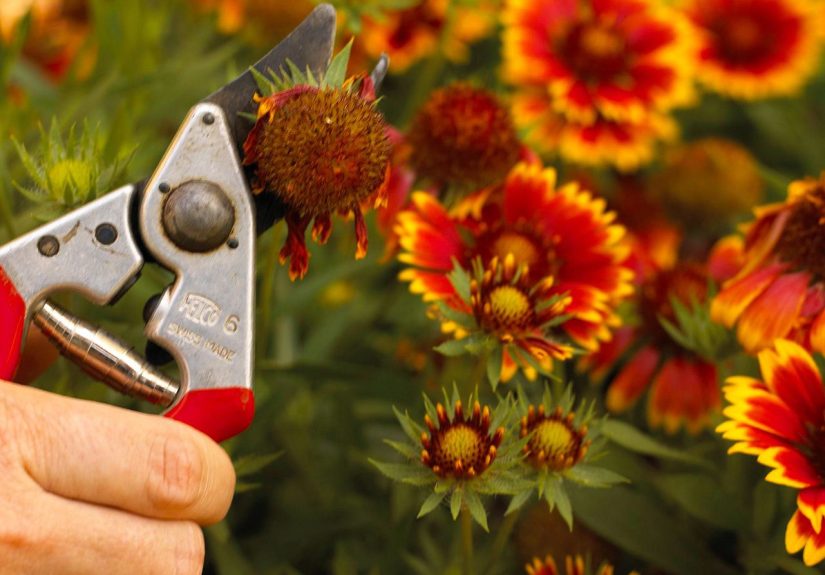
For soft-stemmed flowers, your thumb and forefinger work great. For tougher stems or woody plants, use clean,
sharp snips or hand pruners. Clean tools matter more than people thinkespecially with roses or anything prone to
disease. If you’re bouncing between plants, a quick wipe with rubbing alcohol keeps you from spreading problems.
Deadheading toolkit
- Fingers: best for pinching soft blooms (petunias, pansies, small annuals).
- Snips/scissors: great for thin stems and quick precision.
- Hand pruners: for thicker stems (roses, larger perennials, woody shrubs).
- Bucket or bag: for deadheads (compost if disease-free).
The Golden Rule: Where to Cut When Deadheading
If you remember one thing, remember this:
Cut the spent bloom off just above the next healthy set of leaves or a visible bud/node.
That’s where new growth and new flowers are most likely to form.
Cutting too high leaves a sad little “stick” poking out of your plant like it’s waving a tiny white flag.
Cutting too low can remove buds or reduce foliage that the plant needs to power the next bloom cycle.
Three common deadheading methods
-
Pinch (best for soft annuals):
Pinch the spent flower and its base off between your fingers. Make sure you remove the whole flower baseseeds form there. -
Snip (best for most plants):
Follow the flower stem down to the first strong leaf set or bud and snip just above it. -
Shear (best for mass bloomers):
For plants with lots of tiny flowers (like alyssum or some salvias), you can shear lightly to remove faded blooms in bulk
but avoid chopping off developing buds.
Step-by-Step: How to Deadhead Flowers Like You Mean It
1) Hunt for “spent” signals
Look for blooms that are browning, drooping, losing color, or dropping petals. Don’t wait until your plant looks like it
survived a tiny floral apocalypsedeadheading is easiest when you do it early and often.
2) Check below the bloom for new buds
Many plants push side buds or secondary blooms just below the fading flower. If you cut too far down, you’ll remove tomorrow’s flowers.
A quick glance can save you weeks of regret.
3) Make the cut (or pinch)
Snip cleanly. Don’t tear stems if you can help itripped tissue heals slower and can invite disease.
For single flowers on a leafless stalk (like many daylilies), remove the whole stalk once it’s finished flowering.
4) Repeat regularly
A fast weekly walk-through keeps the job small. High-bloom annuals (petunias, zinnias, marigolds, dahlias) often reward you
with noticeably better color when you stay on top of it.
Deadheading Cheat Sheet: What to Do for Common “Longest Bloom” Favorites
Use this as your quick “What do I snip?” reference. When in doubt, follow the bloom stem down to the next healthy leaf or bud and cut there.
| Plant | Best Deadheading Method | Where to Cut | Pro Tip |
|---|---|---|---|
| Petunias | Pinch or snip | Remove the whole flower + base | Some types are “self-cleaning,” but traditional petunias bloom heavier with frequent deadheading. |
| Zinnias | Snip | Cut above a leaf node (set of leaves) | Regular snipping also gives you bouquetsclassic “cut and come again” energy. |
| Marigolds | Pinch or snip | Just above the next leaf set | Don’t just pull petalsremove the whole spent head to reduce seed set. |
| Dahlias | Snip | Remove faded blooms down to a branching point | Learn the difference between a spent flower and a new budbuds are firm and round, dead blooms are papery. |
| Salvia (many types) | Snip or light shear | Cut the spent spike back to a fresh side shoot | Shear lightly after a big flush to trigger another wave. |
| Coneflower (Echinacea) | Selective snip | Cut a few spent blooms above leaves, leave some seedheads | Want birds in winter? Leave late-season seedheads. Want more blooms? Deadhead earlier in the season. |
| Black-eyed Susan (Rudbeckia) | Snip | Above a leaf node or side bud | Same strategy as coneflowerbalance reblooming vs. seedheads for birds. |
| Daylilies | Two-step removal | Pluck spent flowers daily; cut entire scape when finished | Once the stalk has no buds left, cut it near the base for a cleaner look. |
| Peonies | Tidy snip | Remove spent bloom; cut to a strong leaf | Deadheading won’t rebloom this year, but it helps plant strength and keeps things neat. |
| Roses (repeat bloomers) | Pruner cut | Cut above an outward-facing leaf with 5 leaflets | Early season: lighter cuts on young plants; late season: consider leaving hips for fall/winter interest. |
| Bigleaf hydrangea (many varieties) | Minimal deadheading | Snip just below the flower head, above the first healthy buds | Don’t cut into old wood or you may remove next year’s buds. Deadheading is mostly for looks, not reblooming. |
| Mums | Snip | Remove fading flowers as they go | Start earlyregular deadheading keeps mums from looking “tired” halfway through the show. |
Plants You Shouldn’t Deadhead (Or Should Deadhead Only Sometimes)
Deadheading isn’t a universal law of gardening. Sometimes you want seed heads for wildlife food, winter texture,
or self-seeding next year. And sometimes the plant is already doing the cleanup work for you.
Skip or limit deadheading when you want:
- Self-seeding (columbine, foxglove, love-in-a-mist, and other “surprise me next year” plants).
- Bird food + winter interest (coneflowers, black-eyed Susans, sunflowers, Joe-Pye weed, bee balmseedheads can be valuable later).
- Seed pods as ornament (some plants have gorgeous pods or heads you’ll miss if you snip too early).
- Self-cleaning annuals (some calibrachoa and certain petunia series, plus other varieties bred to drop spent blooms).
The “best” approach can even change by season: deadhead early to keep flowers coming, then stop deadheading later so
plants can set seed or form hips/heads for fall and winter.
Timing Tips: How Often Should You Deadhead?
For maximum blooms
- High-output annuals: check every few days (petunias and dahlias are famously happier when you stay consistent).
- Repeat-blooming perennials: weekly is usually enough (salvia, coreopsis, rudbeckia).
- Roses: remove spent blooms promptly during the main season for faster repeat flowering.
For low effort + good results
Aim for a “garden lap” once a week: coffee in one hand, snips in the other, and a playlist that makes you feel like
the main character in a very wholesome movie. Ten minutes of deadheading beats an hour of trying to fix a plant that
already decided it’s done for the year.
Common Deadheading Mistakes (So You Don’t Accidentally Snip Tomorrow)
1) Removing petals but leaving the seed-forming base
If your goal is more blooms, you need to remove the flower’s basewhere seeds developnot just the “pretty part”
that already fell off in a light breeze.
2) Cutting below active buds
On plants like salvia, roses, and many perennials, buds can form along the stem. Always check before you cut.
3) Going too hard on young plants
Especially with roses and newer transplants, you want enough leaves left to power growth. Deadheading is helpful,
but defoliating your plant like it owes you money is… less helpful.
4) Deadheading everything all season without a plan
If you love birds, seed saving, or winter interest, choose a “late-season switch.” In the final stretch of the season,
let some flowers mature into seedheads or hips. Your future self (and the local finches) will thank you.
Pro-Level Tricks for Longer Bloom (Without Living in Your Garden)
Use deadheading as a health check
While you’re in there, look for yellowing leaves, pests, mildew, or stems rubbing together. Small problems are
easier to solve when you spot them early.
Pair deadheading with light feeding and steady watering
Deadheading can encourage more flowersbut plants still need energy. For heavy bloomers in containers, consistent
watering and appropriate fertilizer can make deadheading even more effective. (Translation: snipping is great,
but snipping plus basic care is where the magic happens.)
Know when to shear vs. snip
Snipping is precise and preserves buds. Shearing is faster for mass bloomers after a big flush. If you shear,
keep it lightthink “trim,” not “lawnmower impression.”
of Real-Life Deadheading Experiences (So It Feels Less Like Homework)
The first “deadheading experience” most gardeners have is the petunia realization: you bought a basket that looked
like a fireworks show in April, and by June it looks like a tangle of stems wearing yesterday’s confetti. The fix is
surprisingly satisfying. Once you start pinching off the spent flowers (and that sticky little base), the plant
responds fastsometimes within days. The chore turns into a weirdly relaxing ritual: pinch, toss, admire, repeat.
And then you notice something even betterdeadheading forces you to look closely, so you catch the moment the plant
starts getting leggy and needs a light cutback. That’s when your hanging basket goes from “sad spaghetti” back to
“wow, who is your florist?”
Zinnias teach a different lesson: deadheading isn’t just maintenanceit’s free flowers for your kitchen counter.
Many gardeners start snipping faded zinnias and realize the plant gets bushier, throws more side stems, and blooms
harder. It’s the “cut and come again” effect in action. The best part is psychological: you stop feeling guilty
for cutting blooms, because you’re not “stealing” flowersyou’re encouraging the plant to produce more. Suddenly,
making a bouquet feels like a gardening strategy, not a crime.
Then there’s the coneflower dilemmayour inner neat freak versus your inner wildlife enthusiast. Early in the season,
you deadhead a few to keep color coming. Later, you start leaving seedheads because you’ve learned the winter garden
can be beautiful, and birds genuinely use those seeds when food is scarce. This is where deadheading becomes less of
a rule and more of a choice. You can design your garden’s “ending” the same way you design its beginning.
Roses often feel like the “advanced class,” mostly because people worry about cutting in the wrong place. The
experience most gardeners report is that once you learn a simple target (a healthy outward-facing leaf set), the fear
melts away. Deadheading roses becomes a rhythm: remove the spent bloom, shape lightly, step back, and the plant looks
instantly refreshed. It’s one of the few garden tasks where the before-and-after is dramatic in under five minutes.
Finally, hydrangeas teach patience. Many folks deadhead expecting a second bloom… and then get nothing but a tidy
shrub. That’s not failureit’s just the plant’s style. Deadheading hydrangeas is usually about appearance and plant
health, not reblooming. The “experience” is learning which plants respond with more flowers and which ones respond
with a polite shrug. Once you accept that, deadheading stops being a desperate attempt to force blooms and becomes a
practical tool in your garden toolkitright next to the gloves you keep losing.
Conclusion: Deadhead Smart, Bloom Longer
If you want the longest blooming plants, deadheading is one of the highest-impact, lowest-cost moves you can make.
Cut (or pinch) spent blooms before they turn into seeds, aim your cut above healthy leaves or buds, and tailor your
approach to the plant. Deadhead aggressively on repeat bloomers like petunias, zinnias, dahlias, salvias, and many
roses. Ease up when you want seedheads for birds or when the plant doesn’t rebloom anyway. Your garden will stay
brighter longerand you’ll get to feel like a floral wizard with scissors.






 Close
Close