
Table of Contents >> Show >> Hide
- Quick Reality Check (So You Don’t Spend 20 Minutes Yelling at Your Phone)
- Before You Start
- How to Create a “Google Play Music” Playlist on Android (14 Steps)
- Extra Tips to Make Your Playlist Feel Like It Was Curated by a Functional Adult
- Troubleshooting: When the Playlist Button Suddenly Acts Like It Doesn’t Know You
- Conclusion
- Bonus: of Real-Life Playlist Experience (Because Playlists Are Emotional Infrastructure)
Remember Google Play Music? The app that felt like it understood the assignment: play music, let you build playlists, and stay out of your way.
Then it packed its bags and left the group chat. If you’re here because you want to make a “Google Play Music playlist” on Android, you’re not wrong
you’re just time-traveling a little. The good news: the playlist-making idea didn’t die. It moved.
Today, the closest “official continuation” of Google Play Music playlists lives inside YouTube Music.
So this guide keeps the classic goalbuild a playlist you actually want to listen toand updates the steps for the app you can use in 2026.
Same vibe, different logo, and yes, you still get to name your playlist something unhinged like “Songs to Dramatically Stare Out a Window To”.
Quick Reality Check (So You Don’t Spend 20 Minutes Yelling at Your Phone)
Google Play Music is discontinued, so you can’t create new playlists inside the old Play Music app anymore.
If a tutorial tells you to tap an orange headphone icon and “Music Library,” it’s basically giving you directions to a mall that turned into luxury condos.
For Android users now, playlist creation happens in YouTube Music (and your playlists can also appear in the main YouTube app’s Library).
Before You Start
- Install or update YouTube Music from the Google Play Store.
- Sign in with the Google account you want the playlists tied to.
- Decide your playlist mission: mood, workout tempo, road trip, “focus,” or “I need motivation to fold laundry.”
-
Know the difference between a queue and a playlist:
a queue is temporary (tonight’s chaos), a playlist is saved (tomorrow’s slightly more organized chaos).
How to Create a “Google Play Music” Playlist on Android (14 Steps)
These steps are written for the YouTube Music app on Android, because that’s where Google’s current playlist tools live.
The flow should feel familiar if you used Google Play Music: pick a song, hit a menu, save it to a playlist, and build from there.
-
Open YouTube Music on your Android phone.
Make sure you’re in YouTube Music (music note icon), not regular YouTube (play button icon). -
Confirm you’re signed in to the right Google account.
If you have multiple accounts, double-check nowotherwise you’ll create a masterpiece playlist on an account you never use. -
Tap Search and find the first song for your playlist.
Example: You’re building a “Gym Warm-Up” playlist. Search for a track you know gets you moving without making you sprint into traffic. -
Start playing the song.
You can also do this from an album page, artist page, or search resultsplaying it just makes the next step easier to find. -
Tap the More menu (three dots).
You’ll see it near the song, in the “Now Playing” view, or next to tracks in lists. -
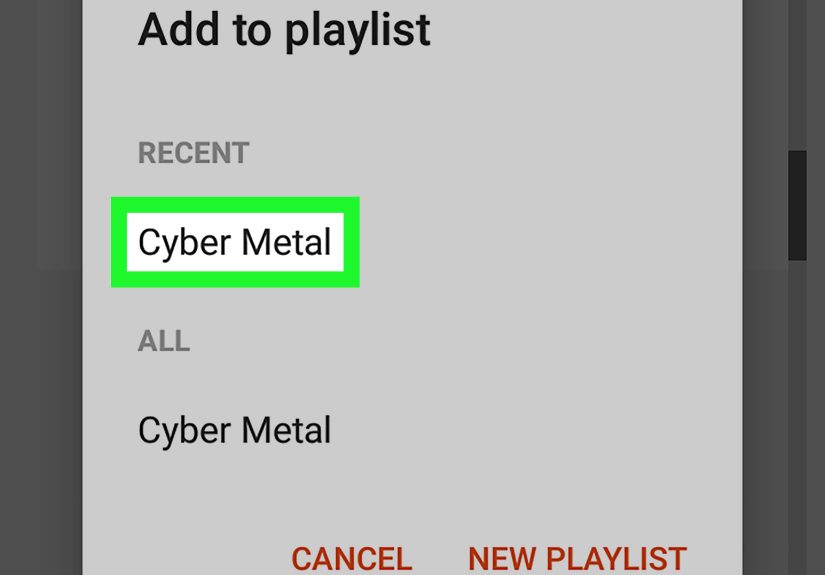
Select Save to playlist.
This is the modern version of “Add to playlist.” Same concept, less nostalgia. -
Tap New playlist.
If you already have playlists, you’ll also see them herebut we’re starting fresh. -
Name your playlist like you mean it.
Go descriptive (“Chill Hip-Hop for Work”) or chaotic (“Music for Pretending I’m in a Movie Montage”).
Clear names help later when you have 47 playlists and all of them are called “Vibes.” -
Choose a privacy setting: Private, Unlisted, or Public.
- Private: only you can see it.
- Unlisted: people with the link can see it (good for sharing without broadcasting).
- Public: searchable and visible (brave behavior).
-
(Optional but smart) Add a description.
This is underrated. A short note like “60–90 BPM for late-night reading” helps you remember what Past You intended. -
Tap Create (or the confirmation button) to finish building the playlist.
Congratsyour playlist now exists in the world, quietly judging your music taste. -
Add more songs using the same “Save to playlist” move.
Find another track → tap the three dots → Save to playlist → select your new playlist.
Repeat until your playlist feels completeor until you get distracted and start making a second playlist by accident. -
Edit your playlist (reorder, remove, add from inside the playlist).
Go to Library → open the playlist → use Edit to reorder songs, change the title/description, or adjust privacy.
Remove tracks that don’t fit anymore (your playlist is not a museum; it can evolve). -
Share itor keep it as your private little masterpiece.
Tap Share to send a link, or invite collaborators if you want friends to add songs.
Warning: collaboration can be magical, or it can turn your indie playlist into a meme soundtrack. Choose wisely.
Extra Tips to Make Your Playlist Feel Like It Was Curated by a Functional Adult
1) Build with “chapters,” not random piles
One easy approach: organize your playlist like a story.
Start with a few easy-entry tracks (the “hook”), build energy (the “middle”), and end with something that doesn’t feel like a door slamming.
Even if you shuffle, this helps the playlist “feel” consistent.
2) Use privacy settings strategically
If you share playlists with coworkers, keep them unlisted unless your professional brand is “publicly emotional over acoustic covers.”
If you’re making playlists for events (party, road trip, wedding prep), unlisted links are the sweet spot.
3) Don’t confuse “Radio” with “Playlist”
YouTube Music can spin up mixes and radios based on what you’re playing. That’s great for discovery,
but if you want a stable set of tracks you can come back to, make a real playlist and intentionally save songs into it.
4) Consider “AI Playlist” features as a starting point (not the final product)
If your app shows an AI playlist creation option, treat it like a helpful intern: it can draft a vibe quickly,
but you should still review, remove weird picks, and reorder. Your ears are the editor-in-chief.
Troubleshooting: When the Playlist Button Suddenly Acts Like It Doesn’t Know You
-
“Save to playlist” is missing or greyed out:
Try updating the app, signing out/in, or checking if the content has restrictions (some content can’t be saved). -
Playlist doesn’t appear:
Make sure you’re on the same Google account across YouTube Music and YouTube, and refresh the Library tab. -
Friends can’t add songs:
Collaboration usually requires the playlist to be shareable (unlisted/public) and invitations to be enabled. -
Too many playlists named “Vibes”:
Rename them with a format: Vibes Morning, Vibes Gym, Vibes Don’t Talk to Me. Instant clarity.
Conclusion
If you came here looking for Google Play Music, you were really looking for the playlist habitthat satisfying feeling of building a soundtrack
that fits your life. While Google Play Music itself is gone, YouTube Music still lets you create, edit, share, and obsessively tweak playlists on Android.
Follow the 14 steps above, and you’ll have a playlist that’s easy to grow over timeand easy to find later when you need the exact mood you created at 1:17 a.m.
Bonus: of Real-Life Playlist Experience (Because Playlists Are Emotional Infrastructure)
The first time I tried to rebuild my “Google Play Music era” playlists in YouTube Music, I did what any reasonable person would do: I panic-added songs
like I was packing a suitcase five minutes before leaving for the airport. The result was a playlist with no identityhalf workout anthems, half soft
background stuff, and one completely random track that made me wonder if my phone had been possessed by a teenager.
That’s when I realized the best playlists don’t start with “What songs do I like?” They start with “What moment am I building for?”
A commute playlist isn’t the same as a deep-work playlist. A “cleaning the house” playlist has to survive the emotional journey from
“I can do this” to “Why do I own seven identical charging cables?” Once you pick the moment, your choices get easierand you stop treating your playlist
like a junk drawer.
A tiny trick that changed everything: I started writing short playlist descriptions. Nothing fancyjust one sentence.
“Mid-tempo tracks for focus, no big drops.” Or “Upbeat pop for errands.” That description becomes a filter for future you.
If a song doesn’t match the description, it doesn’t belong. (Yes, even if you love it. Put it in another playlist. That’s how playlist ecosystems happen.)
I also learned to embrace the “first five songs” rule. If the first five tracks make sense together, the rest is easier.
Those first tracks act like guardrails: they define tempo, mood, and energy. For example, if you want a calm morning playlist,
don’t start with something that sounds like a stadium pyrotechnics test. You’ll spend the rest of the playlist trying to explain that opening decision.
Collaboration is another adventure. In theory, collaborative playlists are a beautiful democracy where everyone contributes their best picks.
In practice, it’s like inviting your friends to decorate your living room. One person adds tasteful neutrals, another adds a neon sign that says
“LIVE LAUGH LOVE (IRONICALLY),” and someone else adds a seven-minute prog-rock track that begins with whale sounds. If you do collaborative playlists,
set a theme, set expectations, and accept that a little chaos is the price of friendship.
Finally: don’t be afraid to prune. The best playlists get edited. If you haven’t skipped a track in months, it probably belongs.
If you skip it three times in a week, it’s on thin ice. Playlists are living things. They should grow, shed, and occasionally reinvent themselves.
That’s the part Google Play Music got rightand it’s still possible on Android today, even if the app name changed.





 Close
Close