
Table of Contents >> Show >> Hide
- First, Understand What Your Parents Are Really Worried About
- Build Your Case Before You Say a Single Word
- Have the Conversation Like Someone Who Wants Trust
- Answer the Questions Parents Will Definitely Ask
- What Actually Makes Parents Say Yes
- Mistakes That Kill Your Chances Fast
- If Your Parents Still Say No
- Experience-Based Lessons: What Teens and Parents Usually Learn the Hard Way
- Conclusion
Wanting to go somewhere far away without your parents is one of those classic growing-up moments. One day you are asking where the snacks are, and the next day you are pitching a trip three states away like a tiny project manager with a backpack and strong opinions. The problem is that your parents are not just hearing, “I want to travel.” They are hearing, “Please allow me to wander beyond your line of sight while the universe does whatever the universe does.”
So yes, they may panic a little.
If you want a real chance at getting a yes, the goal is not to out-argue your parents, guilt-trip them, or wear them down like a dripping faucet. The goal is to show that you are responsible enough to handle more independence. That means thinking like a person who deserves trust, not like a person trying to sneak past the family firewall.
This guide will show you how to make your case, answer the questions parents actually care about, avoid the mistakes that sink your chances, and respond maturely even if the answer is not yes right away. Because when it comes to convincing your parents to let you travel without them, the biggest flex is not rebellion. It is preparation.
First, Understand What Your Parents Are Really Worried About
Before you ask for permission, you need to understand the emotional math happening in your parents’ heads. They are not only judging the destination. They are judging risk, timing, maturity, the people involved, how emergencies would be handled, how fast they could reach you if something went wrong, and whether this trip sounds organized or sounds like “We’ll figure it out” wearing sunglasses.
Most parents worry about the same things:
- Who you are going with and whether those people are responsible
- How you will get there and back
- Where you will stay
- How much money you need and who controls it
- What happens if plans change
- How often you will check in
- Whether this trip fits your age, experience, and judgment
If you do not answer those questions, your parents will answer them for you. Usually with the word “no.”
Build Your Case Before You Say a Single Word
If your current strategy is “ask first, invent details later,” retire it immediately. A mature request starts before the conversation does.
Be Clear About Why You Want to Go
“Because it would be fun” is honest, but not persuasive enough on its own. Give your trip a purpose. Maybe it is a school event, a sports tournament, a family gathering, a college visit, a supervised group trip, a creative workshop, or a chance to see a trusted friend’s family. Parents are more likely to listen when the trip sounds meaningful, planned, and worth the responsibility.
Instead of saying, “I just want to go,” try something like this:
I want to go because it would help me learn how to manage travel responsibly, and I’ve thought through how to do that safely.
That sounds very different from, “Please approve my spontaneous migration.”
Gather Every Detail
Your parents should not need to drag information out of you like detectives in a procedural drama. Have the details ready:
- Destination and exact address
- Dates and times
- Transportation plan
- Who is going
- Who the supervising adults are, if any
- Where you are staying
- Estimated budget
- Contact numbers
- Backup plan if something changes
Specifics calm people down. Vague answers make parents imagine the worst-case version of everything. And parents are very talented at that. It is basically a superpower.
Create a Safety Plan
This is where you separate yourself from the average “trust me” speech. A solid safety plan shows that you are not just excited. You are prepared.
Your safety plan should include:
- How often you will text or call
- How you will share your itinerary
- Emergency contacts
- How you will keep your phone charged
- What you will do if you feel unsafe
- What you will do if transportation is delayed or canceled
- Rules about staying with your group, avoiding risky situations, and leaving if something feels wrong
If the trip involves flying, tell your parents you will check the airline’s age rules and unaccompanied minor policy before booking. If the trip is international, be ready to discuss whether a permission letter, passport rules, or other documents are required. If you take medication, include where you will carry it and how you will keep it accessible. That is what responsible sounds like.
Have the Conversation Like Someone Who Wants Trust
Now that you have done the homework, choose the right moment. Do not bring this up when your parent is late, stressed, hungry, or battling a customer service representative on speakerphone. Pick a calm time and ask if you can talk.
Then use a tone that says, “I respect you,” not, “I have prepared my courtroom closing statement.”
Start Calm and Direct
Try this structure:
- Say what you want
- Explain why it matters
- Show your plan
- Invite concerns
Example:
I want to ask about going to Chicago with my debate team in July without you. I know that sounds like a big step, so I put together the details, budget, transportation, where I’d stay, and how I’d check in. I want to show you I’ve thought about safety and not just the fun parts.
That is a strong opener because it respects their role and lowers defensiveness.
Listen Without Rolling Your Eyes Into Another Dimension
If your parents start listing concerns, do not interrupt with “But nothing bad will happen.” That line has never calmed a parent in human history.
Instead, listen fully. Then respond point by point.
Say:
- That makes sense.
- I thought about that too.
- Here’s how I would handle it.
- What part worries you most?
When parents feel heard, they are much more likely to hear you back.
Do Not Make It a Power Struggle
The second the conversation turns into “you never trust me” versus “you are too young,” everyone loses. Focus on readiness, not rights. You may feel ready, but your job is to show it. Calmly.
If your parents say no immediately, do not explode. Ask what would help them feel more comfortable in the future. That question is gold because it turns a flat rejection into a roadmap.
Answer the Questions Parents Will Definitely Ask
Let’s be honest: if your parents do not ask these, they are probably thinking them. Come prepared.
Who Are You Going With?
Name the people. Do not say, “Just some friends.” That phrase has the same calming effect as “There was a weird noise in the basement.” Tell your parents exactly who is going, how well you know them, whether adults are involved, and whether their parents know about the plan too.
Where Will You Stay?
Be specific. Hotel? Relative’s home? Friend’s family? School housing? Group lodging? Give the address, phone number, and the name of the responsible adult or organizer if there is one. The more concrete the plan, the less the trip sounds like free-range chaos.
How Will You Pay for It?
Parents love a budget almost as much as they love locking the front door twice. Show the full cost: transportation, meals, tickets, emergency money, and any extras. If you are paying for part of it, say so. Contributing financially shows seriousness.
How Will You Stay Safe?
This is your moment. Talk about check-ins, emergency contacts, shared location if your family uses it, staying with trusted people, keeping valuables secure, having a charged phone, knowing local transportation, and leaving any situation that feels off. Safety is not uncool. Safety is what gets you invited to do things again.
What If Something Goes Wrong?
You need an actual answer. Not “I’ll figure it out.” More like: If my ride falls through, I call you first and wait in a staffed public place. If I miss a connection, I contact the airline desk or organizer and update you immediately. If I feel unsafe, I leave and contact you and another trusted adult right away.
That answer sounds mature because it is.
What Actually Makes Parents Say Yes
Here is the truth: parents rarely say yes because of one magical sentence. They say yes because of a pattern. Trust is cumulative. Every responsible thing you do before the trip becomes part of your argument.
You are more likely to get a yes if you already:
- Follow house rules without constant drama
- Keep your word
- Answer texts and calls consistently
- Manage school, activities, and responsibilities well
- Tell the truth, especially when it is inconvenient
- Handle smaller freedoms responsibly
If that is not your current brand, do not panic. Start changing it now. Parents are much more open to bigger freedoms when smaller ones have gone well. Think of independence like a ladder. You usually do not jump to the top rung while yelling, “Believe in me.”
Mistakes That Kill Your Chances Fast
If you want to convince your parents, avoid these common disasters:
1. Asking at the Last Minute
Last-minute requests feel chaotic and manipulative. Ask early enough for your parents to think, research, and talk.
2. Hiding Important Details
If they discover missing information later, your trust level drops through the floor. Transparency matters.
3. Comparing Your Family to Other Families
“Maya’s mom lets her do whatever she wants” is not an argument. It is an excellent way to hear, “I am not Maya’s mom.”
4. Acting Like Safety Is Annoying
If you roll your eyes at reasonable precautions, you prove you are not ready for independence.
5. Treating a No Like a Personal Attack
Sometimes parents say no because the situation is not right yet, not because they think you are incapable forever. A mature response today can create a yes later.
If Your Parents Still Say No
Take a breath. A no does not mean the conversation was a failure. It may just mean your current proposal was too big, too soon, too vague, too expensive, or too stressful for them.
Try this response:
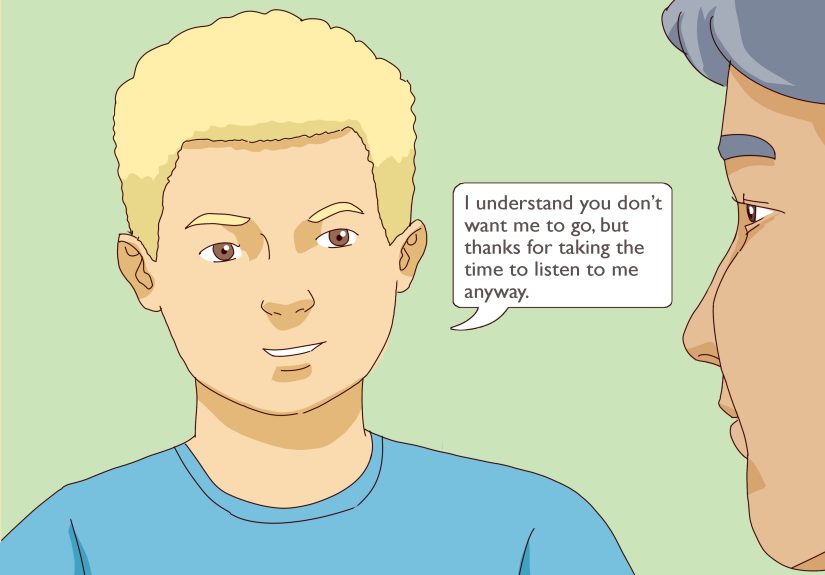
I’m disappointed, but I understand. Can you tell me what would make you more comfortable next time? Would you be open to a smaller version first?
That question can lead to progress. Maybe they would allow a shorter trip, a closer destination, a supervised group outing, or an overnight with more structure. Take the smaller win seriously. Smaller successful trips often become the proof that unlocks bigger ones later.
Also, if they say no, do not go behind their back. Sneaking around destroys exactly the thing you need most for future freedom: trust.
Experience-Based Lessons: What Teens and Parents Usually Learn the Hard Way
The most useful lessons around this topic rarely come from dramatic movie speeches. They come from ordinary family experiences that repeat themselves over and over.
One common experience is that teens assume parents are overreacting, while parents assume teens are underestimating everything. Both sides feel misunderstood. A teen thinks, I can handle this. Why are they acting like I’m five? A parent thinks, You can handle the fun part, but can you handle the weird part, the delayed-bus part, the lost-phone part, the wrong-address part, the friend-making-bad-decisions part? The conversation improves the moment both sides say the quiet part out loud.
Another common experience is that the first version of the request is usually weak. A teen asks to go far away with almost no details, gets rejected, feels crushed, and decides the parents are impossible. But after cooling down, they come back with a real itinerary, adult contacts, costs, check-in times, and backup plans. Suddenly the parents are less focused on fear and more focused on problem-solving. The trip is not magically risk-free, but it becomes easier to imagine saying yes to.
Families also learn that trust is often built outside the travel conversation. Teens who keep curfews, answer messages, admit mistakes, and act responsibly in everyday life tend to get more serious consideration when bigger opportunities come up. In other words, convincing your parents about one far-away trip often starts a month earlier when you came home on time, did what you said you would do, and did not make every small discussion feel like a hostage negotiation.
Parents learn things too. Some realize their first instinct is to say no before hearing the whole plan. Others discover that their child is more capable than expected when given structure and clear rules. A well-handled trip can be a turning point. It may not transform you into a rugged international explorer overnight, but it can change the family story from not ready to ready with guardrails.
And then there is the experience almost everyone remembers: the trip itself is usually less important than what it represents. To a teen, it represents freedom, growth, and being trusted. To a parent, it represents letting go a little. That emotional mismatch is why the conversation can feel so intense. You are not just discussing transportation and hotel details. You are discussing change.
The best outcomes usually happen when the teen does not demand freedom like a prize, and the parent does not guard it like a dragon on a pile of anxiety. The teen says, Here is how I plan to do this safely. The parent says, Here is what I need in order to feel comfortable. Somewhere in the middle, a plan forms.
That is the real experience-based lesson: independence works best when it is earned, explained, and supported. Not rushed. Not hidden. Not dramatized. Just built step by step until both sides can see the same thing clearly: this is not a reckless leap. It is the next responsible step.
Conclusion
If you want to convince your parents to let you go somewhere far away without them, skip the pressure tactics and build a better case. Think ahead. Bring facts. Make a safety plan. Listen seriously. Answer concerns without attitude. Be willing to compromise. And if the answer is no, respond in a way that keeps the door open for future trust.
The truth is simple: parents do not usually say yes because a teen wants freedom. They say yes because a teen shows they can handle it. So do not just ask for permission. Show the kind of maturity that makes permission possible.







 Close
Close