
Table of Contents >> Show >> Hide
- What Are Floating Shelves?
- Why Build Floating Shelves Yourself?
- Tools and Materials You Will Need
- Step 1: Plan the Size and Location
- Step 2: Locate the Wall Studs
- Step 3: Cut the Hidden Cleat
- Step 4: Build the Shelf Box
- Step 5: Sand and Fill
- Step 6: Prime, Paint, or Stain
- Step 7: Install the Wall Cleat
- Step 8: Slide the Shelf Onto the Cleat
- Step 9: Test Before Styling
- Best Places to Use Simple Floating Shelves
- Common Mistakes to Avoid
- Design Tips for a Better Finished Look
- of Real DIY Experience: Lessons From Building Simple Floating Shelves
- Conclusion
Floating shelves are the little black dress of home storage: simple, stylish, and surprisingly good at making a room look like you planned it that way. They create display space without bulky brackets, free up countertops, and give blank walls a reason to stop looking so bored. Best of all, learning how to build simple floating shelves is a beginner-friendly DIY project if you measure carefully, choose the right materials, and resist the very human urge to “just eyeball it.”
This guide walks you through a practical way to build sturdy floating shelves using common lumber, plywood, or project boards. You will learn how to plan the size, build a hidden support cleat, assemble the shelf box, mount it securely, and finish it so it looks clean instead of “garage experiment, version one.” Whether you want kitchen shelves for mugs, a bathroom ledge for towels, or a living room display for books and plants, the same core principles apply: solid support, level installation, and a finish that matches the room.
What Are Floating Shelves?
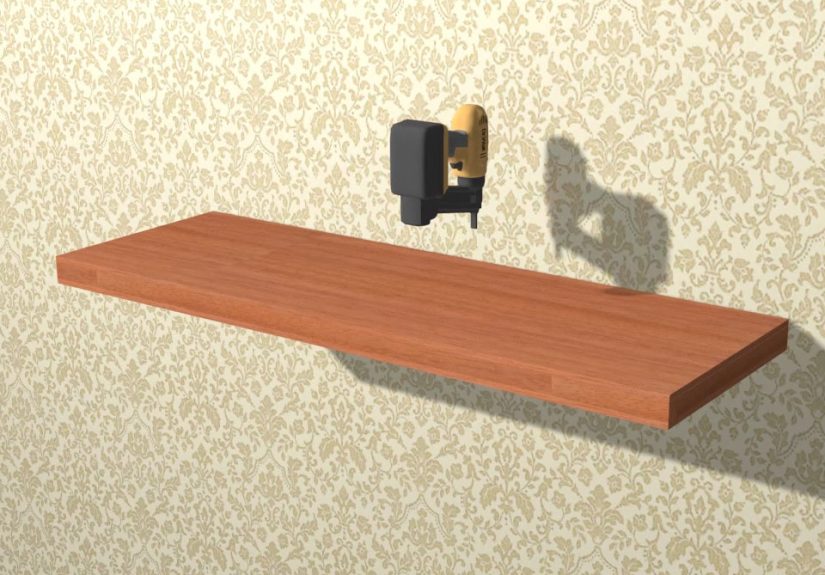
Floating shelves are wall-mounted shelves with hidden support hardware. Instead of visible brackets underneath, the shelf slides over a concealed bracket, cleat, or frame. The result is a clean, modern shelf that appears to “float” against the wall. The magic is not actually magic, unfortunately. It is careful fastening, wall studs, screws, glue, and a little patience.
There are several ways to make DIY floating shelves. Some use metal floating shelf brackets with rods. Others use a French cleat system. For simple floating shelves, one of the easiest and most reliable methods is building a hollow shelf box that slides over a wood cleat attached to the wall. The cleat supports the shelf from inside, while the shelf casing hides the structure.
Why Build Floating Shelves Yourself?
Store-bought floating shelves can be convenient, but building your own gives you control over the size, thickness, finish, and strength. You can customize the shelves for an awkward wall, match the stain to your cabinets, or make a chunky shelf that looks high-end without requiring a high-end budget. DIY floating shelves also let you decide how deep they should be. A narrow shelf may be perfect for framed photos, while a deeper shelf can hold dinner plates, baskets, or office supplies.
Another advantage is repairability. When you understand how the shelf is built, you can tighten screws, repaint, restain, or reinforce it later. That is much better than staring at a sagging shelf and whispering, “Please do not drop my coffee mugs.”
Tools and Materials You Will Need
Before cutting anything, gather your supplies. A smooth project starts with preparation, not with searching for a drill bit while balancing a board on your knee.
Basic Tools
- Stud finder
- Tape measure
- Pencil
- Level
- Miter saw, circular saw, or table saw
- Drill/driver
- Countersink bit or pilot hole bit
- Clamps
- Sander or sanding block
- Paintbrush, foam roller, or staining cloth
Materials
- 1×2 or 2×2 lumber for the hidden wall cleat
- 1/2-inch or 3/4-inch plywood, pine, poplar, or project boards for the shelf box
- Wood glue
- Wood screws, preferably long enough to reach wall studs securely
- Finish nails or brad nails
- Wood filler
- Sandpaper in medium and fine grits
- Primer and paint, or wood stain and polyurethane
- Wall anchors or toggle bolts if studs are not available in the right location
If you plan to store heavy items, prioritize strength over looks. A shelf holding lightweight decor has different demands than a shelf holding cookbooks, ceramic dishes, or a small jungle of enthusiastic houseplants.
Step 1: Plan the Size and Location
Start by deciding where the shelves will go and what they will hold. For most rooms, a floating shelf between 24 and 48 inches long is manageable for a beginner. A depth of 8 to 12 inches works well for kitchens, bathrooms, and living rooms. If the shelf is too deep, it may feel bulky and place extra strain on the wall fasteners. If it is too shallow, it may only hold one candle and your disappointment.
Use painter’s tape to outline the shelf on the wall. This helps you see the scale before committing. Check nearby doors, windows, cabinets, switches, and outlets. If you are installing multiple shelves, leave enough vertical space for the items you plan to display. Books need more clearance than picture frames. Mixing bowls need more space than spice jars. Common sense is your friend here, and unlike some friends, it will not borrow your tools and forget to return them.
Step 2: Locate the Wall Studs
For the strongest installation, attach the hidden cleat directly to wall studs. Studs are the vertical framing members behind drywall, and they provide the solid bite that screws need. Use a stud finder, then confirm by checking several points along the wall. Mark the stud locations lightly with a pencil.
Do not rely on drywall alone for heavy floating shelves. Drywall anchors can help when studs are not available, but they are not a magic spell. If your shelf will hold anything heavy or breakable, design the shelf length so the cleat can hit at least one or two studs. For long shelves, hitting multiple studs is even better.
Step 3: Cut the Hidden Cleat
The hidden cleat is the internal support that attaches to the wall. For a simple hollow floating shelf, cut a back cleat from 1×2 or 2×2 lumber slightly shorter than the inside length of the shelf. Then cut short support arms that extend forward from the back cleat. These arms fit inside the hollow shelf box and help prevent the shelf from tipping downward.
For example, if you are building a shelf that is 36 inches long and 10 inches deep, you might cut a back cleat around 34 inches long and use three or four support arms about 8 inches long. The exact size depends on the thickness of your shelf box and the depth you want. Dry-fit the parts before fastening them together.
Attach the support arms to the back cleat with wood glue and screws. Keep them square. A speed square is helpful, but a careful eye and a level work too. If the arms are crooked, the shelf may not slide on properly, and you will spend quality time muttering at lumber.
Step 4: Build the Shelf Box
The shelf box is the visible part of the floating shelf. It is usually made from a top panel, bottom panel, front face, and side pieces. The back remains open so the box can slide over the cleat.
Cut the top and bottom panels to the same size. Then cut the front face strip to match the shelf length and height. Cut the side pieces to cover the ends. If you want a chunky modern look, make the shelf box 2 to 3 inches thick. If you want a slimmer shelf, reduce the height, but remember that very thin floating shelves have less room for a strong internal support.
Apply wood glue along the edges, clamp the parts together, and secure them with brad nails or finish nails. Wipe away excess glue before it dries. Check that the box is square and that it slides over the cleat. This is the moment when dry-fitting saves your dignity.
Step 5: Sand and Fill
Once the shelf box is assembled, fill nail holes and small gaps with wood filler. Let it dry according to the product directions. Sand the shelf smooth, starting with medium-grit sandpaper and finishing with a finer grit. Slightly soften the edges so the shelf feels finished and does not have sharp corners.
If you are painting, sanding creates a smoother surface for primer. If you are staining, sanding helps the wood absorb stain more evenly. Be gentle with plywood edges, especially if using thinner material. Aggressive sanding can chew through the veneer and create a patchy finish.
Step 6: Prime, Paint, or Stain
Choose a finish that fits the room. Painted floating shelves look crisp and built-in, especially when painted the same color as the wall or trim. Stained shelves add warmth and show off the wood grain. In kitchens and bathrooms, add a durable topcoat to protect against moisture, splashes, and the occasional mystery smudge.
For paint, apply primer first, sand lightly after it dries, and then apply one or two coats of paint. For stain, test the color on a scrap piece of the same wood before applying it to the shelf. Wood can be dramatic about stain, and two boards from the same pile may react differently. Finish with polyurethane or a clear protective coat for durability.
Step 7: Install the Wall Cleat
Hold the cleat against the wall at the marked height. Place a level on top and adjust until it is perfectly straight. Mark the screw locations on the cleat, aiming for wall studs whenever possible. Drill pilot holes through the cleat to reduce splitting and make the screws easier to drive.
Fasten the cleat to the wall with strong screws. If you are drilling into studs, use screws long enough to pass through the cleat, drywall, and into the stud securely. If you must use wall anchors, choose anchors rated for the expected load and install them exactly as directed. For heavy shelves, toggle bolts are generally stronger than basic plastic anchors.
After fastening, check the cleat again with the level. Tighten carefully, but do not overdrive the screws so hard that the cleat bends or the drywall crushes. A straight cleat equals a straight shelf. A crooked cleat equals a shelf that makes every picture frame look suspicious.
Step 8: Slide the Shelf Onto the Cleat
Slide the finished shelf box over the cleat. It should fit snugly but not require wrestling moves. If it sticks, remove it and check for high spots, dried glue, or uneven support arms. Light sanding inside the shelf box may help.
Once the shelf is fully seated against the wall, secure it from underneath with small screws driven through the bottom of the shelf into the support arms. This keeps the shelf from sliding forward. Place the screws where they are not obvious. If needed, cover them with wood filler and touch up the finish.
Step 9: Test Before Styling
Before loading the shelf with your favorite things, test it gently. Press downward with your hand. Check for movement. Look at the wall around the cleat. If the shelf shifts, squeaks, or pulls away from the wall, stop and reinforce the installation.
When styling, place heavier items closer to the wall rather than at the front edge. This reduces leverage on the shelf. Spread weight evenly instead of stacking everything on one side. Floating shelves are strong when built and installed properly, but they are still shelves, not gym equipment.
Best Places to Use Simple Floating Shelves
Kitchen
Floating kitchen shelves are great for everyday dishes, mugs, spice jars, small bowls, and cookbooks. Keep frequently used items within easy reach. If the shelf is near a stove or sink, choose a finish that wipes clean easily.
Bathroom
In bathrooms, floating shelves can hold folded towels, jars, candles, and toiletries. Use moisture-resistant paint or a sealed wood finish. Avoid overloading shelves above toilets or tubs because nobody wants a shampoo avalanche during a peaceful evening.
Living Room
Living room shelves are ideal for framed photos, plants, art, collectibles, and books. For a less generic look, vary the spacing and mix objects of different heights. Leave some empty space so the shelves look intentional rather than crowded.
Home Office
In an office, simple floating shelves can store notebooks, small bins, reference books, and decor. Install them high enough to keep the desk clear but low enough that you do not need a step stool every time you want a sticky note.
Common Mistakes to Avoid
Skipping the Studs
The most common mistake is fastening a shelf to drywall without enough support. Always look for studs first. If studs do not line up with your preferred placement, adjust the shelf size or use a stronger mounting method.
Building the Shelf Too Deep
Deep shelves create more leverage against the wall. If you are a beginner, stay moderate with depth unless you are using heavy-duty brackets or a very strong cleat system.
Forgetting to Pre-Finish
It is much easier to paint or stain the shelf before it is on the wall. Touch-ups are fine later, but full finishing is simpler on a workbench.
Ignoring Weight Limits
A floating shelf that holds framed art may not be suitable for heavy books. Decide what the shelf will hold before choosing materials and hardware.
Design Tips for a Better Finished Look
To make DIY floating shelves look more professional, match the shelf thickness to the room. Chunkier shelves work well in kitchens and living rooms, while slimmer shelves can look elegant in bathrooms or hallways. Consider painting shelves the same color as the wall for a built-in effect, or stain them darker for contrast.
When decorating, use groups of three, mix textures, and vary object heights. Combine practical items with decorative pieces. For example, in a kitchen, stack white plates beside a small plant and a wooden bowl. In a living room, pair books with framed art and one sculptural object. The goal is balance, not a museum display guarded by invisible lasers.
of Real DIY Experience: Lessons From Building Simple Floating Shelves
The first thing most people learn when building floating shelves is that walls are not as honest as they look. A wall may seem flat, but once you hold a level against it, you may discover waves, dips, and corners that apparently had a very creative childhood. That is why dry-fitting is so important. Before painting, before final screws, and definitely before celebrating, place every part where it will go and make sure the shelf sits flush.
Another practical lesson is that shelf thickness affects both strength and style. A 2-inch-thick floating shelf often looks substantial without feeling bulky. It also gives you enough internal space for a sturdy cleat. Very thin shelves can look sleek, but they are less forgiving and may require specialty metal brackets. For a first project, a simple box-style shelf is usually more beginner-friendly.
Measuring twice is good advice, but measuring from the same reference point is even better. If you measure one bracket mark from the floor and another from the ceiling, you may accidentally invite chaos. Floors and ceilings are not always perfectly level. Use one consistent baseline and confirm with a level. When installing multiple shelves, cut a spacer block to keep the distance between shelves even. This trick is faster than remeasuring repeatedly and far less likely to make your pencil question its life choices.
Wood filler and caulk can also make a big difference. Tiny gaps between the shelf and wall are common, especially in older homes. A thin bead of paintable caulk along the back edge can make the shelf look custom-built. Do not overdo it; the goal is a clean shadow line, not frosting a cake. If the shelf is stained rather than painted, use a careful touch because caulk does not blend with stained wood the way it does with painted surfaces.
Finishing takes longer than building, and that surprises many beginners. Cutting and assembling may take an afternoon, but primer, paint, stain, and protective coats need drying time. Rushing the finish can leave fingerprints, tacky spots, or uneven sheen. Let each coat dry properly. Your future self will thank you when the shelf does not stick to the first book you place on it.
Finally, be realistic about what floating shelves should hold. They are excellent for decor, dishes, toiletries, and moderate storage. They are less ideal for extremely heavy collections unless engineered carefully. If you love oversized art books, cast-iron cookware, or twenty-pound ceramic planters, use heavy-duty brackets, hit multiple studs, or consider a different shelving system. A well-built floating shelf should look effortless, but the structure behind it should be anything but casual.
Conclusion
Building simple floating shelves is one of the most rewarding DIY upgrades because it combines function, style, and just enough woodworking to make you feel impressively handy. The key is to plan carefully, attach the hidden support to solid framing whenever possible, build a straight shelf box, and finish it with patience. A floating shelf may look minimal, but its strength comes from the details you cannot see.
Whether you are adding open kitchen storage, upgrading a bathroom wall, or creating a display area in your living room, DIY floating shelves can make a space feel cleaner, warmer, and more personal. Start with one shelf, learn from the process, and then build more. Warning: once you realize how useful they are, blank walls in your home may start looking like invitations.






 Close
Close