
Table of Contents >> Show >> Hide
- Why Small Potatoes Are So Easy to Love
- How to Bake Small Potatoes in 13 Steps
- Step 1: Choose the right small potatoes
- Step 2: Preheat the oven properly
- Step 3: Wash and scrub the potatoes
- Step 4: Dry them like you mean it
- Step 5: Decide whether to leave them whole or cut them
- Step 6: Coat them with oil and basic seasoning
- Step 7: Add flavor boosters carefully
- Step 8: Arrange the potatoes in a single layer
- Step 9: Bake on the middle rack
- Step 10: Flip or stir halfway through
- Step 11: Check for doneness the right way
- Step 12: Finish them while they are hot
- Step 13: Serve immediately or store smartly
- Best Seasoning Ideas for Baked Small Potatoes
- Common Mistakes to Avoid
- Do You Need to Boil Small Potatoes First?
- Kitchen Experiences: What Baking Small Potatoes Teaches You After a While
- Conclusion
- SEO Tags
Small potatoes are proof that good things come in tiny, starchy packages. They cook faster than giant baking potatoes, they crisp up beautifully, and they somehow manage to feel both rustic and fancy at the same time. Put them on a weeknight dinner plate and they look reliable. Put them in a serving bowl with herbs and flaky salt and suddenly they look like they have opinions about wine.
If you want that ideal balance of crispy skin and creamy middle, baking small potatoes is less about complicated technique and more about doing the simple things well. Pick the right potatoes, dry them properly, season them like you mean it, and give them enough room in the oven to actually roast instead of steaming in a crowded potato traffic jam.
This guide walks you through exactly how to bake small potatoes in 13 easy steps, along with timing tips, flavor ideas, and the common mistakes that turn a promising pan of spuds into a sad, pale side dish. Let’s make potatoes that are golden outside, fluffy inside, and worthy of being stolen off the tray before dinner even starts.
Why Small Potatoes Are So Easy to Love
When people say “baked potatoes,” they often picture a giant russet split open with a mountain of toppings. Small potatoes play a different game. Because they have more skin relative to their size, they naturally develop more texture in the oven. That means more crispy edges, more caramelized spots, and more chances for salt, oil, herbs, and pepper to cling to something delicious.
They are also flexible. You can bake them whole if they are tiny, halve them if they are a little larger, or smash them after a quick pre-cook if you want extra crunch. Red potatoes, baby Yukon Golds, creamer potatoes, and fingerlings all work well. The final texture changes a little depending on the variety, but the basic method stays wonderfully simple.
How to Bake Small Potatoes in 13 Steps
-
Step 1: Choose the right small potatoes
Start with potatoes that are roughly the same size so they cook at the same rate. Baby Yukon Golds are buttery and creamy, red potatoes hold their shape nicely, and creamers are the dependable middle managers of the potato world: not flashy, but very effective. If some potatoes are much larger than the rest, cut them so the whole batch cooks evenly.
-
Step 2: Preheat the oven properly
Set your oven to 400°F to 425°F. This range gives you the sweet spot between a tender interior and a browned exterior. If your oven tends to run cool, go with 425°F. If you are baking the potatoes whole and want a gentler cook, 400°F is a safe choice. Give the oven enough time to fully preheat. Potatoes notice when you rush this part.
-
Step 3: Wash and scrub the potatoes
Even if the potatoes look clean, give them a thorough rinse and scrub. You are eating the skin, and the skin is where a lot of the texture lives. Dirt does not add rustic charm. It adds dirt.
-
Step 4: Dry them like you mean it
This step matters more than people think. Use a clean kitchen towel or paper towels to dry the potatoes well. Moisture on the outside works against crisping, and soggy potatoes are not the dream. Dry potatoes roast. Wet potatoes sulk.
-
Step 5: Decide whether to leave them whole or cut them
If the potatoes are marble-sized or very small, leave them whole. If they are closer to golf-ball size, halve them. If they are slightly larger, quarter them. Cutting increases surface area, which means more browning and shorter cooking time. Whole small potatoes have a smoother, creamier center, while cut potatoes get more crispy edges. Neither choice is wrong; it depends on the potato personality you want.
-
Step 6: Coat them with oil and basic seasoning
Toss the potatoes with enough olive oil to lightly coat them, not drown them. Add kosher salt and black pepper. That is your foundation. For about 1 1/2 to 2 pounds of small potatoes, 1 to 2 tablespoons of oil is usually enough. You want the potatoes glossy, not swimming like they booked a spa day.
-
Step 7: Add flavor boosters carefully
Now you can build flavor. Garlic powder, rosemary, thyme, smoked paprika, onion powder, or a pinch of red pepper flakes all work beautifully. Fresh minced garlic can be delicious, but because it burns faster than potatoes cook, use it lightly or add some of it near the end. Fresh parsley, dill, chives, lemon zest, and Parmesan are often best added after baking so they stay bright and flavorful.
-
Step 8: Arrange the potatoes in a single layer
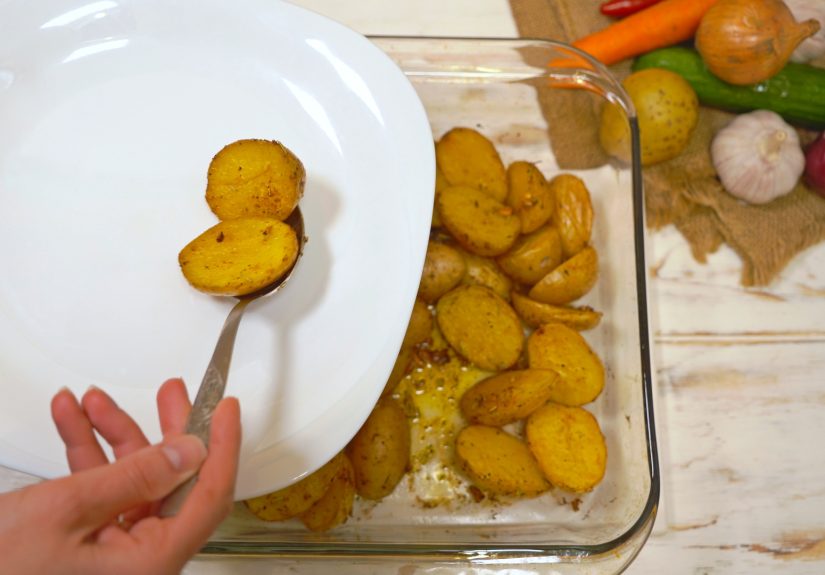
Spread the potatoes on a sheet pan or baking dish in one layer with some breathing room between them. If you crowd the pan, the moisture they release gets trapped and the potatoes steam instead of roast. If the potatoes are cut, place the cut sides down for more direct contact with the hot pan and deeper browning.
-
Step 9: Bake on the middle rack
Slide the pan onto the middle rack, where heat circulates evenly. As a general guide, halved small potatoes often take about 25 to 35 minutes, while whole small potatoes may take 30 to 45 minutes, depending on size and oven behavior. Ovens have quirks. Some run hot, some run lazy, and some appear to be emotionally unavailable. Start checking a little early.
-
Step 10: Flip or stir halfway through
At the halfway mark, use a spatula to turn the potatoes. This helps them brown evenly and keeps the bottoms from getting too dark before the interiors are done. If you want a more deeply roasted finish, leave them mostly undisturbed during the first half of cooking, then turn them once.
-
Step 11: Check for doneness the right way
The potatoes are done when a fork or the tip of a knife slides in easily. If you are using a thermometer, the center should be around the fully cooked potato range. Visually, they should look golden with some crisp edges. If they are brown outside but still firm inside, lower the heat slightly or tent loosely and give them a few extra minutes.
-
Step 12: Finish them while they are hot
Right out of the oven is the moment to add finishing touches. Sprinkle on flaky salt, chopped herbs, grated Parmesan, lemon juice, a little melted butter, or a spoonful of browned garlic butter. Hot potatoes absorb flavor better than cooled ones, so this is when your seasoning earns its paycheck.
-
Step 13: Serve immediately or store smartly
Serve baked small potatoes while they are hot and crisp. They pair well with roast chicken, steak, salmon, eggs, burgers, grain bowls, and practically anything else you can place near them on a plate. If you have leftovers, cool them, refrigerate them promptly, and reheat in the oven or air fryer for the best texture. The microwave works in a pinch, but it softens the exterior.
Best Seasoning Ideas for Baked Small Potatoes
Once you master the base method, you can change the personality of the dish without changing the technique. Here are a few easy directions to go:
Classic herb-roasted
Olive oil, kosher salt, black pepper, rosemary, thyme, and parsley. This is the little black dress of potato seasonings: always appropriate.
Garlic Parmesan
Toss with oil, salt, pepper, and garlic powder before baking, then finish with grated Parmesan and chopped parsley. This version disappears fast and inspires suspiciously long visits to the kitchen.
Smoky and spicy
Add smoked paprika, chili flakes, garlic powder, and a little onion powder. Serve with a cool dip like sour cream, Greek yogurt sauce, or ranch.
Lemon herb
Bake with olive oil, salt, pepper, and oregano, then finish with lemon zest, lemon juice, and chopped dill or parsley. Bright, fresh, and especially good with fish or chicken.
Butter and chive
After baking, toss the hot potatoes with melted butter, chopped chives, and flaky salt. It is simple and deeply comforting, like a side dish wearing a soft sweater.
Common Mistakes to Avoid
Not drying the potatoes well
If the potatoes go into the oven damp, they are far less likely to crisp properly. Dry skin equals better texture.
Crowding the pan
If the potatoes are piled together, they steam. Use a larger sheet pan or divide them between two pans if needed.
Using too little salt
Potatoes need seasoning. Salt is not optional decoration. It is the thing that makes the potatoes actually taste like something.
Pulling them too early
Golden does not always mean done. Check the center. Potatoes should be tender all the way through, not beautifully bronzed and secretly undercooked.
Adding delicate ingredients too soon
Fresh herbs, grated cheese, lemon zest, and fresh garlic can burn or lose flavor if added too early. Finish with those near the end or after baking.
Do You Need to Boil Small Potatoes First?
Not always. If your goal is simple baked small potatoes with crisp skins and creamy middles, you can go straight to the oven. But if you want extra-craggy edges and a restaurant-style crunch, parboiling is a great trick. Simmer the potatoes briefly until just starting to soften, drain them, let the steam escape, then toss with oil and roast.
This extra step roughs up the surface, which helps the exterior brown more dramatically. It is especially useful for bigger small potatoes or when you want a more aggressively crisp result. For a regular weeknight side, though, direct baking is usually easier and more than good enough.
Kitchen Experiences: What Baking Small Potatoes Teaches You After a While
The funny thing about learning how to bake small potatoes is that the recipe starts out feeling very exact, then slowly turns into instinct. The first few times, you watch the clock like it owes you money. You check at 20 minutes, then 25, then 28, then wonder whether the potatoes are supposed to look this pale, this dark, this shiny, or this suspiciously undercommitted. Then one day, without realizing it, you stop relying on the clock so much and start reading the potatoes instead.
You notice that baby Yukon Golds tend to go creamy and rich even with simple olive oil and salt. Red potatoes stay a little firmer and hold their shape better when you toss them with herbs. Fingerlings roast fast and look far fancier than the effort they require, which makes them excellent for people who enjoy compliments without wanting extra work.
You also learn that sheet pans matter. A crowded pan makes potatoes softer, while a roomy pan gives them color and crisp edges. A dark pan browns faster. A preheated pan gives you that satisfying sizzle when the potatoes hit the surface. And if you forget to line or oil the pan properly, you may spend part of your evening negotiating with caramelized potato residue like it is a stubborn tenant.
Seasoning becomes more intuitive, too. At first, many people under-season because they are worried about overdoing it. Then they taste the finished potatoes and realize that potatoes can absorb seasoning like tiny edible sponges. A generous hand with salt, pepper, and herbs usually leads to better results than timid sprinkling. Finishing salt, especially, can make a tray of potatoes taste far more polished.
There is also the valuable lesson of restraint. You do not need to stir every five minutes. You do not need to open the oven door repeatedly just to “check on them.” Potatoes like a little peace and a lot of heat. Leave them alone long enough and they reward you with color. Hover too much and they stay pale, like they have been denied their chance to become their best selves.
In real kitchens, baked small potatoes become a kind of rescue side dish. Chicken looks a little plain? Add potatoes. Salmon night feeling too healthy? Add potatoes. Breakfast-for-dinner situation? Absolutely add potatoes. They make random meals feel intentional. They also rescue leftovers. Reheated baked small potatoes can become breakfast hash, salad toppers, taco filling partners, or the crunchy element in a grain bowl.
Perhaps the most relatable experience of all is the tray theft problem. You tell yourself the potatoes are for dinner. Then you “test one for seasoning.” Then another for texture. Then one more because that especially crispy one was calling your name. Suddenly, the serving bowl looks lighter than expected and nobody in the house trusts you around the sheet pan anymore. Honestly, that is when you know you made them right.
Conclusion
Learning how to bake small potatoes is one of those kitchen skills that pays you back immediately. The ingredient list is short, the method is forgiving, and the results are wildly useful. Once you know how to choose the right potatoes, dry them thoroughly, season them well, and roast them at the right temperature, you can produce a dependable side dish that feels a lot more special than the effort suggests.
The biggest secret is not really a secret at all: give the potatoes heat, space, and enough time to turn golden. From there, everything else is style. Keep them simple with oil and salt, dress them up with herbs and Parmesan, or finish them with lemon and butter for a brighter twist. However you season them, baked small potatoes are one of the easiest ways to make dinner feel complete.






 Close
Close