
Table of Contents >> Show >> Hide
- Why Worms Work So Well as Fishing Bait
- What You Need Before You Start
- How to Bait a Hook with a Worm: 10 Steps
- Step 1: Choose the Right Worm for the Fish
- Step 2: Pick the Correct Hook Size
- Step 3: Keep the Worm Cool and Lively
- Step 4: Hold the Hook Safely
- Step 5: Pierce the Worm Near One End
- Step 6: Thread the Worm Along the Hook
- Step 7: Leave the Hook Point Slightly Exposed
- Step 8: Adjust the Worm Length
- Step 9: Add the Right Rig
- Step 10: Cast Gently and Watch for Bites
- Best Ways to Hook Different Types of Worms
- Common Mistakes When Baiting a Hook with a Worm
- Pro Tips for Catching More Fish with Worms
- Best Fish to Catch with Worms
- Experience Section: Practical Lessons from Fishing with Worms
- Conclusion
Note: This article is written for web publication and synthesizes practical guidance from reputable U.S. fishing education, conservation, and tackle resources in original wording.
Few fishing skills are as classic, affordable, and oddly satisfying as learning how to bait a hook with a worm. It is the kind of thing grandpas teach with great seriousness, kids learn with equal parts curiosity and dramatic squealing, and fish apparently never get tired of falling for. Worms are one of the most reliable forms of live bait because they wiggle naturally, smell like food, and appeal to a wide range of freshwater fish, including bluegill, crappie, trout, bass, perch, and catfish.
The good news? Baiting a hook with a worm is not complicated. The slightly less glamorous news? There is a right way to do it if you want the worm to stay on the hook, look natural in the water, and actually help you catch fish instead of feeding every bait-stealing sunfish in the neighborhood. Whether you are using red wigglers, garden worms, or big nightcrawlers, this guide will walk you through the process step by step.
Below, you will learn how to choose the right hook, prepare your worm, thread it securely, adjust your setup for different fish, avoid common beginner mistakes, and handle live bait responsibly. By the end, you will be ready to cast with confidence instead of staring at your hook like it just asked you a complicated math question.
Why Worms Work So Well as Fishing Bait
Worms are popular because they check almost every box a fish cares about. They move, they smell natural, they are easy to swallow, and they look like something that might tumble into the water after rain. For many freshwater fish, a worm is not a suspicious object. It is lunch with a tiny neon sign above it.
Live worms are especially effective for panfish such as bluegill and sunfish, but they also catch trout, crappie, bass, bullhead, perch, and catfish. They work under a bobber, on the bottom, in streams, from docks, and along weedy pond edges. They are also beginner-friendly because you do not need expensive tackle or advanced casting skills to use them well.
Still, worm fishing is not just “stab and cast.” Hook size, worm size, placement, and presentation all matter. A worm that is too large can get nibbled off. A hook that is too big can reduce bites from small-mouthed fish. A worm threaded poorly can fly off during the cast, which is a very dramatic way to donate bait to the shoreline.
What You Need Before You Start
Before learning how to put a worm on a hook, gather the basic gear. You do not need a tournament-level tackle box. A simple freshwater setup will do.
Basic Gear Checklist
- A fishing rod and reel with appropriate line for your target fish
- Live worms, red wigglers, earthworms, or nightcrawlers
- Hooks in the right size range
- Small split shot weights
- A bobber or float, if fishing shallow water or targeting panfish
- Needle-nose pliers or fishing pliers
- A small bait container or cooler to keep worms fresh
- A towel or damp cloth for wiping hands
For small fish such as bluegill, sunfish, and perch, hooks around size #6 to #10 are commonly useful. For larger fish such as bass or catfish, you may use bigger hooks, often around size #1, #2, or larger depending on the bait and fish. Long-shank hooks, Aberdeen hooks, bait-holder hooks, and octopus-style hooks are popular choices for worm fishing because they help keep live bait secure and make hook removal easier.
How to Bait a Hook with a Worm: 10 Steps
Step 1: Choose the Right Worm for the Fish
Start by matching the worm to the fish you want to catch. Small red worms or pieces of nightcrawler are great for bluegill, perch, and crappie. A full nightcrawler can work well for larger fish such as bass, catfish, and big trout, but it may be too much for tiny panfish. If small fish keep pecking at your bait without getting hooked, your worm is probably too large.
A simple rule is this: small mouths need small meals. A one- to two-inch section of worm is often better for panfish than a whole nightcrawler. For trout, a modest piece with a little tail movement can look natural in current. For catfish, a larger piece or full worm may create more scent and movement near the bottom.
Step 2: Pick the Correct Hook Size
The right hook should fit both the worm and the fish. If the hook is too small, you may miss hooksets or have trouble keeping the worm on. If it is too large, cautious fish may avoid it, especially in clear water.
For beginners, a size #6 hook is a friendly starting point for general pond fishing. It is small enough for bluegill but still useful for many other freshwater species. If you are fishing for trout, hooks in the #6 to #10 range are common. If you are targeting bass or catfish with larger bait, move up to a larger hook that still allows the bait to look natural.
Bait-holder hooks have small barbs on the shank that help grip soft bait. Long-shank hooks are useful when fish swallow bait deeply because they are easier to remove. Circle hooks can be helpful in certain bait-fishing situations, especially where regulations require them, but always check local rules before fishing.
Step 3: Keep the Worm Cool and Lively
A lively worm is usually better than a limp one. Keep worms in their original bedding, shaded from direct sun, and cool but not frozen. Heat can dry them out quickly, and dry worms are about as appealing as overcooked spaghetti with commitment issues.
If you are fishing on a hot day, keep the bait container in a cooler or shaded bag. Do not drown worms in water. They need moisture, not a swimming pool. A healthy worm wiggles naturally, stays on the hook better, and creates more movement underwater.
Step 4: Hold the Hook Safely
Before touching the worm, get comfortable holding the hook. Grip the shank of the hook between your thumb and index finger. Keep the sharp point facing away from your fingers. Hooks are small, but they are designed to stick into things, and your thumb is not invited to the fishing party.
Take your time. If you are teaching a child or a first-time angler, demonstrate slowly. Fishing should be fun, not a surprise medical lesson. Pliers can help with hook removal later, but careful handling begins before the cast.
Step 5: Pierce the Worm Near One End
Take the worm and gently push the hook point through the body near one end. Do not start exactly at the tip; leave a little bit of worm beyond the hook so it can move naturally. The goal is to secure the worm without turning it into a lifeless clump.
For trout and other fish that respond to movement, hooking the worm once or twice and leaving a small trailing tail can be effective. That tail wiggles in the current and helps attract attention. However, if small fish keep stealing the dangling part, shorten the worm or thread more of it onto the hook.
Step 6: Thread the Worm Along the Hook
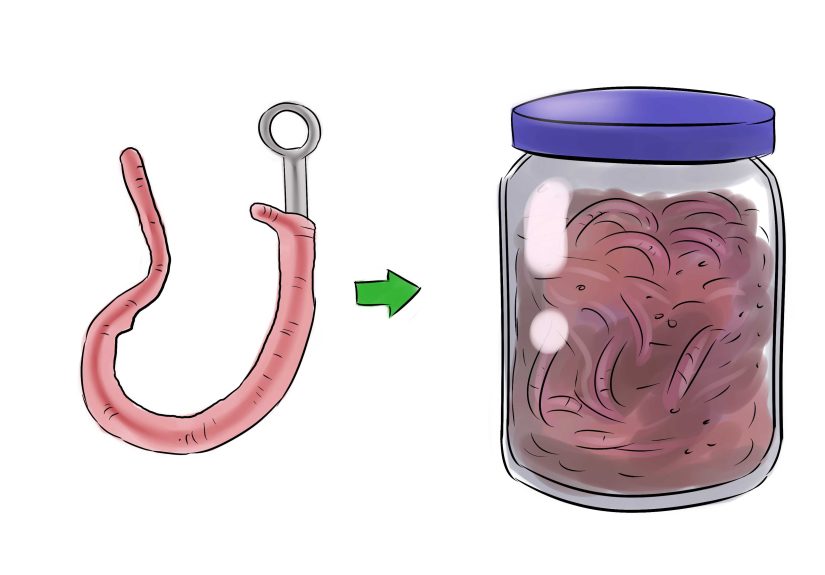
After the first pierce, slide part of the worm up the hook shank. This helps keep it from flying off during the cast. For small worms, thread the hook through the body in several places, almost like sewing. This technique makes the worm harder for bait thieves to pull away.
If you are using a piece of nightcrawler, run the hook through the worm once, then again, bunching it slightly around the bend of the hook. For panfish, many anglers prefer a compact presentation because bluegill and sunfish are famous for nibbling the loose ends and leaving you with nothing but betrayal.
Step 7: Leave the Hook Point Slightly Exposed
This step matters. The hook point must be able to catch the fish. If the point is buried too deeply inside the worm, you may feel bites but fail to hook anything. For many setups, leave the very tip of the hook exposed or barely covered by a thin layer of worm.
There is one exception: when fishing for very small bait-stealing fish, some anglers cover the hook more completely to encourage the fish to bite down. Still, the hook point needs a clear path when you set the hook. Think of it as hiding the hook from the fish, not hiding it from reality.
Step 8: Adjust the Worm Length
Look at your bait after threading it. If there is a long section dangling far below the hook, decide whether that helps or hurts. A little wiggle is good. A giant dangling buffet may let fish steal the worm without touching the hook.
For small panfish, trim or pinch off the worm so only a short piece remains. For trout in moving water, a small tail can look natural as it waves. For catfish, a larger piece may be fine because scent and bottom presentation matter more. The key is to match the bait to the bite. If fish are pecking but not getting hooked, go smaller.
Step 9: Add the Right Rig
A worm on a hook is only part of the setup. The way you rig it affects how it looks underwater. For beginners, a bobber rig is one of the easiest options. Place a bobber above the hook and add a small split shot weight between the bobber and bait. This keeps the worm at a chosen depth and shows you when a fish bites.
For bluegill and pond fishing, try setting the worm one to three feet below the bobber near weeds, docks, or shaded edges. For trout in streams, use just enough weight to drift the worm naturally with the current. For catfish, fish the worm near or on the bottom with enough weight to hold it in place.
Use the lightest weight that still gets the bait where it needs to go. Too much weight can make the bait look stiff and unnatural. The worm should do the work, not sink like a tiny anchor with regrets.
Step 10: Cast Gently and Watch for Bites
Once the worm is secure, cast smoothly. Hard whipping casts can tear soft bait off the hook. A gentle lob is often enough, especially when fishing from a dock, bank, or small boat.
After the cast, pay attention. If you are using a bobber, watch for dips, twitches, sideways movement, or a full underwater plunge. If fishing on the bottom, feel for taps, steady pulls, or line movement. Do not yank wildly at every tiny nibble. Give the fish a moment to take the bait, then lift the rod firmly.
With panfish, a quick but controlled hookset works well. With catfish, wait for a steadier pull. With trout, stay alert because bites can be light. The more you fish with worms, the better you will become at telling the difference between a real bite, a nibble, and your bait bumping into weeds.
Best Ways to Hook Different Types of Worms
How to Hook a Red Wiggler
Red wigglers are small, lively, and excellent for panfish. Thread the worm onto a small hook in two or three places. Keep the bait compact so fish must bite near the hook point. This is a great method for bluegill, sunfish, and perch.
How to Hook a Garden Worm
Garden worms are often the perfect size for beginner fishing. Hook the worm once near the head, slide it up the shank, and pierce it again through the middle. Leave a short tail if fish are actively biting. If they are nibbling without getting hooked, use a smaller piece.
How to Hook a Nightcrawler
Nightcrawlers are large and juicy, which makes them excellent for bigger fish but sometimes too large for panfish. For small fish, cut the nightcrawler into sections. For bass or catfish, thread a larger section onto the hook and leave enough movement to attract attention. Avoid using more worm than the fish can fit in its mouth.
Common Mistakes When Baiting a Hook with a Worm
Using Too Much Worm
More bait does not always mean more fish. A huge worm on a tiny hook often leads to stolen bait. If your bobber keeps twitching but you never catch anything, downsize the worm.
Burying the Hook Point Too Deeply
If the hook point cannot connect, you will miss fish. Keep the point exposed or lightly covered so it can do its job.
Casting Too Hard
Worms are soft. A powerful overhead cast can sling your bait into another zip code. Use a smooth cast and check your bait after each retrieve.
Ignoring Local Fishing Regulations
Some waters restrict live bait, natural bait, hook types, or fishing seasons. Always check local fishing regulations before using worms, especially in trout streams, protected waters, or special management areas.
Dumping Unused Worms Outdoors
Do not release leftover worms into the water, woods, or shoreline. In some areas, non-native worms can harm local ecosystems. Save unused worms for another trip if allowed, or dispose of them properly in the trash. Responsible anglers protect the water they enjoy.
Pro Tips for Catching More Fish with Worms
Once you know how to bait a hook with a worm, small adjustments can make a big difference. First, keep your bait fresh. Fish can tell the difference between a lively worm and a sad brown shoelace. Second, match your bait size to the fish. Third, fish near structure. Docks, logs, weed edges, rocks, shaded banks, and current breaks are all good places to try.
If fishing is slow, change depth before changing location. With a bobber, move the bait higher or lower until you find where fish are feeding. In ponds, bluegill may hover near shallow cover in warm weather. In streams, trout often hold behind rocks, in deeper holes, or along current seams where food drifts by.
Another useful trick is to use only part of a worm when fish are small or cautious. A half-inch piece can catch bluegill when a full worm gets robbed. For bigger fish, use a larger section and let the scent spread naturally.
Finally, be patient but observant. Fishing with worms teaches you to read small signals: a bobber that leans sideways, a line that tightens, a tap that repeats, or a sudden stop in the drift. Those details turn beginner luck into repeatable skill.
Best Fish to Catch with Worms
Worms are versatile, but they shine for certain freshwater species. Bluegill may be the most famous worm-loving fish. They are aggressive, common, and perfect for beginners. Use small hooks, small worm pieces, and a bobber near shallow cover.
Trout also respond well to worms, especially in streams where natural food drifts with the current. Use a smaller hook, minimal weight, and a natural drift. Remember that some trout waters limit live bait, so check the rules first.
Catfish often feed by smell, making worms a reliable choice near the bottom. Use a larger hook and enough weight to keep the bait in place. Bass will also eat worms, especially around cover, but larger bass may prefer bigger nightcrawler pieces or artificial worm presentations depending on conditions.
Experience Section: Practical Lessons from Fishing with Worms
Every angler who has used worms long enough has learned a few lessons the funny way. The first lesson is that fish are excellent at theft. A bluegill can remove a worm from a hook with the confidence of a magician stealing a watch. If your bobber dances every few seconds but you never land a fish, do not assume the fish are too smart. Assume your bait is too big or too loosely hooked.
One of the best experiences for beginners is fishing a small pond with a simple bobber rig. Start with a size #6 or #8 hook, pinch on a tiny split shot, and place the bobber about two feet above the hook. Use a small piece of worm, not the whole nightcrawler. Cast near weed edges, dock posts, or shaded areas. When the bobber dips, lift the rod smoothly. This simple setup teaches timing, patience, and bait control better than almost anything else.
Another practical lesson is to check your bait often. Beginners sometimes cast once, wait ten minutes, and wonder why nothing happens. Meanwhile, the hook has been bare since minute one. After a missed bite, reel in and inspect the worm. If it is gone, use a smaller piece and thread it more securely. If it is still there but twisted or dead-looking, refresh it. Presentation matters.
When fishing with kids or first-time anglers, pre-baiting a few hooks can help keep the trip fun. Young anglers often want action immediately, and worms are perfect for fast bites. Choose a safe area with easy casting, use barbless hooks if appropriate, and keep pliers nearby. The goal is not just catching fish; it is creating a good memory. A child who catches one bluegill on a worm may remember it longer than an adult remembers a trophy fish.
Weather also teaches lessons. After rain, worms naturally appear on sidewalks, lawns, and banks, and fish may be more willing to feed near runoff areas where food washes in. On hot sunny days, fish may move deeper or tuck into shade. In those conditions, lowering the bait or fishing near cover can help. In clear water, use lighter line and smaller bait. In stained water, scent and movement become even more important.
One experience many anglers share is discovering that “natural” beats “perfect.” A worm does not need to look like it belongs in a fishing catalog. It needs to look edible and alive. A slightly uneven, wiggly worm often works better than a perfectly straight one that appears stiff. Let the bait move. Let the current help. Let the fish find it.
Finally, the best worm-fishing habit is respect. Respect the hook, because it is sharp. Respect the fish, especially if you plan to release it. Wet your hands before handling fish, remove hooks carefully, and return fish quickly when practicing catch and release. Respect the water by packing out trash, fishing line, and unused bait. A good fishing trip ends with fish stories, not litter.
Conclusion
Learning how to bait a hook with a worm is one of the simplest and most useful fishing skills. It works because worms are natural, lively, affordable, and attractive to many freshwater fish. The secret is matching the worm to the fish, using the right hook, threading the bait securely, and adjusting when fish nibble without getting hooked.
Start small, keep your worm lively, expose the hook point, and choose a rig that fits the water. A bobber rig is perfect for beginners and panfish, while bottom rigs can work well for catfish and deeper water. Pay attention to local fishing rules, handle hooks safely, and never dump leftover worms outdoors.
In the end, worm fishing is wonderfully simple. It is dirt-under-the-fingernails, bobber-in-the-water, “wait, did it move?” kind of fun. And once you feel that first tug on the line, you will understand why anglers have trusted worms for generations.







 Close
Close