
Table of Contents >> Show >> Hide
- What Was the Hands Off Protest 2025?
- Why Americans Took to the Streets
- Where the Biggest Energy Was Felt
- What Made the Protests Different
- Did the Hands Off Protests Matter?
- What the Hands Off Protest Says About America in 2025
- Experiences from the Ground: What the Day Felt Like Across America
- Conclusion
On April 5, 2025, the United States looked a little less like a sleepy Saturday and a lot more like a civic alarm clock that had been smashed with a frying pan. From the National Mall in Washington, D.C., to city squares, courthouse steps, college towns, and small communities that do not usually make cable-news cameos, Americans turned out for the “Hands Off!” protests in a coordinated burst of political dissent. The message was simple, memorable, and impossible to misread: keep your hands off public programs, civil rights, democratic institutions, and the everyday lives of working people.
The protests were aimed at President Donald Trump’s second-term agenda and at Elon Musk’s high-profile role in the federal government, especially through the administration’s aggressive cost-cutting and restructuring efforts. But the movement was bigger than any one politician, billionaire, or acronym. What made the Hands Off protests stand out was the way they fused anxieties about democracy, economic instability, government layoffs, immigration crackdowns, health care, education, and LGBTQ+ protections into one broad national expression of resistance.
In other words, this was not a niche internet argument that accidentally wandered outdoors. It was a large, visible, multi-issue, cross-generational protest wave. And whether you agreed with every sign in the crowd or not, the scope of the mobilization made one thing clear: plenty of Americans believed 2025 had already become a “speak now or regret it later” kind of year.
What Was the Hands Off Protest 2025?
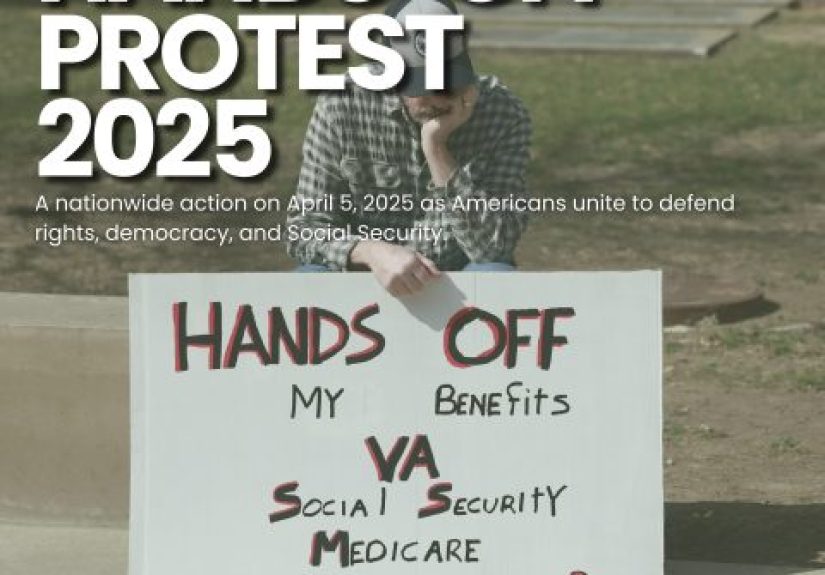
The Hands Off protest was a coordinated national day of action held on April 5, 2025. Organizers and major news outlets described hundreds upon hundreds of local events, with estimates generally ranging from more than 1,200 to around 1,300 rallies and gatherings nationwide. The coalition behind the demonstrations reportedly included more than 150 organizations, spanning civil rights groups, labor unions, women’s organizations, democracy advocates, veterans, LGBTQ+ groups, and local grassroots networks.
That scale mattered. The event was not built around a single city or a single celebrity speaker. It was built like a national patchwork quilt: one rally at the Washington Monument, another outside a state capitol, another in a suburban downtown, another in a town where everyone probably recognized at least three people holding signs. That decentralized model helped the protests feel both national and personal at the same time.
Why the name “Hands Off” hit a nerve
The slogan did heavy lifting because it was flexible without being vague. “Hands off” could mean hands off Social Security, Medicare, Medicaid, veterans’ services, public schools, libraries, scientific research, labor rights, due process, reproductive freedom, and democratic guardrails. Protest branding rarely gets to be both blunt and versatile, but this one managed it. It sounded like a warning, a plea, and a scolding all at once. American politics has produced many unforgettable slogans over the years. This one had the energy of a fed-up aunt who has finally decided to speak at Thanksgiving.
Who showed up
One of the most striking things about the nationwide turnout was the variety of people involved. Coverage from around the country described retirees, students, federal workers, teachers, veterans, health care supporters, union members, parents, immigrant advocates, and first-time protesters standing side by side. That matters because the story of the Hands Off protest was not just “activists protested.” It was “ordinary people who felt directly affected by rapid political change decided the living room was no longer enough.”
Why Americans Took to the Streets
There was no single issue driving the protests, and that was part of their power. Americans were reacting to a stack of grievances that had begun to feel less like separate policy debates and more like one giant stress sandwich. Critics of the administration pointed to rapid federal downsizing, layoffs, attempts to dismantle agencies, moves affecting education and research, hard-line immigration enforcement, pressure on civil liberties, and economic uncertainty tied to broader policy shifts. For many protesters, the fear was not just that one bad policy might pass. The fear was that too many major changes were happening too fast, with too little accountability.
Elon Musk became a political lightning rod
Musk’s role in Trump’s governing orbit helped give the protests a distinctly 2025 flavor. Demonstrators were not only objecting to presidential power; they were also rejecting the growing influence of a billionaire adviser associated with aggressive federal cuts and a disruptive vision of government efficiency. To critics, it looked like a real-time merger of executive power, private wealth, and ideological experimentation. That is the sort of sentence that makes civics teachers sit down and take a deep breath.
It was not one-issue politics
Some protesters worried about Social Security and Medicare. Others focused on federal jobs, schools, immigration raids, protections for transgender Americans, veterans’ services, climate policy, public health, or the future of democratic norms. Rather than weaken the movement, that issue diversity made it more durable. The protests reflected a national mood in which people were connecting dots. They were not saying, “This one policy annoys me.” They were saying, “I think the whole direction of the country is veering somewhere dangerous, and I would like the driver to stop pretending the check engine light is decorative.”
Where the Biggest Energy Was Felt
Washington, D.C., became the symbolic center of the day, with large crowds gathering on the National Mall. But one reason the Hands Off protests resonated so widely was that the energy did not stay in Washington. News coverage described major turnouts in New York, Boston, Los Angeles, Atlanta, Miami, and other large metro areas, while AP and local reporting also highlighted rallies in places that do not always get cast as protest capitals, including communities in Alaska, Georgia, Michigan, New Hampshire, Colorado, and beyond.
That geographic spread changed the meaning of the event. A demonstration in downtown Manhattan is politically significant, but not exactly shocking. A demonstration in a smaller city or deeply local community sends a different message: opposition is not confined to a few predictable zip codes. When people gather in state capitals, along main streets, outside federal buildings, and in town squares, the protest becomes harder to dismiss as a coastal spectacle or a partisan stage show.
Big city crowds, small town conviction
In big cities, the visuals were dramatic: packed plazas, long marching lines, oversized signs, and the familiar theater of chants, drums, and camera phones held high. In smaller communities, the impact was sometimes even sharper. A few hundred people can feel politically seismic when everyone involved knows they are being seen by neighbors, coworkers, former teachers, and that one guy from the hardware store who has opinions about absolutely everything. Small-town turnout gave the movement moral texture. It suggested that the protest mood was not just loud. It was rooted.
What Made the Protests Different
A coalition, not a clique
One reason the Hands Off protests stood out in 2025 was the breadth of the coalition. The involvement of labor, civil rights groups, democracy advocates, women’s organizations, veterans, and LGBTQ+ activists gave the rallies a larger frame than many issue-specific marches. Coalitions are messy. They contain people who agree on principles but argue over strategy, priorities, and punctuation. Yet in this case, the coalition structure became a strength. It turned scattered concern into coordinated visibility.
Peaceful, visual, and intensely local
The demonstrations were not defined by one single script. Some were marches. Some were rallies with speakers. Some were highly produced and media-facing; others looked more like communities deciding they had had enough and bringing homemade signs to the nearest public square. That local texture gave the protests authenticity. The signs were often funny, sharp, or gloriously handmade in the noble American tradition of poster board powered by caffeine and disbelief.
Humor helped the message travel
Political anger may fill a street, but humor helps it circulate. Coverage and photographs from the day showed plenty of wit in the signs and slogans. That mattered because humor can lower the barrier to participation. A movement that can laugh, even while sounding the alarm, feels more human and more inviting. It tells people, “Yes, we are worried. No, we have not surrendered our personality.” In a year full of grim headlines, that emotional balance mattered.
Did the Hands Off Protests Matter?
Street protests do not pass laws by themselves. They do not magically rewrite budgets, reopen agencies, or force political leaders into instant self-awareness. If they did, American government would have been fixed seventeen times before lunch. But protests still matter because they reveal public mood, build local networks, attract media attention, and make private frustration visible.
The Hands Off protests mattered in at least four ways. First, they showed that opposition to the administration was organized, not merely online. Second, they linked many issues into one broad democratic narrative. Third, they created a public record of dissent early in Trump’s second term. Fourth, they appeared to help energize later waves of demonstrations in April and May, suggesting the April 5 mobilization was not just a one-day emotional weather event. It was a staging ground.
From one Saturday to a longer resistance cycle
Subsequent anti-administration demonstrations in April and on May Day reinforced the sense that Hands Off had created momentum rather than merely grabbing headlines. That is a key test for any protest movement. A rally becomes historically interesting when it does more than fill a frame for one weekend. It becomes politically meaningful when it gives people a reason to come back, organize locally, and treat participation as a habit rather than a one-time performance.
The White House did not suddenly change course
To be fair, the administration and its allies did not respond by saying, “Great point, everyone, let us reverse everything by Monday.” Officials defended the agenda, and supporters of the president dismissed the demonstrations as partisan outrage. That response was predictable. Yet the protests still mattered because they prevented the appearance of passive consent. They made clear that large numbers of Americans were not quietly absorbing rapid political change with a polite nod and a coupon for discounted eggs.
What the Hands Off Protest Says About America in 2025
The deeper significance of the Hands Off protests lies in what they reveal about the public mood. Americans were not gathering only because of ideology. They were gathering because policy felt personal. When people worry about retirement benefits, medical coverage, school funding, civil liberties, job security, immigration enforcement, or the stability of democratic institutions, politics stops feeling abstract. It shows up at the kitchen table, in the paycheck, in the doctor’s office, and in the group text that suddenly becomes much less funny.
The protests also revealed a country in which local civic life still matters. Even in an era dominated by algorithms, livestreams, and doomscrolling, Americans still understand the power of physically showing up. A body in a crowd is not just a symbol. It is evidence. It says, “I care enough to leave the house, stand here in uncomfortable shoes, and hold cardboard in public.” Democracy, at its most basic, is still a contact sport.
Experiences from the Ground: What the Day Felt Like Across America
Read enough coverage of the Hands Off protest and a shared experience starts to emerge, even across places that looked nothing alike on a map. In Washington, the scale gave the day a sense of national consequence. People were not just attending a rally; they were stepping into a story they believed might be remembered later. In large cities, the atmosphere mixed urgency with relief. Urgency because people were genuinely alarmed. Relief because they could finally see, with their own eyes, that they were not alone. That emotional flip matters. Isolation breeds resignation. Crowds breed courage.
In smaller cities and suburban communities, the experience seems to have carried a different but equally powerful charge. The act of showing up could feel more exposed, more intimate, and sometimes more brave. When a rally happens where everybody knows the school mascot and half the town shares a grocery store, public dissent feels especially real. Protesters were not blending into a giant anonymous sea. They were standing in front of neighbors, coworkers, and local officials. That can make a sign feel heavier, but it can also make solidarity feel more genuine. A crowd of a few hundred in a small place can feel louder than a crowd of thousands in a giant city because every face means something.
Another striking feature of the day was how ordinary the participants seemed. Reports described retirees, families, students, teachers, veterans, office workers, and first-time protesters. That mix changes the emotional temperature of a demonstration. It stops feeling like a niche political subculture and starts feeling like a cross section of the country. Some people arrived ready to chant. Others looked like they had been drafted into history by sheer disbelief. Handmade signs added to that sense of authenticity. They were funny, messy, sharp, and deeply human. In a polished digital culture, a crooked marker line can be its own kind of credibility.
Then there was the mood itself: angry, yes, but not joyless. Many accounts described an atmosphere with music, jokes, chants, applause, and the kind of spontaneous conversation that happens when strangers realize they have been carrying the same worry. People compared stories about layoffs, health care, Social Security, school budgets, immigration fears, and democratic norms. Some were there because of one specific policy. Others came because the whole political atmosphere had begun to feel like a stress test with no moderator. The day allowed those anxieties to become public, social, and shared instead of private and simmering.
Perhaps the most important experience of all was the feeling of recognition. Protesters were not only trying to send a message to power. They were also sending one to each other: you are not overreacting, you are not imagining this, and you are not the only person who thinks the stakes are high. That message can outlast a march route. It can feed future organizing, future turnout, and future conversations in places where politics usually stays politely buried under small talk. The Hands Off protest was a national demonstration, but for many participants, it likely felt more personal than grand. It felt like fear turning into company, and company turning into action.
Conclusion
The Hands Off Protest 2025 was more than a day of anti-Trump anger. It was a nationwide civic release valve, a coalition test, and an early marker of how many Americans understood the stakes of 2025. The demonstrations drew energy from many issues at once because people believed many parts of public life were under pressure at once. That is what gave the movement scale. It was not built on one grievance. It was built on a pattern.
Whether the protest ultimately changes policy in the short term is only part of the story. Its larger significance is that Americans rallied nationwide and turned diffuse anxiety into visible public action. In a political era defined by velocity, spectacle, and concentration of power, the Hands Off protests reminded the country of something older and sturdier: people still know how to gather, still know how to object, and still know how to say, in one voice, that some lines should not be crossed.






 Close
Close