
Table of Contents >> Show >> Hide
- Why Landslides Are a “Quiet” Disaster (Until They Aren’t)
- The Hackaday Prize 2022 Angle: Climate Resilient Communities, Built by Regular Humans
- Meet the Project: A Landslide Alarm Disguised as a Garden Light
- How Landslide Early Warning Works in the “Real World” (and Why DIY Systems Need Humility)
- Designing Your Own DIY Landslide Warning System (Inspired by the Hackaday Build)
- 1) Pick a signal you can measure reliably
- 2) Power and enclosures: the “unsexy” engineering that decides success
- 3) Wireless alerts: don’t build a silent warning system
- 4) Thresholds and false alarms: where most DIY systems earn their gray hair
- 5) Data that helps decisions (not just graphs that look cool)
- Limitations, Safety, and the Ethics of “DIY Disaster Tech”
- What the Hackaday Prize 2022 Project Gets Right (and Why It’s Worth Talking About)
- Conclusion
- Field Notes: What Building (and Living With) a DIY Landslide Warning System Feels Like
- SEO Tags
Landslides are the introverts of natural disasters. They don’t announce themselves with a dramatic countdown clock.
They don’t send a polite calendar invite. They just quietly rearrange geology… sometimes at 3:00 a.m. when everyone is
asleep and your phone is charging on the other side of the room like a useless decorative brick.
That’s what makes the Hackaday Prize 2022 DIY landslide warning system so compelling: it’s a deliberately
simple, approachable attempt to turn subtle slope movement into an unmistakable “Hey, maybe don’t be here right now”
signal. And it does it with a sense of scrappy practicalityusing common garden lights as enclosures, low-power
microcontrollers, and a wireless link back to something that can yell loudly on your behalf.
Why Landslides Are a “Quiet” Disaster (Until They Aren’t)
A landslide can be a slow creep that takes weeks, or a fast-moving surge that gives you about as much reaction time
as a startled cat. Triggers vary by region, but the greatest hits are familiar: intense or prolonged rainfall,
rapid snowmelt, earthquakes, wildfire-altered slopes, coastal erosion, and human activities that mess with drainage
or stability.
The frustrating part is that many slopes do provide hintsjust not the kind most people are trained to notice.
Public-safety guidance consistently calls out warning signs like leaning trees or fences, new or widening ground
cracks, water appearing where it never used to, unusual noises (cracking trees, boulders knocking together), and
doors or windows suddenly sticking as a structure subtly shifts. None of these are “cute quirks.” They’re the slope
clearing its throat.
That’s the gap DIY monitoring tries to fill: turn “huh, that seems weird” into a measurable signal. Not to replace
official warnings or professional geotechnical work, but to give households and communities one more layer of
situational awarenessespecially in places where professional instrumentation is rare or too expensive.
The Hackaday Prize 2022 Angle: Climate Resilient Communities, Built by Regular Humans
The Hackaday Prize has always been about building things that matter, but Hackaday Prize 2022 leaned into
environmental practicality: projects that reduce waste, improve resilience, and help people live smarter with the
planet we actually have (not the one we keep promising to invent later).
In 2022, the contest ran through themed challenge rounds (including a “Climate Resilient Communities” focus) with
cash awards for finalists and larger prizes for top winners. The structure mattered because it encouraged projects
that were not only clever, but also replicabledesigns you could actually build, iterate, and deploy without needing
a corporate lab or a government budget.
Enter the DIY landslide warning system: a small network of sensors meant to be cheap enough to scale, simple enough
to install, and practical enough to survive outdoors without turning into an expensive weather experiment.
Meet the Project: A Landslide Alarm Disguised as a Garden Light
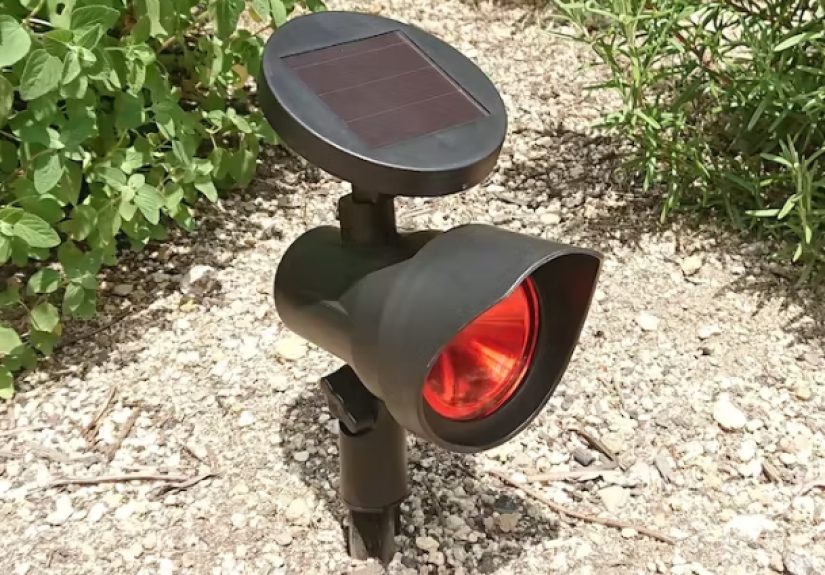
The headline idea is wonderfully hack-ish: take a solar garden lightalready designed to live outside,
already equipped with a solar panel and battery compartmentand use it as a ruggedized enclosure and power system
for a slope-monitoring sensor.
The project’s core measurement is tilt. A sensor node is installed like a stake or pile in the ground.
It measures its initial angle as a baseline, then periodically wakes up and checks whether the tilt has changed
beyond a set threshold. In the build documentation, the default alert threshold is on the order of a few degrees
(for example, 5° as a starting point), and the node typically wakes on a schedule (for example, hourly) to conserve
power.
Key building blocks (the “what’s actually inside” list)
-
Controller: A Sony Spresense-based microcontroller platform chosen for compactness and low-power
potential (with future ideas like GNSS-based location awareness). - Sensing: An accelerometer/IMU used as a tilt sensor (the project references a BMI160-based approach).
-
Enclosure + solar power: A repurposed garden-light housing with a solar panel and upgraded battery
capacity (the build notes swapping a small stock battery for a much larger rechargeable cell). - Wireless comms: Wi-SUN radio back to a local “receiver” base station.
- Base station: A Raspberry Pi 4B that receives Wi-SUN messages (via a USB dongle) and routes alerts.
-
Alerting + dashboards: MQTT messaging (with Node-RED in the mix), plus an optional display/alarm device
(the project demonstrates an M5Stack-based alert display). -
Logging: The documentation discusses recording and managing data using cloud spreadsheets and simple
app-style dashboards for map and device status views.
When the node detects “no abnormality,” it reports a healthy status and its measured angle change, then goes back to
deep sleep. When it detects an abnormal tilt change, it flashes the light’s LEDs for a local visual cue and sends an
alert message back to the base station, which can trigger audible alarms or notifications.
It’s not pretending to be a full geotechnical lab. It’s aiming to be the slope equivalent of a smoke detector:
inexpensive, understandable, and loud when it needs to be.
How Landslide Early Warning Works in the “Real World” (and Why DIY Systems Need Humility)
Professional landslide early warning is a multi-layered game: rainfall, soil moisture, slope movement, historical
landslide inventories, terrain modeling, and sometimes remote sensing like InSAR or GNSS. The reason it gets complex
is simple: slopes fail for different reasons, and the same rainfall event can produce a landslide on one hillside and
nothing on another 200 yards away.
Rainfall thresholds: common, useful, and not magic
One widely used approach is the rainfall thresholda relationship between rainfall intensity and
duration (or cumulative rainfall over recent days) that correlates with increased landslide likelihood. The USGS has
noted that rainfall thresholds are among the most common forecasting tools, but their accuracy is inherently limited
by data quality and local variability.
For a concrete example of how “threshold thinking” looks in practice, USGS work in the Seattle area has used
relationships between rainfall over the last few days and antecedent rainfall over longer windows to estimate when
landslide likelihood rises. You don’t need to memorize formulas to understand the point: what happened yesterday
matters, but what happened the last two weeks also matters.
Instrumented monitoring: the part DIY can borrow from
When rainfall data is fuzzy or localized, instrumentation helps: measuring movement, deformation, groundwater, or
pore pressure can provide clearer signalsespecially when combined with rainfall context. That’s why USGS monitoring
sites exist: to measure what the slope is doing, not just what the clouds are doing.
DIY systems like this Hackaday Prize entry sit in a sweet spot: they can’t replicate a full scientific network, but
they can detect a key precursor in some scenarioschanges in orientation or movement of an anchored stakeat a
cost that makes “many sensors” realistic.
Official warning pipelines: what DIY should respect (and learn from)
In the U.S., debris-flow and landslide-related warning work often intersects with the National Weather Service’s
broader flood warning ecosystem. USGS and NOAA have described a demonstration early warning approach for post-fire
debris flows in Southern California that used radar precipitation estimates compared against rainfall
intensity–duration thresholds, with alerts disseminated through established NWS systems.
Translation: official systems work best when they’re plugged into reliable data feeds and a communication pipeline
people already understand (watches, warnings, and emergency management messaging). DIY projects can’t replace that,
but they can adopt the same philosophy: monitor, threshold, alertthen make sure the alert reaches humans in time.
Designing Your Own DIY Landslide Warning System (Inspired by the Hackaday Build)
If you want to build something in this spirit, the trick isn’t “buy the fanciest sensor.” The trick is
designing a system that stays alive outdoors, produces data you can interpret, and alarms in a way that
humans will actually notice (including sleepy humans).
1) Pick a signal you can measure reliably
A practical DIY landslide monitoring setup usually starts with one (or a small handful) of signals:
- Tilt (inclinometer behavior): MEMS accelerometers can estimate angle changes when stationary.
- Vibration: Useful in some contexts, but noisy (wind, animals, traffic, the neighbor’s questionable DIY).
- Soil moisture or pore-water pressure: Powerful predictors, but harder to measure well and maintain.
- Rainfall: Easy to measure, but rainfall alone is an imperfect proxy for slope response.
The Hackaday Prize 2022 project chose tilt because it’s direct, low-cost, and interpretably physical: if the stake’s
angle is changing, something is happening.
2) Power and enclosures: the “unsexy” engineering that decides success
Putting electronics on a hillside is basically inviting nature to critique your soldering. Moisture, condensation,
temperature swings, insects, UV, and curious animals are all part of the test plan (whether you asked for them or
not).
Repurposing solar garden lights is clever because it shortcuts multiple problems at once: weather-resistant housing,
a solar panel, and an existing battery compartment. The project documentation even calls out upgrading battery
capacity, because power budgeting is the difference between “community safety tool” and “plastic lawn ornament.”
If you’re optimizing for real-world durability, prioritize:
- Deep sleep: Keep the microcontroller asleep most of the time; wake only to sample and transmit.
- Sampling strategy: Hourly checks can be enough for slow creep; faster sampling costs power.
- Condensation control: Gaskets, conformal coating (carefully), desiccant packs, and breathable vents where appropriate.
- Mechanical stability: The sensor is only as meaningful as its anchor. Loose stakes produce “false drama.”
3) Wireless alerts: don’t build a silent warning system
A warning system that logs data perfectly but fails to wake humans is just a very polite tragedy.
The Hackaday build uses a local wireless network (Wi-SUN) to feed a Raspberry Pi base station,
which then publishes alerts via MQTTmaking it easy to route alarms to displays, buzzers,
dashboards, or other devices.
For DIY builders, MQTT is attractive because it’s flexible: your sensor nodes can publish a simple message like
“node_07: tilt_delta=6.2°” and your base station can decide what that meanssound a siren, send a push notification,
flash a beacon, or all of the above.
If you take one UX lesson from official warning systems, make it this: redundancy beats elegance.
Use a loud local alarm, plus a phone notification, plus a visible indicator. If one channel fails, another should still
work.
4) Thresholds and false alarms: where most DIY systems earn their gray hair
Setting a tilt threshold is not a “set it and forget it” decision. Soil expands and contracts. Stakes settle. Frost
heaves in cold climates. Wind rocks tall sensor posts. Even a perfectly stable slope can produce small movements that
look scary when graphed at 2 a.m.
A practical strategy is to use tiers:
- Info: small movement, log it
- Watch: movement exceeds baseline variability, alert quietly
- Warning: rapid or sustained movement beyond a higher threshold, alarm loudly
Professional practice offers a helpful cautionary tale: rainfall thresholds vary dramatically by context. For instance,
National Weather Service materials discussing Southern California highlight how post-fire debris-flow risk can rise at
much lower rainfall intensities than non-burn conditionsmeaning the same rain rate can be “meh” in one context and
“get out now” in another.
The takeaway for DIY builders: avoid copying a number from the internet and assuming it applies to your slope.
Calibrate to your site, and treat any threshold as guidancenot destiny.
5) Data that helps decisions (not just graphs that look cool)
Data is only valuable if it leads to action. One reason the Hackaday project discusses logging to cloud spreadsheets
and mapping status in simple apps is that it turns a pile of sensor readings into something a household can check
quickly.
Borrow another page from the USGS playbook: pair movement data with rainfall context. Tools like USGS rainfall
threshold tracking emphasize moving windows (15-, 30-, 60-minute intensities) and antecedent precipitation because
“what’s happening now” and “what’s been happening lately” both matter.
In a DIY system, that could look like:
- Current tilt delta vs baseline
- Rate of change (is it accelerating?)
- Last 24–72 hours of rain (from your gauge or local weather data)
- Notes from the real world (“new crack near the retaining wall” beats a thousand dashboards)
Limitations, Safety, and the Ethics of “DIY Disaster Tech”
A DIY landslide warning system can be helpful, but it can also create a dangerous illusion: the belief that a gadget
guarantees safety. It doesn’t. Landslides can occur without obvious precursors, sensors can fail, communications can
drop, and false alarms can train people to ignore the system.
So treat this category of project the way you’d treat a smoke detector:
one layer in a larger safety plan. Know your evacuation routes. Pay attention to official watches and
warnings. Take visible slope changes seriously. And if your situation is high-risk, consult professionalsbecause
“I saw it on a forum” is not a geotechnical certification.
What the Hackaday Prize 2022 Project Gets Right (and Why It’s Worth Talking About)
The most admirable thing about this DIY landslide warning system isn’t that it’s perfect. It’s that it is
intentionally buildable. It aims for low cost, scalable deployment, and practical installation by people
who are not electronics experts. That design philosophy is exactly what community resilience needs: tools that can
spread, not just tools that can win demos.
It also demonstrates a smart “stack” approach:
sensor nodes that do minimal work (measure, compare, transmit), a base station that handles routing and logic,
and a human-facing layer that makes alerts obvious. That’s a blueprint you can adapt to other hazards toofloods,
rockfall, wildfire smoke, even “the sump pump is doing that scary thing again.”
Conclusion
Landslides don’t always give fair warning, but when they do, it’s often through subtle movement that humans miss.
The Hackaday Prize 2022: DIY Landslide Warning System is a fun, practical reminder that resilience can be
hackedsometimes literally inside a solar garden light.
If you’re a maker, the opportunity here isn’t just building a device. It’s building a habit: measure what matters,
communicate clearly, and design for the messy outdoors. And if your slope ever starts sending you “weird vibes,”
remember the most important early warning technology ever invented: leaving early.
Field Notes: What Building (and Living With) a DIY Landslide Warning System Feels Like
The first “experience” you’ll have with a DIY landslide warning system is a sudden respect for the outdoors.
Indoors, electronics mostly fail because you spilled coffee on them. Outdoors, electronics fail because reality
is a relentless, wet, dusty, sun-blasted place that views your breadboard as a snack option.
When you start assembling sensor nodesespecially in repurposed garden lightsyou discover why consumer products
are so good at surviving outside: they’re sealed, compact, and designed for zero maintenance. The moment you crack
one open to fit a microcontroller, you inherit every sealing problem the manufacturer solved for you. You’ll learn
quickly that “water-resistant” and “waterproof” are not synonyms, and that condensation is basically water’s
stealth mode.
Then there’s the emotional roller coaster of calibration. Your first few logs will look like the hillside is
auditioning for a disaster movie. A half-degree wobble becomes an existential crisis. You’ll watch graphs like a
day trader watches crypto, except the asset you’re tracking is “the ground under your house.” You’ll also learn
that sensor noise has a personalitywind gusts, temperature swings, and slight settling can all produce patterns
that look meaningful until you correlate them with “oh, that’s when the sun hit the enclosure directly.”
The big practical lesson is that thresholds are a conversation, not a decree. You’ll adjust the alert level, test
again, add a requirement for sustained change, test again, then realize you’ve reinvented “tiers” of alerting.
That’s not failurethat’s maturity. A good warning system doesn’t panic every time something twitches; it escalates
when the twitch becomes a trend.
Wireless reliability adds its own comedy. The bench test is always beautiful: perfect packets, clean dashboards,
everything crisp and obedient. Then you deploy outside and discover that radio waves have opinions about trees,
terrain, and that one metal thing you forgot was between the sensor and the base station. You’ll end up walking
around holding a device like a divining rod, muttering about RSSI, and realizing that “put the base station higher”
is the oldest networking advice on Earth.
Living with the system is where it gets real. When you know you have sensors watching a slope, you start noticing
the environment differently. Heavy rain stops being cozy and becomes data. You’ll find yourself checking not just
the alert status, but also the pace of change. If the system is designed well, it won’t make you more anxiousit
will make you more informed. But it will also teach you that hardware can’t replace judgment: if you see new cracks
or hear the kinds of sounds hazard guides warn about, you don’t wait for a push notification to validate your
instincts.
The most rewarding “experience,” though, is how community-focused the project can become. A single sensor helps one
household. A small network can help neighbors compare notes, share context, and recognize patterns. Makers who build
these systems often end up doing something quietly powerful: turning resilience from an abstract concept into a
shared, practical tool. And yesoccasionally into a neighborhood conversation starter that begins with, “So… why is
there a garden light on your hillside that screams when it’s nervous?”
If you build one, you’ll come away with a sharper sense of what monitoring can and can’t do. You’ll also gain an
appreciation for the professionals who build official early warning pipelinesbecause you’ll have wrestled with the
same core problems on a smaller scale: sensing, thresholds, false alarms, communications, and getting humans to
respond in time. That’s the real Hackaday spirit: learning by building, then using what you learned to make the next
version better.







 Close
Close