
Table of Contents >> Show >> Hide
- The 2020 Payout Surge, in Real Numbers
- Why COVID-19 Hit Life Insurance Claims So Hard
- How Insurers Kept Paying Claims During Lockdowns
- What Families Actually Do When a Life Insurance Claim Happens
- Demand Didn’t Just RiseIt Changed Shape
- Industry Impact: Paying More Claims Doesn’t Automatically Mean “Crisis,” But It’s Real Stress
- Historical Perspective: The Largest Payout Jump Since 1918
- What This Means Going Forward
- Conclusion
- Real-World Experiences From the 2020 Claim Wave (What People Ran Into and Learned)
If 2020 taught the world anything, it’s that “unprecedented” can, in fact, happen again… and again… and again.
While most of us were busy learning how to bake sourdough and pretend Zoom fatigue wasn’t real (it was),
the U.S. life insurance industry was doing something far less trendy but way more important: paying an
unprecedented number of death claims.
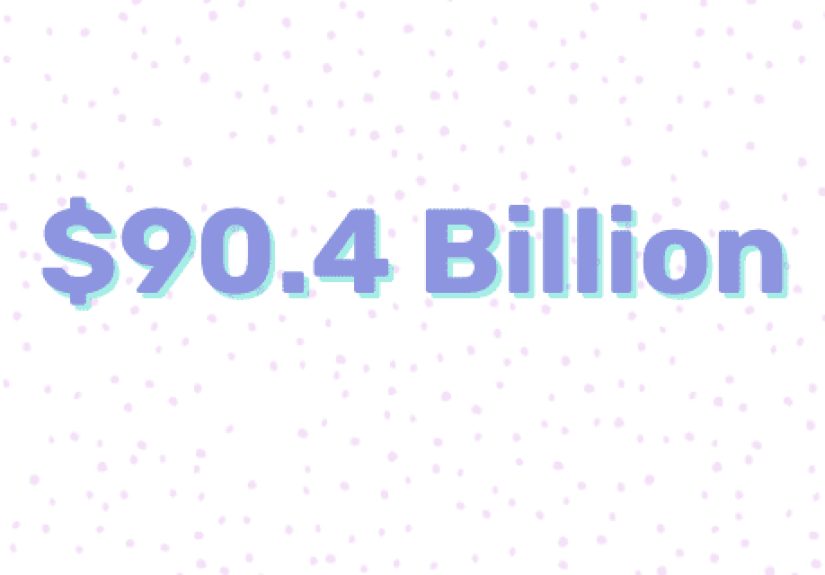
The result was a grim record. Life insurers paid more than $90 billion in death benefits in 2020,
the highest single-year total on recordrising about 15% from the year before. That jump was the
sharpest year-over-year increase since the 1918 influenza era. In plain English: this wasn’t a normal “up year.”
This was the kind of spike that makes actuaries stare into the middle distance.
But here’s the part most headlines skip: record payouts didn’t happen because life insurance “suddenly got expensive”
or because claims departments started handing out checks like candy. It happened because mortality in the United States
surged, and the life insurance systemmessy, regulated, paperwork-heavy, and famously unglamorousstill did what it’s
designed to do: send money to families when a breadwinner, parent, partner, or loved one dies.
The 2020 Payout Surge, in Real Numbers
The pandemic’s mortality shock shows up in two places at once: public health data and life insurance claim payments.
In 2020, total U.S. deaths rose dramatically compared with 2019, and COVID-19 quickly became one of the leading causes
of death. When deaths rise, life insurance claims rise tooespecially when those deaths include working-age adults who
are more likely to have coverage through employers.
Industry data for 2020 shows that death benefit payments climbed to roughly $90.4 billion, up from
about $78.4 billion in 2019 (depending on the dataset and definition used). Some financial datasets
track “net death benefits” (a slightly different accounting view), while trade group summaries often report total death
benefit payments. Either way, the direction is the same: 2020 wasn’t just higherit was a step-change.
A helpful way to think about it: life insurance doesn’t pay out because a calendar flips. It pays out because families
file claims. And in 2020, far more families had to do that than usual.
Why COVID-19 Hit Life Insurance Claims So Hard
1) The mortality shock wasn’t evenly distributed
COVID-19 mortality was heavily age-related, but the life insurance impact wasn’t limited to seniors. Group life coverage
(the type many people have through work) can be especially sensitive when mortality rises among working-age populations.
Even a “small” percentage increase in deaths can translate into a big increase in claim counts when you’re covering
millions of employees.
2) Group life insurance matteredquietly, massively
For many households, employer-provided life insurance is the only coverage they have. It often comes automatically,
sometimes with optional “buy-up” amounts. In a year when workplaces were disrupted, essential workers were exposed, and
health risks were uneven, the group market became a major channel for claims.
Actuarial research reviewing reported COVID-19 claims shows elevated mortality patterns across segments and time periods,
reinforcing that the insurance impact was not a single “one-and-done” wave. Claims patterns tracked outbreaks, variants,
and regional surgesmeaning insurers had to manage ongoing volatility, not a one-week event.
3) Claim severity is tied to coverage amounts, not just claim counts
A claim is not a claim is not a claim. Life insurance payouts depend on the policy’s face amount.
A year with more deaths among insured people who carry higher coverage (think: employed, family-supporting adults)
can push payout totals up sharply even if the overall population death rate rises for different reasons.
How Insurers Kept Paying Claims During Lockdowns
Imagine trying to run a document-heavy industry while offices are closed, customers can’t easily get paperwork,
and families are grieving under travel restrictions. That was claims operations in 2020.
Insurers had to adapt fastbecause “we’ll get to it after the pandemic” is not a valid claim strategy.
Operational shifts that became essential
- Remote claims intake and processing: More online portals, secure uploads, and phone-based support.
- Flexibility on documentation timing: In some cases, insurers and regulators encouraged practical accommodations.
- Digital acceleration: Companies already moving toward e-signatures and automated workflows moved faster.
- Regulatory coordination: State insurance regulators and industry groups provided consumer guidance and operational expectations.
The irony is that life insuranceoften seen as slow-movinghad a strong incentive to modernize quickly.
Claims are the moment of truth. If a claim is delayed, it’s not just inconvenient; it can mean missed mortgage payments,
disrupted childcare, or financial instability for survivors.
What Families Actually Do When a Life Insurance Claim Happens
Most people don’t learn the life insurance claim process until they’re in it. And unfortunately, 2020 forced that learning
curve on millions.
The typical claim checklist (in human terms)
- Find the policy: This may be an employer plan, an individual term policy, or a permanent policy.
- Contact the insurer (or HR for group coverage): Ask for the beneficiary claim packet or online claim link.
- Provide proof of death: Usually a certified death certificate (requirements vary by insurer/state).
- Confirm beneficiary identity: Basic identity verification to prevent fraud (annoying, but necessary).
- Choose payout method: Lump sum is common; some policies allow installment options.
One common myth that popped up in 2020: “Life insurance won’t pay if death is from COVID-19.”
In general, life insurance pays for covered deaths from illness, including pandemicsassuming the policy was in force
and the application information was truthful. The major exclusions people confuse with “pandemic” are usually things like
fraud, a contestability window, or specific riders with conditions. (Translation: the virus wasn’t usually the issue;
paperwork and timing were.)
Demand Didn’t Just RiseIt Changed Shape
Here’s where the story gets interesting: 2020 wasn’t only about claims. It was also about demand.
Fear changes behavior. And when families saw how quickly health outcomes could shift, more people went shopping
for coveragesometimes for the first time, sometimes to increase what they already had.
Trade group data shows total U.S. life insurance coverage reached about $20.4 trillion in 2020,
and consumers purchased a record $3.3 trillion in new coveragerepresenting tens of millions of policies.
But sales metrics tell a nuanced story: the number of policies sold rose while premium-based sales measures
(like new annualized premium) dipped in parts of the market. That can happen when more people buy coverage,
but they buy smaller policies, lower-cost term products, or purchase through direct-to-consumer channels.
What shoppers wanted in 2020
- Speed: Nobody wanted a months-long process during a global emergency.
- Simplicity: More interest in term life and streamlined underwriting.
- Remote-friendly buying: Digital applications, phone support, and fewer in-person steps.
- Clarity: Straight answers on what’s covered and how beneficiaries get paid.
Insurers responded with more accelerated underwriting in some segments (especially where data sources could replace
in-person exams), while also tightening where uncertainty was higher. The product didn’t changelife insurance is still
“if I die, my people get paid”but the buying experience evolved.
Industry Impact: Paying More Claims Doesn’t Automatically Mean “Crisis,” But It’s Real Stress
Life insurers are built to pay claims. They price policies using long-term mortality assumptions, hold reserves,
and use reinsurance to manage risk. Still, a sudden mortality spike tests the systemespecially when it hits
certain portfolios harder than others.
Ratings agencies and industry analysts spent 2020 and 2021 watching claim trends, capital buffers, and the split between
individual and group exposure. Some segments saw more strain than others; geographic concentration and product mix mattered.
Research later showed that paid death benefits in the pandemic years were materially higher than historical norms.
Meanwhile, the actuarial profession did what it always does in a crisis: measured, modeled, argued politely in PDFs,
and tried to separate signal from chaos. Mortality experience studies helped the market understand where claims were elevated,
how they compared to prior years, and what it could mean for future pricing and reserving.
Historical Perspective: The Largest Payout Jump Since 1918
Comparing 2020 to 1918 isn’t clickbaitit’s the closest historical parallel for a national mortality event that also
shows up in life insurance payout data. The 1918 influenza period saw an even sharper rise in payouts. But the modern
insurance system is larger, more regulated, and more complexso even a smaller percentage increase can translate into
an enormous dollar impact.
Put differently: the “record” isn’t just a headline. It’s a reflection of families suddenly needing the product they’d
been paying for, often for years, while juggling unemployment, healthcare disruptions, and grief in isolation.
What This Means Going Forward
The 2020 record payouts reshaped conversations about financial resilience. It also highlighted a long-standing problem:
many households are underinsured. A workplace policy might cover one year of salaryhelpful, but not always enough to
replace income, pay off debt, and stabilize a family through major transition.
Three takeaways that still matter
- Know what you have: Many people don’t realize they’re covered through workor how little it might be.
- Make beneficiaries easy to find: The fastest claim is the one where someone can locate the policy and insurer.
- Design for speed: The pandemic rewarded insurers who could pay quickly and communicate clearly.
If there’s a silver lining (and yes, it’s okay to look for one), it’s this: 2020 forced a modernization wave in underwriting,
servicing, and claims that likely improved consumer experience. Nobody asked for the catalyst. But the operational upgrades
are realand they matter the next time families need the system to work under pressure.
Conclusion
COVID-19 drove record life insurance payouts in 2020 because mortality rose sharplyand because millions of families
depended on life insurance at the exact moment it was designed for. The payout spike was historic, but the underlying
story is human: claims are never “just numbers.” They’re rent payments, funeral expenses, tuition bills, childcare costs,
and timetime to grieve without immediately falling into financial freefall.
If you take nothing else from the 2020 record, take this: life insurance is boring until it’s heroic.
And 2020 was a year that demanded heroics from a product most people prefer not to think about.
Real-World Experiences From the 2020 Claim Wave (What People Ran Into and Learned)
The life insurance story of 2020 isn’t just a chart with a spikeit’s a collection of very specific moments that families
remember in painful detail. Many beneficiaries described the same strange contrast: the world was shut down, but bills
didn’t get the memo. Rent was still due. Car payments still hit. Kids still needed groceries. And amid grief,
someone had to become the “paperwork person.”
One common experience was simply finding the policy. In normal times, families might visit a home office,
dig through a file cabinet, or call an agent. In 2020, that process often happened through text messages and phone calls
while relatives were in different citiesand sometimes while travel wasn’t practical. Employer coverage added its own twist:
beneficiaries frequently learned about group life benefits only after contacting HR or reviewing old onboarding documents.
For some, it was a surprise safety net; for others, it was a reminder that the coverage amount wasn’t as large as they assumed.
The next hurdle was documentation. Death certificates were sometimes delayed because local offices were backed up,
and families had to request certified copies through mail or limited appointments. Many people learnedunhappilythat the life
insurance claim process is straightforward but not casual. You still have to prove identity, confirm beneficiary status, and
provide the required forms. The difference in 2020 was that insurers increasingly offered digital uploads, e-signatures, and
claim status updates online. For beneficiaries who could navigate it, that reduced friction. For those who weren’t tech-comfortable,
it sometimes meant long phone calls and a steep learning curve.
Another frequent experience was choosing how to receive the money. A lump sum can be a relief, but it can also be
overwhelming: suddenly you’re holding a large amount while still emotionally raw. Some beneficiaries used the payout to pay off
a mortgage or clear high-interest debt, prioritizing stability. Others parked funds temporarily in safe accounts until they could
think clearly. Financial planners often recommended “do nothing quickly” with large windfallsexcept for urgent billsbecause
grief and big decisions don’t mix well.
On the buying side, people who shopped for coverage in 2020 often described the process as “adulting under pressure.”
The pandemic made life insurance feel less hypothetical. Many buyers gravitated to term lifebecause it’s simpler to understand,
typically more affordable, and easier to match to a time-bound need (like raising kids or paying down a mortgage). Others tried
direct-to-consumer options because they wanted speed and minimal in-person steps. Some ran into underwriting delays or extra health
questions. And plenty had the same realization: the best time to buy life insurance is usually before you feel like you need it.
The most meaningful “experience” families reported, though, wasn’t about forms or underwriting. It was the emotional whiplash of
receiving a claim payment. A check or deposit can’t fix lossbut it can prevent a second crisis from piling on top of the first.
In a year when everything felt uncertain, the ability to keep a home, maintain childcare, or cover funeral costs without borrowing
was a quiet kind of protection. That’s what record payouts really represent: millions of private safety nets deployed at once,
exactly when the country needed them.






 Close
Close