
Table of Contents >> Show >> Hide
- Wainscoting 101: The Quick, Useful Stuff
- Gorgeous Wainscoting Ideas, Room by Room
- Entryway & foyer: make the first impression do its job
- Living room: add architecture without adding clutter
- Dining room: the classic wainscoting runway
- Kitchen & breakfast nook: cozy, durable, and easy to clean
- Bedroom: soft structure that feels calm, not busy
- Kids’ rooms: charming, tough, and secretly strategic
- Bathroom & powder room: small space, big payoff
- Hallways: the unsung hero of “finished home” vibes
- Staircase walls: go taller and let it be dramatic
- Home office: professional without being boring
- Mudroom & laundry: the “wipe it down” rooms
- Style Recipes: Match Wainscoting to Your Home’s Personality
- Design Tricks That Make Wainscoting Look Custom (Even If It Isn’t)
- DIY vs. Pro: What to Know Before You Commit
- Conclusion: Your Walls Deserve Better Than “Blank”
- Real-World Experiences: What Homeowners and DIYers Learn After the First Cut (About )
If your walls feel a little… emotionally unavailable (blank, flat, and giving “rental beige”), wainscoting is the relationship counseling they need.
It adds instant architecture, protects high-traffic zones, and makes a room look like it has opinionsin the best way.
Whether you love crisp modern lines or full-on “historic home with a butler pantry I don’t actually have,” there’s a wainscoting style that fits.
The best part: wainscoting isn’t one look. It’s a whole categoryfrom beadboard and board-and-batten to raised panels and picture-frame molding.
You can keep it classic and white, go moody and dramatic, mix it with wallpaper, or take it all the way up the wall for maximum “custom home energy.”
Wainscoting 101: The Quick, Useful Stuff
What wainscoting actually is
Traditionally, wainscoting is decorative paneling or molding applied to the lower portion of a wall (often topped with a chair rail or cap).
It started as a practical wall-protector and insulation helper, and evolved into a design move that screams “finished.”
Today, it’s less about stopping drafts and more about stopping your walls from looking like a PowerPoint slide background.
How high should it go?
Most designers treat wainscoting height like a proportions game. A common “looks-right” guideline is placing the cap about one-third up the wall.
In many homes, that lands around chair-rail height (often in the low-to-mid 30-inch range), but taller applicationslike two-thirds heightcan look incredible
in rooms with higher ceilings or when you want extra drama.
- Classic height: roughly one-third of the wall (timeless, safe, and flattering in most rooms).
- Taller height: about two-thirds up (great for dining rooms, stair walls, and rooms that need “presence”).
- Full-height paneling: from baseboard to crown (bold, tailored, and very “designer did this”).
Materials that make sense in real life
Solid wood is the traditional gold standard, but it’s not the only route. MDF is popular for painted installs because it’s smooth and budget-friendly.
In moisture-prone spaces (hello, bathrooms and laundry rooms), moisture-resistant materials and good priming/painting practices matter more than wishful thinking.
If you’re going to do wainscoting near water, plan like water exists (because it does).
Paint finish: the secret to “pretty” and practical
Wainscoting lives in the splash zone of daily life: shoes, chair backs, vacuum bumping, kids doing kid things.
A slightly shinier, more durable finish than your main walls is often the move. Many homeowners use satin or semi-gloss for the panels/trim to make it easier to wipe clean,
while keeping the upper walls in matte/eggshell for a softer look.
Gorgeous Wainscoting Ideas, Room by Room
Entryway & foyer: make the first impression do its job
Your entryway is the handshake of your home. A simple board-and-batten or flat-panel wainscot instantly makes it feel intentional.
Keep it bright if the space is tight, or go darker on the bottom half to hide scuffs from bags, boots, and the occasional dramatic coat toss.
- Idea: Board-and-batten wainscoting + a row of hooks above it for a mini mudroom vibe.
- Idea: Picture-frame molding in a grid + a chunky mirror for instant “welcome, we’re organized” energy.
Living room: add architecture without adding clutter
Living rooms love wainscoting because it adds structure behind furniture. If you’re decorating a large wall, a picture-frame grid can create rhythm without needing
a million small decor pieces. If your style leans modern, try flat panels with clean trim and minimal ornamentation.
- Idea: Full-wall picture-frame molding painted the same color as the wall for subtle texture (a.k.a. “quiet luxury, but for drywall”).
- Idea: Low wainscoting + oversized art above for contrast and balance.
Dining room: the classic wainscoting runway
Dining rooms and wainscoting go together like candles and “we should host more.” Raised panels or a two-thirds-height treatment instantly feels formal.
Want a designer trick? Pair crisp lower paneling with wallpaper above. The wainscoting becomes a visual “frame,” and the wallpaper does the personality work.
- Idea: Two-tone dining room: light wainscoting below, richer paint or wallpaper above.
- Idea: Add a ledge/rail on top for plates, small art, or seasonal swaps (without more nail holes).
Kitchen & breakfast nook: cozy, durable, and easy to clean
Kitchens benefit from paneling in seating areas, nooks, or as a casual accent wall. Beadboard reads cottage/coastal, while board-and-batten reads farmhouse-modern.
If you have a banquette, wainscoting behind it makes the whole corner feel built-ineven if it’s secretly just a bench and your optimism.
- Idea: Beadboard wainscoting + open shelving above for a bright, classic nook.
- Idea: Flat-panel Shaker-style wainscoting to echo cabinet doors for a cohesive look.
Bedroom: soft structure that feels calm, not busy
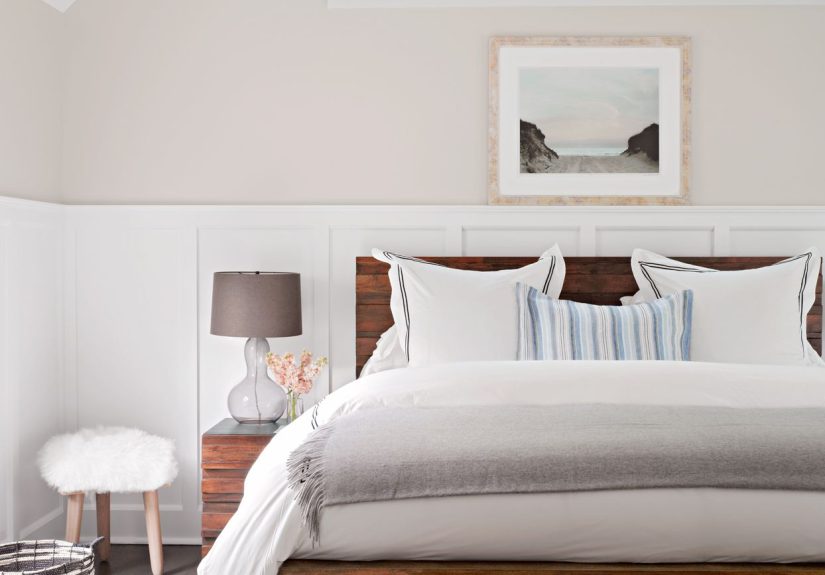
Wainscoting in bedrooms is like putting a blazer on your wallspolished, but not trying too hard. A half-wall treatment works beautifully behind nightstands,
and a full-height grid behind the bed can mimic the look of an upholstered headboard wall for a fraction of the cost.
- Idea: Picture-frame molding behind the bed in the same paint color (texture without visual noise).
- Idea: Low beadboard in a soft color for a relaxed, airy feel.
Kids’ rooms: charming, tough, and secretly strategic
In kids’ spaces, wainscoting earns its keep. It protects walls from chairs, toys, and the mysterious handprints that appear overnight.
Keep the pattern simple so it grows with themthen let paint do the fun stuff.
- Idea: Chair-rail height wainscoting with a playful color below and washable paint.
- Idea: Board-and-batten with wider spacing for a cleaner, more “not just for toddlers” look.
Bathroom & powder room: small space, big payoff
Bathrooms are where wainscoting turns into a glow-up fast. Beadboard is a classic, but you can also do flat panels for a tailored look.
In humid rooms, prep matters: prime properly, seal edges, and choose materials and finishes that can handle moisture and cleaning.
Powder rooms are the “go bold” zonepair paneling with a dramatic wallpaper and suddenly guests are complimenting your walls instead of your soap.
- Idea: Beadboard wainscoting + vintage-inspired mirror for instant charm.
- Idea: Dark, moody wainscoting + bright wallpaper above for a high-end boutique look.
Hallways: the unsung hero of “finished home” vibes
Hallways take a beating, which makes wainscoting both pretty and practical. A simple half-wall panel treatment can protect high-traffic areas,
while giving long corridors a sense of rhythm. If your hallway is narrow, keep the color lighter to avoid a tunnel effect.
- Idea: Slim picture-frame molding to add detail without crowding the space.
- Idea: Wainscoting + gallery wall above for layered texture and personalization.
Staircase walls: go taller and let it be dramatic
Stair walls are made for taller paneling. A one-third-height application can look “stuck” on a slanted wall, but a taller two-thirds treatment
(or full-height grid) helps the whole space feel intentional. If you’ve ever stared at a stair wall and thought, “What do I do with you?”this is the answer.
- Idea: Tall board-and-batten aligned with the staircase angle (it looks custom because it is).
- Idea: Full-height square grid molding for a modern architectural statement.
Home office: professional without being boring
Wainscoting in a home office adds “grown-up library” energy, even if your bookshelf is half business books and half snack storage.
Try a deeper color on the lower panels, keep lighting warm, and you’ve got a room that looks good on video calls without yelling for attention.
Mudroom & laundry: the “wipe it down” rooms
These spaces are messy by nature, so choose paneling styles that handle scuffs and cleaning. Board-and-batten looks great with built-in benches and cubbies,
while beadboard fits a cottage-y laundry space. Add hooks, baskets, and a durable paint finish, and your utility room suddenly has main-character confidence.
Style Recipes: Match Wainscoting to Your Home’s Personality
Modern farmhouse
Board-and-batten with medium-wide spacing, painted white or a warm neutral. Pair with simple black hardware, woven textures, and (optional) one tasteful “Welcome” sign
that does not threaten the aesthetic.
Coastal & cottage
Beadboard is the classic here. Keep it bright, add soft blues or sandy neutrals, and you’ve got instant relaxed charm.
Traditional & historic
Raised panels, more detailed caps, and symmetrical layouts. Consider two-thirds-height paneling in formal rooms for an elevated feel.
Modern & minimalist
Flat panels or a simple square-grid molding pattern. Keep trim profiles clean, spacing consistent, and colors either tone-on-tone or high contrast for graphic impact.
Design Tricks That Make Wainscoting Look Custom (Even If It Isn’t)
- Align with architecture: Whenever possible, line up the top rail with window sills, door casings, or other trim elements for a cohesive look.
- Scale your panels: Bigger rooms usually need larger panels; tiny panels in a big room can look fussy.
- Mind the spacing: Consistent spacing is what separates “tailored” from “Pinterest project at 1 a.m.”
- Use contrast strategically: Dark lower panels ground a room; light panels open it up.
- Wallpaper + wainscoting: If you want impact without chaos, put the wild pattern above the trim line.
DIY vs. Pro: What to Know Before You Commit
When DIY is a great idea
If you’re installing straightforward board-and-batten, beadboard panels, or picture-frame molding, DIY can be very doable with careful measuring, level lines,
and patience. (And yes, patience counts as a tool.)
When calling a pro might save your sanity
If you’re doing complex raised panels, working around very uneven walls, or want stain-grade wood with flawless joinery, a finish carpenter can be worth it.
Painted projects are forgiving; stain-grade projects are… honest.
Prep and finishing tips that matter
- Patch and smooth walls firstwainscoting highlights wonky surfaces more than you’d think.
- Prime properly (especially MDF), and don’t skip caulk on seams for that “built-in” finish.
- Choose a durable sheen for the wainscoting if the room gets traffic or splashes.
Conclusion: Your Walls Deserve Better Than “Blank”
Wainscoting is one of the highest-impact, most flexible upgrades you can make without changing your floor plan.
It can read classic or modern, subtle or bold, and it works in nearly every roomentryways, dining rooms, bathrooms, hallways, and beyond.
Start with the room that bugs you most, pick a style that fits your home, and use proportion and finish to make it look intentional.
Your future self (and your walls) will thank you.
Real-World Experiences: What Homeowners and DIYers Learn After the First Cut (About )
If you ask people who’ve actually installed wainscoting what it’s like, you’ll hear two things: (1) “I love it,” and (2) “Why are walls not straight?”
Real homes are charming, and also slightly chaotic. Baseboards dip. Corners aren’t 90 degrees. Drywall waves like it’s at a parade.
The most common “experience moment” is realizing your laser level is the only honest friend you have in the room.
A frequent surprise is just how much layout affects the final look. Many DIYers start with, “I’ll just put a few battens up,” and then
discover that spacing has to be planned around outlets, vents, furniture placement, and doors. The best results usually come from drawing a quick elevation
(even a rough sketch), marking stud locations, and deciding where you want the pattern to “land” visually. People who skip this step often end up with
one awkward skinny panel in the corner that haunts them forever.
Paint and prep are another big lesson. Homeowners who love their finished wainscoting often say the “magic” happened after caulking and filling nail holes.
Before caulk, everything can look like separate pieces of trim. After caulk and a good sanding pass, it suddenly looks like it’s always been there.
If you’re using MDF, many DIYers learn (sometimes the hard way) that sealing and priming edges is not optionalespecially in bathrooms, mudrooms, or anywhere
water and humidity might show up uninvited.
Another common experience: the emotional roller coaster of the first wall. Wall #1 takes forever. You measure six times, cut once, and still whisper,
“Please be right.” Wall #2 goes faster. Wall #3 makes you feel unstoppable. And then you hit an inside corner that’s slightly off, and you’re humbled again.
This is normal. The practical takeaway is to buy a little extra material for mistakes and off-cuts, and to treat the first wall as your practice round.
People also report that wainscoting changes how they decorate. Once the wall has structure, you don’t need as many small objects to make the room feel complete.
A hallway with paneling suddenly looks finished with just a mirror and a runner. A dining room feels formal with fewer “extra” pieces. And if you pair wainscoting
with wallpaper above, many homeowners say it becomes their favorite room because it looks custom without requiring a full renovation.
The most consistent “real-life” conclusion is simple: wainscoting is worth it. It’s one of those upgrades that photographs well, holds up to daily life,
and makes a home feel cared foreven if the laundry is currently auditioning for a documentary series.






 Close
Close