
Table of Contents >> Show >> Hide
- Why Gluten Sneaks Into Stroganoff
- Ingredient Strategy: The Building Blocks of a Great Gluten-Free Stroganoff
- Gluten-Free Beef Stroganoff Recipe (Creamy, Classic, Weeknight-Friendly)
- Gluten-Free Ingredient Checklist (So Nothing “Sneaky” Shows Up)
- Pro Tips for the Best Texture and Flavor
- Variations That Still Taste Like Stroganoff
- Make-Ahead, Storage, and Reheating
- FAQ: Gluten-Free Beef Stroganoff
- Conclusion
- Real-World Experiences With Gluten-Free Beef Stroganoff (The Stuff Recipes Don’t Tell You)
Beef stroganoff is the kind of comfort food that feels like a warm hug… except a warm hug that also insists you do the dishes afterward. Traditionally, it’s tender beef and browned mushrooms in a creamy, tangy sauce, usually spooned over egg noodles. The problem? Classic stroganoff often gets its silky thickness from flour and rides in on wheat-based noodlestwo things that don’t exactly RSVP “gluten-free.”
The good news: you can make a gluten-free beef stroganoff that tastes every bit as rich, savory, and weeknight-heroic as the original. You just need a few smart swaps, a tiny bit of technique, and the confidence to tell your sauce: “We’re not boiling today.”
Why Gluten Sneaks Into Stroganoff
Stroganoff is naturally gluten-adjacent. Even if you skip noodles, gluten can slide in through: (1) flour used to coat the beef or thicken the sauce, (2) broth and bouillon with wheat-based additives, (3) sauces like Worcestershire (some brands use malt vinegar), and (4) cross-contact from shared utensils, strainers, or cutting boards.
The fix isn’t complicatedjust intentional. Use a gluten-free thickener (like cornstarch), choose certified or clearly labeled gluten-free packaged items, and keep your prep area from turning into a “mystery crumb” crime scene.
Ingredient Strategy: The Building Blocks of a Great Gluten-Free Stroganoff
1) The beef: pick your cooking style
Stroganoff can be fast or slow, depending on the cut:
- Fast (20–30 minutes): sirloin steak, ribeye, strip steak, or tenderlointender cuts that stay juicy with a quick sear.
- Cozy-and-slow (2–8 hours): chuck roastmore connective tissue, best when gently braised or slow-cooked until spoon-tender.
If you’re doing the quick version, slice against the grain into thin strips. If you’re doing the slow version, cube it and let time do the heavy lifting. Either way, don’t skip browningthose golden bits on the pan are basically flavor savings accounts.
2) Mushrooms: the savory backbone
Cremini (baby bella) mushrooms are a favorite for stroganoff because they’re meatier than white button mushrooms and brown beautifully. Slice them thick enough to avoid mushroom “shrinkage sadness” (it’s a technical term now).
Pro tip: mushrooms brown best when they’re not crowded. Give them space, and they’ll repay you with deep, roasty flavor instead of steaming into beige regret.
3) The creamy-tangy sauce: where the magic happens
A great stroganoff sauce balances richness and brightness. Key players:
- Beef broth: choose gluten-free labeled broth or stock.
- Sour cream: full-fat is more stable and tastes richer.
- Dijon mustard: adds gentle heat and tang.
- Worcestershire sauce (or a gluten-free alternative): boosts umamijust verify it’s gluten-free.
- Paprika: classic stroganoff warmth; smoked paprika is optional but delightful.
One rule that keeps the sauce from splitting: don’t boil after adding sour cream. Add it off heat or at very low heat, and consider tempering it with warm broth first for extra insurance.
4) Thickening without flour
Flour is traditional, but cornstarch (or arrowroot/tapioca starch) thickens beautifully and stays gluten-free. The easiest approach is a slurry: whisk starch with a little cold broth or water, then stir into the simmering sauce. Smooth sauce, no lumps, no tears.
5) What to serve it over (beyond gluten-free pasta)
The most classic base is noodles, but gluten-free options are everywhere now:
- Gluten-free egg-style noodles (look for certified GF if you’re sensitive)
- Gluten-free pasta (rice, corn, quinoa blends)
- Mashed potatoes (stroganoff + mashed potatoes = pure winter energy)
- Rice (white, brown, or even cauliflower rice)
- Roasted potatoes for a crispy contrast
Gluten-Free Beef Stroganoff Recipe (Creamy, Classic, Weeknight-Friendly)
Ingredients (Serves 4)
- 1 to 1 1/4 lb beef sirloin (or strip steak), sliced into thin strips against the grain
- 1 tsp kosher salt, plus more to taste
- 1/2 tsp black pepper
- 2 tbsp olive oil (or avocado oil), divided
- 1 tbsp butter (optional but tasty)
- 1 medium onion, thinly sliced
- 12 oz cremini mushrooms, sliced
- 3 cloves garlic, minced
- 1 1/2 tsp paprika (sweet or smoked)
- 1 tbsp Dijon mustard
- 1 to 2 tsp gluten-free Worcestershire sauce (check label)
- 1 1/2 cups gluten-free beef broth
- 1 tbsp cornstarch (or 1 1/2 tbsp arrowroot for a slightly silkier finish)
- 1/2 cup full-fat sour cream
- 1 tbsp lemon juice (optional, for extra brightness)
- Chopped parsley or scallions, for garnish
- Gluten-free noodles, rice, or mashed potatoes, for serving
Instructions
- Prep the thickener. In a small bowl, whisk cornstarch with 3 tbsp cold broth (taken from your measured broth) until smooth. Set aside.
- Sear the beef fast. Pat beef dry (important for browning). Season with salt and pepper. Heat 1 tbsp oil in a large skillet over medium-high heat. Add beef in a single layer (work in batches if needed). Sear 45–60 seconds per sidejust enough to brown. Transfer to a plate.
- Brown the mushrooms. Add remaining 1 tbsp oil and butter (if using). Add mushrooms and cook until they release moisture and turn golden, 6–8 minutes. Don’t rush: color = flavor.
- Soften onion + bloom the spices. Add onion to the mushrooms and cook 3–4 minutes until softened. Stir in garlic and paprika; cook 30 seconds until fragrant (your kitchen will smell like it deserves a round of applause).
- Build the sauce. Stir in Dijon mustard and gluten-free Worcestershire. Pour in remaining broth, scraping up any browned bits from the pan. Bring to a gentle simmer.
- Thicken it. Whisk your cornstarch slurry again, then slowly stir it into the simmering sauce. Simmer 1–2 minutes until glossy and slightly thickened.
- Finish the beef gently. Reduce heat to low. Return the beef (and any juices on the plate) to the skillet. Stir for 1–2 minutes just to warm throughavoid overcooking.
- Add sour cream without drama. Turn off the heat. To prevent curdling, stir 2–3 tbsp warm sauce into the sour cream (in a bowl), then stir that mixture back into the skillet. Add lemon juice if using. Taste and adjust salt/pepper.
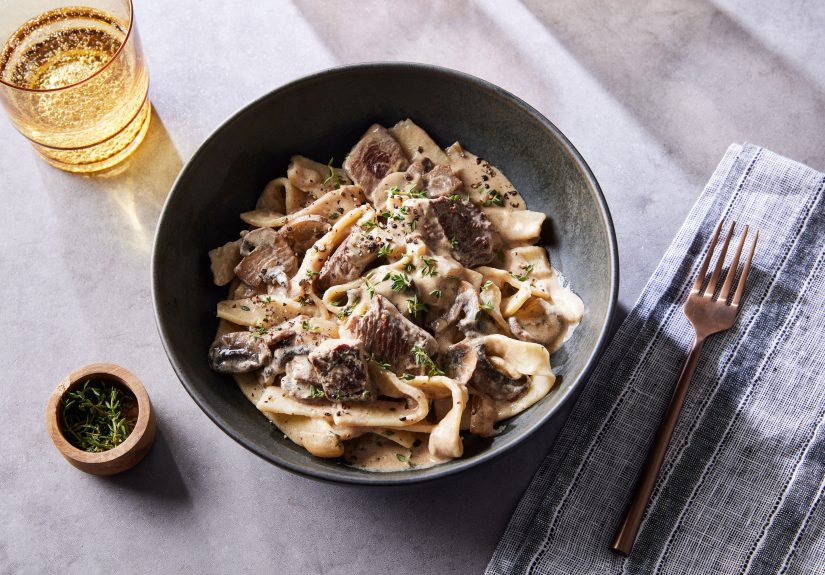
- Serve. Spoon over gluten-free noodles, rice, or mashed potatoes. Garnish with parsley or scallions.
Gluten-Free Ingredient Checklist (So Nothing “Sneaky” Shows Up)
If you’re cooking gluten-free because of celiac disease or sensitivity, your safest move is to choose products labeled gluten-free and avoid shared, crumb-prone tools. Here’s a quick checklist:
| Item | What to Check | Simple Swap |
|---|---|---|
| Beef broth / bouillon | Wheat-based additives or “natural flavors” without GF labeling | Broth labeled gluten-free |
| Worcestershire sauce | Malt vinegar or unclear labeling | Gluten-free Worcestershire (or a splash of tamari) |
| Thickener | Flour used in classic recipes | Cornstarch, arrowroot, tapioca starch |
| Noodles | Traditional egg noodles contain wheat | Gluten-free pasta, rice, potatoes |
| Kitchen tools | Colanders, wooden spoons, shared cutting boards can hold gluten | Dedicated GF tools or thorough cleaning |
Pro Tips for the Best Texture and Flavor
Temper the sour cream like it’s fragile (because it is)
Sour cream can split if it hits high heat too fast. The workaround is wonderfully low-effort: mix a little warm sauce into the sour cream first, then add it back in. This “temperature handshake” keeps the sauce creamy and smooth.
Don’t overcook the beef
Quick-cook cuts are at their best when browned and then gently warmed at the end. If you keep simmering them in sauce, they can tighten up. Sear first, finish last.
Use a thermometer if you want peace of mind
If you’re cooking steaks/strips and want to be extra food-safe, remember that whole cuts of beef are generally recommended at 145°F with a 3-minute rest. Ground beef is typically recommended at 160°F. You don’t have to turn stroganoff into a science fair projectbut a thermometer can remove the guesswork.
Boost umami without gluten
A little Dijon + gluten-free Worcestershire is classic. Want extra depth? Add:
- 1 tsp tomato paste (cook it with the onions/garlic for 30 seconds)
- A splash of gluten-free tamari
- A pinch of mushroom powder (if you keep it around like a culinary wizard)
Variations That Still Taste Like Stroganoff
Dairy-free (still creamy)
Use a dairy-free sour cream alternative, or blend soaked cashews with lemon juice, salt, and water until smooth. Stir it in off heat the same way you would sour cream.
Slow-cooker stroganoff (set it, forget it, remember it at dinner)
Use chuck roast. Brown it first for flavor, then slow-cook with onions, mushrooms, and broth until tender. Thicken with a starch slurry near the end and stir in sour cream off heat.
Ground beef stroganoff (weeknight speedrun)
Brown ground beef, sauté mushrooms and onions, then follow the same sauce method. It’s not “traditional,” but neither is eating dinner at 9:45 p.m. because everyone had “one more email.”
Make-Ahead, Storage, and Reheating
- Make-ahead: Cook the sauce base (without sour cream), cool, and refrigerate up to 3 days. Add sour cream when reheating.
- Freeze: Freeze the sauce base without sour cream for best texture. Thaw overnight and finish with sour cream off heat.
- Reheat: Low heat only. If it gets too thick, loosen with broth. Avoid boiling to prevent curdling.
FAQ: Gluten-Free Beef Stroganoff
Can I use Greek yogurt instead of sour cream?
Yeschoose full-fat, and add it off heat. Greek yogurt is more prone to separating, so temper it with warm sauce first. The flavor will be slightly tangier and lighter.
What’s the best gluten-free pasta for stroganoff?
Rice-and-corn blends hold up well and feel closest to classic noodles. If you’re very sensitive, look for pasta labeled gluten-free and avoid cross-contact by using a clean pot and colander.
How do I keep gluten out if my kitchen isn’t fully gluten-free?
Use separate or freshly cleaned tools (especially colanders, wooden spoons, and cutting boards), keep a gluten-free prep space, and store gluten-free items away from crumb hazards. When in doubt, treat flour like glitter: it gets everywhere and never truly leaves.
Conclusion
Gluten-free beef stroganoff doesn’t have to be a “sad substitute” situation. With a well-browned pan, a smart thickener, and a gentle sour-cream finish, you get that classic creamy mushroom sauce and tender beefwithout wheat sneaking into the party. Serve it over gluten-free noodles, mashed potatoes, or rice, and you’ve got a comfort-food dinner that tastes like the original… just with better boundaries.
Real-World Experiences With Gluten-Free Beef Stroganoff (The Stuff Recipes Don’t Tell You)
The first “experience” most people have with gluten-free stroganoff is realizing the dish is basically a gluten trap disguised as a beige, creamy blessing. You follow a classic recipe, everything smells incredible, and then you remember the flour, the noodles, or the “mystery broth cube” you tossed in like a carefree woodland creature. The fix is simple, but the learning curve is realespecially if you’re cooking for someone who gets genuinely sick from gluten.
One of the biggest real-life wins is discovering that stroganoff is a technique, not a single ingredient list. The “stroganoff feeling” comes from browned beef, deeply cooked mushrooms, and a tangy creamy sauce. Once you understand that, gluten-free becomes a straightforward swap game: starch slurry instead of flour, gluten-free pasta (or potatoes), and checking labels on broth and sauces. Suddenly, it’s not restrictiveit’s just… organized.
Another common experience: the sauce turning grainy or separating the moment sour cream hits the pan. This is the stroganoff equivalent of stepping on a LEGO. It hurts, it’s loud, and you immediately question your life choices. The trick is heat control. Many home cooks eventually develop a ritual: turn off the burner, scoop a little warm sauce into the sour cream, stir like you mean it, then pour it back in. It feels fancy, like you’re doing French cuisine, but you’re really just preventing a dairy tantrum.
Then there’s the mushroom situation. People who “don’t like mushrooms” often discover they actually don’t like watery mushrooms. Stroganoff is a great place to convert skeptics because browning mushrooms properly changes everythingless squeaky, more savory. The first time you cook them until golden and a little crisp at the edges, you’ll wonder why you ever rushed them. It’s one of those “ohhhh, that’s why restaurants taste better” moments.
Serving choices become part of the personality of your stroganoff. Gluten-free noodles are classic and convenient, but mashed potatoes make it feel like a Sunday dinner that just got promoted. Rice makes it lighter and great for leftovers. Roasted potatoes add crunch and turn the dish into a texture party. Real kitchens also involve real schedulesso lots of people end up serving stroganoff over whatever starch is already happening in the house. That’s not a compromise; it’s resourcefulness.
If you’ve ever brought gluten-free stroganoff to a potluck, you know the special anxiety of the serving spoon. It starts out innocent: someone takes a scoop, thenlike a slow-motion horror moviethe spoon drifts toward the nearby wheat pasta tray. This is why people who eat gluten-free get protective. A simple solution is bringing your own labeled spoon and parking it in your dish like a tiny security guard. It’s not dramatic. It’s practical. (Okay, it’s a little dramatic. But so is ruining dinner with one rogue breadcrumb.)
Leftovers teach another lesson: stroganoff sauce thickens a lot in the fridge. The next day it can look like it’s trying to become a casserole. The fix is gentle reheating and a splash of broth to loosen it back to silky. Also, reheating on high heat is the fastest way to make the sauce separate. Low and slow is the movelike warming up after a nap instead of sprinting out the door.
Finally, there’s the quiet satisfaction of serving a gluten-free stroganoff that everyone loves, including people who aren’t gluten-free. That’s the gold standard: nobody says, “Wow, this is good… for gluten-free.” They just say, “Wow, this is good,” and go back for seconds. Your secret is not magic. It’s technique, label-reading, and the deeply heroic decision to not boil sour cream. Respect the sauce, and it will respect you.







 Close
Close