
Table of Contents >> Show >> Hide
The Glass-Steagall Act was a landmark piece of U.S. legislation passed in 1933 in the wake of the Great Depression. Its main goal was to prevent the kind of reckless speculation and financial practices that had contributed to the 1929 stock market crash. The Act introduced significant reforms to the banking sector by separating commercial banking from investment banking, hoping to curb conflicts of interest and reduce the risk of future economic instability. But after more than six decades of existence, parts of the Glass-Steagall Act were repealed in 1999, leading to a heated debate over the effectiveness of the law and its eventual undoing. In this article, we’ll break down the Glass-Steagall Act’s definition, purpose, and the reasons behind its repeal.
What is the Glass-Steagall Act?
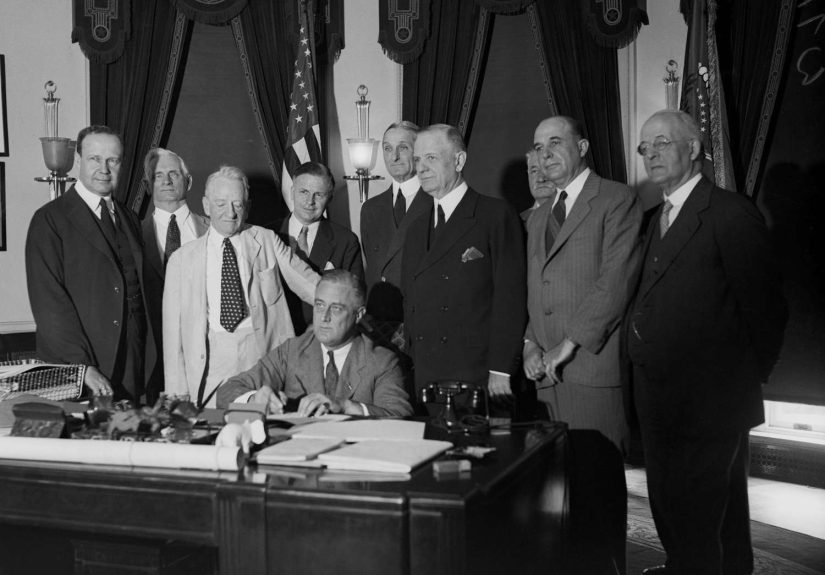
Enacted during the early years of the Franklin D. Roosevelt administration, the Glass-Steagall Act (officially known as the Banking Act of 1933) sought to restore public confidence in the financial system following the Great Depression. It addressed the growing concerns over the safety of bank deposits and the risky practices that were taking place in financial markets. One of its most significant provisions was the separation of commercial banksbanks that deal with deposits and loansfrom investment banks, which engage in securities trading and investment activities.
The rationale for this separation was simple: commercial banks were trusted with the savings of the public, while investment banks often engaged in riskier ventures such as underwriting securities and trading. By keeping the two distinct, the law aimed to prevent conflicts of interest, reduce speculation, and ensure that the financial sector could operate in a more stable, transparent manner.
Key Provisions of the Glass-Steagall Act
There were several core elements to the Glass-Steagall Act that had a lasting impact on the financial landscape. These included:
- Separation of Commercial and Investment Banking: Commercial banks were prohibited from engaging in investment banking activities, such as underwriting and dealing in securities. Likewise, investment banks could not accept deposits or make loans.
- Insurance of Bank Deposits: The Act established the Federal Deposit Insurance Corporation (FDIC), which insured deposits up to a certain amount, ensuring that depositors would be reimbursed in the event of a bank failure.
- Regulation of Bank Affiliations: The law imposed restrictions on bank affiliations with securities firms, mutual funds, and other financial entities, limiting the ability of banks to engage in risky financial activities that could jeopardize depositors’ money.
Overall, the Act was designed to provide a clear structure for banking and investment operations and to provide protections for depositors, which helped restore public trust in the banking system during a turbulent time.
The Purpose Behind the Glass-Steagall Act
The Glass-Steagall Act was conceived to achieve several important goals, all of which were aimed at stabilizing the banking industry and preventing another catastrophic collapse like the one that happened during the Great Depression. Its key purposes included:
- Restoring Public Confidence: The banking system had been rocked by widespread failures in the early 1930s. By creating clear distinctions between commercial and investment banking, Glass-Steagall sought to reassure the public that their deposits were safe from the risky practices of investment banks.
- Preventing Conflicts of Interest: Before Glass-Steagall, some banks were able to use their clients’ deposits to fund speculative activities, including investments in stocks, bonds, and other financial products. This created a direct conflict between a bank’s fiduciary responsibility to protect depositors and its desire to profit from high-risk investments. The law aimed to end this dual role by separating the two types of banking.
- Reducing Systemic Risk: By ensuring that commercial banks would not be engaged in the more volatile world of securities trading, the Glass-Steagall Act sought to limit the potential for a collapse of the entire banking system due to risky financial practices.
The Repeal of the Glass-Steagall Act
While the Glass-Steagall Act was hailed as a necessary safeguard during the Depression, it faced increasing criticism as the financial landscape evolved. By the 1980s and 1990s, many argued that the separation between commercial and investment banking was outdated and that it prevented banks from competing on a global scale. This sentiment led to efforts to weaken or repeal the law.
In 1999, the Gramm-Leach-Bliley Act (GLBA) was passed, which effectively repealed the core provisions of the Glass-Steagall Act. The GLBA allowed commercial banks to once again merge with investment banks, reversing the separation of banking activities. Proponents of the repeal argued that the changes would lead to more efficient and competitive financial institutions that could better serve the needs of the modern economy. They also pointed out that the banking system had become much more diversified and interconnected, and that the restrictions were no longer necessary.
Arguments for Repeal
Several factors contributed to the call for the repeal of Glass-Steagall:
- Increased Global Competition: Globalization had increased the competition for American banks, and many believed that the Glass-Steagall Act’s separation of banking functions put U.S. institutions at a disadvantage compared to their foreign counterparts.
- Financial Innovation: Financial markets had changed significantly, with the rise of new investment products and risk management tools. Supporters of repeal argued that modern financial instruments had reduced the risks that the Glass-Steagall Act sought to prevent.
- Changes in Banking Practices: By the 1990s, commercial banks had already begun finding ways to engage in investment banking activities through loopholes or subsidiaries. Critics of Glass-Steagall felt that the law was ineffective in preventing risky financial activities.
Consequences of the Repeal
The repeal of the Glass-Steagall Act is widely viewed as a major turning point in the financial industry. While it allowed banks to grow and diversify, critics argue that it contributed to the 2008 financial crisis. By allowing banks to engage in both commercial and investment activities, some institutions became “too big to fail,” and their risky practices resulted in a massive global financial meltdown.
The repeal has led to ongoing debates about the role of regulation in the banking sector. Many believe that the deregulation era that followed contributed to a “race to the bottom” where risk-taking and financial speculation went unchecked, resulting in widespread economic consequences. The financial crisis of 2008 highlighted many of the concerns that Glass-Steagall supporters had raised prior to its repeal, including the risks of concentrated power in the banking sector and the potential for systemic collapse.
Conclusion
The Glass-Steagall Act was a foundational piece of U.S. financial legislation that aimed to stabilize the banking sector after the Great Depression. Its goal was to prevent conflicts of interest and reduce risk by separating commercial and investment banking. However, its eventual repeal in 1999 sparked controversy and has been a point of contention ever since, especially in light of the 2008 financial crisis. While the debate over its effectiveness and necessity continues, the Glass-Steagall Act remains an important chapter in the history of financial regulation in the United States.
Experience with the Glass-Steagall Act
Looking back, the Glass-Steagall Act served as a vital safeguard for many years, preventing the kind of unchecked speculation that led to the Great Depression. It protected depositors and kept financial markets more stable. However, the repeal of Glass-Steagall has created a complex financial environment where large institutions wield immense power. The challenge now is balancing regulation with innovation to ensure that financial markets serve the broader economy and do not put the entire system at risk.
In my experience, understanding the historical context of financial legislation like the Glass-Steagall Act is crucial in evaluating modern financial practices and regulations. The repeal of the law was a key moment in the evolution of the U.S. banking system, and its aftermath continues to shape financial policy discussions today.
The debate over Glass-Steagall’s repeal underscores the tension between market freedom and regulation. As we witness continued discussions around bank deregulation and potential reforms, it’s essential to look at the lessons learned from both the successes and failures of the Glass-Steagall Act. While it may not be realistic to reintroduce the law in its original form, understanding its history can inform future decisions about the appropriate balance of regulation in the financial sector.
While banking has evolved, the lessons from the Glass-Steagall Act still resonate today. It serves as a reminder of the importance of regulating financial institutions in a way that protects consumers and maintains the stability of the financial system, even in the face of innovation and globalization.
SEO Tags (JSON Format):







 Close
Close