
Table of Contents >> Show >> Hide
- What Is a GFCI Outlet?
- What Is an AFCI Outlet?
- GFCI vs. AFCI Outlets: The Main Difference
- Do You Need GFCI and AFCI Protection?
- What Is a Dual-Function AFCI/GFCI Outlet?
- GFCI Outlet vs. GFCI Breaker
- AFCI Outlet vs. AFCI Breaker
- Where Are GFCI Outlets Commonly Required?
- Where Are AFCI Outlets Commonly Required?
- Can You Put a GFCI Outlet on an AFCI Circuit?
- How to Tell Whether You Have GFCI or AFCI Protection
- Common Myths About GFCI and AFCI Outlets
- When Should You Upgrade?
- Real-World Examples
- Safety Tips for Homeowners
- Experience-Based Notes: What Homeowners Usually Learn the Hard Way
- Conclusion
Electricity is wonderful. It powers your coffee maker, charges your phone, keeps the fridge humming, and lets your Wi-Fi router blink mysteriously at 2 a.m. like a tiny spaceship. But electricity also has a serious side, which is why modern homes use safety devices such as GFCI and AFCI outlets. They look similar enough to confuse homeowners, but they are designed to protect against very different hazards.
The simple version is this: a GFCI outlet helps protect people from electric shock, while an AFCI outlet helps protect homes from electrical fires caused by dangerous arcing. One watches for electricity going where it should not go. The other watches for electrical sparks and unstable current patterns that may signal damaged wiring. Think of GFCI as the lifeguard and AFCI as the smoke-sniffing detective. Both are useful. Neither wants your toaster to become the villain of the week.
Understanding the difference between GFCI and AFCI outlets matters because using the wrong protection in the wrong location can leave gaps in your home’s safety system. Kitchens, bathrooms, garages, laundry rooms, bedrooms, living areas, basements, and outdoor outlets may have different requirements depending on the electrical code adopted where you live. This guide breaks down what each device does, where it is commonly used, how it differs from a breaker, and when dual-function protection may make sense.
What Is a GFCI Outlet?
GFCI stands for Ground Fault Circuit Interrupter. A GFCI outlet is designed to reduce the risk of electric shock by monitoring the flow of electricity between the hot and neutral conductors. Under normal conditions, the current going out should match the current coming back. If the device detects a small imbalance, it assumes electricity may be leaking through an unintended path, such as water, a damaged appliance, a metal fixture, or a person. At that point, the GFCI shuts off power quickly.
This is why GFCI outlets are common in areas where moisture is likely. Water and electricity are not exactly best friends. In fact, they are more like two coworkers who should never be assigned the same project. Bathrooms, kitchens, laundry rooms, garages, unfinished basements, crawl spaces, exterior receptacles, pool areas, and other damp or wet locations are typical places where GFCI protection may be required.
What a GFCI Protects Against
A GFCI protects against ground faults. A ground fault happens when electricity finds an unintended path to ground. For example, imagine a hair dryer with damaged insulation near a bathroom sink. If electricity escapes its intended path, a GFCI can cut power before the situation becomes more dangerous. Standard circuit breakers and fuses are mainly designed to protect wiring from overloads and short circuits. They are not a substitute for GFCI protection where shock hazards are the concern.
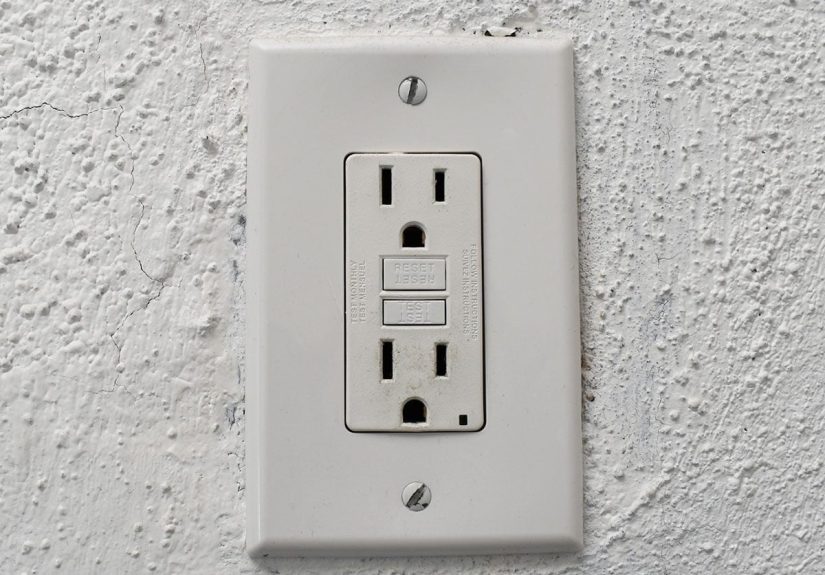
Most people recognize a GFCI outlet by its TEST and RESET buttons. Pressing the test button should trip the outlet, cutting power. Pressing reset should restore power if the device is working and the fault condition is gone. Many newer GFCI outlets also include self-testing features, but homeowners should still follow the manufacturer’s instructions for testing.
What Is an AFCI Outlet?
AFCI stands for Arc Fault Circuit Interrupter. An AFCI outlet is designed to reduce the risk of electrical fires by detecting dangerous arcing conditions. An arc fault can occur when electricity jumps across a gap between damaged, loose, corroded, or improperly connected conductors. Sometimes the warning signs are subtle: a buzzing switch, a warm outlet, flickering lights, or a cord that has been pinched behind furniture. Sometimes there are no obvious signs at all.
Arcing can generate heat. Enough heat can damage insulation, ignite surrounding materials, or start a fire inside a wall cavity before anyone notices. That is why AFCI protection has become an important part of modern residential electrical safety. It is especially associated with living spaces such as bedrooms, family rooms, dining rooms, hallways, closets, and similar areas, although exact requirements depend on the adopted electrical code and local amendments.
What an AFCI Protects Against
An AFCI protects against arc faults. Arc faults may be caused by damaged cords, nails or screws piercing wiring, loose terminals, aged insulation, overheated conductors, or stressed wiring. A traditional circuit breaker may not always respond to certain arcing patterns because the current may not be high enough to trip it. AFCI technology looks for signatures associated with hazardous arcs and interrupts power when those patterns are detected.
AFCI protection may come from an AFCI circuit breaker in the electrical panel, an AFCI receptacle installed at a suitable point on the circuit, or a listed system designed to provide the required protection. Because proper placement and wiring matter, AFCI work is not a “guess and hope” project. That strategy belongs to assembling discount furniture, not protecting a home from electrical fires.
GFCI vs. AFCI Outlets: The Main Difference
The biggest difference between GFCI and AFCI outlets is the type of danger they are designed to detect. A GFCI outlet detects ground faults, which are shock hazards. An AFCI outlet detects arc faults, which are fire hazards. Both can shut off power, but they are listening for different electrical troublemakers.
| Feature | GFCI Outlet | AFCI Outlet |
|---|---|---|
| Full Name | Ground Fault Circuit Interrupter | Arc Fault Circuit Interrupter |
| Main Purpose | Helps protect people from electric shock | Helps protect the home from electrical fires |
| Detects | Current leakage or ground faults | Dangerous arcing patterns |
| Common Locations | Bathrooms, kitchens, garages, outdoors, laundry rooms, basements | Bedrooms, living rooms, hallways, family rooms, dining rooms, similar living areas |
| Typical Visual Clue | TEST and RESET buttons | May also have TEST and RESET buttons if receptacle-style |
| Best Nickname | The shock stopper | The fire watcher |
Do You Need GFCI and AFCI Protection?
In many modern homes, the answer is yes, but not always in the same device or in the same locations. Some circuits need GFCI protection because they serve moisture-prone areas. Other circuits need AFCI protection because they serve living areas where arc-fault fire prevention is required. Some circuits may need both.
For example, a kitchen countertop receptacle may need GFCI protection because small appliances are used near sinks and wet surfaces. Depending on the adopted code in your area, that same kitchen circuit may also need AFCI protection. A bedroom circuit may need AFCI protection because of fire risk from damaged cords, furniture pressure, aging wiring, or loose connections. A bathroom receptacle generally needs GFCI protection, but AFCI requirements may vary by jurisdiction and circuit design.
This is where local code matters. The National Electrical Code is updated on a regular cycle, but states, counties, and cities may adopt different editions at different times. Some jurisdictions also make amendments. A rule that applies in one city may not be enforced the same way in another. When in doubt, the safest answer is not “my cousin saw a video.” It is “ask the local authority having jurisdiction or hire a licensed electrician.”
What Is a Dual-Function AFCI/GFCI Outlet?
A dual-function AFCI/GFCI outlet combines both types of protection in one device. It is designed to detect ground faults and arc faults. In plain English, it can help protect against shock and fire hazards at the same time. This can be useful in areas where both protections are required or desired.
However, dual-function does not mean “install this everywhere and call it a day.” The device still has to be listed for the application, installed correctly, and placed where it can provide the intended protection. It also must match the circuit rating and local code requirements. A dual-function device can be a smart solution, but it is not a magic sticker that makes every electrical question disappear.
Dual-Function vs. Combination AFCI
One common source of confusion is the phrase combination AFCI. A combination AFCI is not the same thing as a dual-function AFCI/GFCI device. A combination AFCI refers to AFCI technology that can detect different types of arc faults, such as series and parallel arcs. A dual-function AFCI/GFCI device provides both arc-fault and ground-fault protection. The words sound similar, which is exactly the kind of thing that makes electrical terminology feel like it was invented during a committee meeting fueled by cold coffee.
GFCI Outlet vs. GFCI Breaker
GFCI protection can be provided by a receptacle or by a circuit breaker. A GFCI outlet protects itself and may also protect downstream outlets if it is wired to do so. A GFCI breaker protects the entire circuit from the panel. Both can be effective when correctly installed.
A GFCI outlet is often easier to identify because it has buttons on the face. A GFCI breaker sits in the service panel and usually has a test button. Breaker-based protection can be cleaner for certain layouts, especially when multiple receptacles are on the same circuit. Outlet-based protection can be useful when protecting a specific location or replacing an older receptacle in a permitted, code-compliant way.
AFCI Outlet vs. AFCI Breaker
AFCI protection can also come from either a breaker or a receptacle. An AFCI breaker protects the circuit from the panel. An outlet branch-circuit AFCI receptacle may be used in certain code-approved configurations to protect downstream wiring and connected loads. The correct choice depends on the circuit, panel compatibility, wiring method, accessibility, and local code.
One practical issue is panel compatibility. Not every electrical panel accepts every AFCI breaker. In older homes, an electrician may evaluate whether AFCI receptacles, dual-function receptacles, breakers, or a panel upgrade is the better solution. This is especially important because nuisance tripping, shared neutrals, multi-wire branch circuits, and older wiring conditions can complicate upgrades.
Where Are GFCI Outlets Commonly Required?
GFCI protection is commonly associated with places where people may contact electricity and moisture at the same time. In residential settings, this often includes bathrooms, kitchens, garages, unfinished basements, laundry areas, crawl spaces, outdoor receptacles, boathouses, pool and spa areas, and similar locations. The exact list has expanded over time as electrical safety standards have evolved.
Here is a simple homeowner-friendly way to think about it: if an outlet is near water, outdoors, on concrete, in a garage, near a sink, or in a damp location, GFCI protection is probably part of the conversation. That does not replace code, but it is a good mental sticky note.
Where Are AFCI Outlets Commonly Required?
AFCI protection is commonly used for circuits serving habitable living areas. Bedrooms were among the earliest areas associated with AFCI requirements, but modern codes have expanded AFCI protection into many other rooms and spaces. These may include family rooms, dining rooms, living rooms, parlors, libraries, dens, sunrooms, recreation rooms, closets, hallways, and similar areas.
The reason is simple: electrical fires can start anywhere wiring, cords, and devices are used. A lamp cord crushed behind a bed, an aging receptacle behind a sofa, or a loose connection in a junction box can create risk without looking dramatic. Electrical hazards rarely enter the room wearing a cape. They prefer to hide quietly behind drywall.
Can You Put a GFCI Outlet on an AFCI Circuit?
Yes, GFCI and AFCI protection can often be used on the same circuit when the equipment is compatible and installed correctly. A common setup might include AFCI protection at the breaker and GFCI protection at a receptacle. Another option may be a dual-function breaker or receptacle that provides both protections. The right approach depends on the circuit design and code requirements.
If a circuit trips repeatedly after adding protection, do not simply assume the device is “too sensitive.” Sometimes repeated tripping means the protective device is doing its job. There may be a damaged cord, a faulty appliance, improper wiring, shared neutral issue, moisture problem, loose connection, or equipment incompatibility. Resetting it again and again without investigating is like snoozing a smoke alarm because the sound is annoying. The sound is not the real problem.
How to Tell Whether You Have GFCI or AFCI Protection
The easiest visual clue is the face of the outlet. A GFCI receptacle typically has TEST and RESET buttons. Some AFCI and dual-function receptacles also have buttons and may be labeled AFCI, GFCI, or AF/GF. Breakers in the electrical panel may also be labeled. Many modern breakers have a test button and printed markings showing AFCI, GFCI, CAFCI, or dual-function protection.
Still, labels can be missing, painted over, wrong, or written in handwriting that looks like it was done during an earthquake. If you are unsure, use a qualified electrician. Outlet testers can help identify some wiring and GFCI conditions, but they do not replace a professional inspection, especially for AFCI protection or older wiring.
Common Myths About GFCI and AFCI Outlets
Myth 1: “A regular breaker is enough.”
A standard breaker is important, but it is not designed to provide the same protection as GFCI or AFCI devices. Standard breakers respond mainly to overloads and short circuits. GFCI and AFCI devices detect different hazards.
Myth 2: “GFCI and AFCI are basically the same thing.”
They both interrupt power, but they watch for different problems. GFCI protection is about shock prevention. AFCI protection is about fire prevention.
Myth 3: “If an outlet works, it must be safe.”
An outlet can power a lamp and still be wired incorrectly, ungrounded, worn out, overloaded, or missing required protection. Function is not the same as safety.
Myth 4: “Tripping always means the device is bad.”
Sometimes a protective device fails. But frequent tripping can also point to a real problem, such as moisture, damaged cords, appliance faults, or wiring defects. The trip is a clue, not an insult.
When Should You Upgrade?
You may want to consider an electrical safety evaluation if your home is older, has two-prong receptacles, lacks GFCI protection near sinks or outdoors, has frequent breaker trips, uses many extension cords, has warm outlets, shows scorch marks, or has buzzing switches. You should also ask about GFCI and AFCI protection during renovations, kitchen remodels, bathroom updates, basement finishing, panel replacements, or when adding new circuits.
For older homes, upgrades can be especially valuable. Many houses were built before modern GFCI and AFCI requirements existed. That does not automatically mean the home is unsafe, but it does mean the electrical system may not reflect current safety practices. A licensed electrician can evaluate grounding, panel condition, circuit layout, breaker compatibility, and the best way to add protection.
Real-World Examples
Example 1: The bathroom outlet. A homeowner plugs in an electric razor near the sink. Because the location is close to water, GFCI protection is the star of the show. If current leaks through an unintended path, the GFCI can trip quickly.
Example 2: The bedroom lamp cord. A bed frame slowly crushes a lamp cord against the wall. Over time, the cord insulation becomes damaged. AFCI protection may detect dangerous arcing and shut off the circuit before heat builds into a fire hazard.
Example 3: The garage freezer. A freezer in the garage trips a GFCI. The cause might be moisture, appliance leakage current, a failing compressor, or another issue. The answer is not to bypass protection. The answer is to investigate safely and follow local requirements.
Example 4: The kitchen remodel. A kitchen may require both GFCI and AFCI protection depending on local code. This is a classic case where dual-function protection or a combination of breaker and receptacle protection may be considered by the electrician.
Safety Tips for Homeowners
Test GFCI devices according to manufacturer instructions. Do not ignore outlets that feel hot, smell unusual, spark, buzz, or show discoloration. Avoid running cords under rugs or behind heavy furniture where they can be damaged. Replace damaged cords instead of wrapping them in electrical tape and hoping for the best. Use weather-resistant covers outdoors where required. Most importantly, do not work on live electrical circuits. Electricity does not give bonus points for confidence.
If you are buying a home, ask the inspector about GFCI and AFCI protection. If you are renovating, ask your contractor which electrical code edition applies in your jurisdiction. If you are replacing outlets, remember that device type, circuit rating, box size, grounding, load-side protection, and code rules all matter. This is one area where “close enough” is not a charming personality trait.
Experience-Based Notes: What Homeowners Usually Learn the Hard Way
One of the most common homeowner experiences with GFCI and AFCI outlets is confusion after a sudden power loss. Someone plugs in a blender, hair dryer, vacuum, treadmill, outdoor tool, or garage appliance, and suddenly the outlet stops working. The first reaction is usually panic. The second reaction is to blame the outlet. The third reaction is to discover a tripped GFCI hidden behind a stack of cleaning supplies in the garage. Electrical mysteries love hiding in inconvenient places.
In real homes, GFCI protection often teaches people that one outlet can affect another. A bathroom outlet may be protected by a GFCI in another bathroom. An outdoor receptacle may be connected to a garage GFCI. A basement outlet may lose power because a GFCI upstream has tripped. This can feel annoying, but it is often intentional. One properly placed GFCI device can protect outlets downstream on the same circuit when wired correctly. The downside is that homeowners may not know where the reset button is until the holiday lights go dark and everyone starts accusing the extension cord.
AFCI experiences are different. Instead of obvious water-related situations, AFCI trips can feel more mysterious. A circuit may trip when a vacuum starts, when a treadmill runs, when a power tool is used, or when an older appliance creates electrical noise. Sometimes the device is reacting to a real arc fault. Sometimes the issue involves compatibility, damaged cords, loose connections, or older wiring. Either way, the lesson is the same: repeated AFCI tripping deserves attention. It should not be dismissed as “just a picky breaker” until the circuit and connected equipment have been checked.
Another practical lesson is that upgrades can reveal old problems. A homeowner may replace an older standard receptacle with a GFCI, only to discover that the box is crowded, the wiring is brittle, the grounding is questionable, or the circuit layout is not what anyone expected. Older houses have personality. Unfortunately, some of that personality lives inside junction boxes. This is why many homeowners decide that hiring an electrician is cheaper than turning a Saturday project into a three-day detective series.
People also learn that labels matter. A small “GFCI Protected” or “No Equipment Ground” label may not look exciting, but it helps future homeowners, inspectors, and electricians understand what is going on. The same is true for panel labels. A clear label can save time when troubleshooting. A panel directory that says “stuff,” “lights maybe,” or “Bob’s room???” is funny until the power goes out.
The most valuable experience is learning that GFCI and AFCI devices are not competitors. You do not choose one because it is “better.” They solve different problems. GFCI protection is essential where shock risk is higher. AFCI protection is essential where hidden fire risk is the concern. Dual-function protection exists because some locations need both. Once homeowners understand that, the whole topic becomes much less intimidating.
In everyday terms, GFCI and AFCI protection are like seat belts and airbags. They are different safety systems, and you want each one doing its job. You may never need them, and that is exactly the point. The best electrical safety device is the one that quietly prevents a bad day from becoming a much worse one.
Conclusion
GFCI and AFCI outlets may look similar, but they are designed for different safety missions. A GFCI outlet helps protect people from electric shock caused by ground faults. An AFCI outlet helps protect homes from electrical fires caused by dangerous arcing. Some areas of the home may require one, some may require the other, and some may require both.
For homeowners, the smartest approach is to understand the basic difference, test devices as recommended, watch for warning signs, and rely on licensed professionals for installation or troubleshooting. Electrical protection is not about making your home complicated. It is about making your home safer while everything else keeps running: the lights, the fridge, the Wi-Fi, and yes, the sacred coffee maker.







 Close
Close