
Table of Contents >> Show >> Hide
- Who Is Erik, Really?
- Ranking the Phantoms: From Gothic Terror to Romantic Antihero
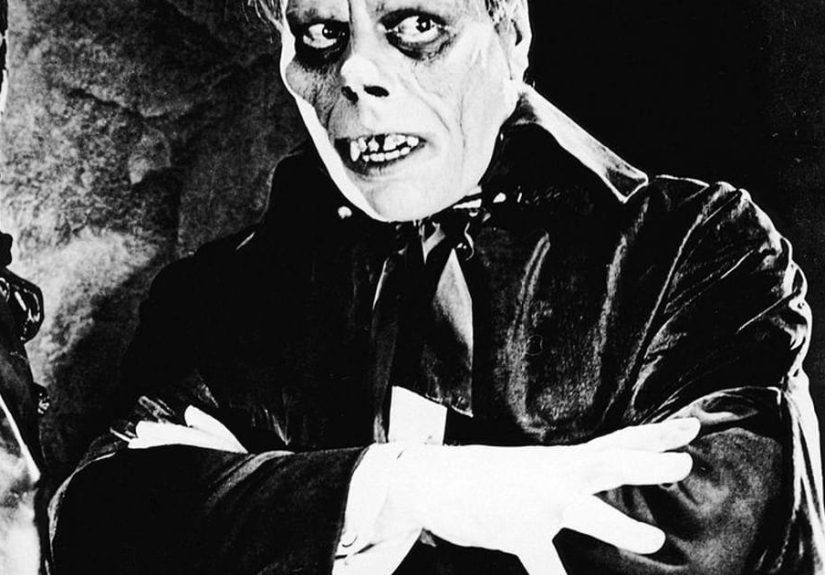
- #1: Lon Chaney – The Silent Nightmare (1925 Film)
- #2: Michael Crawford – The Definitive Musical Phantom (1986 Stage Musical)
- #3: Ramin Karimloo – The Intense Modern Phantom
- #4: Leroux’s Original Novel Erik – The Blueprint
- #5: Claude Rains – The Golden-Age Gothic (1943 Film)
- #6: Gerard Butler – The Divisive Heartthrob (2004 Film)
- #7: Herbert Lom – The Hammer Horror Phantom (1962 Film)
- #8: Stage Phantoms as a Group – Norm Lewis, Ben Crawford, and Beyond
- So… What Makes a “Good” Erik?
- Fan Opinions: Why Erik Keeps Inspiring Debate
- of Phantom-Fan Experience: Living With Erik in Your Head
- Conclusion: Your Phantom, Your Rankings
Ask ten Phantom of the Opera fans who their favorite Erik is and you’ll probably get twelve answers,
a passionate debate, and at least one person singing “Music of the Night” in full chest voice. Erik,
the masked genius haunting the Paris Opera House, has been reimagined for more than a century: in
Gaston Leroux’s original novel, silent horror films, Broadway’s longest-running musical, and a
somewhat divisive but still beloved 2004 movie adaptation.
This article dives into Erik as a character and ranks some of his most iconic portrayals, from skull-like
nightmare to misunderstood gothic heartthrob. We’ll look at how different actors, directors, and eras
have shaped “the Opera Ghost” and why fans still argue about whether the Phantom should be terrifying,
romantic, or both at once.
Who Is Erik, Really?
In Gaston Leroux’s 1910 novel, Erik is not just a brooding man in a half-mask. He’s described as
corpse-like, with a skull-like face, yellowed skin stretched over bone, sunken eye sockets, and almost
no hair. Christine calls his hands “death-cold” and likens his face to a living skeleton.
He’s a genius architect, engineer, and musician, but also an assassin, extortionist, and world-class
manipulator.
Modern character analyses tend to agree that Erik is less a cartoon villain and more a deeply traumatized
person whose entire life has been shaped by cruelty and rejection. Deprived of a “normal” childhood and
human affection, he clings obsessively to Christine as his one chance at love and redemption and that
desperation frequently tips into violence.
Depending on the adaptation, Erik can come across as:
- A horror icon you’d never want to meet in a dark backstage corridor.
- A tragic romantic antihero who makes questionable life choices but has an absolute banger of a
solo number. - Occasionally, a little too handsome to be the “monster” everyone in the story is screaming about.
Ranking the Phantoms: From Gothic Terror to Romantic Antihero
Instead of ranking every single adaptation ever (we would be here until the chandelier fell),
this list focuses on some of the most influential and talked-about Eriks using a mix of cultural
impact, faithfulness to the source, and fan opinions.
#1: Lon Chaney – The Silent Nightmare (1925 Film)
For horror fans, Lon Chaney is the Phantom. In the 1925 silent film, Chaney famously
created his own makeup: wires to pull his nose upward, false teeth, exaggerated dark eye sockets,
and a skull-like visage that allegedly caused early audiences to faint when the mask was ripped off.
Why he ranks so high:
- Faithful horror design: His appearance is the closest to Leroux’s original
description of Erik. - Physical storytelling: Without dialogue, Chaney communicates pain, rage, and
longing through body language and expressive eyes. - Enduring legacy: Film historians consider his Phantom a milestone of horror
cinema and makeup artistry, influencing generations of movie monsters.
Verdict: The most terrifying Erik, and the gold standard if you like your Phantom as an actual horror figure,
not a walking Tumblr crush.
#2: Michael Crawford – The Definitive Musical Phantom (1986 Stage Musical)
When Andrew Lloyd Webber’s musical premiered in 1986, Michael Crawford’s Phantom set the blueprint
for the stage version: powerful, controlled vocals; a mix of menace and vulnerability; and a physical
performance that made the mask and cape feel genuinely iconic. He went on to win both Olivier and
Tony Awards for the role.
Why he ranks so high:
- Vocal performance: Crawford’s “Music of the Night” became the Phantom
song for countless fans. - Balanced characterization: He feels dangerous yet heartbreaking ruthless in
his control over the Opera House, but emotionally naked in scenes with Christine. - Cultural impact: For many theater lovers, he is still “the” Phantom against whom
all others are measured.
Verdict: The ultimate musical Erik half villain, half tragic lover, and 100% Broadway legend.
#3: Ramin Karimloo – The Intense Modern Phantom
Ramin Karimloo, who played the Phantom in various London productions and in the 25th Anniversary
Royal Albert Hall concert, helped redefine Erik for a modern audience. His Phantom is vocally
powerful, emotionally explosive, and often reads as younger and more physically dynamic.
Why he ranks here:
- Emotional intensity: Karimloo leans hard into Erik’s desperation and jealousy,
making his outbursts feel raw rather than melodramatic. - Fan favorite: Among musical fans, his Phantom is frequently cited alongside
Crawford as a top-tier interpretation. - Continuity: His work in sequels and concert versions deepened the character’s
emotional arc for many viewers.
Verdict: The “modern classic” Phantom perfect for fans who like Erik as a volatile, deeply wounded
romantic figure.
#4: Leroux’s Original Novel Erik – The Blueprint
You can’t rank Erik without honoring the source material. Leroux’s Phantom is less polished than
later reinventions, but he’s the most complex: a former sideshow attraction and political assassin,
a master architect, and a musical genius who designed the Opera’s hidden passages and deadly traps.
Why he’s crucial:
- Morally ambiguous: He is truly dangerous blackmailing, kidnapping, and killing
yet capable of heartbreaking tenderness and self-sacrifice. - Deep backstory: The novel emphasizes years of abuse and exploitation, making
his obsessive behavior tragically understandable, if not forgivable. - Fandom fuel: Modern analyses often read him as a trauma survivor rather than
a straightforward monster, inspiring endless essays, meta, and fanfiction.
Verdict: Not always the most “likable” Erik, but the most layered and the reason any of the others exist.
#5: Claude Rains – The Golden-Age Gothic (1943 Film)
In the 1943 Technicolor adaptation, Claude Rains plays a version of the Phantom who is disfigured
by acid rather than born deformed, repositioning Erik as a once-respected musician turned vengeful
after an injustice.
Why he still matters:
- Sympathetic angle: The film leans into tragedy and revenge more than pure horror.
- Classic Hollywood charm: Rains brings a dignified, haunted presence rather than
a monstrous one. - Fan debates: Some classic-horror fans still argue Chaney vs. Rains as the superior
Phantom, often praising Chaney for horror and Rains for pathos.
Verdict: A key transitional Erik less nightmare fuel, more tragic backstory.
#6: Gerard Butler – The Divisive Heartthrob (2004 Film)
Gerard Butler’s Phantom in the 2004 film adaptation is one of the most hotly debated Eriks. Critics
and some theater purists argued that he lacked the vocal training the role demands and that the film
prioritized looks and spectacle over musical precision.
Fans, however, often praise his raw emotional energy and the rock-inflected style of the soundtrack
to the point that some people’s go-to Phantom is the film version.
Why he lands mid-list:
- Too handsome? Many argue the Phantom’s physical “otherness” is minimized, shifting
him from horror figure to brooding romantic lead. - Emotional but uneven: His acting often sells the pain and obsession, even when
the vocals divide opinion. - Cult favorite: For fans who discovered Phantom via the movie, Butler can feel like
the definitive Erik, regardless of critical reviews.
Verdict: Not the technically strongest Phantom, but undeniably influential in bringing Erik to a new
generation of moviegoers.
#7: Herbert Lom – The Hammer Horror Phantom (1962 Film)
Hammer Films’ 1962 adaptation, starring Herbert Lom as a masked composer wronged by a corrupt impresario,
shifts the tone toward gothic melodrama. The film isn’t the most famous Phantom outing, but Lom’s version
adds another layer to the “wronged artist” interpretation.
Why he’s worth mentioning:
- Atmospheric horror: Classic Hammer visuals and tone give Erik a lurid, colorful world
to haunt. - Tragic dignity: Lom leans into the quiet, wounded aspects of the character.
Verdict: A niche favorite not the first Phantom you’ll meet, but an important stop on the Erik tour.
#8: Stage Phantoms as a Group – Norm Lewis, Ben Crawford, and Beyond
Over decades of Broadway and West End runs, dozens of actors have worn the mask including Norm Lewis,
the first Black actor to play the Phantom on Broadway, and performers like Ben Crawford and Hugh Panaro,
each bringing subtly different shades of menace and vulnerability.
Rather than ranking them individually, it’s helpful to think of “the stage Phantom” as an evolving
character:
- Vocal variety: Some Phantoms are more operatic, others more pop-rock in style.
- Character emphasis: Certain actors lean into Erik’s cruelty; others emphasize the
wounded, almost childlike neediness described in fan analyses. - Representation: Modern casting has slowly expanded who gets to embody Erik, which
also changes how audiences read the story and its themes of difference and rejection.
Verdict: Collectively, stage Phantoms keep Erik alive literally, eight shows a week for decades.
So… What Makes a “Good” Erik?
After surveying Eriks from page to stage to screen, a few patterns emerge. A strong Phantom usually has:
1. A Clear Balance of Horror and Humanity
If Erik is only a monster, the story loses its emotional punch. If he’s only a brooding
love interest, the danger feels hollow. The best portrayals like Chaney’s horror-infused sadness or
Crawford’s terrifying yet sympathetic musical villain keep you constantly off balance.
2. A Sense of Isolation and Social Rejection
Modern readers and viewers often interpret Erik’s violence through the lens of a lifetime of rejection
and abuse. Commentary and fan analyses highlight him as someone “robbed of all humanity” who will do
anything to be seen and loved.
The more a performance conveys that isolation physically, vocally, emotionally the more Erik feels
like a tragic figure rather than a cartoon villain.
3. A Strong Musical or Physical Presence
In the musical, you need the voice. On film, especially silent-era and horror versions, you need
physical expression and a memorable visual design. Chaney’s self-applied makeup is unforgettable;
Crawford and Karimloo’s vocals define entire generations of fans; Butler’s raw emotional style gives
his Phantom an almost rock-star quality, even when his technique is debated.
4. A Believable (If Unhealthy) Bond with Christine
Erik’s story is ultimately about obsession, power, and an impossible relationship with Christine Daaé.
Some adaptations lean darker, emphasizing manipulation and coercion; others show glimmers of genuine
tenderness. The emotional core of any good Phantom depends heavily on that dynamic whether in the
original novel, the musical, or film interpretations.
Fan Opinions: Why Erik Keeps Inspiring Debate
Spend ten minutes in any Phantom discussion group and you’ll find:
- Classic horror fans insisting that Lon Chaney is “the one true Phantom.”
- Musical purists defending Michael Crawford’s voice and stage presence as unmatched.
- Movie fans cheerfully admitting they love the 2004 film, Gerard Butler and all, even while
acknowledging its flaws. - Book enthusiasts pointing out that Leroux’s Erik is far more dangerous and fascinating than
most adaptations allow.
And that’s part of the fun. Erik is a character flexible enough to be horror icon, romantic lead,
psychological case study, and cosplay inspiration, sometimes all at once. Your “best Erik” often
ends up being the version you encountered first the one that grabbed you by the heart (or the
vocal cords) and refused to let go.
of Phantom-Fan Experience: Living With Erik in Your Head
If you spend enough time with Phantom of the Opera fans, you realize something slightly alarming:
Erik has essentially taken up long-term residence in a lot of people’s brains. He’s that fictional
ex you never technically dated but still overthink at 2 a.m.
For many fans, the journey starts in one of three places: a battered copy of Leroux’s novel,
a Broadway or touring production, or the 2004 film playing on repeat in a DVD player (or,
let’s be honest, on a slightly blurry streaming copy). Each entry point shapes how you experience
Erik and how you judge every other version afterward.
Novel-first fans often talk about the shock of seeing Chaney’s makeup for the first time after
reading Leroux’s descriptions. The skeletal face, the dead eyes, the sense that Erik is something
between a ghost and a corpse it all lines up with the text in a way that feels unsettlingly
“right.” Watching the 1925 film in a packed theater, especially with live organ accompaniment
(as happens at special screenings in historic venues), can feel almost like time travel:
suddenly you’re experiencing Erik the way horror audiences did a century ago.
Musical-first fans, especially those who grew up with the original cast recording or anniversary
performances, tend to talk about Erik in more emotional terms. For them, the character is inseparable
from that soaring score: the swelling organ chords of the title song, the intimacy of “Music of the Night,”
the heartbreak of “All I Ask of You (Reprise).” Seeing the chandelier crash in person, feeling the
vibration of the orchestra in your seat, and watching the Phantom disappear in a swirl of cape and
smoke it’s all part of a formative theater experience that leaves a lasting impression.
Then there are the movie-first fans who will happily admit that, yes, the 2004 Phantom is not perfect,
but it is theirs. Maybe they were teenagers discovering gothic romance for the first time.
Maybe they didn’t care that some critics found the adaptation “histrionic” or felt that Gerard Butler
was too handsome and not vocally ideal. For them, the visual opulence, the dramatic camera work, and
the unapologetically earnest tone turned the film into comfort viewing. They hum the soundtrack while
doing chores, quote lines in group chats, and unapologetically defend “their” Erik from online slander.
A funny thing happens when these different fan types meet: the arguments get enthusiastic, but the
underlying emotion is the same. Everyone is trying to protect the version of Erik that made them
feel something terror, pity, attraction, or all three tangled together. Even critical debates
about whether the Phantom should be disfigured, de-glamorized, or de-romanticized are, at their core,
about ownership of a story that’s been retold for over a century.
On a personal level, ranking Eriks becomes less about “objective quality” and more about context.
The Phantom you saw at a life-changing performance, or the one you watched on a grainy DVD while
going through your own teenage angst, will always hit differently than a pristine, technically
flawless production you stream years later.
And that may be the most Erik thing of all: he is literally written as someone desperate to be
remembered, to carve his mark into the opera house and the hearts of the people inside it. The fact
that fans are still arguing lovingly, loudly, and with extensive playlists about which Erik
is “best” means he got exactly what he wanted. In a way, the opera house may change cities, casts,
and mediums, but Erik is still living in the walls… and in our rankings.
Conclusion: Your Phantom, Your Rankings
From Chaney’s nightmare skull to Crawford’s velvet-voiced mastermind, from Karimloo’s intense modern
antihero to Butler’s polarizing rock-romantic Phantom, Erik keeps evolving and so do our opinions
about him. There’s no single “correct” ranking, because each version reflects a moment in pop culture:
what we fear, what we romanticize, and how we understand loneliness and obsession.
So go ahead: make your own list, defend your favorite Phantom, and argue lovingly with other fans.
Erik would approve. After all, he’s been demanding our attention for over 100 years and judging by
how often he still shows up onstage and onscreen, he’s not leaving the opera house (or our collective
imagination) any time soon.







 Close
Close