
Table of Contents >> Show >> Hide
- Who Is Emma Kohlmann?
- Why Watercolor Is Her Medium of Choice
- Inside the Book “Emma Kohlmann: Watercolors”
- Recurring Themes in Emma Kohlmann’s Watercolors
- Exhibitions and Projects That Shaped Her Watercolor Practice
- Democratizing Art: Zines, Books, and Tableware
- Collecting and Living with Emma Kohlmann Watercolors
- What Artists Can Learn From Emma Kohlmann’s Watercolors
- A Journey Through Emma Kohlmann Watercolors: A 500-Word Experience
- Conclusion: Why Emma Kohlmann’s Watercolors Stick With You
If you’ve ever wished your dreams could spill onto paper in loose, inky color,
you’re already halfway to understanding Emma Kohlmann’s watercolors.
Her figures float, plants bloom, animals grow extra eyes, and everything seems
to exist in a space where gender is fluid, time is soft, and nothing is fully
explainedand that’s exactly the point.
Over the past decade, Kohlmann has used watercolor and ink to build a visual
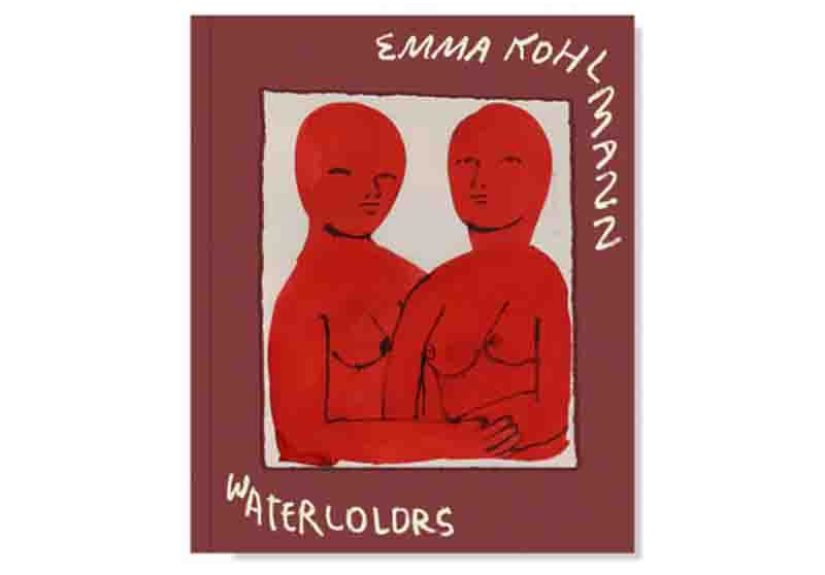
universe that feels both ancient and futuristic. Her book
Emma Kohlmann: Watercolors pulls together hundreds of these works into
a single, heavy volume that feels like a field guide to an invented mythology.
The result is intimate, accessible, and surprisingly playfuleven when it’s
touching on big topics like embodiment, spirituality, and desire.
In this guide, we’ll explore who Emma Kohlmann is, what makes her watercolor
practice so distinctive, how her book is structured, and why collectors,
casual art lovers, and aspiring painters are all paying attention.
Who Is Emma Kohlmann?
Emma Kohlmann is an American artist, born in 1989 in New York and now based in
Western Massachusetts. She studied at Hampshire College in Amherst, where she
dove into philosophy and feminist theory instead of following a traditional
art school path. That mixbig ideas plus DIY practicalityshows up everywhere
in her work.
After college, Kohlmann started out making zines with friends, self-publishing
small editions of drawings and experiments. That zine culturecheap, fast,
collaborativestill shapes her approach to watercolors today. She works across
mediums (painting, drawing, digital work, zines, books, ceramics, and even
tableware), but watercolor is the language she returns to again and again.
Her work has been shown widely in the U.S. and internationally: Jack Hanley
Gallery in New York, V1 Gallery in Copenhagen, exhibitions in Portland, Los
Angeles, Mexico City, Toronto, Stockholm, and beyond. Museums like the Portland
Museum of Art and MOCA Tucson have also included her work, and she continues to
show in thoughtful, concept-driven exhibitions that emphasize her dreamlike
figurative style.
Why Watercolor Is Her Medium of Choice
Kohlmann’s work sits at the place where watercolor’s softness meets ink’s deep,
inky authority. Rather than treating watercolor as a delicate, polite medium,
she leans into its unpredictability:
- Fluidity: Colors bleed into each other, creating halos around figures and plants.
- Speed: Watercolor dries quickly, which matches her prolific, iterative process.
- Accessibility: The materials are relatively simple, echoing her zine and DIY roots.
- Atmosphere: Thin washes create foggy, spiritual spaces that feel neither fully real nor fully imaginary.
She often pairs watercolor with black sumi ink. The ink gives her crisp lines
and decisive contours, while the color pools around them like mood or aura.
This balancebetween control and chance, line and washlets her paintings feel
both intentional and intuitive, as if they’ve just appeared on the page in a
single exhale.
Inside the Book “Emma Kohlmann: Watercolors”
The book Emma Kohlmann: Watercolors, published by Anthology Editions,
is essentially a decade-long diary of her watercolor practice in visual form.
It’s a substantial hardcover volume with hundreds of pages, collecting works
from roughly ten years of steady, focused painting.
A decade of experimentation
Over those years, Kohlmann has produced a staggering number of works on paper.
The book draws from this vast archive, highlighting how her imagery has evolved
but also how consistent her visual language is: androgynous figures, hybrid
creatures, symbolic plants, moons, suns, and mysterious shapes that feel like
they might be letters in an unknown alphabet.
Flipping through the book, you see her experimenting with:
- Monochrome palettesentire images in deep blue, rust, or green.
- Saturated gradients where one hue quietly morphs into another.
- Loose, sketch-like outlines that still carry emotional weight.
- Repeating motifs, like faces nested in flowers or two figures mirroring each other.
How the book is structured
Rather than presenting a strict, chronological retrospective, the book reads
more like a journey through moods and ideas. Works are grouped so that shapes,
colors, and gestures talk to each other across pages. You won’t necessarily see
a “2013 section” and a “2019 section.” Instead, you see how certain forms
return, transform, and complicate themselves over time.
This is part of the book’s charm: you’re not reading a timeline, you’re
wandering through a visual vocabulary. You might notice a motif in one painting
and then suddenly recognize it again, altered, 50 pages later.
Why the book matters
For fans and collectors, the book is a rare chance to see the breadth of her
watercolor practice in one place. For new viewers, it’s an approachable entry
point: you don’t need to know art theory to feel the emotional register of
these images. The works are intimate in scale and presentation, but their
themesidentity, connection, spiritual searchingare anything but small.
Recurring Themes in Emma Kohlmann’s Watercolors
One of the reasons Emma Kohlmann watercolors resonate so
strongly is that they work on multiple layers at once. At first glance, they
can look light, playful, even cute. Sit with them a bit longer, and the deeper
currents start to surface.
Feminine mythology and androgyny
Kohlmann’s figures often read as femininecurves, long hair, soft limbsbut
they’re rarely pinned to a specific gender. Features blur, bodies merge,
faces multiply. Critics often describe her work as building a
“contemporary feminine mythology,” but it might be more accurate to say she’s
building a mythic human landscape where gender is open-ended.
These figures frequently occupy positions of calm power: sitting, standing,
meditating, touching one another, or holding animals and symbols. There’s very
little hierarchy in these compositions. A small plant or butterfly can be as
important as the central figure.
Nature as collaborator
Plants, insects, birds, and hybrid creatures appear everywhere in her
watercolors. They’re not background decoration; they’re co-characters. A face
might be half flower, half person. A bird might share eyes with a human. Vines
tangle around limbs in a way that looks more like an embrace than an attack.
The overall effect is a sense of constant entanglement between humans and the
natural world. Rather than painting humans looking at nature from the outside,
she paints humans as one node in a larger, mysterious ecosystem.
Spirituality without dogma
Many of Kohlmann’s watercolors feel spiritual, but they don’t point to any
specific religion. Symbolsmoons, suns, eyes, altars, radiating shapesshow up
repeatedly, suggesting ritual or prayer without ever spelling it out.
Recent exhibitions have pulled this out even more clearly, showing her figures
in grid-like arrangements that resemble altarpieces or tarot spreads. The
watercolors invite contemplation, but they never tell you what to believe; they
just give you a place to sit with your own thoughts.
Exhibitions and Projects That Shaped Her Watercolor Practice
While the book offers a broad overview, Kohlmann’s gallery exhibitions give
her watercolors specific contexts and themes. Shows in New York, Copenhagen,
and elsewhere have explored connections between her imagery and ideas like
inner vision, the body, and ritual.
-
Early solo shows in places like Portland, Los Angeles,
and New York brought her “Sun Spots,” dreamlike figures, and small-format
works to wider audiences. -
International exhibitions in galleries such as V1 (Copenhagen),
Nevven (Gothenburg), and others helped frame her work as part of a global
conversation around contemporary figurative painting and gendered imagery. -
Recent shows continue to expand her vocabulary, often
presenting tightly curated sequences of watercolors that focus on a specific
mood or symbolic cluster.
Across these exhibitions, one thing remains constant: the watercolor works are
small enough to feel intimate but powerful enough to command a full gallery
wall when presented in series. That tension between intimacy and scale is part
of what makes them so memorable.
Democratizing Art: Zines, Books, and Tableware
Emma Kohlmann’s watercolors don’t only live in white-cube galleries. From the
start, she’s been committed to making her work accessible in everyday formats:
zines, books, posters, and even ceramics and tableware.
She has collaborated on publishing projects and co-runs a small press with her
sister, focusing on equitable, affordable access to art and text. That ethos
carries into Emma Kohlmann: Watercolors itself: it’s a beautifully
produced book, but it’s also an object you can keep on your coffee table,
flip through whenever you need a dose of visual weirdness, and share with
friends.
She has also collaborated with design brands on everyday objectslike a
tableware collection that carries her signature loose figures and plant
motifs. It’s a simple but radical idea: you don’t have to go to a museum to
live with art. You can drink coffee from it, too.
Collecting and Living with Emma Kohlmann Watercolors
If you’re drawn to Emma Kohlmann watercolors, you’re in good
company. Her works appear with galleries, on curated online platforms, and in
institutional collections. But even if you’re not ready to buy an original,
there are a few ways to bring her world into yours.
Original works
Original watercolors are typically small to medium in scale and often appear in
series. Collectors are drawn to their combination of intimacy and boldness:
you can hang a single piece in a corner and it will quietly transform the
space. Because she works prolifically, her body of work feels alive and in
motion; new pieces echo earlier ones while opening fresh variations.
If you’re considering collecting, it’s worth thinking about:
- What motifs you’re drawn tofaces, plants, hybrid creatures, or pure abstraction.
- Whether you want a standalone piece or a pair that mirrors or contrasts.
- How the color palette fits into your space (deep blue, earthy brown, moss green, etc.).
Books and editions
For most people, the book Emma Kohlmann: Watercolors is the easiest
and most affordable way to bring her work home. It functions as:
- A personal art library essential if you’re into contemporary watercolor or figurative art.
- A reference for artists studying how to balance looseness and clarity.
- A conversation piece that tends to migrate from the bookshelf to the coffee table.
Zines and small-run printed matter, when available, are also a key part of her
practice and an accessible entry point for new fans.
What Artists Can Learn From Emma Kohlmann’s Watercolors
You don’t need to paint exactly like Emma Kohlmann (you shouldn’t!) to learn
from her practice. There are a few big takeaways for anyone experimenting with
watercolor, ink, or figurative work more broadly.
1. Let repetition deepen your language
Kohlmann returns to certain motifs over and over: faces, mirrored bodies,
plants that look like symbols, eyes that might be suns. Rather than searching
for a completely new image every time, she lets repetition push familiar forms
into new territory. If you’re painting, try doing the same figure ten
different ways. You’ll be surprised how much emerges on attempt number seven
or eight.
2. Trust intuition (and imperfection)
Many of her watercolors feel like they were made quickly, with a steady hand
but without overworking. Edges are sometimes fuzzy, limbs are a little
strange, faces are stylized rather than anatomically perfect. Those quirks are
what give the work its emotional honesty. Watercolor rewards artists who know
when to stop; Kohlmann seems to have a finely tuned sense of that threshold.
3. Mix everyday life with big ideas
Behind the mythic vibe of her watercolors is a very grounded practice: a
consistent studio routine, a commitment to making lots of work, and a
willingness to learn from communities outside traditional art institutions.
That blend of practical discipline and conceptual curiosity is a powerful model
for any creative person.
A Journey Through Emma Kohlmann Watercolors: A 500-Word Experience
Imagine walking into a small, bright room where every wall is lined with
watercolor works the size of your head or smaller. At first, you do what
everyone does in a gallery: slow walk, polite nods, the little “hmm” face that
says, “I am Thinking About Art.” And then, somewhere around the third or
fourth painting, you realize you’re not just lookingyou’re being quietly
pulled in.
A pair of figures stand side by side, their bodies outlined in a dark, inky
line. They’re not detailed in the usual senseno eyelashes, no tiny
wrinklesbut somehow you know exactly what they’re feeling. Their torsos are
filled with a soft wash of color, like a mood poured into a body. Around them,
plants curl into shapes that could just as easily be calligraphy. You’re not
sure if you’re reading or looking anymore.
As you move along the wall, you start to notice how many little decisions are
holding these images together. One painting might be entirely blue, with the
color pushed from pale sky to dense indigo. Another might be a warm rust, like
something left in the sun too long. The palettes are simple, almost strict,
but the emotional range is huge: some works feel like jokes, others like
prayers, many like dreams you almost remember.
If you’ve spent any time with watercolor yourself, you know how easy it is to
turn a promising painting into a muddy mess. That’s part of what makes seeing
Emma Kohlmann’s work in person so striking. You can almost trace the order of
operations: the quick, decisive line; the wash that blooms out from the
center; the tiny, concentrated detail added at the end. There’s risk in every
step, and you can feel that risk, even in the calmest pieces.
Now imagine taking the exhibition home in book form. You open
Emma Kohlmann: Watercolors on your couch with a cup of coffee and
flip to a random page. A single figure floats there, half plant, half person.
You turn the page, and suddenly there’s a whole grid of figures, like a choir
of shapes singing in different colors. You look up from the book and realize
the room you’re inyour very normal, slightly messy living roomfeels
different now. Not dramatically, just…more open. As if something inside the
paintings has quietly agreed to keep you company.
That might be the strongest part of the experience of Emma Kohlmann
watercolors: they don’t insist on themselves. They’re not shouting for
attention or demanding that you decode them correctly. They’re more like
invitations. You can bring your own questions about gender, identity,
spirituality, or you can simply enjoy the way a single line curves around a
shoulder. The work meets you wherever you happen to be that day.
For some people, that means collecting an original and living with it on their
wall, letting it slowly reveal new details over years. For others, it means
revisiting the book every few months when life feels too literal and you need
a reminder that other, stranger, softer worlds are possible. Either way,
spending time with Emma Kohlmann watercolors is a bit like
learning a new languageone where plants talk, bodies are mutable, and
everything is painted just loose enough that you get to finish the sentence
yourself.
Conclusion: Why Emma Kohlmann’s Watercolors Stick With You
In a world full of polished, hyper-detailed images, Emma Kohlmann’s
watercolors stand out precisely because they’re not trying to be perfect. They
’re fast, intuitive, symbolic, and deeply human. They leave room for the
viewerto project, to question, to feel.
Whether you encounter them on a gallery wall, in a museum collection, in the
pages of Emma Kohlmann: Watercolors, or on everyday objects, her
paintings offer a consistent invitation: slow down, look closely, and let a
simple wash of color and a single, confident line re-arrange how you see the
worldeven if just for a moment.






 Close
Close