
Table of Contents >> Show >> Hide
There was a time when COVID felt like a flashing billboard: impossible to ignore, emotionally exhausting, and somehow always louder than whatever else was happening in the world. Now it often behaves more like background music in a grocery store. It is still there. You just do not always notice it until the tune changes, your cart squeaks, and suddenly you are very aware that something is off.
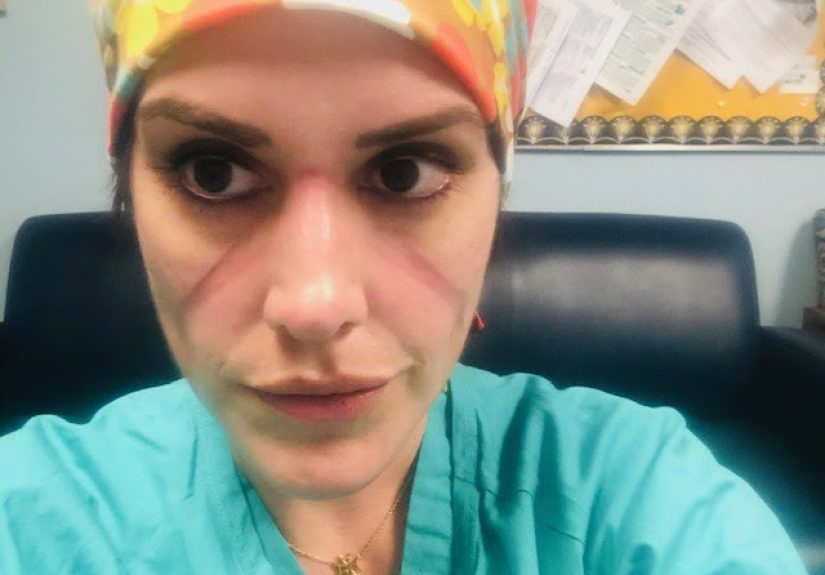
That is why the phrase “an impending case of the stripes” still works so well. COVID has always left marks. Some were obvious: the grooves masks pressed into tired faces, the tear lines on cheeks after a frightening phone call, the dramatic red line on a test that could ruin a week in a single second. Other stripes were harder to spot. They showed up as brain fog, missed shifts, a child falling behind in school, a grandparent avoiding crowded rooms, or a patient who looked “fine” right up until they absolutely were not.
So no, COVID is not the same emergency it was in 2020. But it is also not a historical costume we can pack away in the attic next to sourdough starters and questionable home haircut memories. The virus keeps evolving, public health guidance keeps adapting, and millions of people are still living with its aftereffects. In other words, the stripes did not vanish. They just became more complicated.
What “the stripes” really mean in the COVID era
The beauty of this metaphor is that it captures two truths at once. First, COVID is a medical story. Second, it is a social story. The stripes are not just symptoms. They are evidence of pressure. They are what happens when biology collides with fear, work, family, policy, and the deeply human urge to pretend everything is normal five minutes before it actually is.
Early in the pandemic, the stripes were dramatic and easy to identify. Hospitals were stretched. Protective gear left bruises. Families learned medical vocabulary they never wanted to know. Entire routines were rearranged around risk. That visible phase of the pandemic burned itself into public memory.
Today, the stripes are less theatrical but still significant. COVID has settled into a pattern closer to an endemic respiratory threat, which sounds calm until you remember that “endemic” does not mean harmless. It means persistent. It means we live with it. It means the danger is now distributed unevenly rather than announced with a giant siren.
The virus changed costumes, not character
One reason COVID keeps earning new stripes is simple: the virus does not sit still. SARS-CoV-2 continues to mutate, generate new lineages, and replace older versions of itself. Public health agencies use genomic surveillance to track those changes, while wastewater monitoring has become an especially useful early-warning system because it can detect rising circulation before clinical data fully catches up.
That matters because our experience of COVID now is less about one singular wave crashing over everyone at once and more about a rolling series of smaller swells. Different lineages rise. Community activity goes up or down. Severe disease is less common than in the earliest phases of the pandemic, but it has not disappeared, especially for older adults, people with certain medical conditions, and residents of long-term care settings.
In plain English: COVID is no longer always the loudest virus in the room, but it is still very much in the room, occasionally rearranging the furniture when nobody is looking.
Why testing still matters, even when it is annoying
Testing is another part of the striped landscape. FDA guidance has repeatedly emphasized that most COVID tests are designed to detect known variants, but viral mutations can affect test performance and false negatives can happen. That does not make testing useless. It makes testing a tool that should be used with common sense. If someone has symptoms, known exposure, or risk factors for severe illness, a single negative result should not always be treated like a magical hall pass.
That modest little strip on a rapid test still carries emotional weight because it represents uncertainty. For many people, that is the most durable stripe of all: the mental math of “Is this allergies, a cold, COVID, or the universe playing practical jokes again?”
The invisible stripes: Long COVID and the slow burn
If acute infection is the first chapter, long COVID is the reason the story refuses to end on cue. The CDC describes long COVID as a chronic condition that occurs after SARS-CoV-2 infection and is present for at least three months. It can improve, worsen, come and go, or stubbornly remain. It can affect multiple body systems, including the heart, lungs, brain, kidneys, and skin. That wide range is one reason long COVID is so frustrating for patients and clinicians alike.
Fatigue is a common stripe. Brain fog is another. Some people deal with shortness of breath, exercise intolerance, palpitations, sleep disruption, or symptoms that flare after mental or physical effort. Others face a messier pattern: several symptoms, no neat timeline, and a life that begins to revolve around energy management like it is now a part-time job with no benefits.
Long COVID also complicates the old, lazy habit of dividing illness into “serious” and “mild.” An infection that did not lead to hospitalization can still leave a person with months of trouble concentrating, working, parenting, or participating in normal routines. That is why the stripes metaphor lands so well here. The marks may not be obvious to everyone else, but they alter daily life in real ways.
The stigma stripe
There is another layer: disbelief. Many people with long COVID have described the experience of feeling dismissed, minimized, or politely nodded at while their lives become harder to manage. Public health guidance now explicitly recognizes stigma as part of the long COVID challenge. That is a major shift from the early years, when many patients felt like they had to become their own case manager, researcher, and defense attorney all at once.
And that is a particularly exhausting stripe, because symptoms are hard enough without needing to audition for credibility.
The stripes of inequality
COVID has never spread or landed on a perfectly level playing field. The pandemic exposed and amplified barriers that already existed: difficulty taking time off work, limited transportation, crowded housing, uneven healthcare access, distrust of institutions, and the simple fact that some people are expected to keep society running while everyone else is told to stay home and hydrate.
CDC materials continue to note racial, ethnic, and socioeconomic disparities in COVID illness, hospitalization, and death. The burden of long COVID has also raised concerns about work limitations, healthcare affordability, and ongoing social strain. Survey-based analyses from U.S. health policy researchers have shown that many people living with long COVID report at least some limitation in daily activities, and a meaningful share say those limitations are severe enough to affect work, finances, or both.
These are stripes that do not show up on a forehead thermometer. They show up in paychecks, school attendance, appointment delays, and the patience required to navigate a healthcare system that is still learning how to meet a chronic, shape-shifting condition.
There is no clever way around that truth. A virus may be biologically indiscriminate, but its consequences are not.
What smarter COVID living looks like now
If the first era of COVID was about emergency reaction, the current era is about intelligent maintenance. The winning strategy is not panic, and it is not denial. It is practical, boring, stubborn prevention. Frankly, boring prevention has always been underrated. It lacks drama, but drama is not actually a public-health metric.
1. Vaccination still belongs in the conversation
Current CDC guidance recommends 2025–2026 COVID vaccination based on individual decision-making, with particular emphasis on people at higher risk for severe disease, including older adults and people with certain medical conditions. The vaccines used in the United States have been updated to reflect the virus’s ongoing evolution, including formulations based on the Omicron JN.1 lineage.
This is not about pretending vaccines eliminate all risk forever. It is about reducing the odds of severe illness, hospitalization, death, and possibly lowering the risk of long COVID. That is a realistic goal, and realism is refreshing.
2. Early treatment should not be an afterthought
For people at higher risk of progression to severe illness, early treatment remains important. Antiviral options exist, and timing matters. Waiting around to see whether symptoms become dramatic enough to deserve attention is not a great strategy, especially for older adults or people with multiple risk factors. COVID has a long history of punishing procrastination.
3. Cleaner air is not a fad
Ventilation and air cleaning deserve their glow-up. Public health guidance now places cleaner indoor air alongside hygiene, vaccination, and staying home when sick as part of the prevention toolkit. This is one of the most useful lasting lessons from the pandemic. Air is infrastructure. Once you accept that, a lot of old arguments start sounding silly.
4. Stay home when sick, and yes, that still applies
One of the most reasonable shifts in public health messaging has been the broader respiratory-virus guidance: stay home when sick, take steps to reduce spread, and seek care promptly if you are at higher risk. It sounds almost insultingly simple, which is probably why it remains so hard for modern life to practice consistently.
The pandemic revealed a strange cultural flaw: many people were proud of functioning while obviously ill, as though coughing through a meeting was a character trait. It is not. It is a biohazard with a calendar invite.
Why the metaphor still matters
The phrase “an impending case of the stripes” works because it lets us talk about COVID without reducing it to a dashboard or a political argument. It reminds us that disease leaves marks beyond the lab result. Some stripes are medical. Some are emotional. Some are social. Some are economic. Some are visible only in hindsight.
And perhaps the most persistent stripe of all is the one COVID drew across our illusions. It separated what we assumed from what was true. We learned that healthcare systems can bend alarmingly fast, that misinformation can spread almost as efficiently as a pathogen, and that people will tolerate confusion for a surprisingly long time if normalcy is sold in attractive enough packaging.
Still, there is a useful lesson in all this. The answer is not to become permanently frightened. It is to become permanently smarter. Smarter about risk. Smarter about air. Smarter about compassion. Smarter about believing people when they say they are not fully recovered, even if they look fine under fluorescent lighting.
Experiences from the striped years
A nurse once described the pandemic to me in a way I have never forgotten: “At first, COVID looked like chaos. Later, it looked like paperwork.” That sentence explains more than many official summaries ever could. In the early days, the experience was noise, alarms, and adrenaline. Years later, the experience often became follow-up appointments, rescheduled plans, and a strange recalibration of what people considered normal.
For one office worker, the stripe was not hospitalization or dramatic illness. It was the routine collapse of certainty. She caught COVID, recovered, and returned to work expecting closure. Instead, she found herself rereading the same email three times because her concentration kept slipping. She laughed it off at first. Then she stopped laughing. Her job had not changed, but the amount of effort required to do it had. That is a very modern COVID experience: not a cinematic medical crisis, but a quiet theft of ease.
For a father of two, the stripe was logistical. Every sore throat became a scheduling event. School drop-offs, test kits in bathroom drawers, text messages to grandparents, and the constant negotiation of who could stay home and who absolutely could not. The emotional burden was not always fear of catastrophe. Often it was fatigue from endless contingency planning. COVID turned ordinary family life into a low-budget operations center.
For some older adults, the stripes were social before they were physical. A woman in her seventies described how the world reopened faster than her confidence did. Restaurants were full again, but she still chose corners, patios, and off-hours. Her friends called her cautious. She called it math. She knew her age increased her risk. She also knew public impatience is not the same thing as public safety. That too is part of the experience: being asked to treat your own caution as though it were eccentricity.
Healthcare workers have their own version of the stripes. Not always the dramatic ICU scenes people imagine, though those were real enough. Sometimes the stripe is moral fatigue. It is the feeling of caring for patients while also watching misinformation, distrust, and system strain make the work harder than it already is. It is the memory of a face seen through protective equipment, the sense that medicine became both more heroic and more heartbreakingly limited at the same time.
And then there are the people with long COVID, whose experience often feels like being forced to explain a blurry photograph to someone demanding perfect resolution. They know something changed. They can feel the difference in stamina, memory, or breathing. But because the change is not always visible, they are sometimes expected to perform wellness for the comfort of others. That may be the most unfair stripe of all.
Taken together, these experiences reveal the same thing: COVID did not just infect bodies. It reorganized expectations. It taught people to scan for symptoms, calculate tradeoffs, and think about air, risk, and recovery in ways they never had before. The stripes may fade, but they have changed the pattern of everyday life.
Conclusion
COVID no longer needs a spotlight to remain consequential. Its stripes are still visible in variant tracking, vaccine updates, long COVID clinics, workplace adjustments, school absences, and the quiet caution many people carry into shared spaces. The virus has become more familiar, but familiarity should not be mistaken for triviality.
If there is a hopeful takeaway, it is this: we are better equipped than we were, even if we are not always better behaved. We know more about prevention, risk, treatment, and recovery. We know cleaner air matters. We know early treatment matters. We know long COVID is real. And we know the people still carrying the pandemic’s stripes deserve something better than skepticism and fatigue from the rest of us.
COVID may not always announce itself with drama anymore. But the wise response remains the same: pay attention, stay honest about risk, and do not confuse quieter stripes with harmless ones.






 Close
Close