
Table of Contents >> Show >> Hide
- What Is the Cat-Cow Stretch?
- How To Do the Cat-Cow Stretch Correctly
- Benefits of the Cat-Cow Stretch
- Common Mistakes To Avoid
- Easy Modifications and Variations
- Who Should Be Careful With Cat-Cow?
- When To Add Cat-Cow to Your Routine
- What Cat-Cow Feels Like in Real Life: Common Experiences With the Stretch
- Final Thoughts
If your back feels like it spent the night sleeping in a folding chair, the cat-cow stretch may be your new favorite truce with gravity. This simple yoga move looks almost too easy to matter, but that is exactly the point. Cat-cow is gentle, beginner-friendly, and surprisingly effective at waking up the spine, loosening stiff muscles, and helping your breathing slow down enough to remember you are, in fact, a human and not a stressed-out office pretzel.
Known in yoga as a flowing combination of Cat Pose and Cow Pose, this movement pairs spinal flexion and extension with steady breathing. In plain English: you round your back, then arch it, then repeat. That little rhythm can help improve spinal mobility, encourage better posture awareness, activate the core, and ease some of the tension that builds up after long stretches of sitting, scrolling, driving, or existing in modern society.
Below, you will learn exactly how to do the cat-cow stretch, what benefits it may offer, common mistakes to avoid, and how to modify it if your wrists, knees, or lower back are not in a particularly cooperative mood.
What Is the Cat-Cow Stretch?
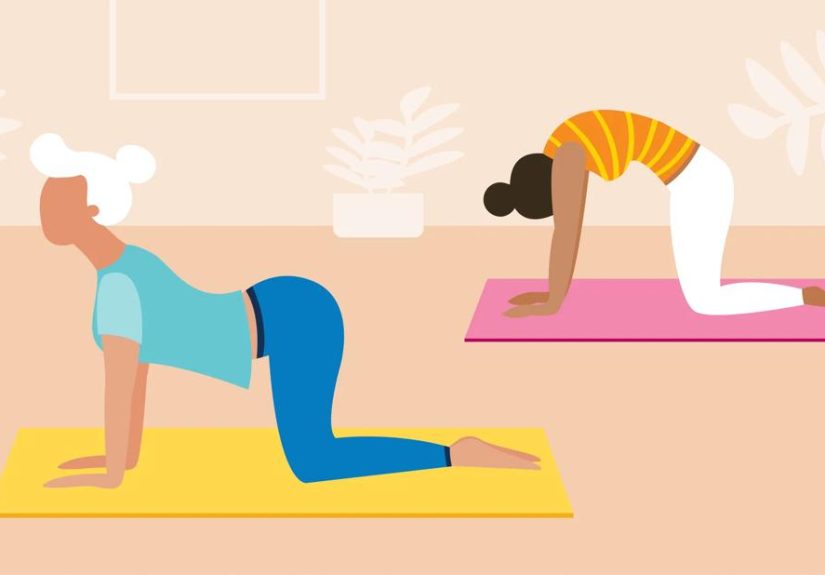
The cat-cow stretch is a gentle yoga flow usually performed on all fours in a tabletop position. You alternate between two shapes. In cow, you lift the chest, tilt the tailbone up, and let the belly soften toward the floor. In cat, you round the spine toward the ceiling, tuck the chin, and draw the belly in. The movement is slow and controlled, and each phase matches your breath.
It is often used at the beginning of a yoga class because it warms up the spine without demanding heroic flexibility. But you do not need a mat, incense, or a playlist called “Moonlight Vibes for Inner Alignment” to use it. Cat-cow works just as well as a standalone stretch during a morning routine, a work break, or a post-workout cooldown.
How To Do the Cat-Cow Stretch Correctly
Step 1: Set up in tabletop
- Start on your hands and knees on a mat, carpet, or other comfortable surface.
- Place your wrists under your shoulders and your knees under your hips.
- Spread your fingers and press evenly through your palms.
- Keep your head and neck in line with your spine, with your gaze down.
- Lightly brace your midsection so your back starts in a neutral position rather than sagging or rounding.
Step 2: Inhale into cow
- Breathe in slowly.
- Lift your tailbone and gently let your belly drop toward the floor.
- Draw your shoulder blades back and broaden your chest.
- Lift your head slightly and look forward, not sharply upward.
- Keep length through the back of your neck instead of crunching it.
Step 3: Exhale into cat
- Breathe out slowly.
- Tuck your tailbone and draw your belly button inward.
- Round your spine up toward the ceiling.
- Let your shoulder blades spread apart.
- Drop your head naturally and bring your chin toward your chest without forcing it.
Step 4: Repeat with control
Flow back and forth for 5 to 10 slow rounds, or for about 30 to 60 seconds. Move with your breath rather than rushing through the shapes like you are trying to impress a stopwatch. Cat-cow works best when it feels smooth, comfortable, and steady.
Benefits of the Cat-Cow Stretch
1. It improves spinal mobility
This is the headline benefit. Cat-cow moves the spine through flexion and extension, which can help reduce stiffness and improve the way your back feels after long periods of sitting. It is especially useful in the morning or after hours at a desk, when your spine may feel less “ready for life” and more “please reboot later.”
2. It can support better posture awareness
Cat-cow will not magically turn you into a posture model from a physical therapy brochure, but it can help you notice where neutral spine actually is. By moving from rounded to arched and passing through the middle each time, you get a better feel for spinal alignment. That body awareness matters, especially if you tend to slump over a laptop or phone.
3. It gently activates the core
Although cat-cow is not a six-pack move, it does wake up the muscles around your trunk. In cat, the abdominals engage as you round and support the spine. In cow, the back and trunk muscles help control the extension. That balanced activation can make the stretch feel supportive instead of floppy.
4. It may ease mild back tension
Cat-cow is commonly included in routines for lower back stiffness because it offers gentle movement without high impact. That does not make it a cure for every back problem on Earth, but it can be a helpful, low-intensity option for people who feel tight, achy, or compressed from inactivity. If you have sharp, radiating, or severe pain, though, this is the moment to skip the heroics and talk to a qualified clinician.
5. It encourages mindful breathing
One reason the stretch feels so good is that it links movement with breathing. Inhaling into cow opens the front of the body; exhaling into cat helps you gently engage the abdominals and round the back. That rhythm can make the exercise feel calming, grounded, and more meditative than your average hurried stretch between emails.
6. It warms up the body for other movement
Because cat-cow mobilizes the spine, shoulders, chest, and hips at the same time, it makes an excellent warm-up before yoga, walking, strength training, or other exercise. It is like a polite knock on your body’s front door before you ask it to do more demanding things.
7. It is accessible for many beginners
Some exercises arrive with enough setup cues to require a pilot’s license. Cat-cow is not one of them. The movement is simple, low-impact, and easy to adjust for different comfort levels, which makes it useful for beginners, older adults, and people easing back into movement.
Common Mistakes To Avoid
Moving too fast
If you rush, cat-cow turns into a vague wobble. Slow movement helps you feel each segment of the spine and coordinate the breath.
Dumping into the neck
In cow, many people throw the head back as if auditioning for dramatic opera. A small lift is enough. Keep the neck long and comfortable.
Forcing the range of motion
More is not always better. You do not need the deepest arch or the roundest curve. Aim for controlled movement, not maximum drama.
Collapsing through the shoulders
Press evenly through your hands and keep the shoulders active. This helps the movement stay in the spine instead of sinking into the joints.
Ignoring pain signals
Stretching tension is one thing. Sharp pain, pinching, numbness, or joint irritation is another. If something feels wrong, stop and adjust.
Easy Modifications and Variations
Seated cat-cow
If getting on the floor is not practical, sit tall in a chair with your feet flat on the ground and your hands on your thighs. Inhale to lift the chest and tip the pelvis slightly forward for cow. Exhale to round your back and tuck your chin for cat. This is a great option for office breaks and “I have exactly three minutes before my next meeting” situations.
Standing cat-cow
Place your hands on a desk, counter, or chair seat and hinge slightly at the hips. From there, alternate between arching and rounding the spine. This reduces pressure on the wrists and knees while still giving you a solid spinal mobility drill.
Add padding
If your knees are sensitive, slide a folded blanket or cushion underneath them. If your wrists complain, try placing your hands slightly forward, making fists, or using a wedge if you have one.
Pause in each shape
Some people prefer holding cat and cow for a full breath or even a few seconds each. This can make the stretch feel more deliberate and help you notice where you are tight.
Who Should Be Careful With Cat-Cow?
Cat-cow is gentle, but gentle does not mean universal. Use extra care if you have a recent back, neck, wrist, or knee injury. Move in a smaller range if you are pregnant and certain positions feel uncomfortable. If you have been told to avoid spinal flexion or extension for a medical reason, get guidance before adding this stretch to your routine.
A good rule of thumb is simple: comfort first, ego never. If the movement feels relieving, smooth, and controlled, you are probably in the right zone. If it feels sharp, unstable, or aggravating, modify it or skip it.
When To Add Cat-Cow to Your Routine
In the morning
Cat-cow is excellent after waking up because it helps the spine move gradually after a night of relative stillness. Think of it as coffee for your back, except without the mug.
During the workday
If you sit for long periods, a quick round of cat-cow can break up stiffness in the neck, upper back, and lower back. The seated version is especially useful here.
Before exercise
As part of a warm-up, cat-cow can prepare the spine and torso for more movement, especially if your workout includes lifting, yoga, or core work.
After exercise or at night
Done slowly, the movement can also work as a cooldown or as part of a calming bedtime stretch routine.
What Cat-Cow Feels Like in Real Life: Common Experiences With the Stretch
One reason cat-cow remains so popular is that the benefits are not just theoretical. People often notice changes almost immediately, even if they are subtle. A beginner who tries cat-cow after a long workday may first feel how stiff the upper back has become. The movement can reveal that the chest is tight, the shoulders are creeping upward, and the mid-back barely wants to move. After several slow rounds, there is often a sense of space through the spine, like the body just remembered it has more than one setting.
Office workers frequently describe cat-cow as a “reset” stretch. After hours of leaning toward a screen, the spine tends to settle into one predictable pattern: rounded shoulders, forward head, and a back that feels grumpy for no clear reason. Cat-cow gives that pattern a gentle interruption. The arching and rounding are not extreme, but they are enough to wake up muscles that have been quiet too long and lengthen tissues that have been stuck in one position. In real life, that can translate into feeling less locked up when you stand, walk, or reach overhead.
Beginners also tend to notice the breathing effect. At first, many people discover they are not actually breathing as deeply as they thought. The inhale into cow can feel awkward for a round or two, and the exhale into cat may come with a surprising sense of relief. Once the breath and movement start syncing, the stretch often feels smoother and more calming. That is part of the charm. Cat-cow does not just move the spine; it gives your nervous system a hint that maybe, just maybe, everything is not on fire.
For people with mild morning stiffness, the stretch often feels better after three or four rounds than it does on the first one. The first rep can feel creaky, the second more familiar, and the fifth like someone quietly oiled the hinges. That does not mean every ache disappears, but it explains why so many people add cat-cow to a daily routine. It is simple enough to repeat consistently, and consistency is often where the real payoff lives.
Fitness beginners and recreational exercisers often say cat-cow helps them tune into their core without the intimidation factor of harder ab exercises. Instead of bracing aggressively, they learn what it feels like to gently engage the trunk while moving the spine with control. That awareness can carry into other exercises, from squats to deadlifts to basic walking posture. In that sense, cat-cow acts like a rehearsal. It teaches your body how to organize itself before you ask it to do something tougher.
Even experienced exercisers keep coming back to cat-cow because it works well on days when the body feels overcooked. After heavy training, travel, or too much sitting, aggressive stretching can sometimes feel like the wrong tool. Cat-cow is softer. It invites movement without demanding a performance. That is probably why it shows up in yoga classes, physical therapy-inspired mobility routines, and quick home stretch breaks alike.
Another common experience is that cat-cow helps people notice asymmetry. One side of the rib cage may feel tighter. One shoulder blade may move more easily than the other. The low back may want to do all the work while the upper back stays stiff and stubborn. These are useful observations. They do not mean anything is broken, but they can help you move more thoughtfully and avoid bulldozing through stiffness with force.
Perhaps the biggest real-world benefit is psychological: cat-cow feels manageable. On busy days, people often skip exercise because a full workout seems impossible. But five slow rounds of cat-cow? That feels doable. And once you start with something manageable, it often becomes easier to keep going, whether that means a longer mobility session, a walk, or simply better posture for the next hour. Sometimes the best stretch is the one you will actually do.
Final Thoughts
The cat-cow stretch is one of those rare exercises that earns its popularity honestly. It is simple, low-pressure, and practical. Done with smooth breathing and good control, it can help improve spinal mobility, support posture awareness, gently activate the core, and reduce everyday tension. It is not flashy, and that is part of its genius. No complicated equipment. No circus-level flexibility. Just a smart, rhythmic movement that helps your body feel a little more organized and a lot less cranky.
If you want a stretch that fits into real life, cat-cow is a strong place to start. Your spine may not send a thank-you card, but it will probably get the message.





 Close
Close