
Table of Contents >> Show >> Hide
- What Are Blue on Blue Splatterware Plates?
- Why the “Blue on Blue” Look Works So Well
- The Italian Roots: Splatterware as Pottery Tradition
- How Blue on Blue Splatterware Plates Are Made
- Sizes, Shapes, and What They’re Actually Good For
- How to Style Blue on Blue Splatterware (Without Overthinking It)
- Care Tips: Keeping Splatterware Beautiful in Real Life
- Buying Tips: How to Choose Quality Blue on Blue Splatterware
- Blue on Blue Splatterware Plates in Everyday Life: Why People Get Attached
- Experiences and Moments Inspired by Blue on Blue Splatterware Plates (Extra)
- Final Thoughts
Some plates are just plates. Others show up to the dinner table like they’ve got a personality, a backstory, and possibly a tiny espresso addiction.
Blue on blue splatterware plates fall into the second category. They’re the kind of dinnerware that makes even leftovers look intentional.
(Yes, your “I swear this is a meal” bowl of pasta counts.)
In this guide, we’ll break down what “blue on blue splatterware” actually means, why it’s become a modern classic, how to style it without turning your
table into a paintball arena, and how to care for it so it stays gorgeous for years.
What Are Blue on Blue Splatterware Plates?
“Splatterware” can mean two related-but-different things, and the internet loves mixing them up like it’s auditioning for a cooking show:
-
Italian ceramic splatterware: glazed earthenware (a traditional pottery style) with a hand-splattered pattern. This is what most people
mean when they talk about chic, artisan “splatterware” for the home. -
Enamel splatterware: porcelain enamel fused onto a steel base with a speckled or marbled lookpopular for camping, picnics, and
“I need something that won’t shatter when my friend gestures with a plate” situations.
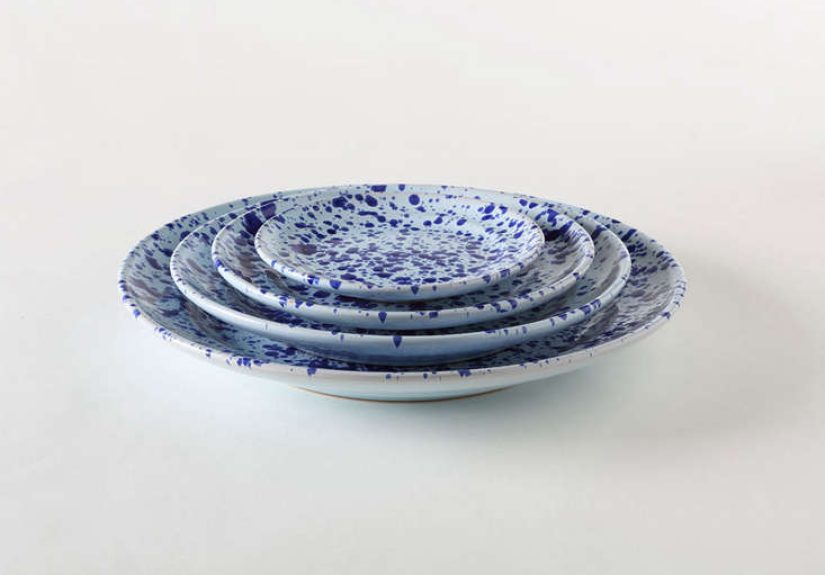
Blue on blue splatterware plates (the ones people search for by that exact phrase) are typically
Italian-made, glazed earthenware piecesdeep blue base, lighter speckles, and enough variation to prove a human made them.
Each plate is its own little constellation.
Why the “Blue on Blue” Look Works So Well
Design-wise, blue-on-blue is a sweet spot: it reads as calm and classic, but the splatter pattern keeps it from feeling formal or precious.
You get that “collected, artsy kitchen” vibe without needing to host a twelve-course tasting menu.
It’s bold without being loud
A high-contrast pattern (like black on white) can feel graphic and modern. Blue-on-blue stays softermore coastal, more Mediterranean, more “sure, sit
anywhere, I’ll just pretend I cleaned.”
It hides real life
Tiny speckles are practically a public service: they’re forgiving with crumbs, sauce smears, and the occasional “this cookie exploded” situation.
(You should still wipe the plate. But the plate won’t judge you.)
The Italian Roots: Splatterware as Pottery Tradition
Splatterware is often described as a traditional style of Italian pottery, with enamel versions becoming famous as practical, rustic staples for outdoor use.
That heritage matters because it explains why the ceramic versions feel both handmade and timeless: they’re connected to long-standing craft traditions,
not a random trend that disappears faster than your favorite limited-edition latte.
Many “Blue on Blue Splatterware” pieces sold in the U.S. have been associated with Puglia (the heel of Italy’s boot), a region frequently
celebrated for ceramic production. When a retailer notes Puglia as a source, it’s a sign you’re looking at an object tied to a place with real craft
credentialsnot just a pattern printed by a machine.
How Blue on Blue Splatterware Plates Are Made
While each workshop has its own methods, high-quality ceramic splatterware generally follows a similar rhythm:
- Shaping the plate from clay (often by pressing into molds or shaping on a wheel, depending on the maker).
- First firing to set the form (turning raw clay into bisque).
- Glazing with a base colorhere, a saturated blue that acts like a night-sky background.
- Splattering a second color by hand, creating a speckled effect that’s never identical twice.
- Final firing to fuse glaze into a smooth, glassy surface made for everyday use.
The best part: the “imperfection” is the point. Slight variation in splatter density, droplet size, and placement is what keeps the pattern alive.
If every plate looked exactly the same, it wouldn’t feel like splatterwareit would feel like wallpaper.
Sizes, Shapes, and What They’re Actually Good For
Blue on blue splatterware plates are often sold as individual pieces, which is great news if you:
(a) love building a collection slowly, (b) want mix-and-match charm, or (c) broke a plate once and still think about it.
A well-known “Blue On Blue Splatterware Plates” set has been offered in four sizes that cover basically every eating scenario from “just berries” to
“this is my personality now” cheese board:
- Fruit plate (about 7.25″): pastries, snacks, side salads, dessert that you’re “just tasting.”
- Salad plate (about 9.5″): lunch plates, salad-plus-protein meals, sandwiches that deserve a proper landing pad.
- Dinner plate (about 11.25″): main meals, pasta nights, anything you want to look restaurant-level at home.
- Charger (about 14″): serving platter energyalso great under bowls for a layered table look.
Pro move: build a “working set,” not a matching set
Instead of buying eight of everything, consider how you actually eat. A practical starter collection might be:
4 dinner plates + 4 salad plates + 2 fruit plates + 1 charger that moonlights as a serving platter.
How to Style Blue on Blue Splatterware (Without Overthinking It)
These plates are surprisingly flexible. The pattern is the star, so everything around it can be simpleor deliberately mismatched.
Easy, classic pairings
- White linen or cotton napkins: crisp, clean, and lets the blue shine.
- Natural wood: cutting boards, serving trays, and warm-toned tables balance the cool blue.
- Clear glassware: keeps the look airy and not too “theme-y.”
More personality (still tasteful)
- Striped napkins (blue, cream, or even pale yellow): echoes the movement of the splatter.
- Brass or matte black flatware: adds contrast and modern edge.
- Hand-thrown serving bowls in neutral glazes: keeps the artisan vibe going.
Make it seasonal without buying seasonal plates
Blue on blue works year-round. Swap the “supporting cast” instead:
spring = herbs + citrus, summer = tomatoes + wildflowers, fall = linen + candles, winter = evergreen + deep red accents.
Care Tips: Keeping Splatterware Beautiful in Real Life
Glazed earthenware is meant to be used, not babysat. But it does appreciate a little respectlike any good houseguest.
Dishwasher? Usually yes, but be smart
Many makers and retailers describe these plates as dishwasher safe, often recommending a lower-temperature cycle when possible.
If you want the glaze to stay glossy for the long haul, avoid the harshest, hottest “sanitize the universe” settings every day.
Avoid thermal shock
Don’t go straight from fridge to blazing-hot oven. And don’t pour boiling liquid onto a cold plate.
Sudden temperature shifts can stress ceramics over time.
Watch for chips and cracks
A small chip on the rim is mostly a cosmetic issue, but deeper cracks can trap moisture and weaken the plate.
If a plate develops a structural crack, it’s best to retire it from food duty and use it as decor.
What about “crazing”?
Crazing is a network of fine lines in the glaze (think: tiny hairline crackle). Some people panic about it.
In pottery circles, there’s debate: crazing can be mostly aesthetic, but it can also stain more easily and may reflect clay-glaze fit issues.
The safe, practical approach is simple: if it’s just faint lines and the plate remains smooth and intact, keep it clean and dry between uses;
if it’s heavily crazed, stained, or the plate feels compromised, don’t use it for wet/acidic foods.
Buying Tips: How to Choose Quality Blue on Blue Splatterware
When you’re shopping for splatterware dinnerware (especially online), use this quick checklist:
1) Look for real material details
“Glazed earthenware,” “made in Italy,” workshop or region informationspecifics usually indicate a legitimate product listing.
2) Expect variation
Handmade splatter patterns should vary from piece to piece. If every speck is identical, it might be printed, not splattered.
3) Consider how you’ll actually use it
Hosting outdoors a lot? Enamel splatterware might be your best friend (lightweight and durable), but remember:
enamelware is steel-based and is typically not microwave safe. Ceramic splatterware is more “sit-down dinner” and “make it pretty” energy.
4) Food-safety basics (especially for vintage)
If you’re buying vintage or handmade pottery from unknown sources, be cautious about lead in glazes or decorations.
Items that are antique, heavily worn, or from uncertain makers deserve extra scrutiny.
When in doubt, use reputable sellers, look for proper labeling, or test if you’re concerned.
Blue on Blue Splatterware Plates in Everyday Life: Why People Get Attached
Here’s the secret: plates like these aren’t just “nice things.” They become part of routines.
The splatter makes ordinary meals feel special, and the blue is soothing in a way that makes your kitchen feel a little more like a place you chose,
not just a place you eat standing up at 10 p.m.
They also play well with other dinnerware. You can pair them with basic white plates, vintage glass, modern flatware, or even that one inherited
floral china plate you keep “just in case” (and never use). Splatterware doesn’t compete; it collaborates.
Experiences and Moments Inspired by Blue on Blue Splatterware Plates (Extra)
Since you’re planning content that feels human (and not like a catalog listing), here are lived-in, realistic experiences people commonly associate with
blue on blue splatterware plates. Think of these as scene-starters you can use in storytelling, product descriptions, or lifestyle sections.
The “suddenly my lunch looks intentional” moment
A plain salad can feel like a chore. Put it on a blue on blue splatterware plate andsomehowit becomes a lunch. Add sliced cucumbers, a little olive oil,
a pinch of salt, and now you’re basically starring in a calm, European kitchen montage. The plate doesn’t change the food, but it changes the mood.
It’s the tabletop equivalent of putting on real shoes.
Weeknight pasta, upgraded
People love these plates for pasta because the blue background makes reds, greens, and creamy sauces pop. A simple tomato basil spaghetti looks more vivid.
A lemony arugula pasta looks fresher. Even leftover mac and cheese becomes “comfort food with vibes.”
The splatter pattern also hides tiny sauce freckles (the harmless kind), so the plate still looks great at the table.
Hosting without the “don’t break that!” anxiety
There’s a sweet relief in serving guests on plates that are beautiful but not intimidating. Blue splatterware reads special, but it doesn’t scream,
“This costs more than your car payment, please don’t blink near it.” Guests relax. You relax. And when everyone’s relaxed, the dinner is better.
The slight variations between plates also start conversationssomeone always notices, “Wait, yours has more speckles than mine,” like it’s a fun mystery.
The Sunday breakfast ritual
Pancakes on a blue splatter plate feel like a small ceremony. The plate’s pattern frames breakfast in a way that makes it feel slower and more deliberate.
Fruit plates become the go-to for toast, pastries, or a “just a little something” snack. Over time, people tend to assign roles:
“That’s the blueberry pancake plate,” “That’s the grilled cheese plate,” “That’s the cookie plate we always grab first.”
The plate becomes part of the routine, and routines are where home actually happens.
Mix-and-match confidence
A common experience with splatterware is realizing you don’t need everything to match to look good. People pair blue splatterware with plain white bowls,
clear tumblers, vintage silverware, and a random serving platter they found years ago. It works because the splatter pattern acts like a visual bridge:
it’s busy enough to harmonize with other textures, but calm enough (because it’s all blue) to avoid chaos.
The “I’m keeping these forever” feeling
Plenty of tableware is disposable in spiriteven if it’s technically durable. Splatterware often triggers the opposite reaction:
people want to keep it, add to it, and build small traditions around it. Maybe it becomes the default plate for family dinners.
Maybe it’s the set pulled out for birthdays. Maybe it’s the “we’re having friends over” plate.
Either way, it turns into a quiet household signature.
Final Thoughts
Blue on blue splatterware plates hit a rare combination: artisan character, practical everyday use, and a design that feels current without being trendy.
They’re expressive without being demanding. They elevate a table without forcing you to redecorate your entire life.
If you’re building a table setting that feels warm, modern, and genuinely lived-in, these plates are a strong place to start.
And if someone asks why your food suddenly looks so good, you can tell them the truth: your plates have better PR than you do.







 Close
Close