
Table of Contents >> Show >> Hide
- Top Picks at a Glance
- Why Propane Fire Pits Are Having a Moment in 2025
- How to Choose the Best Propane Fire Pit for Your Space
- The Best Propane Fire Pits of 2025
- 1) Outland Living Mega Fire Pit (Portable Bowl) Best Overall Portable Pick
- 2) Ignik FireCan Best Packable Propane Fire Pit
- 3) Howl R4 Best Splurge for Serious Heat (and Windy Nights)
- 4) Ninja Fireside360 Best Heater + Firepit Hybrid
- 5) 44" Propane Fire Pit Tables (50,000–55,000 BTU Class) Best for Entertaining
- 6) Hampton Bay-Style Fire Tables Best “Looks Expensive, Works Hard” Option
- 7) Real Flame Riverside-Style Fire Bowls Best Firebowl for Patio Vibes
- 8) Bali Outdoors / Similar Convertible Fire Tables Best Multi-Use Patio Pick
- Safety Setup: The 5-Minute Routine You Should Actually Do
- Getting a Better Flame: Small Tweaks, Big Payoff
- Maintenance and Troubleshooting (So You Don’t Panic-Google at 10:47 PM)
- Real-World Experiences: What Owning a Propane Fire Pit Feels Like (And Why You’ll Use It More Than You Think)
- Final Thoughts
If you love the idea of a cozy fire but hate the reality of soggy firewood, smoky hair, and that one friend who insists they’re “basically a wilderness expert” because they once watched a survival showwelcome to the propane era.
In 2025, propane fire pits aren’t just a “nice alternative” to wood. They’re a full-on lifestyle upgrade: cleaner starts, adjustable flames, less mess, and (often) better compatibility with HOA rules, patios, and campgrounds that don’t want you auditioning for a firefighter calendar.
This guide pulls together what U.S. product testers, home-and-garden editors, outdoor gear reviewers, and safety documentation consistently emphasizethen translates it into a plain-English shortlist you can actually use. No fluff. No keyword confetti. Just smart picks, honest trade-offs, and practical tips.
Top Picks at a Glance
- Best portable “campfire vibe”: Outland Living Mega (big heat, travel-friendly, classic firebowl feel)
- Best ultra-packable: Ignik FireCan (ammo-can portability, easy setup)
- Best “I want real warmth” splurge: Howl R4 (high-output, built for wind and cold nights)
- Best for patios as a fire table: 44″ class tables around 50,000–55,000 BTU with lid + wind guard
- Best hybrid heater + firepit: Ninja Fireside360 (big BTUs, quick warmth, modern controls)
Why Propane Fire Pits Are Having a Moment in 2025
A propane fire pit is basically the “push-button convenience” version of a fire. No sparks. No ash pile. No guessing whether your wood is secretly a damp sponge. You get instant ignition (or near-instant), adjustable flame, and a cleaner burn that’s friendlier for neighbors and for people who don’t want to smell like a campfire candle for three days straight.
They’re also practical for modern outdoor spaces: smaller backyards, covered patios (with correct clearances), rooftop decks, and campgrounds that restrict open wood burning. Propane won’t solve every rulebook, but it often plays nicer than wood when regulations tighten.
How to Choose the Best Propane Fire Pit for Your Space
1) Pick the right style: fire bowl, fire table, or “portable campfire”
- Portable fire bowls look like classic campfires, sit low, and travel well. Great for backyard hangouts, tailgates, and campsites.
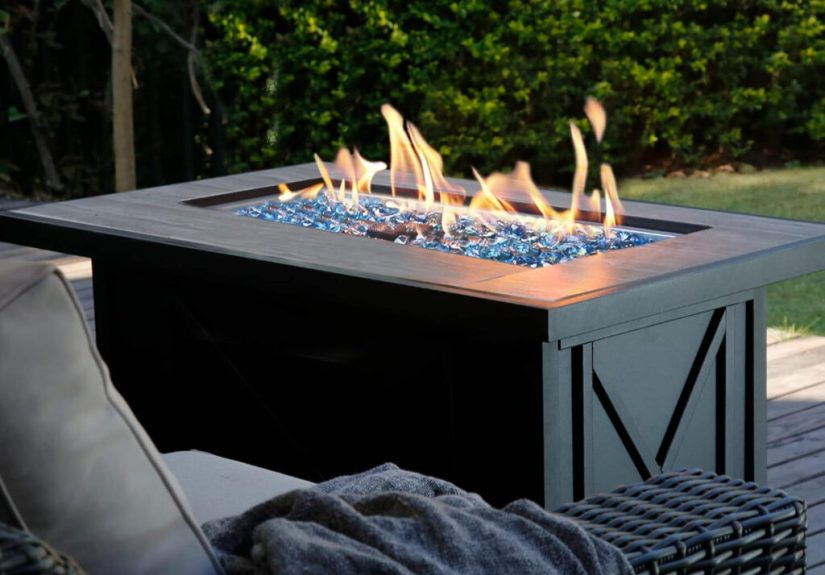
- Fire pit tables are the patio multitaskersflame in the middle, drinks and snacks around the edges, and a lid to convert it into a normal table when you’re done.
- Compact portable pits (the “bring it anywhere” category) are designed for quick setup, quick storage, and less fuss.
2) Understand BTUs (without turning it into math homework)
BTU output influences how warm the pit feelsespecially when temperatures drop or wind picks up. Many patio fire tables live in the 40,000–55,000 BTU range, while popular portable bowls often hit 58,000 BTU. Premium “campfire replacement” options can push past 60,000 BTU, and heater-style hybrids can go higher.
One important reality check: fire pits heat people best when you’re close. Unlike a patio heater, a standard fire table is more “glow and ambiance” than “toasty hands at 12 feet.” If you want meaningful warmth for a group in cooler weather, prioritize higher BTUs, a taller flame pattern, and a wind-resistant design.
3) Look for safety signals that matter
- CSA/ANSI listing (or equivalent) for outdoor gas appliances
- Stable base and quality burner components
- Easy access to the shutoff (you should never have to play hide-and-seek with the control knob)
- Hose/regulator quality with clear instructions for leak testing
4) Don’t ignore the “little stuff” that you’ll feel every single night
- Ignition type: electronic ignition is convenient; manual ignition is simple and reliable
- Wind guard: a glass wind guard can make a huge difference on breezy patios
- Included media: lava rock is classic and hides the burner; fire glass looks high-end and reflects flame nicely
- Tank storage: many tables hide a 20-lb tank inside; portable bowls keep it external
- Cover + carry kit: especially valuable if you’re moving it between backyard and car
The Best Propane Fire Pits of 2025
Below are standout propane fire pits and fire tables that repeatedly show up as top performers across U.S. reviews and testingplus a few newer-style picks that reflect how people are actually using propane fire in 2025 (patios, burn-ban travel, and “I want warmth, not just vibes” nights).
1) Outland Living Mega Fire Pit (Portable Bowl) Best Overall Portable Pick
If you want a propane fire pit that feels the most like a real campfire without the wood hassle, this style is the sweet spot: a low, wide firebowl that creates a classic gathering circle. The Mega format is known for strong outputcommonly listed around 58,000 BTUwith a rugged build that’s still transportable.
Why it wins: big flame presence, dependable heat for a portable unit, and a design that works for both backyards and trips. Many kits include a cover, hose/regulator, and lava rock, so you’re not hunting accessories like you’re on a scavenger mission.
Best for: campers, tailgaters, and backyard hosts who want the “sit around the fire” vibe with minimal mess.
2) Ignik FireCan Best Packable Propane Fire Pit
The FireCan is famous for its “ammo can” style portability and all-in-one convenience. It’s designed for quick deployment when wood fires aren’t practical or allowed, and it’s built to travel. Output is commonly listed around 37,000 BTU, which is enough for ambiance and moderate warmthespecially when everyone’s pulled in close.
Why it wins: it stores easily, sets up fast, and feels purpose-built for camping life (and the real-world chaos of packing a car).
Best for: road trips, RV folks, beach nights (where allowed), and anyone who values “grab-and-go” more than maximum heat.
3) Howl R4 Best Splurge for Serious Heat (and Windy Nights)
If most propane pits feel like “nice ambiance,” the Howl R4 is aiming for “campfire replacement.” It’s a premium portable propane fire pit engineered for high output (commonly cited around ~62,000 BTU) and durability, with design choices meant to keep the flame stable in tougher conditions.
Why it wins: if you actually want warmthnot just a pretty flamethis category is where you look. It’s also the kind of build that feels like it was made by people who got personally offended by flimsy patio gear.
Best for: cold-weather hangouts, wind-exposed patios, and buyers who want the “one-and-done” premium option.
4) Ninja Fireside360 Best Heater + Firepit Hybrid
Some people don’t want a fire pit. They want an outdoor comfort system. That’s the appeal of heater-style hybrids like the Ninja Fireside360: big BTUs (commonly advertised around 80,000 BTU), quick warmth, and controls that feel more like a grill than a traditional fire pit.
Why it wins: meaningful heat output, fast warm-up, and a modern approach to outdoor heating when you’re hosting in shoulder seasons. It’s not trying to be rusticit’s trying to keep your friends from leaving early.
Best for: patios, frequent hosts, and anyone who’s tired of “We can stay outside… for like 12 minutes.”
5) 44″ Propane Fire Pit Tables (50,000–55,000 BTU Class) Best for Entertaining
In 2025, a mid-size rectangular fire table is still the most popular “backyard upgrade” format: it’s part fire feature, part snack-and-drink station. Many well-reviewed options land around 50,000 BTU, and some push to 55,000 BTU with stainless burners, included lids, and (ideally) a glass wind guard.
Why it wins: it makes your patio feel finished. The lid matters more than you thinkbecause you’ll actually use the table when the flame is off. A wind guard is the difference between a steady flame and a dramatic flicker that dies the moment someone opens a sliding door.
Best for: outdoor dining areas, patios with seating groups, and hosts who love “set it and forget it” ambiance.
6) Hampton Bay-Style Fire Tables Best “Looks Expensive, Works Hard” Option
Mainstream patio brands (often found at big-box home retailers) tend to nail the practical features: hidden tank storage, dependable ignition, and a design that blends with outdoor furniture. This category is popular because it’s easy to ownno special learning curve, no precious maintenance rituals.
Why it wins: reliable patio performance and strong value when you want a complete setup without boutique pricing.
Best for: everyday patio use and buyers who want straightforward assembly plus easy replacement parts access.
7) Real Flame Riverside-Style Fire Bowls Best Firebowl for Patio Vibes
If you want a softer, more decorative look than the typical “camp bowl,” oval or sculpted fire bowls are a great middle ground. They’re still propane-clean and adjustable, but the styling leans more “designed outdoor living space” than “campsite tailgate.”
Why it wins: elevated aesthetics without giving up the simple propane experience.
Best for: patios where design matters as much as heat.
8) Bali Outdoors / Similar Convertible Fire Tables Best Multi-Use Patio Pick
Editors and reviewers often highlight convertible fire tables because they fit how people actually live: some nights you want flame, some nights you want a normal table. Models that include a lid and a usable table surface earn points because they don’t become “that big thing you only use twice a month.”
Why it wins: versatility, easy hosting setup, and a flame feature that doesn’t demand constant attention.
Best for: smaller patios, multipurpose outdoor seating areas, and people who love practical furniture.
Safety Setup: The 5-Minute Routine You Should Actually Do
Propane is convenient, but it’s still fuelso treat setup like you would a grill: calmly, correctly, and with zero shortcuts. The good news is that most safety best practices are simple and fast once you build the habit.
Leak test every time you reconnect the tank
Use a soapy-water solution on connections (tank valve, regulator, hose fittings). If you see bubbles growing, shut it down and fix the connection. Never use a flame to check for leaks. Ever. Not even “just for a second.” That’s how you end up as the neighborhood cautionary tale.
Give it breathing room
- Use outdoors only in a well-ventilated area.
- Keep the unit away from overhangs, low branches, and anything meltable or flammable.
- Mind tank placement: some guidance recommends keeping the propane cylinder several feet away from the pit when in use (follow your specific manual).
Don’t freestyle parts
Use the correct regulator/hose setup specified by the manufacturer. If you’re upgrading hoses or adding quick-connects, match ratings and fittings and follow instructions. “It kinda fits” is not a fuel-system standard.
Getting a Better Flame: Small Tweaks, Big Payoff
Lava rock vs. fire glass
Lava rock gives a more natural campfire look and helps distribute flame. Fire glass looks upscale and reflects light beautifully, but it can be pricier. Either way, don’t overfillleave room for airflow and flame movement as directed.
Add a wind guard if your patio gets breezy
Wind is the silent fun-killer. A glass wind guard often makes the difference between a steady, tall flame and a low flicker that keeps dying just as someone brings out s’mores.
Match BTU to how you entertain
If your group sits close and you mostly want ambiance, 40k–55k BTU tables are often perfect. If you host in chilly weather or your seating is spread out, look for higher output and designs that throw heat more effectively.
Maintenance and Troubleshooting (So You Don’t Panic-Google at 10:47 PM)
- Low flame? Check tank level, then confirm the valve is fully open. Some regulators also have safety devices that can restrict flow if opened too quicklyreset per manual.
- Uneven flame? Make sure burner ports aren’t blocked by debris, insects, or damp media.
- Ignition issues? Replace batteries (if electronic), check electrode alignment, and try manual lighting per instructions.
- Rust prevention: Use a cover and keep the burner area dry. If you live in a wet climate, covers matter more than “weather-resistant” marketing.
Real-World Experiences: What Owning a Propane Fire Pit Feels Like (And Why You’ll Use It More Than You Think)
Here’s the part people don’t always say out loud: the best propane fire pit is the one you’ll actually bother to use on a random Tuesday. Propane shines because it turns “a whole event” into “a quick moment.”
Imagine you’re done with dinner, the dishes are stacked, and someone says, “We should go outside for a bit.” With wood, that sentence often triggers a chain reaction: find dry logs, find kindling, fight with a lighter, wait for smoke to calm down, realize the wood is damp anyway, then spend the next 20 minutes pretending you like the smell of campfire in your eyebrows. With propane, it’s: open valve, spark, adjust. You’re sitting down before the group chat has time to pick a Spotify playlist.
For patio owners, a fire table becomes the unofficial “conversation anchor.” People drift toward it the way they drift toward a kitchen island at parties. Drinks land on the edges, snacks appear, and suddenly your backyard looks like you planned it. The lid is what makes it feel like furniture, not equipment. When the flame’s off, it’s still a table. When the flame’s on, it’s the vibe. That’s why so many folks end up using it more than they expected it’s not a seasonal novelty; it’s part of how you use the space.
Campers and tailgaters have their own “propane conversion story.” It usually starts with restrictions: burn bans, firewood rules, or a campsite where collecting wood is a no-go. A portable propane bowl or a compact pit like the FireCan becomes the compromise that doesn’t feel like a compromise. You still get the ritual: circle of chairs, snacks, stories, and the classic “Who’s roasting marshmallows like a professional?” debate. The difference is cleanup: instead of packing ash and smelling like smoke, you shut it off, let it cool, and stash it.
Windy deck? That’s where people learn the value of design details. A wind guard isn’t just a fancy accessoryit’s what keeps your flame from doing interpretive dance every time a door opens. High-output pits also matter more than you think in real life. A 40,000 BTU table can be perfect for a mild evening, but on a crisp fall night, people sit closer, angle their chairs, and treat the fire like a shared warm spot. If you’re hosting in cooler weather, that’s when bigger output and better flame stability become worth every dollar.
And yespropane changes how you think about “fire season.” It expands it. You don’t need to wait for the perfect conditions or the perfect stash of wood. You can do a quick 30-minute hangout after work, or a longer weekend gathering, without committing to a full-scale backyard production. That’s the real magic of propane: it lowers the friction so the good moments happen more often.
Final Thoughts
The best propane fire pits of 2025 all share the same DNA: safe construction, usable heat output, reliable ignition, and a design that fits how you actually live whether that’s patio hosting, camping during burn restrictions, or simply making your backyard feel like your favorite outdoor bar.
If you’re shopping for maximum use, prioritize the format first (portable bowl vs. fire table vs. compact travel unit), then dial in BTUs and wind resistance based on your climate. Do that, and you’ll end up with a fire pit you use constantlynot one that becomes expensive “outdoor décor.”





 Close
Close