
Table of Contents >> Show >> Hide
- Why This Is the “Best” Baked Pork Chops Method
- Pick the Right Pork Chops (This Matters More Than the Seasoning)
- The Science of Juicy Oven Baked Pork Chops
- Best Baked Pork Chops Recipe (Juicy, Easy, Weeknight-Friendly)
- How to Know When Pork Chops Are Done (Without Ruining Them)
- Flavor Variations (Same Method, Different Vibes)
- What to Serve With Baked Pork Chops
- Troubleshooting: When Pork Chops Go Wrong
- Storage, Reheating, and Meal Prep
- FAQ: Best Baked Pork Chops Recipe Questions
- Kitchen “Experiences” That Make You Better at Pork Chops (Extra Notes)
- Conclusion
Pork chops have a reputation problem. One minute they’re juicy, tender, and worthy of a dinner party. The next minute they’re… an edible coaster. The good news: baked pork chops don’t have to be a gamble. This recipe is built around the same core ideas that show up again and again in the most dependable U.S. cooking guidance: season correctly, manage moisture, use high heat, and stop cooking before you’ve dried out dinner.
Below you’ll get a foolproof method (with timing ranges), plus variations, troubleshooting, and the real secret weapon: a meat thermometer that tells the truth even when your oven lies.
Why This Is the “Best” Baked Pork Chops Method
- Dry-brine (or quick brine) for flavor + juiciness without complicated marinades.
- High-heat bake for a browned surface and a tender center.
- Optional quick sear or broil finish so your chops look as good as they taste.
- Rest time so the juices don’t sprint out the moment you slice.
- Timing by thickness so you’re not guessing based on vibes.
Pick the Right Pork Chops (This Matters More Than the Seasoning)
If you’ve ever wondered why your baked pork chops turned dry even though you followed a recipe exactly, thickness is usually the culprit. Thin chops cook fastso fast they can jump from “perfect” to “please pass the water” in the time it takes to argue about what movie to watch.
Best choices for baking
- 1 to 1½-inch thick chops (boneless or bone-in). Thicker chops give you a bigger “safe zone.”
- Bone-in chops tend to stay juicier and taste meatier.
- Rib chops (a.k.a. pork ribeye chops) are especially forgiving and flavorful.
Still have thin chops?
You can absolutely bake themjust reduce the time and watch the temperature like a hawk. Thin chops are not “bad,” they’re just dramatic.
The Science of Juicy Oven Baked Pork Chops
Pork chops are lean. Lean meat dries out when it overcooksfull stop. The goal is to cook to the right internal temperature, then stop. Not “stop when it looks done,” not “stop when the timer beeps,” but stop when the center hits the target.
Meanwhile, salting ahead of time (dry brining) helps the meat hold onto moisture and seasons it deeper than a last-second sprinkle. And drying the surface encourages browning instead of steamingbecause nobody dreams of a steamy chop.
Best Baked Pork Chops Recipe (Juicy, Easy, Weeknight-Friendly)
Recipe at a Glance
- Servings: 4
- Prep time: 10 minutes (plus optional brine time)
- Cook time: 12–25 minutes (depends on thickness + bone)
- Oven temp: 400°F
- Skill level: “I can preheat an oven”
Ingredients
- 4 pork chops, ideally 1 to 1½ inches thick (boneless or bone-in)
- 1½ teaspoons kosher salt (plus more if your chops are very thick)
- 1 teaspoon black pepper
- 1½ teaspoons garlic powder
- 1 teaspoon smoked paprika (regular paprika works too)
- 1 teaspoon onion powder
- 1–2 teaspoons brown sugar (optional, helps browning)
- 1 tablespoon olive oil (or avocado oil)
- 1 tablespoon butter (optional, for richness)
- Optional finish: lemon wedges, chopped parsley, or a drizzle of pan juices
Optional Dry Brine (Recommended)
If you have time, do this. If you don’t, skip it and proceedyour dinner will still be good. But with a dry brine, it’ll be the kind of good where people pretend they’re not going back for seconds… and then do.
- Pat pork chops dry with paper towels.
- Salt both sides (use the 1½ teaspoons total as a guide).
- Place chops on a wire rack set over a baking sheet. Refrigerate uncovered 1 hour (or up to overnight).
- Before cooking, pat dry again if the surface looks wet.
Instructions
- Preheat the oven to 400°F. Place a rimmed baking sheet in the oven while it heats (preheating the pan helps browning, like a little head start).
- Make the seasoning. In a small bowl, mix pepper, garlic powder, paprika, onion powder, and brown sugar (if using).
- Dry + oil. Pat chops very dry. Rub both sides with olive oil, then coat evenly with the seasoning mix.
- Optional quick sear (extra flavor). Heat a skillet over medium-high heat with a tiny bit of oil. Sear chops 60–90 seconds per side until lightly browned. (You’re not cooking them throughjust building flavor.)
- Bake. Carefully remove the hot baking sheet from the oven. Arrange chops with space between them. Bake uncovered until the thickest part reaches 145°F on an instant-read thermometer.
- Timing guide (start checking early):
- Boneless, 1 inch: about 15–20 minutes
- Bone-in, 1 inch: about 20–25 minutes
- Thin (½–¾ inch): often 10–15 minutes (watch closely)
- Thick (1½ inch): roughly 20–30 minutes, depending on your oven
- Optional broil finish. If you want a deeper golden top, broil 1–2 minutes at the end. Don’t walk awaybroilers turn “browned” into “charcoal” with impressive confidence.
- Rest. Transfer chops to a plate and rest 3–5 minutes. If you used butter, add a small pat on top while resting.
- Serve. Spoon any juices over the chops. Finish with lemon, parsley, or both.
How to Know When Pork Chops Are Done (Without Ruining Them)
The best indicator is internal temperature, measured in the thickest part of the chop. Avoid touching the bone with your thermometer tip (bones conduct heat and can give a false reading).
Target temperature
- Pull at 145°F and rest. The temperature may rise slightly as it rests.
- A faint blush of pink is normal in safely cooked pork chopsespecially if you pull at the recommended temperature. “Pink” is not a personality flaw; it’s often a sign you didn’t overcook your dinner.
Flavor Variations (Same Method, Different Vibes)
1) Honey Garlic Glaze
Mix 2 tablespoons honey, 1 tablespoon soy sauce, 1 minced garlic clove, and 1 teaspoon apple cider vinegar. Brush on during the last 3–5 minutes of baking, then broil 1 minute for a sticky finish.
2) Parmesan Herb Crust
Combine ⅓ cup grated Parmesan, ½ cup panko, 1 teaspoon Italian seasoning, and a drizzle of oil. Press onto oiled chops before baking. Broil at the end to crisp.
3) Ranch-Style Weeknight Chops
Swap the spice mix for 1–2 tablespoons ranch seasoning. Add black pepper. Bake the same way. This is dangerously good with roasted potatoes and a crunchy salad.
4) Smoky BBQ Rub
Use smoked paprika, chili powder, garlic powder, brown sugar, and a pinch of cayenne. Brush with BBQ sauce in the last few minutes if you want it saucier.
What to Serve With Baked Pork Chops
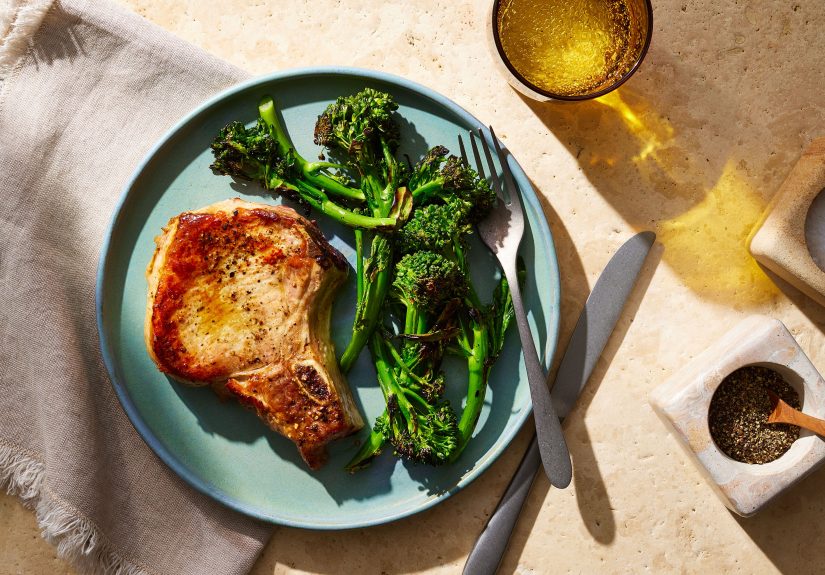
- Roasted vegetables: broccoli, green beans, Brussels sprouts, carrots
- Starches: mashed potatoes, rice pilaf, buttered noodles, roasted sweet potatoes
- Bright sides: apple slaw, cucumber salad, lemony arugula salad
- Sauces: pan juices, mustard cream sauce, apple pan sauce, gravy (if you’re feeling cozy)
Troubleshooting: When Pork Chops Go Wrong
“My chops are dry.”
This is nearly always overcooking. Next time: choose thicker chops, dry brine if you can, and start checking temperature early. Also, let them restslicing immediately is like popping a water balloon.
“They’re pale and kind of sad.”
You likely had too much surface moisture or baked in a crowded pan. Pat dry, space them out, preheat the sheet pan, and/or finish under the broiler.
“They’re salty.”
Use kosher salt (not fine table salt) for better control. If your seasoning mix includes salt, reduce the added salt in the brine step. Also note: very thin chops need less salt than thick ones.
“The outside is done but the center isn’t.”
Your oven may run hot, or your chops were unusually thick. Lower the oven to 375°F and bake a bit longer, or sear less aggressively before baking.
Storage, Reheating, and Meal Prep
- Refrigerate: Store in an airtight container for up to 3–4 days.
- Freeze: Wrap tightly and freeze up to 2–3 months for best quality.
- Reheat gently: Warm in a 300°F oven, covered loosely with foil, until just heated through. Add a splash of broth or a pat of butter to keep them moist.
- Meal prep tip: Slice leftovers for grain bowls, salads, wraps, or fried rice.
FAQ: Best Baked Pork Chops Recipe Questions
Should I cover pork chops when baking?
Usually no. Covering traps steam, which can prevent browning. If your chops are very lean and thin, you can tent loosely with foil for part of the bake, but you’ll sacrifice some color.
Can I bake pork chops from frozen?
It’s possible, but results vary. For the best texture, thaw in the refrigerator overnight so the chop cooks evenly. If you must bake from frozen, plan on a longer cook time and rely on a thermometer, not the clock.
Do bone-in pork chops take longer?
Typically yes. The bone can slow cooking slightly and the chops are often thicker. Use temperature, not guesswork.
Kitchen “Experiences” That Make You Better at Pork Chops (Extra Notes)
If you’ve cooked pork chops more than once, you’ve probably lived through at least one of these classic moments: You follow a timing chart, pull the chops out, and they’re perfect. Then you make them againsame chart, same oven, same confidenceand suddenly you’re chewing like you’re trying to get Wi-Fi from the meat. Welcome to the reality of pork chops: they’re small, lean, and sensitive to tiny changes. Thickness varies. Starting temperature varies. Ovens run hot, cold, or “chaotic neutral.” The “experience” that upgrades you fastest is learning what to watch, not just what to do.
Here’s the most common real-life pattern: you wait for the chops to “look done,” and by the time they look done, they’re over. Pork chops don’t broadcast doneness like a sitcom laugh track. They whisper. That’s why the thermometer is such a confidence booster: it turns whispers into numbers. The second experience that changes everything is discovering carryover cooking. You pull the chops out right on the edge, rest them a few minutes, and suddenly you’re slicing into something that’s juicy without being undercooked. It feels like cheating, except it’s just physics being helpful for once.
Another experience many home cooks share: the seasoning is great, but the surface is kind of… damp. That’s usually a moisture issue. If you season and immediately bake, the salt begins pulling moisture to the surface. If the surface is wet, your chop steams first, and steaming is not the vibe when you want browning. Dry brining flips that story: you salt earlier, the meat absorbs the seasoning, and the surface dries out in the fridgemeaning it browns faster in the oven. You don’t need a culinary degree for this. You just need a wire rack, a little patience, and the willingness to let your refrigerator do some of the work.
Then there’s the “I bought whatever was on sale” experience. Sometimes those sale chops are thin. Sometimes they’re huge. Sometimes they’re “boneless” but cut from different parts of the loin and behave differently. The trick is to stop treating every chop like it’s identical. When you get home, take ten seconds to notice thickness. If one chop is thinner, put it at the edge of the pan (edges run a little cooler), or pull it first. It’s a small move that feels like restaurant energy.
Finally, there’s the leftover experience. Reheated pork chops can be tragicunless you reheat gently. A low oven, a little moisture (broth, butter, pan drippings), and patience bring them back to life. And if all else fails, slice them thin and toss them into something saucy: tacos, ramen, stir-fry, a grain bowl, or a sandwich that suddenly feels like a lunch upgrade. The “best” baked pork chops recipe isn’t just about the first meal; it’s about setting yourself up for delicious leftovers that don’t taste like punishment.
Conclusion
The best baked pork chops are not about complicated ingredientsthey’re about smart technique: season early if you can, dry the surface, bake hot, and stop at the right temperature. Once you’ve nailed the method, you can change the flavors endlessly (honey garlic today, parmesan herb tomorrow) and still get juicy, tender chops that make weeknight dinner feel like you planned ahead… even if you didn’t.







 Close
Close