
Table of Contents >> Show >> Hide
- What a Sensory-Friendly Bedroom Really Means
- Start With Observation Before You Start Shopping
- The Core Elements of Bedroom Design for Kids With Sensory Issues
- 1. Lighting: Soft, Layered, and Adjustable
- 2. Sound Control: Quiet Wins
- 3. Color Palette: Calm Does Not Have to Mean Boring
- 4. Textures: Soft, Predictable, and Child-Approved
- 5. Layout: Clear Pathways and Simple Zones
- 6. Storage: Hide the Chaos, Keep the Function
- 7. Temperature and Air Quality: Comfort Is Regulation
- 8. Screens and Stimulation: Keep the Bedroom Boring in a Good Way
- Best Furniture and Decor Choices
- Three Sensory-Friendly Bedroom Examples
- Common Mistakes to Avoid
- When to Ask for Professional Help
- Experiences From Families Living This Every Day
- Conclusion
Designing a bedroom for a child with sensory issues is a little like trying to build the world’s coziest control panel. Every switch matters: light, sound, texture, smell, layout, and even the emotional vibe of the room. For some kids, a bright overhead bulb feels like an interrogation lamp. For others, a scratchy blanket is basically a betrayal. And for movement-seeking kids, a room with nowhere safe to wiggle, bounce, or reset can feel less like a sanctuary and more like a very tidy trap.
The good news is that a sensory-friendly bedroom does not have to look clinical, dull, or like a beige waiting room with one sad pillow. It can be beautiful, playful, and full of personality. The goal is not to remove all stimulation. The goal is to create the right kind of stimulation for your child, and to make it easier for them to rest, regulate, play, and feel safe.
Whether your child is sensitive to noise, overwhelmed by clutter, craves movement, avoids certain textures, or just needs a calmer place to land at the end of the day, smart bedroom design can make daily life smoother for everyone. Fewer bedtime battles. Fewer sensory ambushes. More peace, more sleep, and hopefully fewer moments where a pajama seam somehow ruins the entire evening.
What a Sensory-Friendly Bedroom Really Means
Kids with sensory challenges do not all experience the world the same way. Some are hypersensitive, meaning they notice and react strongly to sounds, lights, smells, textures, or touch. Others are hyposensitive or sensory-seeking, meaning they may crave movement, pressure, texture, or input to feel regulated. Many children are a mix of both depending on the sense involved. A child might hate loud sounds, for example, but still love deep pressure and constant movement.
That is why the best bedroom design for kids with sensory issues starts with one simple rule: design for the child in front of you, not for a trend. The room should support how your child sleeps, calms down, wakes up, dresses, plays, and transitions. If a trendy neon sign looks cute online but turns bedtime into a disco-themed meltdown, it has to go. No hard feelings.
Start With Observation Before You Start Shopping
Before you buy blackout curtains, beanbags, or a moon-shaped bookshelf that costs more than your first car payment, pause and observe. Ask yourself a few practical questions:
- What usually triggers discomfort in the bedroom: light, sound, temperature, texture, smell, clutter, or transitions?
- What seems to calm your child: soft pressure, movement, darkness, music, predictability, or enclosed spaces?
- What part of the day is hardest: getting dressed, falling asleep, waking up, or winding down?
- Does your child avoid things, seek things, or both?
These answers become your design blueprint. A sensory-smart room is less about filling the space with “special” products and more about removing friction. Often the best upgrade is not adding more stuff. It is choosing fewer, better things.
The Core Elements of Bedroom Design for Kids With Sensory Issues
1. Lighting: Soft, Layered, and Adjustable
Lighting can make or break a sensory-friendly bedroom. Harsh overhead lights, strong blue-toned bulbs, flashing décor, or bright screens can be overwhelming for a child who is sensitive to visual input. A softer setup is usually more effective.
Use layered lighting instead of one dramatic ceiling light that makes the room feel like a dentist’s office. A good combination might include a dimmable ceiling fixture, a bedside lamp, and one small warm-toned nightlight. This allows you to match the light level to the moment: brighter for getting dressed, softer for reading, and low and calm for bedtime.
Blackout curtains can help children who are very sensitive to early morning light or who need a darker room to fall asleep. If full darkness feels scary, try a tiny amber or warm-white nightlight instead of a bright blue one. Think “gentle glow,” not “airport runway.”
2. Sound Control: Quiet Wins
Noise is a huge issue for many kids with sensory sensitivities. Traffic, barking dogs, a humming fan, a sibling stomping down the hall, or the mysterious sound of the house “doing house things” at 2 a.m. can all interfere with sleep and regulation.
Soft materials help absorb sound. Rugs, curtains, upholstered headboards, fabric wall hangings, and even fuller bedding can reduce echo. If outside noise is the problem, white noise or a consistent sound machine can help mask sudden sounds. The key word is consistent. Random noise is often more disruptive than steady noise.
For kids who are especially sound-sensitive, keep noisy toys, buzzing chargers, and unnecessary electronics out of the room. Bedrooms should not double as mini arcades if the goal is rest.
3. Color Palette: Calm Does Not Have to Mean Boring
Bright colors are fun, but too many bold colors competing at once can create visual overload. A calmer palette often works better in a sensory-friendly space. Think muted blues, soft greens, dusty rose, warm gray, creamy white, pale clay, or gentle lavender. These shades can still feel cheerful without shouting at the walls.
You do not have to ban color completely. Just use it with intention. A mostly calm room can still have one fun accent color in pillows, art, or a favorite chair. Think less “toy aisle exploded,” more “calm room with personality.”
4. Textures: Soft, Predictable, and Child-Approved
Texture matters more than many adults realize. If your child hates certain fabrics, tags, seams, or rough materials, the bedroom should be a low-irritation zone. Choose bedding, pajamas, rugs, and cushions with comfort in mind first and style second. Luckily, soft can also look great.
Some children love plush textures and heavy comforters. Others prefer crisp sheets and lightweight blankets. Some crave deep pressure, while others feel trapped by it. Let your child test fabrics when possible. The “perfect” blanket is the one that does not get launched dramatically across the room at bedtime.
Also watch out for small texture surprises: scratchy throw pillows, stiff curtains, rough basket liners, irritating mattress protectors, or decorative bedding that looks charming but feels like sandpaper with ambition.
5. Layout: Clear Pathways and Simple Zones
A sensory-friendly bedroom should feel easy to understand at a glance. That usually means a straightforward layout with clear walking paths and a few defined zones. One area for sleep. One small area for reading or calming down. Maybe one area for quiet play, if space allows.
Children who seek movement may benefit from a safe open area on the floor, a crash pad, or a soft beanbag for body breaks. Children who crave retreat may love a canopy corner, a floor tent, or a cozy nook with pillows and low light. The best layout reduces collisions, overstimulation, and decision fatigue.
If the room is tiny, do not panic. Even a small bedroom can work well with under-bed storage, wall shelves, and furniture that does not block movement. A calm room is not about square footage. It is about thoughtful choices.
6. Storage: Hide the Chaos, Keep the Function
Visual clutter can be stressful for many children. Open bins stuffed with toys, crowded bookshelves, mismatched storage towers, and laundry mountain season three can make a room feel busy even when no one is doing anything.
Use closed storage when possible. Dressers, bins with lids, baskets that match, or cabinets with doors can visually quiet the room. Rotate toys instead of displaying everything at once. Leave a few favorite items accessible, but do not ask the room to hold every stuffed animal your child has ever loved in full public view.
Labels can also help. Picture labels work well for younger children or kids who benefit from visual supports. When the room is easier to read, it is easier to use.
7. Temperature and Air Quality: Comfort Is Regulation
A room that is too hot, stuffy, or dry can be especially irritating for a child who already feels sensory input intensely. Aim for a cool, comfortable sleep environment with good airflow. Breathable bedding often works better than overly heavy synthetic layers that trap heat.
If your child is sensitive to smells, skip strongly scented sprays, plug-ins, candles, or heavily fragranced laundry products. Even products marketed as “relaxing” can be overwhelming if your child’s nose disagrees. Unscented is often the safest place to start.
8. Screens and Stimulation: Keep the Bedroom Boring in a Good Way
For better sleep, the bedroom should not be the entertainment hub of the house. Tablets, TVs, bright gaming systems, and phone chargers can make it harder for kids to wind down. A sensory-friendly bedroom should signal safety and rest, not one more chance to get revved up.
That does not mean the room has to be joyless. It means the stimulation should be intentional. Books, a fidget basket, a few stuffed animals, calming music, and a predictable bedtime routine usually support regulation better than a glowing screen two inches from the pillow.
Best Furniture and Decor Choices
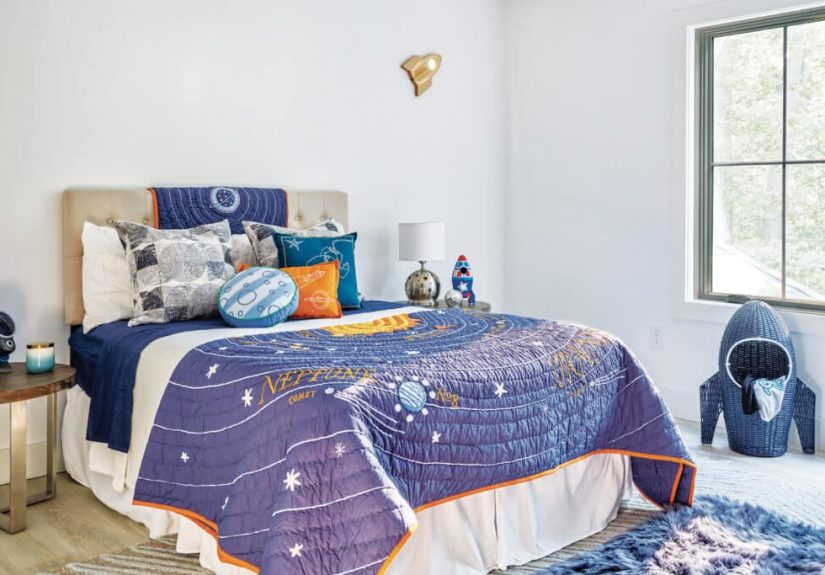
When choosing furniture for bedroom design for kids with sensory issues, favor pieces that feel sturdy, simple, and multifunctional. A low bed can help some children feel grounded. A cozy reading chair or beanbag can create a built-in calm-down spot. Rounded furniture edges may feel safer in rooms where movement is frequent. Soft rugs add comfort underfoot and also help with acoustics.
Wall art should be chosen carefully. A few soothing, meaningful pieces are better than a gallery wall full of busy patterns and visual noise. The same goes for bedding. One fun print is fine. Seven competing prints create the visual equivalent of a sugar rush.
If your child benefits from deep pressure or enclosed spaces, you might consider a body pillow, weighted lap pad, compression sheet, or a small tent-like nook. But anything weighted should be used thoughtfully and with professional guidance when needed, especially for young children. Safety always beats internet hype.
Three Sensory-Friendly Bedroom Examples
For a Light- and Sound-Sensitive Child
Choose blackout curtains, a dimmable lamp, warm bulbs, a soft area rug, quiet storage, and a white noise machine. Keep wall décor minimal and the color palette muted. Store toys behind closed doors and use soft cotton bedding in solid colors.
For a Touch-Sensitive Child
Focus on tag-free bedding, predictable textures, a smooth rug, soft pajamas stored within easy reach, and a simple dressing area. Skip scratchy cushions, stiff blankets, and complicated bedding layers. Let the child help choose fabrics before bringing them home.
For a Movement-Seeking Child
Create one safe movement zone with a crash cushion, floor mat, or beanbag. Keep pathways open. Use sturdy furniture anchored properly. Add a cozy nook for winding down after big-body play. The room should allow movement without turning into a full-contact obstacle course.
Common Mistakes to Avoid
- Choosing décor before understanding the child’s triggers.
- Using too many bright colors, patterns, or flashing lights.
- Overfilling the room with sensory products “just in case.”
- Ignoring sound, which is often a hidden trigger.
- Using the bedroom for sleep, homework, gaming, rough play, and screen time all at once.
- Assuming what works for one child with sensory issues will work for another.
When to Ask for Professional Help
If your child regularly struggles with dressing, sleep, transitions, meltdowns tied to sensory input, or avoiding everyday activities, it may help to talk with your pediatrician or an occupational therapist. An OT can help identify patterns and suggest environmental changes that match your child’s specific needs. Sometimes the best “design tip” is expert insight into what your child is actually experiencing.
Experiences From Families Living This Every Day
Many parents start this process thinking they need to buy a whole new room. Then they discover the biggest changes are often surprisingly ordinary. One family realizes their child is not “bad at bedtime.” He just hates the sharp seam in his pajama pants and the hallway light spilling under the door. Another parent swaps the bright overhead bulb for a dimmable lamp and suddenly the bedtime routine no longer feels like a hostage negotiation with stuffed animals as witnesses.
Some families learn that clutter was the hidden problem all along. The room was full of good intentions: books, toys, bins, wall art, storage cubes, reward charts, and seasonal décor. It looked cheerful to adults, but to the child it felt noisy even when the room was silent. Once the parents edited the space, stored half the toys out of sight, and simplified the walls, their child started entering the room more calmly. Nothing dramatic happened. The room just stopped shouting.
Other parents discover that the child who “won’t stay in bed” is actually a child who cannot settle because their body needs more input before sleep. A few minutes of heavy work, a predictable routine, soft music, and a cozy beanbag in the corner can make a huge difference. Not because the child was stubborn before, but because their nervous system needed a better runway for landing.
Touch-sensitive kids often teach families to respect fabric like it is a major life decision. The blanket that looked adorable online may be rejected on contact. The expensive themed comforter might lose to an old faded throw that feels just right. Parents sometimes laugh about this eventually, but in the moment it is a reminder that comfort is not a luxury for sensory-sensitive kids. It is the whole point.
Families also learn that flexibility matters. A room that works beautifully at age five might need updates at age eight. A child who once loved a tent nook may later find it too enclosed. A kid who needed complete darkness may start preferring a tiny warm light. Sensory needs can change, especially as children grow, communicate more clearly, and become better at noticing what helps them regulate.
Perhaps the most meaningful experience parents describe is the shift from trying to “fix behavior” to trying to understand the environment. When the room supports the child instead of challenging them, everyone breathes easier. Bedtime gets softer. Mornings get smoother. The child feels more successful, and the adults feel less like detectives trying to solve a mystery with one sock and a half-eaten granola bar as evidence.
That is the heart of bedroom design for kids with sensory issues. It is not about perfection. It is about listening, adjusting, experimenting, and creating a space that says, in the quietest possible way, you are safe here.
Conclusion
The best bedroom design for kids with sensory issues is calm, flexible, and deeply personal. It supports sleep, regulation, comfort, and independence without sacrificing warmth or style. Start with what your child actually experiences. Lower visual and sound stress. Choose softer lighting, better textures, smart storage, and a simple layout. Then tweak over time.
In other words, build the room like a gentle exhale. Your child may not say, “Mother, this layered lighting plan beautifully respects my sensory profile,” but if bedtime gets easier, sleep improves, and the room becomes a place they truly want to be, you will know you got it right.






 Close
Close