
Table of Contents >> Show >> Hide
- What Is a Ball Cabinet Knob (and Why Is It Everywhere)?
- Why Ball Knobs Never Really Go Out of Style
- Materials and Finishes: The Personality of Your Ball Knob
- Solid brass: warm, classic, and quietly expensive-looking
- Unlacquered brass: the “living finish” choice
- Stainless steel and brushed nickel: the low-drama heroes
- Matte black: modern, crisp, and high-contrast
- Ceramic, glass, and acrylic: the charming statement-makers
- Zinc alloy and mixed materials: budget-friendly and everywhere
- Choosing the Right Size: Diameter, Projection, and “Does This Feel Weird?”
- Placement: Where Ball Knobs Look Best (and Feel Best)
- Installation: A DIY-Friendly Upgrade (If You Measure Like You Mean It)
- Design Pairings: How to Style Ball Knobs Like You Planned It
- Maintenance: Keep the Shine (or Keep the PatinaYour Call)
- Where Ball Cabinet Knobs Shine (and Where They’re Not the Best Pick)
- Budget and Value: What You’re Actually Paying For
- A Quick Buyer’s Checklist (Because Regret Is Expensive)
- Real-World Experiences: of “What I Wish Someone Told Me”
- Conclusion: Small Sphere, Big Payoff
Somewhere between “tiny design detail” and “daily hand workout,” the humble ball cabinet knob sits quietly on your doors and drawers
like a polite little planet. It doesn’t ask for attention. It doesn’t demand a spotlight. And yet, swap your old hardware for a clean, spherical knob
and suddenly your kitchen looks like it got eight hours of sleep, drank water, and started journaling.
This guide goes deep on what a ball knob is, why it works, how to choose the right size and finish, where to place it, how to install it without
inventing new curse words, and how to style it so your cabinets look intentionalnot “I bought these at 11:58 p.m. with my thumb.”
What Is a Ball Cabinet Knob (and Why Is It Everywhere)?
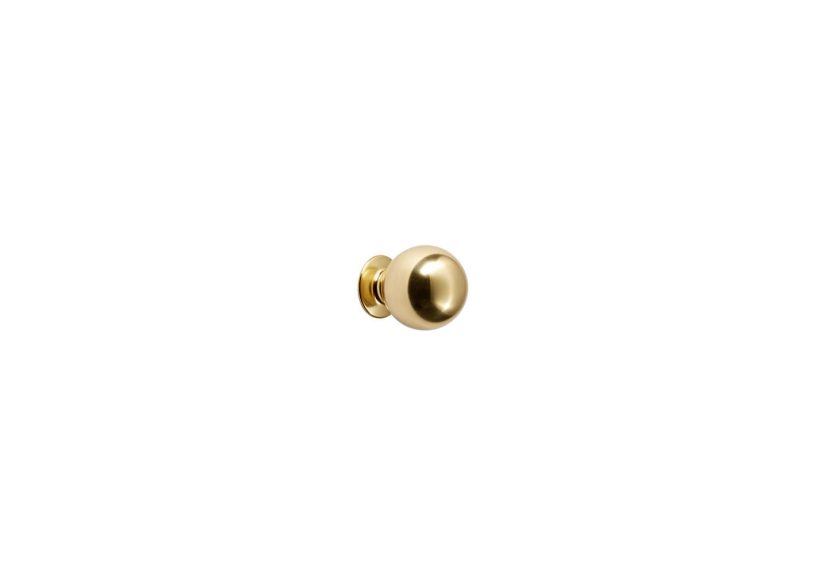
A ball cabinet knob (also called a round, globe, or spherical cabinet knob) is exactly what it sounds like:
a knob shaped like a sphere or near-sphere, usually attached to a small stem and base (sometimes called a rose). It’s one of the most classic shapes in
cabinet hardware because it’s visually simple, comfortable to grip, and works with a ridiculous range of stylesfrom modern slab cabinets to traditional
raised-panel doors.
Design-wise, it’s the equivalent of a white T-shirt that actually fits. It can be understated, polished, playful, or downright fancy depending on material,
finish, and scale. And because it’s symmetrical, it tends to look “right” even when your cabinets, walls, and life are slightly… not.
Why Ball Knobs Never Really Go Out of Style
1) They’re visually calm
Cabinetry has a lot going onpanels, rails, stiles, reveals, seams, grout lines, and that one drawer that’s always a little smug. A round knob adds a clean,
repeatable shape that doesn’t fight your cabinet style. It’s a design “reset button.”
2) They work in almost any room
Kitchens and bathrooms are the obvious picks, but ball knobs look right at home on built-ins, mudroom lockers, furniture upgrades, bar cabinetry, and even
closet systems. If it opens, it can probably wear a ball knob.
3) They’re easy to live with
Spheres don’t have sharp corners. That’s great for pockets, sleeves, and hips that pass too close. They’re also easy to wipe downimportant in kitchens where
“mystery smudge” is a recurring theme.
Materials and Finishes: The Personality of Your Ball Knob
The shape may be simple, but the material and finish do most of the talking. Here’s how to pick a knob that matches your space (and your
patience for maintenance).
Solid brass: warm, classic, and quietly expensive-looking
Brass ball knobs are popular because they add warmth without adding visual clutter. They can lean vintage, transitional, or modern depending on the finish:
polished brass feels traditional, satin/brushed brass reads contemporary, and aged/bronzey brass feels historic.
Unlacquered brass: the “living finish” choice
Unlacquered brass is brass without a protective clear coat. Translation: it will change. It develops patina, darkens in spots you touch most, and
slowly tells the story of your kitchen like a tiny brass diary. Some people love that character. Others would prefer their hardware not emotionally evolve.
Know yourself.
Stainless steel and brushed nickel: the low-drama heroes
If you want something that plays nicely with most appliances and doesn’t demand special care, brushed nickel and stainless finishes are hard to beat. They’re
neutral, forgiving with fingerprints, and feel “clean” without looking sterile.
Matte black: modern, crisp, and high-contrast
Matte black ball knobs look especially sharp on white, light wood, or colorful cabinetry. They can make even basic cabinets feel more intentional. The main
trade-off: dust and greasy fingerprints can show more, so keep a microfiber cloth nearby (or embrace the “real life” aesthetic).
Ceramic, glass, and acrylic: the charming statement-makers
A round knob in ceramic, glass, or acrylic can add sparkle, texture, or color. This is where you can go playfulthink vintage-inspired clear “crystal” looks,
soft white ceramic for cottage style, or a colored knob to tie into backsplash or paint. These materials can be slightly less forgiving if you’re rough on
hardware, so they’re great for lighter-use areas or furniture.
Zinc alloy and mixed materials: budget-friendly and everywhere
Plenty of ball knobs are made from zinc alloy with plated finishes. They can look great, especially at a lower price point. The key is choosing a finish that
matches your use: heavy-traffic kitchens may benefit from more durable construction, while a guest bath vanity can happily wear a budget knob for years.
- Pro tip: Match sheen, not just color. “Brass” can be bright, muted, or brownish. Same with “nickel.”
- Pro tip: If you’re mixing metals, repeat each finish at least twice so it looks deliberate.
Choosing the Right Size: Diameter, Projection, and “Does This Feel Weird?”
Ball knobs look deceptively simple, but size mattersboth for aesthetics and for your hand. The three measurements to care about are:
diameter (how wide the knob is), projection (how far it sticks out), and the base size
(how much “footprint” it has on the cabinet).
Common ball knob diameters
In many homes, ball knobs around 1″ to 1.5″ in diameter feel right. A 1-1/4″ knob is often a sweet spot: not tiny, not
comically large, and comfortable for most hands. Smaller knobs can look refined on inset cabinets or petite furniture, while larger spheres can be a bold,
modern moveespecially on big drawers.
Projection: comfort vs. snag risk
A knob that doesn’t project enough can feel pinchy. Too much projection and you’ll catch belt loops, tote bags, or the occasional existential dread when you
walk past. If your kitchen is narrow or your island is a traffic zone, choose a moderate projection and test it in real life (a.k.a. walk past it carrying
groceries like you always do).
When to use pulls instead
Ball knobs are great, but they aren’t the answer to every drawer. For heavy, wide drawers (think trash pull-out, pots and pans, or that “everything” drawer),
a longer pull can offer better leverage. Many designers mix knobs on doors with pulls on drawers for function and variety.
Placement: Where Ball Knobs Look Best (and Feel Best)
Hardware placement is the difference between “professionally finished” and “something feels off but I can’t explain why.” Good placement also protects your
sanity: the knob should be easy to reach and easy to use.
Cabinet doors
A common approach is to place the knob near the corner opposite the hinges. Many installers use consistent offsetsoften a couple inches from the corner and
about an inch in from the edgethen repeat that placement across the whole kitchen for clean alignment. On framed doors (like Shaker), aligning the knob
visually with the rail-and-stile intersection often looks especially natural.
Drawers
For most drawers, centering a single knob looks classic and works well. On wider drawers, two knobs can look charming and symmetrical, but a pull may be more
practical. If you do use two knobs, measure carefully so they’re evenly spaced and aligned with nearby hardwareyour eyes are ruthless about symmetry.
Consistency is your best friend
Pick a rule and stick to it. Even if your rule is “I eyeballed it,” at least eyeball it the same way every time. Consistency creates rhythm, and rhythm is
what makes cabinetry feel designed instead of assembled.
Installation: A DIY-Friendly Upgrade (If You Measure Like You Mean It)
Installing a ball cabinet knob is one of the fastest visual upgrades you can make. It’s also the fastest way to invent a new geometry problem if you skip the
template. Here’s the sane method:
Tools you’ll want
- Measuring tape or ruler
- Pencil
- Painter’s tape (optional, but helpful for marking and preventing tear-out)
- Drill + correct drill bit
- Hardware template or a DIY jig (cardboard works; chaos does not)
- Screwdriver
Step-by-step (without drama)
- Choose placement. Mark it lightly in pencil and step back to check it visually.
- Make a repeatable template. Use a store-bought template or create one from cardstock.
- Drill carefully. Start slow; keep the drill perpendicular to the door/drawer face.
- Test screw length. Many knobs include breakaway screwstrim if your door is thin.
- Tighten gently. Overtightening can strip threads or crack delicate materials.
If you’re replacing old knobs: celebrate. You likely already have holes, which means your project becomes “swap and admire” instead of “measure, drill,
re-measure, question reality.”
Design Pairings: How to Style Ball Knobs Like You Planned It
Shaker cabinets + brass ball knobs
This combo is a classic for a reason. Shaker doors have clean lines, and a warm round knob softens the geometry without getting fussy. Brushed or satin brass
reads updated; polished brass leans more traditional.
Modern slab cabinets + matte black round knobs
Minimal doors + a small, dark sphere is a sleek look. Choose a knob with a simple base (or no visible base) for a cleaner silhouette. This is where scale can
do a lot: slightly oversized knobs can feel intentional and modern.
Vintage-inspired spaces + glass/acrylic globe knobs
Clear knobs bounce light and bring a subtle sparkle, especially in bathrooms and bar areas. Pair them with chrome or polished nickel for a crisp, vintage
feelor with brass if you want a little “old Hollywood.”
Backplates and bases: the tiny upgrade with big impact
Adding a backplate behind a knob can elevate the look and help cover old wear marks from previous hardware. It’s like putting your knob on a little frame and
saying, “Yes, this is art.”
Maintenance: Keep the Shine (or Keep the PatinaYour Call)
- Brushed nickel / stainless: Mild soap + water, dry with a soft cloth.
- Matte black: Gentle cleaner and microfiber; avoid harsh chemicals that can dull finishes.
- Lacquered brass: Wipe and dry; avoid abrasive polishes that can damage the protective coat.
- Unlacquered brass: Either let it age naturally or polish occasionally for a brighter look.
- Glass/ceramic: Soft cloth; don’t overtighten during installation.
The main idea: treat knobs like jewelry. You don’t scrub your nice earrings with a scouring pad (and if you do, we should talk).
Where Ball Cabinet Knobs Shine (and Where They’re Not the Best Pick)
Best places to use ball knobs
- Upper and lower cabinet doors
- Bathroom vanities
- Furniture refreshes (dressers, nightstands, credenzas)
- Built-ins and bookcases
- Laundry rooms and mudrooms (if you don’t mind occasional bumps)
Consider alternatives when…
- You have very heavy drawers (a pull offers better leverage)
- You need easier grip for accessibility (larger knobs or D-shaped pulls can be friendlier)
- You have tight walkways and snag risk (choose lower projection or a different style)
Budget and Value: What You’re Actually Paying For
Ball knobs can be inexpensive or premium, and the difference usually comes down to construction (solid vs. hollow), finish
quality, and brand consistency. In a busy kitchen, durable finishes and solid materials often hold up better over time.
That said, you can absolutely get a beautiful look on a budgetespecially if you’re upgrading a smaller space or a piece of furniture. If you’re uncertain,
buy one knob first and live with it for a week. Consider it a “hardware trial run” before you commit to 40 tiny spheres.
A Quick Buyer’s Checklist (Because Regret Is Expensive)
- Choose a finish that works with lighting, faucets, and appliances (and match sheen thoughtfully).
- Pick a size that fits your drawer scale and feels good in your hand.
- Check projection if your kitchen is narrow or high-traffic.
- Decide on patina: lacquered (stays consistent) vs. unlacquered (changes over time).
- Plan placement and stick with a consistent rule.
- Buy extras (because hardware is the sock of home improvementone will vanish).
Real-World Experiences: of “What I Wish Someone Told Me”
The first time I swapped cabinet hardware, I thought I was embarking on a quick glow-up. You know: remove old knobs, install new knobs, admire self in the
reflective toaster like the capable adult I obviously am. The reality was… educational.
I started with a charming set of brass ball knobs because I wanted that warm, classic looksomething that whispers “thoughtful renovation” instead of shouting
“rental special.” I held one up to the cabinet door and thought, Perfect. Easy. Then I installed the first knob and discovered something no one
tells you: a knob can be objectively beautiful and still look wrong if it’s placed half an inch off from its neighbors. Cabinets are basically a grid, and
grids are judgmental.
Lesson one: make a template. I tried “careful measuring” for the second knob and somehow created two holes that were perfectly aligned with each other…
and perfectly misaligned with the rest of the kitchen. After a short period of staring into space, I grabbed a simple hardware template (cardboard works in a
pinch) and suddenly my project transformed from “abstract art” into “clean lines.” If you only take one thing from this entire article, take the template.
Lesson two: check screw length before you tighten anything. Some knobs come with long screws designed for thicker doors, and if your cabinet doors are thinner,
you’ll tighten forever and the knob will still wobble like it’s trying to escape. Breakaway screws are great, but you need to snap them to the right length.
Once I trimmed the screws properly, everything tightened up like it was supposed to. Amazing how hardware behaves when you use the correct hardware. (Wild.)
Lesson three: think about how you actually use your kitchen. I put ball knobs on everythingincluding a giant trash pull-outbecause I wanted a consistent
look. Two weeks later, I was yanking that heavy drawer open with the determination of someone starting a lawn mower. The knob survived, but my wrist had
opinions. I switched that one to a pull for better leverage and kept the ball knobs on doors and lighter drawers. The kitchen still looked cohesive, and my
joints sent a thank-you note.
Lesson four: finishes have personalities. Unlacquered brass is gorgeous, but it changes where you touch it most. In my case, that meant the knobs near the
coffee station started developing a deeper patina quicklybecause apparently I am there more than I’d like to admit. I ended up loving the “lived-in”
variation, but if you prefer uniform hardware, go for a lacquered finish or a more forgiving option like brushed nickel.
Finally: buy a few extra knobs. Not because they’ll break (most won’t), but because you’ll inevitably want to add hardware to a pantry, a laundry cabinet, or
a piece of furniture laterand matching finishes across batches can be tricky. Extras are cheap insurance against future you standing in the hardware aisle,
whispering, “This is close enough,” like a person bargaining with fate.
Conclusion: Small Sphere, Big Payoff
A ball cabinet knob is one of those rare home upgrades that’s affordable, approachable, and genuinely transformative. Pick the right material
and finish, choose a size that looks proportional and feels comfortable, place it consistently, and install it carefully. You’ll end up with cabinetry that
looks sharper, functions better, and quietly signals, “Yes, someone cared about the details here.”
And if you mess up one hole? Congratulationsyou’ve joined the grand tradition of DIY. Fill it, adjust, and keep going. Your cabinets will forgive you. Your
tape measure might not, but it’ll get over it.






 Close
Close