
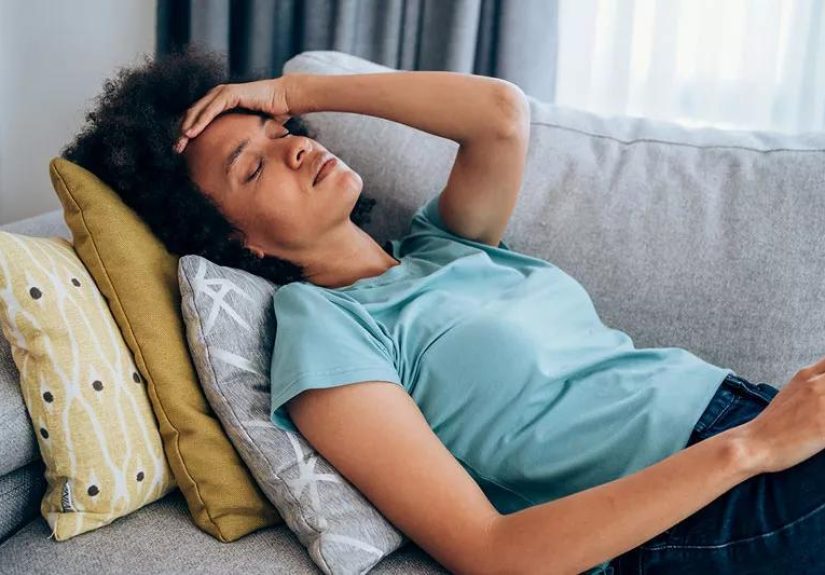
Table of Contents >> Show >> Hide
- So… are migraines hereditary? Yesmostly. But it’s complicated.
- What “hereditary” means in migraine (without the biology textbook)
- How strong is the family connection? What the numbers suggest
- When migraines really are “genetic” in the classic sense: rare single-gene types
- Why migraine can run in families even if nobody talks about it
- Genes load the gun, environment pulls the trigger (and sometimes the trigger is “Tuesday”)
- What to do if migraines run in your family
- Should you get genetic testing for migraine?
- When a “migraine” might be something else (and when to seek urgent care)
- Bottom line
- Experiences: What Migraine Heredity Looks Like in Real Life (and Why It’s Not Always Obvious)
If you’ve ever sat at a family dinner and realized everyone is squinting under the same bright kitchen lights, you’ve probably wondered:
“Wait… are we all allergic to illumination, or is this a migraine thing?”
The short version: migraines often run in familiesbut they don’t behave like a simple hand-me-down sweater. They’re more like a complicated recipe:
a genetic base layer, plus life’s spices (sleep, stress, hormones, weather, food, and the audacity of fluorescent bulbs).
This article synthesizes guidance and research summaries from major U.S. medical organizations and academic health systems (including NIH resources,
Mayo Clinic, Cleveland Clinic, Johns Hopkins Medicine, Yale Medicine, and MedlinePlus Genetics) to explain what “hereditary” really means for migraine,
what the numbers do (and don’t) say, and what to do if migraine seems to be the unofficial family tradition.
So… are migraines hereditary? Yesmostly. But it’s complicated.
Migraine is widely described as a condition with a strong genetic component. Many people with migraine have relatives who also experience it, and family history
is considered one of the most consistent risk factors. That said, most migraines don’t follow a neat, predictable inheritance pattern the way some single-gene
conditions do. In plain English: genes can raise your odds, but they don’t write your calendar.
What “hereditary” means in migraine (without the biology textbook)
When people say “migraine is hereditary,” they usually mean genetic susceptibility can be passed through families. Susceptibility is not the same as destiny.
For most people, migraine risk seems to come from many small genetic factors working together (often called “polygenic” risk), plus environmental influences.
Think of it like this:
- Genes can make your nervous system more likely to react in migraine-y ways (sensitive brain circuitry, pain pathways, sensory processing).
- Environment helps decide whether that sensitivity turns into real-world migraine attacksand how often.
- Life (stress, sleep changes, hormonal shifts, dehydration, missed meals, etc.) is the chaotic roommate who keeps rearranging everything.
How strong is the family connection? What the numbers suggest
Different reputable medical resources describe migraine heredity using slightly different figures, because studies measure risk in different ways (and because
migraine itself isn’t one single “type” of problem). Still, the message is consistent: family history matters.
Commonly cited patterns you’ll see in clinical guidance
-
Many people with migraine report a family history.
Some clinical resources estimate that a large majority of migraine patients have a close relative with migraine. -
If a parent has migraine, a child’s risk can be significantly higher than average.
Some sources discuss roughly “about a 50% chance” when a parent has migraine, and higher estimates when both parents are affected. -
Migraine doesn’t always show up identically in relatives.
One person gets classic one-sided throbbing pain and nausea; another gets dizziness, light sensitivity, and brain fog; a third insists it’s “sinus pressure”
while wearing sunglasses indoors. (We see you, Uncle Dave.)
Why it’s hard to pin down one perfect percentage
Migraine is underdiagnosed and often mislabeled. Some people never see a clinician for it. Others have migraine but call it “stress headaches.”
Kids may show migraine differently than adults. And because migraine has multiple subtypes, risk estimates can shift depending on whether you’re talking about
migraine with aura, without aura, chronic migraine, or rarer forms. So if you find two trustworthy sources with different percentages, it doesn’t mean one is lying.
It means migraine is messyin a scientifically interesting way and an everyday-life annoying way.
When migraines really are “genetic” in the classic sense: rare single-gene types
Most migraines are not caused by a single gene mutation. But there are rare migraine syndromes where a mutation plays a starring role.
The best-known example is familial hemiplegic migraine (FHM), a subtype of migraine with aura that can include temporary weakness on one side
of the body (the “hemiplegic” part). This is uncommon, but it’s a big reason migraine genetics comes up in neurology conversations.
Familial hemiplegic migraine in plain language
In FHM, attacks can involve aura symptoms such as visual changes, speech difficulties, or numbnessplus temporary one-sided weakness.
Because some symptoms can resemble a stroke, it’s important that people with suspected hemiplegic migraine get evaluated by a clinician.
Genetic resources commonly associate FHM with mutations in genes involved in how nerve cells handle ions (charged particles) and electrical signaling.
Genes frequently discussed in this context include CACNA1A, ATP1A2, SCN1A, and sometimes PRRT2.
This is not “a migraine gene” in the way people imagine; it’s more like a wiring-and-signal-regulation issue that can make the brain more vulnerable to certain attack patterns.
Important reality check: genetic testing isn’t routine for most migraine
Major clinical resources emphasize that genetic tests are not used for the vast majority of migraine patients. Testing may be considered when a person has symptoms strongly
suggestive of a rare inherited subtype (like hemiplegic migraine), especially when multiple family members have similar, unusual episodes. Otherwise, migraine diagnosis remains primarily clinical:
based on symptoms, history, and a clinician’s evaluation.
Why migraine can run in families even if nobody talks about it
You can have a “migraine family” without realizing itbecause migraine can hide behind many masks. Here are a few reasons your family history may be bigger than you think:
- Different labels: “Sinus headaches,” “stress headaches,” “I just get sick around perfume,” “I’m fine, it’s just my head exploding a little.”
- Different symptoms: Some people get severe pain; others mainly get nausea, dizziness, light sensitivity, or visual aura.
- Different life stages: Migraine patterns can change around puberty, pregnancy, postpartum, perimenopause, and menopause.
- Different coping styles: One relative lies down in a dark room; another powers through at work; a third “treats” it by grumbling at the weather channel.
Genes load the gun, environment pulls the trigger (and sometimes the trigger is “Tuesday”)
If migraine susceptibility runs in your family, the next practical question is: “Okay, what sets it off?” While triggers vary by person, many reputable medical resources
describe common categories of migraine triggers and risk amplifiers.
Common trigger categories clinicians often discuss
- Sleep changes: Too little sleep, too much sleep, or inconsistent sleep schedules.
- Stress shifts: Not only stress itself, but also the “letdown” after stress (weekends and vacations can be suspiciously migraine-friendly).
- Hormonal changes: Many people report menstrual-related migraine patterns; hormones can influence frequency and severity.
- Food and hydration: Skipped meals, dehydration, alcohol for some people, and individual food sensitivities.
- Sensory overload: Bright lights, strong smells, loud environments, screen glare.
- Weather and barometric pressure: Some people notice patterns with storms or pressure shifts.
Here’s the empowering part: even if your genetics raise your baseline risk, identifying personal triggers and building protective routines can meaningfully reduce attack frequency
for many people. It’s not about “controlling” your brain; it’s about giving it fewer reasons to start a protest.
What to do if migraines run in your family
If you suspect migraine heredity, you don’t need to panic or start drafting a formal “Family Migraine Constitution.” Start practical and specific.
1) Map the family pattern (lightly, not obsessively)
Ask a few simple questions: Who gets headaches? What symptoms come with them (nausea, light sensitivity, aura)? When did they start?
Are there known triggers? Do people miss school or work because of attacks? This helps with diagnosis and can speed up appropriate care.
2) Keep a migraine or headache diary for a few weeks
Track: onset time, duration, symptoms, possible triggers (sleep, meals, stress), and treatments used. Patterns often appear faster than you’d expect.
This is especially useful in families where multiple people get migrainebecause you may find shared triggers (like irregular sleep) and also learn what’s unique to each person.
3) Talk to a clinicianespecially if attacks are frequent or disabling
Migraine isn’t “just a headache.” If attacks disrupt school, work, sports, or daily life, a clinician can help confirm the diagnosis, rule out other causes when needed,
and discuss options like acute treatments, preventive medications, and lifestyle strategies. Newer preventive approaches (including those targeting CGRP pathways)
may be appropriate for some patients, depending on age, frequency, and medical history.
4) Build “boring consistency” (it’s secretly powerful)
A consistent sleep schedule, regular meals, hydration, and stress-management habits can reduce attack frequency for many people. This doesn’t mean life becomes a monk-like routine.
It means you stop giving your brain surprise parties it didn’t RSVP to.
Should you get genetic testing for migraine?
Usually, no. For most migraine, there isn’t a single test that tells you whether you “have the migraine gene.” Migraine risk is typically polygenic and influenced by environment.
However, genetic evaluation may be considered in specific situationsespecially if the clinical picture suggests a rare inherited subtype such as familial hemiplegic migraine,
or if migraine symptoms are paired with unusual neurological features and a strong family pattern.
If you’re curious about testing, the best first step is not an online kitit’s a conversation with a qualified clinician (often a neurologist or headache specialist) who can
determine whether testing would actually change diagnosis or management.
When a “migraine” might be something else (and when to seek urgent care)
Migraine can be intense and dramatic, but certain headache scenarios deserve prompt medical evaluation. Seek urgent care if you experience:
- Sudden, severe “worst headache of your life” that peaks quickly
- New neurological symptoms that are unusual for you (confusion, fainting, weakness, difficulty speaking)
- Headache with fever, stiff neck, or rash
- New headache after head injury
- New or changing headaches in someone with immune suppression or other complex medical issues
Many people with migraine experience aura or sensory symptoms that feel scary but are familiar to them; the key is noticing what’s new, what’s different,
and what escalates rapidly.
Bottom line
Migraines are often hereditary in the sense that migraine susceptibility commonly runs in families. But heredity isn’t a single switch: most migraine risk reflects a mix of
genetic vulnerability plus environmental triggers and life patterns. The practical takeaway is hopeful: family history can help you recognize migraine earlier, name it accurately,
and build strategies that reduce attacksso you inherit fewer miserable days, not more.
Experiences: What Migraine Heredity Looks Like in Real Life (and Why It’s Not Always Obvious)
When people talk about hereditary migraine, they often imagine a neat storyline: “My mom has migraines, so I do too.” Sometimes it is that straightforwardyet many families
experience a more confusing version, where migraine shows up wearing disguises and changing outfits every few years.
One common experience is the “family resemblance” effect. A teenager gets repeated headaches with nausea and light sensitivity, and a parent suddenly recognizes the pattern:
“That’s exactly what happened to me in college.” The parent may never have called it migrainemaybe they blamed stress, skipped meals, or “bad posture.” Once the family connects
the dots, the teen often gets evaluated sooner, learns trigger management earlier, and avoids years of thinking they’re just “bad at handling stress.”
Another frequent theme is that migraine heredity doesn’t always mean identical symptoms. In some families, one person has migraine with aurazigzag lights, blind spots, or odd tingling
while another gets no aura at all and mainly experiences pounding pain and nausea. A sibling might have dizziness or vertigo episodes (sometimes categorized as vestibular migraine),
while a parent mostly has “silent” migraine features like sensitivity to light and brain fog without much head pain. Families can end up arguing about whether they share the same condition,
when the truth is: migraine is a spectrum, and genes may shape the underlying sensitivity while life circumstances shape the final presentation.
Many people also describe a strong “timing” pattern. Migraine may appear around puberty, change during pregnancy, or shift during perimenopause. In families, this can create the illusion
that migraine isn’t hereditarybecause everyone’s onset happens at different ages. A parent’s attacks peaked in their 20s, calmed down in their 40s, and returned later; meanwhile, a child
develops migraine during adolescence. The heredity is still there, but the timeline is personalized.
Then there’s the emotional experience: guilt, worry, and the urge to bargain with biology. Parents sometimes fear they “gave” migraine to their kids. Kids sometimes feel anxious that migraine
will limit their future. In practice, many families find that naming the condition helps reduce shame. Instead of “Why can’t you just push through?” the conversation becomes,
“Okay, what helps you recover?” Families often trade practical tips: a dark, quiet room; hydration; consistent sleep; an agreed-upon plan for school or work absences; and reminders to avoid
medication overuse (because taking acute pain meds too frequently can make headaches worse over time for some people).
Finally, some families describe a “shared trigger culture.” Everyone gets hit during the first big seasonal weather shift. Multiple relatives react badly to disrupted sleep or skipped meals.
Stressful weeks trigger attacks across generations. The upside is that families can also build shared protective habits: regular meal times, a calmer bedtime routine, sunglasses in bright environments,
and a little more respect for recovery time. Migraine heredity may be realbut so is the power of a family plan that treats migraine like a health condition, not a character flaw.






 Close
Close