
Table of Contents >> Show >> Hide
- The Big Surprise: It May Have Been Pikes, Not Thrown Spears
- Why Archaeologists Started Rethinking the Old Story
- What the Evidence Actually Shows
- So Did Early Humans Definitely Use Planted Pikes?
- What Mammoth Hunting Probably Looked Like in Real Life
- Why This Discovery Matters Beyond Mammoths
- The Experience of Standing Close to This Story
- Conclusion
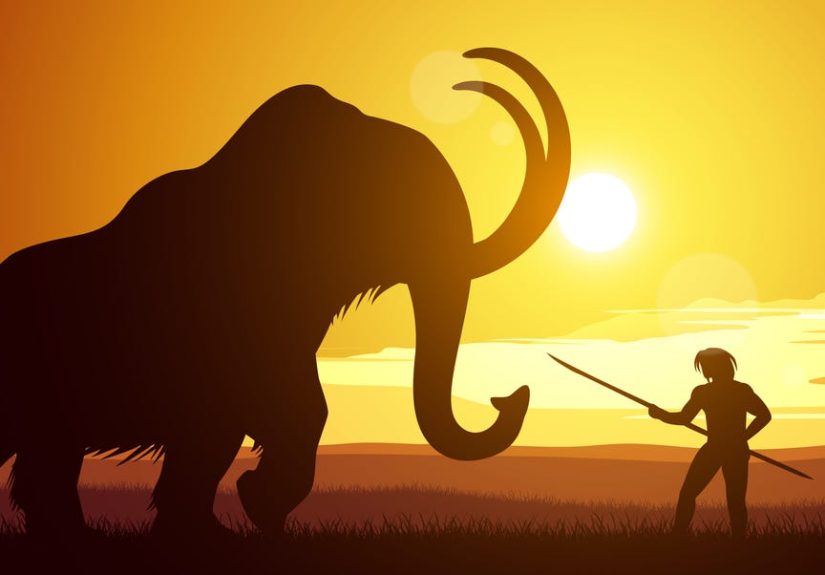
If you grew up on the classic version of prehistory, you probably picture early humans sprinting across a frozen plain, flinging spears at a woolly mammoth while dramatic music swells in the background. It is a great movie scene. It is also, according to a newer line of archaeological thinking, probably not the smartest way to pick a fight with an animal the size of a moving shed with tusks.
A growing body of research suggests that at least some Ice Age hunters may not have relied on thrown spears to kill mammoths at all. Instead, they may have used braced pikes or planted, upward-pointing weapons that turned the animal’s own momentum into the deadly force. In other words, the mammoth may have done part of the work itself. That sounds almost too clever, but archaeology has a way of humbling modern assumptions. Ancient people were not reckless cave cartoon characters. They were practical, inventive, and extremely motivated not to get flattened.
This matters because mammoth hunting is not just a flashy prehistoric headline. It sits at the center of bigger questions about how early people in North America lived, how advanced their hunting technology really was, how mobile they were, and whether humans helped push giant Ice Age animals toward extinction. And lately, the evidence has gotten a lot more interesting.
The Big Surprise: It May Have Been Pikes, Not Thrown Spears
The attention-grabbing idea comes from research on Clovis points, the beautifully fluted stone points associated with the Clovis culture in North America around 13,000 years ago. For decades, these points have been treated like prehistoric spear tips. That led to a familiar story: hunters hurled or thrust them into mammoths, mastodons, and other megafauna.
But recent archaeological modeling argues that this picture may be too simple. The newer theory suggests some Clovis weapons may have worked more like braced pikes than javelins. Hunters could have planted or firmly braced the shaft, angled the point upward, and used the charging animal’s speed and mass against it. That would create much more force than a human arm alone could generate.
Honestly, it makes sense. If you are facing a massive animal with thick hide, huge bones, and an extremely bad attitude, relying on your shoulder strength sounds less like strategy and more like a very short career. A planted weapon lets physics join the hunting party.
This theory also helps explain why Clovis points are shaped the way they are. The fluted base may have helped attach the point to a shaft or foreshaft system that could absorb pressure, detach in useful ways, or preserve valuable components after impact. Archaeologists have tested replicas under compression and found that this kind of weapon system could behave in surprisingly sophisticated ways. That does not mean every Clovis hunter used the exact same method every time, but it does suggest that “just throw the spear harder” may be a modern fantasy more than an archaeological fact.
Why Archaeologists Started Rethinking the Old Story
1. Mammoths Were Not Easy Targets
Let’s start with the obvious: mammoths were huge. Their thick hides, dense muscle, ribs, and sheer body mass made them difficult prey. Even if a stone point was sharp enough to break skin, that did not guarantee a quick, fatal wound. A thrown weapon would lose force after impact, and that is a major problem when your target is basically a tank covered in hair.
Some researchers argued that this made the classic image of hunters repeatedly throwing spears into mammoths less convincing. The animal’s anatomy offered a lot of protection to vital organs. If that is true, then early humans needed more than courage and cardio. They needed a smarter delivery system.
2. Clovis Points Were Valuable Gear
Clovis points were not disposable junk. They took skill, time, quality stone, and real craftsmanship to make. Hunters would not have casually launched them away the way a kid loses pencils during math class. A system that improved the odds of a successful strike while reducing pointless breakage would have been a practical choice.
That is one reason the braced-pike theory has grabbed attention. It treats Clovis technology as carefully engineered rather than crude. Ancient hunters were not just brave. They were economical. When a tool took serious labor to produce, you designed the hunt around not wasting it.
3. Archaeology Keeps Showing Up With Annoying Nuance
Archaeology loves ruining tidy stories. Mammoth bones with cut marks, Clovis points found near large-animal remains, and butchering evidence all strongly suggest humans interacted directly with megafauna. But exactly how those animals died is often harder to prove. Some could have been hunted. Some may have been scavenged. Some might reflect multiple behaviors at the same site.
That is why the new pike model matters. It gives archaeologists a more realistic mechanism for how people could have hunted giant prey without needing superhero-level throwing power.
What the Evidence Actually Shows
Clovis Points and Mammoth Bones
Since the first famous discoveries near Clovis, New Mexico, archaeologists have found Clovis points associated with mammoth remains at a number of North American sites. Blackwater Draw is the celebrity example, but it is not alone. Other sites in places like Arizona, Colorado, Wyoming, and beyond have added to the picture.
These sites helped build the long-standing belief that Clovis people were specialized big-game hunters. The logic was straightforward: if you keep finding these distinctive stone points around mammoth bones, early people were probably not just arriving late to someone else’s barbecue. They were involved in the kill, the butchery, or both.
Cut Marks, Butchering, and Processing
Archaeologists also look for butchering marks on bone, breakage patterns, and the distribution of remains. A mammoth carcass was not just dinner. It was food, hide, bone, ivory, sinew, and probably a week’s worth of exhausting labor. Processing an animal that size required planning, coordination, and likely social organization. This was not a one-person side quest.
That broader picture matters because it reminds us that mammoth hunting was not simply about the kill moment. It was part of an entire survival system. People had to track, wound, finish, butcher, defend the carcass, transport useful parts, and avoid becoming lunch for other predators attracted to the scene.
Dietary Evidence Changed the Conversation
One of the most important recent developments came from chemical analysis of ancient human remains associated with Clovis culture. Researchers studying the famous Anzick child remains from Montana found evidence suggesting that mammoth contributed a very large share of the diet represented there, alongside animals like elk and bison. That finding does not prove every Clovis group everywhere lived on mammoth steaks morning, noon, and night, but it strongly supports the idea that mammoth was not an occasional novelty item.
In plain English, mammoth was not just on the menu. It may have been one of the main entrées for at least some groups. That gives extra weight to the argument that early hunters had effective ways to take down or exploit these giant animals.
Older Weapons, Smarter People
There is also evidence that pre-Clovis or early North American populations used sophisticated hunting tools made from bone. Finds like the osseous point from the Manis mastodon site show that people were developing specialized weaponry long before anyone handed them a Hollywood script and told them to yell while charging mammoths. The deeper archaeologists dig, the more early humans look like adaptable engineers rather than clumsy opportunists.
So Did Early Humans Definitely Use Planted Pikes?
Not definitely. That is the key nuance, and it deserves to stay in bold mentally even if not typographically.
The braced-pike idea is a strong and intriguing hypothesis, but it is still a hypothesis. No complete wooden Clovis pike has survived for archaeologists to hold up and say, “Here it is, mystery solved.” Organic materials like wood, lashings, and shafts usually decay, which means stone points are often left to do all the talking. And stone, while helpful, is not always chatty enough to settle every argument.
Some archaeologists remain cautious. They point out that association between points and mammoth bones does not automatically reveal the precise hunting method. Others have argued that Clovis points could have served multiple purposes, including butchering or scavenging. That skepticism is healthy. Good archaeology is not built on vibes, dramatic illustrations, or someone shouting “case closed” next to a museum diorama.
Still, the pike theory is powerful because it solves a real mechanical problem. It explains how relatively small humans could have inflicted serious wounds on giant prey without relying on unrealistic throwing force. It also fits the broader pattern of human behavior: when faced with dangerous prey, people usually invent technique, teamwork, and leverage instead of picking a fair fight. Nature does not give extra credit for style points.
What Mammoth Hunting Probably Looked Like in Real Life
It probably looked less like chaos and more like setup. Hunters may have used terrain, timing, group coordination, and weapon placement. They may have separated vulnerable animals, exploited bottlenecks, or pressured prey toward places where a braced strike was more likely to work. Once an animal was wounded, tracking and finishing it may have taken time.
That would make mammoth hunting an exercise in patience and logistics, not just raw aggression. It also helps explain why these hunts could support highly mobile people. A successful big kill would provide enormous returns in calories and materials. If you can reliably secure huge packages of food and useful raw material, you can move farther, survive harsh conditions, and expand quickly.
That possibility fits with why Clovis culture spread so widely in a relatively short time. Efficient large-game hunting, even if not the only strategy, would have been a serious advantage in the late Ice Age world.
Why This Discovery Matters Beyond Mammoths
The appeal of this story is not just that mammoths are cool, though they are extremely cool. It matters because it changes how we think about early human intelligence. Too often, ancient people are described as primitive in ways that flatten their ingenuity. But the archaeological record keeps pushing back.
Early humans did not survive brutal climates, dangerous predators, and massive prey by being lucky for a few thousand years in a row. They survived by observing animal behavior, designing specialized tools, passing knowledge between generations, and adapting techniques to landscapes and risks. The planted-pike theory fits that broader pattern beautifully.
It also reminds us that extinction debates are complicated. If humans were efficient mammoth hunters, they may have contributed more directly to megafaunal decline than some researchers once allowed. Climate change almost certainly shaped the environment these animals lived in, but human hunting pressure may have been part of the final squeeze. The answer may not be “climate or people.” It may be the messier and more realistic “both, in varying ways, depending on time and place.”
The Experience of Standing Close to This Story
One of the strangest things about reading mammoth archaeology is how fast the subject changes from abstract science into something almost physical. On the page, a Clovis point can look small and elegant, almost decorative. In a museum case, it can seem even smaller, which somehow makes the whole story more dramatic. You look at a stone point the size of your palm and then picture a mammoth towering over a group of humans on a cold plain, and your brain has to do a hard reset.
That is the real experience attached to this topic. It is the feeling of realizing that prehistory was not populated by cartoon cavemen, but by people who had to solve terrifying practical problems with limited materials and no safety net. No backup plan. No rescue helicopter. No motivational podcast. Just knowledge, teamwork, and whatever tools they could shape with stone, bone, wood, and nerve.
Visit a site report, a museum hall, or even a careful reconstruction drawing, and the emotional center of the story changes. The mammoth is not only a symbol of Ice Age grandeur. It becomes a measure of human ambition. You start to understand that mammoth hunting was not simply violence against a giant animal. It was risk management, engineering, social cooperation, and survival rolled into one high-stakes event.
That perspective becomes even stronger when you think about the aftermath of a successful hunt. The drama was not over once the animal went down. Then came the hard work: butchering, hauling, preserving meat, processing hide, cutting bone, protecting the carcass from scavengers, and deciding what could be carried and what had to be left behind. A mammoth would have transformed a place for hours or days. It would have changed the smell of the air, the traffic of predators, the movement of people, and the rhythm of a whole group’s labor.
There is also a human experience hidden inside the technology debate. The planted-pike theory feels believable because it sounds like something real people would invent. It is clever without being magical. It relies on leverage, positioning, and the behavior of prey. That is exactly the kind of practical intelligence archaeology keeps revealing in ancient societies. The more we learn, the less prehistory looks like brute force and the more it looks like accumulated expertise.
For modern readers, that is probably why this story sticks. It is not only about mammoths. It is about respect for the minds of people who lived deep in the past. Their world was harsher than ours in nearly every imaginable way, yet they found ways to turn landscape, materials, and animal motion into opportunity. That realization can be oddly moving. The ancient point behind glass stops looking like a relic and starts looking like an answer to a life-or-death question.
And maybe that is the most memorable experience connected to this topic: the moment you stop asking, “How could people kill a mammoth?” and start asking, “What kind of intelligence does it take to survive a world where mammoths exist?” Once you ask that, the archaeology gets bigger than a headline. It becomes a story about ingenuity under pressure, and that story still feels very modern.
Conclusion
Archaeologists have not uncovered a final, perfect replay of an Ice Age mammoth hunt. But the newer research has made one thing clear: the old image of humans simply hurling spears at giant prey is probably too neat, too cinematic, and too simple. The evidence increasingly points toward more strategic, more engineered hunting methods, including the possibility that Clovis hunters used braced pikes to let a mammoth’s own momentum deliver the fatal force.
That idea does more than refresh a prehistoric headline. It restores sophistication to early people and reminds us that survival has always rewarded brains as much as bravery. Ancient hunters were not trying to look dramatic for a future documentary narrator. They were trying to stay alive, feed their group, and make the most of every tool they had. As usual, reality is less Hollywood and far more impressive.






 Close
Close