
Table of Contents >> Show >> Hide
- What Is an Old Wood Duck for the Walls?
- Why the Wood Duck Makes Such Beautiful Wall Art
- A Brief History of Wooden Duck Decoys as American Folk Art
- How to Tell If an Old Wooden Duck Has Character
- Where an Old Wood Duck Looks Best in the Home
- How to Hang or Display a Vintage Wooden Duck Safely
- Decorating Styles That Pair Well With an Old Wood Duck
- Buying Tips: What to Look for Before You Bring One Home
- Care and Preservation: Let Old Wood Stay Old
- Why This Small Object Makes a Big Design Impact
- Experiences With an Old Wood Duck for the Walls
- Conclusion
An old wood duck for the walls is not just a quirky thing you hang above a console table and hope guests understand. It is a small sculpture with a surprisingly big personality: part wildlife tribute, part American folk art, part rustic décor, and part conversation starter. Put one on a wall and suddenly the room has a story. Not a loud story, thankfully. More like a quiet “I have excellent taste and possibly know where the good antique shops are” story.
Whether the piece is a vintage wooden duck decoy, a hand-carved wall plaque, a painted duck silhouette, or a weathered folk-art bird found at a flea market, it can bring warmth and character to a home. The charm comes from the mix of nature and craft. A real wood duck is one of North America’s most beautiful waterfowl, known for its crested head, bold colors, and woodland wetland habitat. A carved or painted version captures that same feeling in a form you can live with every dayno pond required, no muddy boots necessary.
In interior design, old wooden objects work because they soften a room. They interrupt the flat perfection of modern walls. They add texture, patina, age, and a little bit of mystery. A framed print says, “I bought art.” An old wood duck says, “I found something.” That difference matters.
What Is an Old Wood Duck for the Walls?
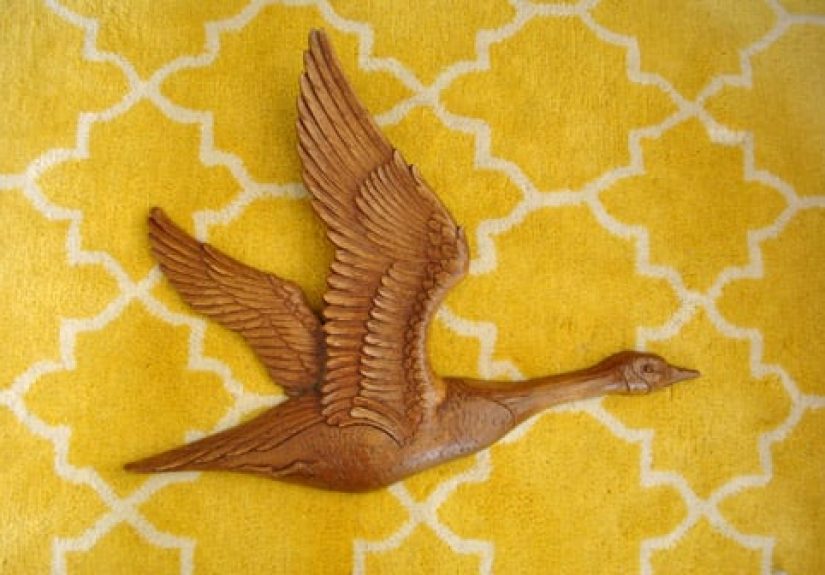
The phrase “old wood duck for the walls” can describe several types of decorative objects. It might be an antique or vintage duck decoy, originally made to float on water but now retired into a calmer career as wall décor. It might be a carved wooden wood duck designed specifically as folk art. It could also be a rustic painted duck plaque, a relief carving, or a handmade wall sculpture inspired by the real bird.
The most desirable pieces usually share a few qualities: hand-carved wood, visible brushwork, signs of age, and a form that feels alive without being overly polished. A little fading, rubbing, crazing, or uneven paint can be part of the appeal. In fact, too much perfection can make a piece feel newly manufactured rather than storied. Patina is the duck’s résumé.
Wood duck wall décor fits especially well in cabins, lake houses, farmhouse interiors, traditional homes, cottage spaces, and rooms with natural materials. But it can also look striking in a clean modern interior. A single old wooden duck mounted on a white wall can create the kind of contrast designers love: rustic against minimal, handmade against smooth, history against right-now.
Why the Wood Duck Makes Such Beautiful Wall Art
The wood duck is visually dramatic. Male wood ducks are famous for their iridescent greens, chestnut tones, white striping, red eyes, and elegant crest. Females are subtler, with a soft gray-brown body and a delicate white eye ring. Both have a distinctive shape: compact body, thin neck, broad tail, and that unmistakable head profile.
That shape translates beautifully into carving. Even when a wooden duck is simplified, the silhouette still reads clearly. A carver does not need to paint every feather to suggest the bird’s spirit. A raised crest, a curved back, a pointed bill, and a confident posture can do most of the work.
Wood ducks also carry a deeper nature story. They live around wooded swamps, marshes, creeks, beaver ponds, and bottomland forests. Unlike many ducks, they nest in tree cavities and will also use human-made nest boxes in suitable habitat. That connection to trees makes a wooden representation feel especially fitting. A duck carved from wood, inspired by a bird that nests in woodlands, hanging on a wall made of timber framing somewhere in the backgroundthat is design symmetry with feathers.
A Brief History of Wooden Duck Decoys as American Folk Art
Wooden duck decoys began as practical tools, but many have become collectible folk art. Long before modern plastic decoys, people shaped waterfowl forms from natural materials such as reeds, wood, and skins. In North America, decoy traditions developed across regions where wetlands, migration routes, and local craftsmanship overlapped.
By the nineteenth and early twentieth centuries, carved wooden decoys were widely used in waterfowl culture. Some were simple working birds made for daily use. Others were carefully carved and painted by skilled makers whose names later became important to collectors. Over time, the best decoys came to be admired not only for function but for sculpture, regional style, paint, balance, and personality.
That is why an old wooden duck on the wall can feel more meaningful than ordinary themed décor. It belongs to a lineage of handwork. The maker had to understand the bird’s posture, the grain of the wood, the way paint sits on a curved surface, and how a simple form can suggest life. Even a humble, unsigned piece can carry the feeling of a place: Chesapeake Bay, New England, the Great Lakes, the Midwest, the South, or a small workshop whose address nobody remembers.
How to Tell If an Old Wooden Duck Has Character
Not every old-looking duck is truly old, and not every truly old duck is valuable. But for wall décor, value is not only about auction results. It is also about presence. Does the duck make you stop and look? Does it have a pleasing shape? Does the paint feel honest? Does it look better from across the room than it did in the shop? If yes, you may have found a keeper.
Look at the Carving
Hand-carved ducks often show small irregularities. The two sides may not be perfectly symmetrical. The head may have tool marks. The body may show subtle planes where the carver shaped the wood. These details can make the piece feel human. Machine-made décor often looks too smooth, too identical, or too eager to impress.
Study the Paint
Original paint is important to collectors, especially on antique decoys. For decorative use, original paint is still wonderful, but good old repainting can also have charm if it was done with care. Avoid pieces with paint that looks artificially distressed in a predictable pattern. Real wear usually happens where hands, water, storage, sunlight, and time have had their say.
Check the Surface
Cracks, small dents, rubbed edges, and mellowed colors can all be attractive. However, active flaking, soft rotten wood, moldy odor, or unstable parts are warning signs. A wall piece should feel safe to display. “Rustic” is charming. “About to become sawdust” is less charming.
Consider Provenance
If the seller knows where the duck came from, who made it, or how long it has been in a family, that story adds interest. Provenance can matter for collecting value, but it also makes the object more personal. A wooden duck with a traceable past feels less like décor and more like a small historical guest.
Where an Old Wood Duck Looks Best in the Home
An old wood duck is flexible décor. It can lean rustic, nautical, traditional, farmhouse, cottage, or even modern depending on how you style it. The trick is to give it space and avoid surrounding it with too many other “duck things.” One duck is charming. Fifteen ducks, three mallard pillows, and a lamp shaped like a goose may start to feel like the room is organizing a migration.
Above a Console Table
A wooden duck mounted above a narrow console table can create a strong entryway moment. Pair it with a simple ceramic lamp, a small stack of books, and a bowl for keys. The duck gives the wall personality without needing a large framed piece.
In a Kitchen or Breakfast Nook
Wood ducks feel natural in kitchens because they bring warmth and humor. A small carved duck above open shelving, near a breakfast table, or beside vintage cutting boards can make the space feel collected rather than decorated from a catalog.
In a Study or Reading Room
In a study, an old wood duck adds quiet character. It pairs beautifully with leather, old books, brass lamps, plaid textiles, and dark wood. It says “library” without requiring a ladder, a fireplace, or an inheritance from a mysterious uncle.
In a Lake House or Cabin
This is the most obvious setting, and for good reason. A vintage wooden duck feels at home with pine walls, stone fireplaces, wool blankets, canoe paddles, and landscape paintings. It reinforces the outdoor mood without turning the room into a gift shop.
How to Hang or Display a Vintage Wooden Duck Safely
Before hanging any old wooden object, consider its weight, shape, and condition. Some decoys were not made to hang vertically, so they may need a custom bracket, narrow display shelf, or secure cradle. Avoid driving screws directly into an antique piece unless it has already been altered and the method is appropriate. When in doubt, use a display system that supports the object rather than damaging it.
A shallow wall shelf is often the safest choice. It lets the duck sit naturally while still reading as wall décor. A small museum-style bracket can also work if it supports the body evenly. For lighter carved plaques, proper picture-hanging hardware may be enough. Always anchor the display to a stud or use hardware rated for more than the object’s weight.
Placement matters too. Avoid direct sunlight, which can fade old paint. Keep the piece away from damp bathrooms, steamy kitchens, and heating vents. Wood expands and contracts with environmental changes, so a stable indoor location is best. Dust gently with a soft brush rather than scrubbing with a cloth or using household cleaners. Old paint deserves kindness, not a spa treatment with lemon oil.
Decorating Styles That Pair Well With an Old Wood Duck
A wood duck wall piece is surprisingly versatile because it combines shape, color, and texture. In a rustic room, it blends in naturally. In a modern room, it becomes the unexpected note that keeps the space from feeling cold.
Rustic and Cabin Style
Use the duck with natural textures: wool, linen, pine, oak, stone, iron, and aged leather. Keep colors earthy. Think moss green, tobacco brown, cream, slate, and faded red. The duck should feel like it wandered in from a lakeside morning and decided to stay.
New England Traditional
Pair the duck with framed maps, blue-and-white ceramics, striped runners, antique mirrors, and simple wood furniture. This look feels classic, coastal, and quietly polished.
Modern Farmhouse
In a farmhouse setting, an old wood duck works best when used sparingly. Avoid clutter. Let it stand near clean shiplap, black metal accents, a simple bench, or a reclaimed wood table. One strong folk-art object is more stylish than a wall crowded with signs explaining that the kitchen is, in fact, a kitchen.
Collected Eclectic
If your home mixes art, travel finds, vintage pieces, and family objects, a wooden duck can fit right in. Try grouping it with a small landscape painting, a woven basket, or a framed botanical print. The key is balance: vary shapes and sizes so the wall feels curated, not chaotic.
Buying Tips: What to Look for Before You Bring One Home
When shopping for an old wood duck, start with your purpose. Are you buying for beauty, collecting, investment, or sentimental charm? A serious collector may focus on maker, region, age, original paint, and documented history. A home decorator may care more about size, color, silhouette, and mood. Both approaches are valid.
Check the duck from every angle. Look for loose heads, replaced bills, major repairs, fresh paint pretending to be old, and weak areas in the wood. Ask whether the piece has been restored. Restoration is not always bad, but it should be reflected in the price and clearly disclosed.
Also consider scale. A tiny duck can disappear on a large wall unless grouped with other objects. A large decoy may overpower a narrow shelf. Measure before buying, especially if you plan to place it over a doorway, mantel, or console table.
Finally, buy what you enjoy looking at. Trends change. Personal taste lasts longer. If the duck makes you smile every time you pass by, that may be the best appraisal of all.
Care and Preservation: Let Old Wood Stay Old
The goal with an old wooden duck is not to make it look new. The goal is to help it survive gracefully. Avoid aggressive cleaning, sanding, repainting, or polishing. Those actions can remove the very surface that gives the piece its charm and, in some cases, its value.
Use a soft natural-bristle brush to remove dust gently. If the paint is flaking, stop and consult a conservator or knowledgeable antiques specialist. Keep the object in a stable environment, away from direct sun and high humidity. Do not “feed” the wood with random oils. Wood is not hungry; it is just sensitive.
If the duck has a musty smell, isolate it before bringing it into a main living space. A mild odor from age is common, but strong moldy smells can indicate storage problems. Avoid sealing the object in plastic, which can trap moisture. Let old wood breathe in a dry, stable room.
Why This Small Object Makes a Big Design Impact
Good interiors are not built only from expensive furniture. They are built from layers: texture, memory, contrast, humor, and surprise. An old wood duck brings all five. It has texture in the grain and paint. It has memory in its age. It contrasts beautifully with smooth modern surfaces. It has humor because, frankly, it is a duck on the wall. And it surprises people because it is not another generic print of beige grass in a beige field under a beige sky.
It also creates a bridge between indoors and outdoors. Many homes feel more grounded when they include natural motifs: birds, branches, landscapes, shells, stone, and handmade wood. A wooden duck is a simple way to add that connection without becoming overly themed.
Experiences With an Old Wood Duck for the Walls
The first time I saw an old wooden duck used well on a wall, it was not in a grand lake house or a carefully styled magazine room. It was in a modest breakfast nook with a round table, two mismatched chairs, and morning light coming through a small window. The duck sat on a narrow wall shelf above a stack of cookbooks. Its paint was worn, its head leaned slightly forward, and one side had a small crack that looked like a wrinkle earned honestly. It made the whole corner feel finished.
That is the magic of these pieces. They do not need perfection to work. In fact, perfection can ruin the mood. An old wood duck should look as though it has lived somewhere before. Maybe it spent years in a shed, a family cabin, an antiques booth, or a box under someone’s stairs. When placed thoughtfully, that history gives a room emotional weight.
One practical lesson: location changes everything. I once saw a carved duck placed too high above a doorway, where it looked like it was attempting escape. Lowered to eye level near a reading chair, it suddenly became art. Another time, a dark wooden duck disappeared against dark paneling until it was moved onto a pale wall. The shape popped, the paint looked richer, and the room instantly felt more intentional.
Grouping also matters. A single duck can be elegant, but a small collection can be beautiful if each piece has breathing room. Three ducks on individual shelves can create rhythm. A duck paired with a small landscape painting and a woven basket can feel like a story about wetlands, craft, and home. But crowding too many pieces together can make even charming objects compete for attention. Give the duck some dignity. It has a crest, after all.
Another experience worth noting is how people respond to old wooden animals. Guests often ask about them. “Where did you find that?” is the usual question, and that is exactly what good décor should invite. It opens a conversation without shouting. A wood duck can lead to stories about antique markets, family trips, birdwatching, lake weekends, or simply the pleasure of finding one odd, lovely object and deciding it belongs with you.
For web readers, homeowners, collectors, and decorators, the best advice is simple: do not treat an old wood duck like a prop. Treat it like a small piece of American craft. Let it keep its wear. Place it where light is gentle. Pair it with honest materials. Do not over-theme the room around it. The duck should be the wink, not the entire joke.
In the end, an old wood duck for the walls is appealing because it combines beauty and humility. It is not precious in the stiff, museum-silent way. It is warm, approachable, and a little eccentric. It reminds us that a home becomes more interesting when it includes objects with age, texture, and personality. And if that personality happens to have a beak, a crest, and a slightly judgmental expression, so much the better.
Conclusion
An old wood duck for the walls is more than rustic decoration. It is a link between wildlife, craftsmanship, folk art, and personal style. Whether you choose a true vintage decoy, a hand-carved wall sculpture, or a weathered wooden duck found in an antique shop, the right piece can add warmth, history, and quiet humor to a room.
The best examples do not have to be flawless. They need character, good shape, pleasing color, and a surface that feels authentic. Display them carefully, protect them from harsh light and moisture, and resist the urge to over-clean or over-style. Let the duck do what old wooden objects do best: make a home feel collected, lived-in, and gently unforgettable.






 Close
Close