
Table of Contents >> Show >> Hide
- Why Riley Needed New Emotions in the First Place
- Meet the New Emotions in Inside Out 2
- How the New Emotions Change Riley’s Story
- Are the New Emotions Actually Accurate?
- Why Anxiety Became the Emotion Everyone Talked About
- Why the New Emotions Work So Well
- Extra Reflections: The Real-Life Experiences That Make These New Emotions Hit So Hard
- Conclusion
Puberty has entered the chat, and in Inside Out 2, it does not arrive quietly. It barges into Riley’s mind, remodels Headquarters like a chaotic contractor with no permit, and introduces a fresh lineup of emotions that feel hilariously familiar to anyone who has ever been 13, awkward, and one bad social moment away from mentally moving to another planet. If the first movie taught audiences that Sadness deserves a seat at the table, the sequel says, “Great, now pull up four more chairs and maybe a fainting couch.”
The new emotions in Inside Out 2 are not random add-ons tossed in for sequel sparkle. They are carefully chosen feelings tied to adolescence, identity, social pressure, and the messy transition from childhood to the teenage years. Riley is older now, her inner world is more crowded, and the emotional math is no longer simple. Joy cannot just slap a smile on everything and call it character growth. That strategy worked about as well as wearing socks with sandals to impress cool hockey players.
This is what makes the new emotions so interesting: each one represents a real shift in how teens start thinking about themselves and other people. They are louder, more social, more self-conscious, and more future-focused than the original core crew. In other words, Riley’s mind has officially entered the “What if everyone hates me forever because I said one weird thing?” era.
Why Riley Needed New Emotions in the First Place
The original Inside Out centered on five core emotions: Joy, Sadness, Anger, Fear, and Disgust. That lineup worked beautifully for an 11-year-old Riley because childhood emotions often feel more immediate and straightforward. In the sequel, Riley is 13, which means everything has changed. Her friendships matter more. Her self-image matters more. Her future matters more. And suddenly, emotions that depend on social comparison, identity, embarrassment, and anticipation become impossible to ignore.
That shift is the heart of Inside Out 2. The movie does not just say that teens feel more. It shows that teens feel differently. Childhood feelings still exist, of course, but adolescence adds new layers. Riley is no longer reacting only to what is happening in the moment. She is also reacting to what might happen, what others might think, what kind of person she wants to become, and whether she belongs. That is where the new emotions earn their screen time.
The filmmakers reportedly considered even more new emotions at one point, but scaling the lineup down was the smart move. Four main additions keep the story focused and let each emotion have a clear purpose. Instead of turning Riley’s mind into a crowded group project where no one stops talking, the movie gives each new emotion a specific job and a memorable personality.
Meet the New Emotions in Inside Out 2
Anxiety: The Orange Overachiever With a Terrible Bedtime Routine
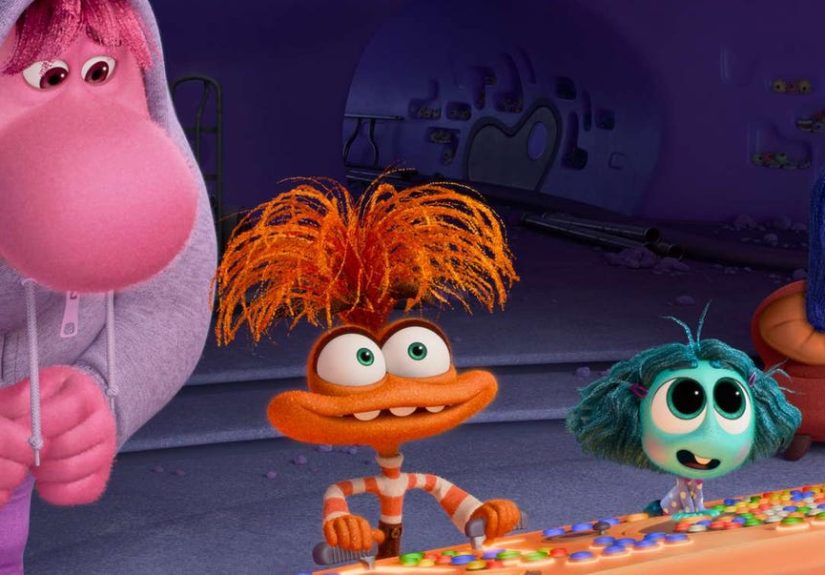
Anxiety is the breakout star of the sequel, and for good reason. She is fast-talking, frazzled, hyper-prepared, and convinced that if she can just plan enough, predict enough, and worry enough, nothing bad will happen. That is both her strength and her problem.
Unlike Fear, who deals with immediate danger, Anxiety is all about the future. She imagines possible disasters before they happen and then tries to steer Riley away from them. In theory, that sounds useful. In practice, it can spiral into control, perfectionism, and emotional takeover. Anxiety is not evil, though. She is trying to protect Riley. She just does it with the energy of someone who has had six espressos and read one too many worst-case-scenario blogs.
What makes Anxiety such an effective character is that she feels painfully recognizable. She captures the teenage urge to rehearse every social interaction, impress the right people, avoid rejection, and build a version of yourself that seems safer, cooler, and more successful. The movie wisely treats her as a meaningful emotion, not a cartoon villain in orange lighting.
Envy: Tiny, Sparkly, and Extremely Good at Making You Question Your Entire Life
Envy may be physically small, but she has major influence. She notices what other people have and immediately makes it look shinier, better, and somehow essential to Riley’s happiness. Better hair, better skills, better confidence, better social standing, better everything. Envy does not need a megaphone; she just needs one glance across the room.
This emotion fits adolescence perfectly because the teen years are full of comparison. At that age, social life can feel like one long scoreboard you never agreed to join. Envy feeds that energy. She pushes Riley to want what others seem to have, whether it is popularity, talent, or belonging. But the film also suggests that envy is not automatically destructive. It can motivate growth if it nudges someone toward effort rather than bitterness.
That nuance matters. Inside Out 2 does not pretend Envy is pretty in a moral sense just because she is adorable in a visual sense. Instead, it shows how envy can become a driver of insecurity or ambition depending on how it is handled. That is a very teen truth, and honestly, a very adult one too.
Ennui: Boredom, But Make It French and Unimpressed
Ennui is the sequel’s driest joke machine and possibly its most accurate portrait of certain teen moods. She represents boredom, apathy, detachment, and that specific adolescent flavor of emotional distance that says, “I care deeply, but I absolutely refuse to look like I care.” She is the queen of the eye-roll and the spiritual patron saint of slouching.
At first glance, Ennui seems like comic relief. But she does important work in the story. Adolescence often comes with emotional withdrawal, sarcasm, and a desire to create distance from childish enthusiasm. Teens may not always want to admit that they are overwhelmed, so boredom becomes armor. Ennui helps the movie capture that defensive coolness without overexplaining it.
She also balances out the chaos of Anxiety. Where Anxiety is all motion, Ennui is stillness. Where Anxiety panics, Ennui shrugs. That contrast makes Riley’s inner world feel richer and more believable. Not every teenage emotion announces itself with fireworks. Some just lean against a wall and say, “Whatever,” while secretly changing the entire mood.
Embarrassment: Giant, Red, and Ready to Hide Forever
Embarrassment is a visual home run. He is huge, shy, red-faced, and clearly would prefer to disappear into his hoodie. In other words, he is the perfect embodiment of that awful teenage sensation of becoming suddenly, horribly aware that other people can see you.
Embarrassment is crucial in a story about adolescence because social awareness explodes during the teen years. Kids start thinking more deeply about how they are perceived, which can make everyday moments feel enormous. A weird comment, a bad outfit day, a stumble, a voice crack, a parent being mildly uncool in public: congratulations, your brain has declared this a catastrophic event worthy of permanent storage.
Yet Embarrassment has a purpose. He signals that social norms matter, that relationships matter, and that belonging matters. The discomfort he brings is real, but it is also part of learning how to exist with other people. The movie understands that embarrassment is painful without treating it as pointless. That balance is one of the sequel’s smartest moves.
What About Nostalgia?
Nostalgia is not one of the main drivers in the film, but she makes a memorable appearance. That choice is funny and surprisingly clever. Nostalgia feels a little early for a 13-year-old, and the movie knows it. Her role works like a wink to the audience, suggesting that some emotions are waiting in the wings for later stages of life.
It is also a neat reminder that emotional life keeps expanding. Puberty is not the final update. It is just one software patch, and frankly, there are more coming whether anyone likes it or not.
How the New Emotions Change Riley’s Story
The biggest contribution of the new emotions is not just that they create conflict. It is that they shift the movie’s entire emotional logic. The first film asked how Riley could process change. The sequel asks who Riley is becoming. That is a much bigger question, and the new emotions push her toward it.
Inside Out 2 introduces the idea of Riley’s Belief System and Sense of Self, which is a smart step forward for the franchise. Instead of focusing only on moment-to-moment feelings, the movie explores how repeated experiences and emotional patterns shape identity. Riley is not just collecting memories now. She is building beliefs about whether she is a good friend, a strong player, a likable person, and someone who belongs.
This is where Anxiety becomes especially powerful. She does not just want Riley to survive one social weekend or one hockey camp. She wants to engineer a future version of Riley who will never be rejected, never be left out, and never fail. Of course, that is impossible. The more Anxiety tries to control Riley’s identity, the more fragile that identity becomes.
The movie’s emotional insight is that a healthy self cannot be built from only polished memories and flattering beliefs. Riley needs room for messy feelings too. She needs an identity that can survive awkwardness, uncertainty, mistakes, and disappointment. That message gives the new emotions real narrative weight beyond their comedy value.
Are the New Emotions Actually Accurate?
For a colorful Pixar movie set inside a teenager’s mind, Inside Out 2 is grounded in an impressive amount of real psychological thinking. The film’s team consulted experts on emotion and development, and it shows. No, the brain does not literally have a glowing console staffed by tiny workers with excellent hair design. Science remains stubbornly less adorable than that. But the emotional logic is strong.
Anxiety, embarrassment, envy, and boredom all make sense as more prominent social emotions during adolescence. The teen years involve growing self-consciousness, heightened peer awareness, identity formation, and increased sensitivity to future consequences. The sequel captures that shift without turning into a lecture. It stays funny, but the feelings underneath the jokes are real.
The movie also gets something else right: there are no useless emotions. Some feelings are painful, inconvenient, and spectacularly bad at timing, but they all do something. Anxiety prepares. Embarrassment protects social connection. Envy highlights desire. Ennui creates distance when everything feels like too much. The danger comes when one emotion grabs the steering wheel and refuses to share.
Why Anxiety Became the Emotion Everyone Talked About
Among all the new emotions, Anxiety clearly landed the hardest with audiences. That is partly because the character is funny and memorable, but it is also because she reflects the current emotional climate. Plenty of kids, teens, and adults already know what it feels like to overthink the future, to catastrophize, to perform confidence while panicking inside, and to treat preparation like a full-time religion.
The movie does not glamorize anxiety, but it does make it understandable. That is a big deal. Viewers are not asked to hate the emotion or crush it into silence. They are asked to see what it is trying to do and why it sometimes goes too far. That approach feels compassionate, modern, and useful. It gives the story emotional credibility and helps explain why the film connected so strongly with families.
It also makes Joy more interesting. She cannot solve Riley’s problems by simply being upbeat. She has to learn that emotional leadership is not the same thing as emotional domination. That lesson gives the sequel a maturity that fits its older protagonist.
Why the New Emotions Work So Well
The genius of the new emotions in Inside Out 2 is that each one is funny on the surface and insightful underneath. They are designed with bold visual personalities, clear comedic rhythms, and instantly readable traits, but they also reflect real developmental changes. That combination is classic Pixar when Pixar is firing on all cylinders.
More importantly, the new emotions do not replace the original ones. They complicate them. Joy still matters. Sadness still matters. Anger, Fear, and Disgust still matter. The sequel’s emotional world gets bigger, not meaner. It recognizes that growing up is not about swapping one set of feelings for another. It is about learning to live with a larger, noisier, stranger mix.
And yes, that mix can be chaotic. But it can also be honest. That is why the new emotions matter. They make Riley’s teenage inner life feel specific, modern, and deeply relatable. They turn the sequel into more than a reunion tour for beloved characters. They make it feel like the next real chapter.
Extra Reflections: The Real-Life Experiences That Make These New Emotions Hit So Hard
What really gives the new emotions their power is how closely they match real experiences. You do not need to play hockey at a high level or go to a Pixar-style mind headquarters to recognize what Riley is dealing with. You just need to remember what it felt like when growing up became less about toys and bedtime and more about identity, status, awkwardness, and the terrifying possibility that other people had opinions.
Anxiety shows up in real life every time a kid overprepares for a first day at a new school, rewrites a text five times, or lies awake imagining every possible way tomorrow could go wrong. It is the emotion behind trying to fit in before anyone has even said you do not belong. It often sounds helpful at first. Be ready. Be smarter. Be cooler. Do not mess up. Then suddenly it is 2 a.m. and your brain is running a disaster simulation with the production values of a summer blockbuster.
Envy is just as familiar, though people rarely admit it out loud. It is the feeling of seeing someone else walk into a room and instantly seem more confident, more talented, or more wanted. For teenagers, that might be a teammate, a classmate, or a friend who seems to know exactly who they are. For adults, frankly, it might still be a coworker with perfect presentation skills and suspiciously calm skin. Envy can make people feel small, but it can also reveal what they value and what they want to grow toward.
Embarrassment probably has the most universal resume of the bunch. Nearly everyone has a memory that still causes a physical wince years later. Saying the wrong thing in class. Tripping in public. Getting corrected by a teacher when you were trying to look cool. Waving at someone who was definitely waving at the person behind you. Teenagers feel these moments especially intensely because social belonging matters so much during that stage of life. Inside Out 2 understands that embarrassment is not a minor inconvenience when you are young. It can feel like the entire world just paused to stare.
Then there is Ennui, who may be the most quietly accurate character of all. A lot of teenage “whatever” behavior is not true indifference. Sometimes it is fatigue. Sometimes it is self-protection. Sometimes it is a stylish disguise for confusion. Kids who seem detached are not always empty; they may just be overloaded. That is why Ennui is funny and sad at the same time. She captures the performance of not caring when caring feels too risky.
And perhaps that is why the film resonates beyond children. Adults watching the movie can see their younger selves in Riley, but they can also see their current selves in the new emotions. Plenty of grown-ups still let Anxiety micromanage the future, let Envy compare lives, let Embarrassment replay old moments, or let Ennui flatten their enthusiasm. The sequel works because it does not treat these feelings as childish problems. It treats them as human problems that simply get louder during adolescence.
That makes the movie feel oddly comforting. The message is not that growing up gets easier because the messy emotions disappear. It is that life becomes more manageable when those emotions are recognized, understood, and given their proper place. Not the whole console. Not total exile. Just a place. That is a wise idea wrapped in a very entertaining movie, and it is exactly why the new emotions in Inside Out 2 feel like more than clever characters. They feel like people we have met before, usually in the mirror.
Conclusion
The new emotions in Inside Out 2 do exactly what a great sequel should do: they expand the original idea without breaking what made it special. Anxiety, Envy, Ennui, and Embarrassment are funny, visually distinct, and emotionally sharp. They deepen Riley’s story, reflect the chaos of adolescence, and help the film explore identity in a richer way than the first movie needed to.
Most of all, they remind viewers that emotional complexity is not a flaw. It is part of growing up. Riley’s mind gets messier because her world gets bigger. That can be uncomfortable, but it is also honest. And honesty, even when it arrives wearing a hoodie of shame or muttering sarcastic one-liners, is what makes Inside Out 2 hit home.







 Close
Close