
Table of Contents >> Show >> Hide
- What Is a Blended Wing Body (and Why Does It Look Like a Flying Manta Ray)?
- Why the Air Force Cares: Fuel, Reach, and the “Flying Gas Station” Problem
- The “Fly in Four Years” Timeline: What That Actually Means
- What the Demonstrator Isand What It Isn’t
- How a BWB Could Change Tankers and Transports
- Why Airlines Are Paying Attention (and Not Just for the Cool Renderings)
- The Hard Parts: Why “Looks Efficient” Isn’t the Same as “Ready for Fleet Service”
- What Success Looks Like if the Demonstrator Flies on Schedule
- Frequently Asked Questions
- Conclusion
- Field Notes & Experiences: What It Feels Like to Chase a Blended Wing Body to First Flight
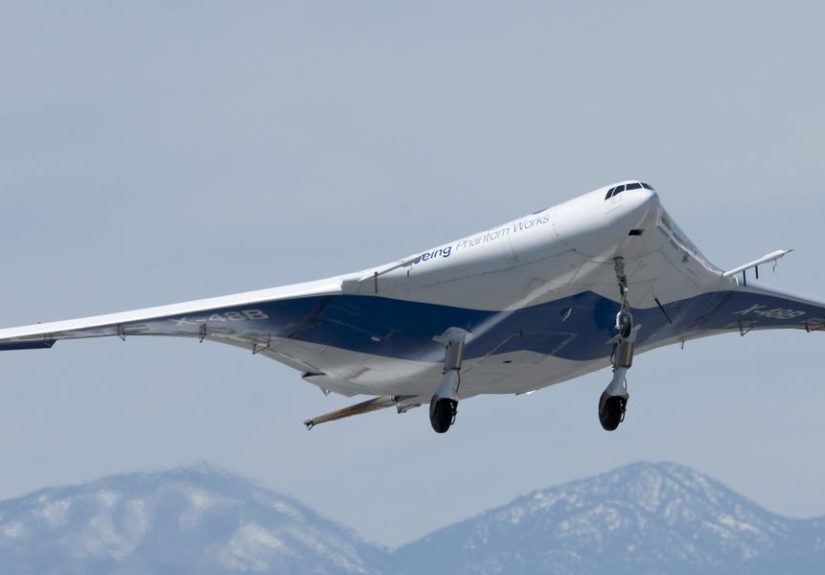
The U.S. Air Force is betting on a jet that looks less like a “tube with wings” and more like a stingray that got really into aerodynamics.
The goal is simple (and wildly ambitious): build a full-scale blended wing body (BWB) demonstrator and get it airborne faston a timeline that,
in aircraft years, is basically “tomorrow.”
If it works, the payoff is huge: tankers and airlifters that burn less fuel, fly farther, haul more, and potentially show up on radar with a little less
“hello there” energy. If it doesn’t work… well, at least everyone will finally stop saying, “Why don’t we just redesign the airplane?”
What Is a Blended Wing Body (and Why Does It Look Like a Flying Manta Ray)?
Most large aircraft follow the classic recipe: a cylindrical fuselage (the tube), wings stuck on the sides, and a tail in the back to keep everything
behaving like a responsible adult. A blended wing body flips that idea. Instead of a distinct tube and wing, the body and wings merge into a single,
smooth lifting shape. The result is an aircraft where more of the surface produces lift, not just the wings.
Aerodynamically, that matters because lift-to-drag ratio is the closest thing aviation has to a cheat code. A BWB can reduce drag by smoothing out the
shape and spreading lift across a broader area. That can mean less fuel for the same mission, or more mission for the same fueltwo options the Air Force
enjoys roughly the way normal people enjoy “free guac.”
BWBs also tend to have a lot of internal volume. More volume can mean more fuel, more cargo space, or new layout options. It can also mean engineers get to
stare at spreadsheets and argue over “usable cubic feet” with the passion of sports fans debating playoffs.
Why the Air Force Cares: Fuel, Reach, and the “Flying Gas Station” Problem
In military aviation, fuel is strategy. Tankers and transports enable everything else, from rapid logistics to long-range operations. They also consume a
lot of fuelso much that even moderate efficiency improvements can translate into major operational and budget impact.
A BWB tanker or cargo aircraft could potentially deliver:
- Lower fuel burn for long-haul mobility missions
- More range or more payload without redesigning the laws of physics
- Greater fuel offload at distancethe tanker superpower that matters when operating far from friendly bases
- Reduced logistics risk by needing fewer refueling links in the chain
In plain English: if your aircraft burns less and flies farther, you can do more with fewer aircraftor keep the same number and dramatically increase your
operational flexibility. Either way, the accountants and the planners both get to smile, which is rare enough to be considered an aviation milestone.
The “Fly in Four Years” Timeline: What That Actually Means
The phrase “should fly in 4 years” is tied to a very specific storyline: the Air Force chose JetZero to develop a full-scale BWB demonstrator with a target
first flight around 2027, based on a four-year sprint that began with the 2023 award period.
Here’s the practical version of that timeline:
Step 1: The Air Force and Partners Define the Need
Before you can build a new kind of aircraft, you have to do the government equivalent of saying, “We’re thinking about maybe possibly changing our entire
air mobility futureno big deal.” The early phases involved gathering industry concepts and narrowing options down to something that could actually be built.
Step 2: JetZero Gets the Nod
In 2023, the Department of the Air Force selected JetZero to help fast-track a full-scale demonstrator. The public messaging was consistent: the goal was a
piloted demonstrator aircraft on an accelerated path to flight test.
Step 3: Subscale Testing So You Can Crash the Spreadsheet, Not the Airplane
A big BWB doesn’t get to skip the awkward teenage phase. One update described a subscale aircraft nicknamed “Pathfinder,” flown to gather data and refine
control software and configuration decisions. Subscale testing helps validate flight characteristics and reduce risk before committing to full-scale flight.
Step 4: Full-Scale Build and Flight Test
The headline milestone is the first flight of the full-scale demonstrator. If that happens on schedule, it doesn’t instantly create an operational tanker
or transport. But it does prove (or disprove) that this configuration can work at meaningful scale and complexity.
What the Demonstrator Isand What It Isn’t
It’s tempting to hear “Air Force” and “futuristic plane” and imagine a stealthy airborne sci-fi brick that refuels jets while invisibly playing chess.
Real life is less dramatic and more useful.
A demonstrator is meant to answer questions like:
- Does this shape deliver the promised efficiency at full scale?
- How does it handle takeoff, landing, and low-speed flight?
- What does stability and control look like for a wide, blended platform?
- Can it be built and maintained without requiring wizard licensing?
- How do you integrate engines, systems, and structure without losing the aerodynamic benefits?
It is not a guarantee that the Air Force will replace its tanker fleet overnight. Think of it more like a high-stakes audition: if the BWB nails the
performance, it earns a call-back for the next program.
How a BWB Could Change Tankers and Transports
The Air Force’s interest centers on the mobility side of the houseair refueling and airlift. A blended wing body can support those missions because it can
offer more internal volume and improved efficiency.
1) Tankers: More Offload, Farther Out
Tankers don’t just “carry fuel.” They deliver fuel at a distance, and the farther they have to go, the more fuel they burn just getting there.
Efficiency improvements can translate into more fuel offloaded where it matters, and potentially fewer tanker sorties to support the same operation.
Another idea that keeps popping up: a BWB shape may lend itself to reduced radar signature compared to conventional designs, largely because it can avoid some
traditional tail surfaces and present smoother geometry. That doesn’t automatically make it a stealth aircraft, but it could support survivability goals
depending on design choices and mission needs.
2) Airlift: Cargo Efficiency Is the Quiet Superpower
Airlift missions are often long-haul, heavy, and frequent. Cut fuel burn by a meaningful margin, and you can translate savings into increased capacity,
extended reach, or reduced dependence on vulnerable logistics nodes. This is the kind of improvement that rarely trends on social mediaright up until it
decides the outcome of a real-world operation.
Why Airlines Are Paying Attention (and Not Just for the Cool Renderings)
The BWB story isn’t only military. Commercial aviation is also obsessed with efficiency for the same reason your phone switches to low power mode at 20%:
fuel is expensive, and the math is relentless.
JetZero’s concept has drawn attention from major airlines, including public announcements about partnerships and investment frameworks tied to development
milestones. The pitch is straightforward: if a blended wing body can cut fuel burn per passenger mile dramatically, it can reduce costs and emissions while
maintaining useful range and capacity.
There’s also the passenger-experience angle. A blended wing body can enable different interior layoutspotentially wider cabins, different seating zones,
and new approaches to bins, aisles, and galleys. Of course, every cabin innovation eventually runs into the final boss of aviation: evacuation rules and
certification requirements.
The Hard Parts: Why “Looks Efficient” Isn’t the Same as “Ready for Fleet Service”
If aviation were only about being slippery in the wind, we’d all be commuting in dolphins. But aircraft have to be safe, certifiable, maintainable, and
compatible with the real worldmeaning runways, gates, ground equipment, and humans who would prefer not to exit via interpretive dance during an emergency.
Stability and Control
A blended wing body behaves differently from a conventional aircraft, especially at low speeds and high angles of attack. Control laws, flight computers,
and careful testing (including subscale flights) are essential to confirm the handling qualities are robust and predictable.
Structure and Pressurization
Pressurizing a wide blended cabin is not identical to pressurizing a tube. Loads distribute differently, and the structure has to manage those stresses
efficiently. Modern composites and manufacturing methods help, but the engineering is still non-trivial.
Certification and Evacuation
A wide cabin shape can complicate evacuation planning: where doors go, how aisles flow, and how quickly people can exit. Certification standards don’t care
that the aircraft looks futuristic. They care whether everyone gets out safely, quickly, and consistentlyeven when the cabin is full and everyone suddenly
forgets how walking works.
Airports and Operations
A BWB may fit existing runways, but gates and ground handling are another story. Wingspan, taxi clearance, and compatibility with existing infrastructure
matter for both military bases and commercial hubs. A design that requires reinventing the airport will have a harder time scalingno matter how elegant it
looks on a PowerPoint slide.
What Success Looks Like if the Demonstrator Flies on Schedule
If the full-scale blended wing body demonstrator reaches first flight on the targeted timeline, it would represent more than a “new airplane moment.”
It would validate a set of assumptions that ripple into future acquisitions:
- Efficiency claims backed by real flight data, not just wind tunnels and simulations
- Operational feasibility for tanker and airlift mission profiles
- Manufacturing credibilityproof you can build it repeatably, not just once in a heroic sprint
- Program optionality for next-generation mobility decisions
In other words, the Air Force isn’t only trying to build a demonstratorit’s trying to buy down risk for the next decade of mobility strategy.
A successful BWB flight test campaign would give planners real numbers on fuel burn, payload-range tradeoffs, and operational constraints.
Frequently Asked Questions
Is this the same as a flying wing?
Close cousin, not identical twin. A BWB blends wing and body so the whole platform contributes to lift, while still accommodating payload and systems.
It shares “big wing energy” with flying wings, but the intent and internal layout can differ depending on mission.
Will it replace current tankers like the KC-46?
Not immediately. A demonstrator is a proving step. Replacing a major fleet requires years of requirements work, testing, budgeting, and production planning.
But successful demonstration could influence what the Air Force buys next.
Is the “4 years” promise realistic?
It’s aggressive, but it’s framed around reaching first flight of a demonstrator, not full operational deployment. The program approachpartnering with
industry and using incremental test stepsaims to move quickly while managing risk.
Conclusion
“Air Force’s Blended Wing Body Jet Should Fly in 4 Years” is more than a catchy headlineit’s a statement of intent. The Air Force (with partners and
industry support) is trying to prove that a radically different airframe can deliver real efficiency gains on a schedule that feels… unusually caffeinated.
If the demonstrator reaches the sky on time and validates the core promiseslower fuel burn, strong performance, and scalable manufacturabilitythe BWB
could reshape the future of tankers and airlifters, and potentially influence commercial aviation’s next chapter as well.
And if nothing else, we’ll get a rare treat: an aerospace program where “it looks cool” is actually supported by physics.
: experiences related to the topic
Field Notes & Experiences: What It Feels Like to Chase a Blended Wing Body to First Flight
Even if you never touch a rivet or run a simulation, the BWB program has a certain vibe: equal parts moonshot and meticulous routine. One day it’s
futuristic renderings and big claims about efficiency; the next day it’s an engineer squinting at telemetry like it personally offended them.
Imagine standing near a test range on a calm morning while a subscale “Pathfinder” aircraft taxis out. It’s small enough to feel approachable, but serious
enough that everyone talks a little quieter. The people closest to the program tend to describe these flights in a very unglamorous way“data collection,”
“control law validation,” “configuration updates”which is code for “we’re making sure the weird-looking plane doesn’t do weird-looking things.”
For flight-test teams, the experience is often a loop: plan, brief, fly, debrief, adjust. The surprise isn’t that something goes wrong; the surprise is
when something goes right exactly as predicted. A successful flight doesn’t end with cheering (this isn’t a movie). It ends with people exporting
files, comparing notes, and asking what changed between Run 17 and Run 18.
Program managers live in two timelines at once. In one timeline, you’re sprinting toward first flight with a calendar that won’t stop yelling. In the other
timeline, you’re thinking about what happens after first flightbecause a single successful takeoff doesn’t automatically equal an aircraft the Air Force
can operationalize. Their “experience” of the program is essentially structured anxiety: optimism tempered by a thousand checklists.
Maintainers and manufacturing teams have their own perspective: “Can we build this again?” A blended wing body might be aerodynamically elegant, but a fleet
aircraft has to be serviceable. That means access panels that make sense, systems routing that doesn’t require a yoga certification, and materials and
processes that won’t turn every repair into an artisanal craft project. The most valuable compliments in this world are not “beautiful” or “innovative,”
but “repeatable” and “inspectable.”
And then there’s the broader aviation community watching from the sidelinesespecially airlines. Their lived experience is part curiosity, part skepticism,
and part “if this reduces fuel burn like you say, we’re listening.” Airline ops people tend to be allergic to hype, because their daily reality includes
weather, schedules, maintenance, and passengers who believe boarding groups are a suggestion. When they look at a BWB, they’re not just seeing an airframe;
they’re seeing gate compatibility, turnaround time, and whether cabin layouts can keep people moving efficiently.
If the full-scale BWB demonstrator flies on schedule, the moment will feel both historic and oddly normal. Historic because a new configuration at that
scale is rare. Normal because the first flight is the start of the hardest phase: proving consistency, reliability, and real-world value. In aerospace,
success is less a fireworks finale and more a long series of quiet wins that add upuntil one day, the “future plane” is just… an airplane.
SEO tags (JSON)





 Close
Close