
Table of Contents >> Show >> Hide
- What Acne Actually Is (And Why It’s Not “Dirty Skin”)
- Quick Map: Acne Types at a Glance
- Non-Inflammatory Acne: Comedones (Clogged Pores Without the Drama)
- Inflammatory Acne: When Your Immune System Joins the Group Chat
- Special Patterns: When Acne Has a “Personality”
- Acne Symptoms: What to Look For (Beyond “It’s a Bump”)
- How Acne Severity Is Often Classified
- When to See a Dermatologist (A.K.A. When “Wait It Out” Is a Bad Plan)
- Conclusion
- Real-World Experiences: The Part Nobody Tells You (But Everyone Learns)
- 1) The “I’ll Just Pop It” Era
- 2) The “I Must Be Dirty” Myth (And the Overwashing Trap)
- 3) The “Why Is It Always My Chin?” Mystery
- 4) The “My Backpack Is Betraying Me” Discovery
- 5) The “Everything Burns” Moment
- 6) The “Wait… Blackheads Aren’t Dirt?” Fact Check
- 7) The “It’s Not Just My Skin, It’s My Mood” Reality
- 8) The “Consistency Is Boring but It Works” Lesson
- 9) The “My Back Acne Needs a Plan Too” Wake-Up Call
- 10) The “Dermatologist = Cheat Code” Realization
Acne is basically your skin’s way of saying, “I’m doing my best, but my pores have formed a union.”
It’s incredibly common, wildly misunderstood, andannoyinglycapable of showing up right before any event involving cameras,
sunlight, or exes. The good news: once you understand acne types and symptoms, you can stop guessing, start identifying,
and make smarter choices (instead of declaring war on your face with a magnifying mirror and bad intentions).
This guide breaks down the major types of acne, what each one looks and feels like, where it tends to appear,
and the telltale symptoms that separate “minor breakout” from “please call a dermatologist.”
What Acne Actually Is (And Why It’s Not “Dirty Skin”)
Acne usually develops in and around hair folliclestiny openings where hair grows and oil (sebum) is produced.
When oil and dead skin cells clump together, they can clog the follicle. Add bacteria and inflammation to the mix,
and you get the classic acne lineup: blackheads, whiteheads, pimples, painful lumps, and sometimes scarring.
One myth worth retiring forever: blackheads aren’t black because of dirt. They look dark because the clogged material is exposed to air
and oxidizes. Your pores are not “unclean.” They’re just… overachievers at trapping stuff.
Quick Map: Acne Types at a Glance
Dermatology often groups acne into two big categories:
- Non-inflammatory acne (comedonal acne): mainly blackheads and whiteheads (usually not painful).
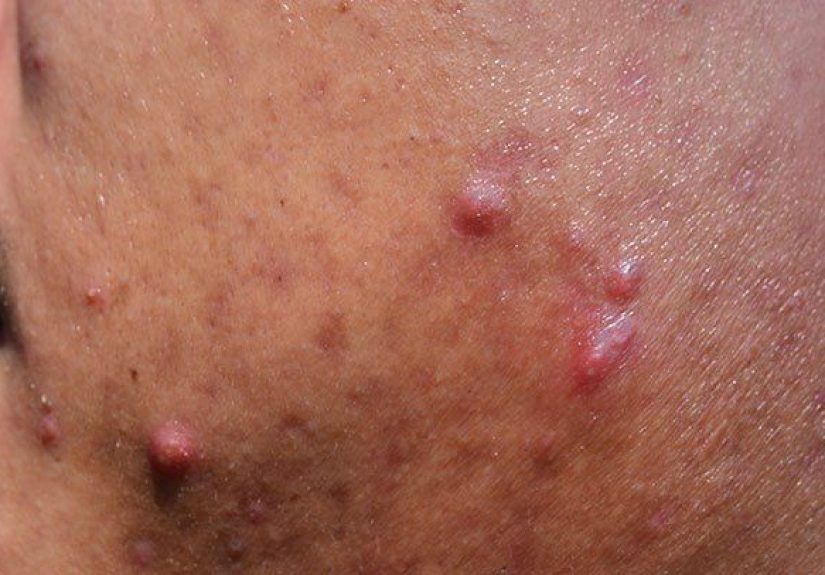
- Inflammatory acne: red, swollen lesions like papules, pustules, nodules, and cysts (often tender or painful).
From there, acne can take on patternslike hormonal acne along the jawline, or friction-related acne from masks or sports gear.
Understanding the “shape” your acne takes is half the battle.
Non-Inflammatory Acne: Comedones (Clogged Pores Without the Drama)
Comedones are clogged follicles. They’re the quiet types of acneless red, less angry, but very committed to hanging around
if you don’t address what’s causing the clogging.
Whiteheads (Closed Comedones)
What they look like: small, flesh-colored or white bumps under the skin’s surface. They can make skin feel bumpy or uneven.
Symptoms: usually not painful; may feel like tiny “grains” under the skin, especially on the forehead, chin, or cheeks.
Common confusion: whiteheads can be mistaken for milia (small keratin cysts). A clue: whiteheads are part of acne-prone patterns
and often appear with other blemishes.
Blackheads (Open Comedones)
What they look like: small dark dots in poresoften on the nose, chin, and forehead.
Symptoms: not typically tender; may feel slightly rough. The dark top is oxidation, not dirtso scrubbing like you’re sanding a deck
is not the winning strategy.
Inflammatory Acne: When Your Immune System Joins the Group Chat
Inflammatory acne happens when the clogged follicle triggers swelling, redness, and irritation. These lesions are more likely to hurt,
leave marks, and cause scarringespecially if they’re deep.
Papules (Small Red or Discolored Bumps)
What they look like: small raised bumps that are red, pink, brown, purple, or darker than your natural skin tonedepending on your complexion.
Symptoms: tender to the touch; no visible pus head. If you try to “pop” a papule, you’ll usually get… disappointment.
Helpful clue: papules are often the “early stage” of a pimple that may become a pustule if inflammation increases.
Pustules (Classic “Pimples” With a Pus Tip)
What they look like: inflamed bumps with a white or yellow center and a red base.
Symptoms: soreness, swelling, and a visible “head.” They can be tempting to squeezelike a forbidden button begging to be pressed.
But aggressive picking increases the risk of dark marks and scarring.
Nodules (Deep, Solid, Painful Lumps)
What they look like: large, hard bumps under the skin. They often don’t come to a head.
Symptoms: significant tenderness or pain, deep pressure sensation, and longer healing time (often weeks).
Nodules are a big reason acne can scarbecause inflammation is happening deeper in the skin.
Cystic Lesions (Deep, Painful, Fluid-Filled Bumps)
What they look like: soft-ish, deep lumps that can feel “squishy” compared to nodules, sometimes with swelling around them.
Symptoms: pain, throbbing, sensitivity, and a high chance of scarring if untreated (or repeatedly attacked).
Cystic acne is considered a severe form of inflammatory acne and often benefits from professional care.
Special Patterns: When Acne Has a “Personality”
Hormonal Acne (The Jawline Regular)
Hormonal acne often shows up on the lower facechin, jawline, and neckand may flare with menstrual cycles, stress, sleep disruption,
or shifts in hormones. It’s common in adults, especially women, and can include deep, tender bumps that feel “stuck” under the skin.
Symptoms: cyclical flares, deep tender lesions, stubborn breakouts that resist simple spot treatments.
Acne Mechanica (Friction + Sweat = Plot Twist)
This type of acne is triggered or worsened by pressure, friction, heat, and sweatthink helmets, chin straps, tight collars,
backpack straps, sports bras, and yes, masks.
Symptoms: breakouts in the exact shape of the gear (a very rude but helpful clue), plus irritation where fabric rubs the skin.
Acneiform (Drug-Induced) Breakouts
Some medications can cause acne-like eruptions that look similar to pimples but behave differently. These “acneiform” breakouts can be more uniform
(same-size bumps) and may appear suddenly. Common culprits include certain steroids, lithium, and some hormone-related therapies.
Symptoms: rapid onset, widespread bumps, often similar-looking lesions, and less of the mixed “blackheads + pimples + deep bumps” pattern typical of classic acne.
“Fungal Acne” (Malassezia Folliculitis) Look-Alike
Not all bumpiness is classic acne. Malassezia folliculitis (often nicknamed “fungal acne,” though it’s not true acne) can cause uniform, itchy bumps,
especially on the chest, back, and sometimes forehead.
Symptoms: itchiness (a big clue), many same-size bumps, and breakouts that don’t respond to typical acne treatments.
If you suspect this, a clinician can help confirm it and guide treatment.
Rare Severe Variants (When Acne Stops Being “Just Acne”)
Severe nodulocystic acne can sometimes evolve into rare forms like acne conglobatamarked by interconnected nodules, cysts, and significant scarring risk.
Even rarer, acne fulminans can include systemic symptoms (like fever and joint pain). These situations require prompt medical evaluation.
Acne Symptoms: What to Look For (Beyond “It’s a Bump”)
1) Lesion Type (Your Skin’s “Vocabulary”)
- Whiteheads: small closed bumps, often flesh-colored/white.
- Blackheads: open plugs with a dark top.
- Papules: red/discolored tender bumps without a pus head.
- Pustules: inflamed bumps with a visible white/yellow center.
- Nodules: deep, firm, painful lumps.
- Cysts: deep, painful, fluid-filled lesions with high scarring risk.
2) Location (Where It Appears Can Offer Clues)
Acne tends to favor areas with more oil glands: face, forehead, chest, upper back, shoulders, and sometimes the neck and upper arms.
Chest and back acne (“truncal acne”) is common and can be aggravated by sweat, friction, and occlusive clothing.
3) Sensation (What It Feels Like Matters)
Non-inflammatory acne often feels like texturebumps and roughness without much pain.
Inflammatory acne is more likely to feel tender, sore, or throbbing. Deep nodules and cysts may hurt even when you’re not touching them,
like a tiny internal complaint department.
4) Timeline (How Long It Lingers)
Blackheads and whiteheads can persist for weeks to months. Papules and pustules may resolve faster, but deeper nodules and cysts can last weeks
and leave marks behind. If lesions repeatedly appear in the same area and heal slowly, it may point toward a more persistent pattern
(like hormonal acne).
5) Aftermath: Dark Spots and Scars
Two common “souvenirs” from acne are:
- Post-inflammatory hyperpigmentation (PIH): flat brown or darker marks after acne healsmore common and longer-lasting in deeper skin tones.
- Scars: textural changes like pitted (ice-pick/boxcar/rolling) scars or raised scars (hypertrophic/keloid), especially after deep inflammation.
If you’re seeing frequent deep lesions or new scars, consider that a sign to level up your planoften with professional guidance.
How Acne Severity Is Often Classified
Clinicians often think in terms of mild, moderate, and severe acne:
- Mild: mostly comedones with a few inflammatory bumps.
- Moderate: more frequent papules/pustules and wider distribution.
- Severe: nodules/cysts, significant inflammation, and higher scarring risk.
Severity isn’t only about how many blemishes you have. It’s also about how deep they are, how much they hurt, how long they last,
and whether they’re leaving scars or affecting your well-being.
When to See a Dermatologist (A.K.A. When “Wait It Out” Is a Bad Plan)
Consider seeing a dermatologist or qualified healthcare provider if:
- You have painful nodules or cystic acne.
- You’re developing scars or persistent dark marks.
- Over-the-counter options haven’t helped after a consistent trial (usually several weeks).
- Breakouts are affecting your confidence, mood, or daily life.
- You suspect a look-alike condition (like folliculitis) or medication-related acneiform eruptions.
- You have systemic symptoms (fever, joint pain) with severe acne-like lesions.
Acne is treatableand earlier intervention can reduce scarring. You don’t get extra points for suffering.
Conclusion
Knowing the difference between acne types and symptoms is like having a translator for your skin.
Blackheads and whiteheads are clogged pores. Papules and pustules are inflamed pimples. Nodules and cysts are deeper, more painful,
and more likely to scar. Patterns like hormonal acne or acne mechanica add context that can guide better choices and smarter care.
If your acne is painful, persistent, scarring, or messing with your quality of life, it’s not “vanity” to seek helpit’s maintenance.
And honestly, if your pores are going to be dramatic, you’re allowed to be practical.
Real-World Experiences: The Part Nobody Tells You (But Everyone Learns)
If you’ve dealt with acne for more than five minutes, you’ve probably collected a few storiessome useful, some mildly embarrassing,
and at least one involving a “miracle” product that turned out to be a lie wrapped in peppermint oil. Here are common experiences people share
when they start paying attention to acne types, symptoms, and patternsplus what they wish they’d known earlier.
1) The “I’ll Just Pop It” Era
Almost everyone goes through a phase where they believe they can outsmart physics with their fingernails.
The usual result: a papule becomes angrier, a pustule becomes a crater, and a blackhead becomes a week-long red mark.
Many people learn (the hard way) that squeezing increases inflammationespecially with nodules and cystsbecause the contents can rupture deeper
under the skin. Translation: you don’t “remove” the problem; you redistribute it like confetti.
2) The “I Must Be Dirty” Myth (And the Overwashing Trap)
A surprisingly common experience is scrubbing more and more aggressivelymultiple cleansers, harsh exfoliants, alcohol-based toners
because acne feels like something you should be able to “clean off.” The irony is that over-cleansing can irritate the skin barrier,
increase redness, and make breakouts look worse. People often notice their face feels tight, flaky, or stingsyet acne continues,
because the real issue is follicle clogging and inflammation, not a lack of effort.
3) The “Why Is It Always My Chin?” Mystery
Adults frequently describe stubborn lower-face breakouts that flare before a period, during stressful work weeks, or when sleep goes off the rails.
That jawline/chin pattern is one reason hormonal acne gets recognized: deep, tender bumps, often recurring in familiar zones.
Many people report that once they identify the pattern, they stop wasting time treating it like a random surprise and start building a consistent plan.
4) The “My Backpack Is Betraying Me” Discovery
Students, athletes, and commuters often notice acne clustering where straps and gear sitshoulders, upper back, jawline (helmet straps),
or under a mask. That’s acne mechanica making its dramatic entrance. People describe it as “why do I have a perfect line of pimples?”
The experience is oddly validating once you realize friction, heat, and sweat are a known comboand you’re not being haunted.
5) The “Everything Burns” Moment
Many people experimenting with acne products hit a point where their skin gets red, dry, and sensitive. They describe burning after washing,
makeup looking patchy, and breakouts feeling more painful. Often, it’s the skin barrier waving a white flag.
Once they back off irritation and focus on gentle basics, inflammation can calm downmaking acne easier to treat and less “loud.”
6) The “Wait… Blackheads Aren’t Dirt?” Fact Check
Learning that blackheads darken because of oxidationnot grimechanges how people treat them. Instead of intense scrubbing,
they aim for ingredients and routines that prevent clogs. This is one of those truths that feels obvious in hindsight,
like realizing your phone was on silent the whole time.
7) The “It’s Not Just My Skin, It’s My Mood” Reality
Acne isn’t only physical. People often talk about avoiding photos, canceling plans, or feeling self-conscious in bright lighting.
Recognizing that emotional impact is a legitimate symptompart of the experiencehelps many seek care sooner and avoid spiraling.
8) The “Consistency Is Boring but It Works” Lesson
One of the most universal experiences: the products that help often take weeks, not days. Many people describe wanting instant results,
switching too quickly, and then realizing acne doesn’t negotiate. Once they stick with a routine long enough to see change,
progress becomes more predictableeven if it’s not thrilling.
9) The “My Back Acne Needs a Plan Too” Wake-Up Call
Truncal acne can be frustrating because it’s harder to reach, often hidden until summer, and can be aggravated by sweat and tight clothing.
People frequently report that once they treat chest/back acne as “real acne” (not an afterthought), they see better results
especially when they reduce friction and avoid leaving sweaty clothes on for hours.
10) The “Dermatologist = Cheat Code” Realization
When someone finally sees a dermatologist for painful nodules, cystic acne, or persistent scarring, the most common reaction is:
“I should have done this sooner.” Not because over-the-counter care is uselessbut because severe acne can need targeted strategies.
People often feel relief simply having the acne type identified correctly. Once you know what you’re dealing with, your routine stops being a guessing game.
If there’s a single takeaway from real-world acne experiences, it’s this: acne is common, treatable, and not a moral failing.
Learn your acne type, respect your skin barrier, and don’t let one pore with an attitude run your whole schedule.






 Close
Close