
Table of Contents >> Show >> Hide
- The Quick Answer: Which Episode Was It?
- Bob Denver Was the Perfect Gilligan and Not Just Because He Could Trip Over Anything
- What Happened on the Set of “Feed the Kitty”?
- Why This Story Still Shocks Fans
- The Lion Was Famous Too
- Why “Feed the Kitty” Is More Than Just a Wild Anecdote
- Bob Denver’s Reaction May Be the Most Bob Denver Part of the Story
- Watching the Episode Today Feels Different
- Related Experiences: When Classic TV Comedy Got Uncomfortably Real
- Final Thoughts
- SEO Tags
Note: This article is written in standard American English for direct web publication. It includes no source links so it can be pasted cleanly into a CMS.
There are plenty of weird sentences in television history, but this one deserves a gold-plated coconut trophy: Bob Denver, the lovable goofball behind Gilligan, once came terrifyingly close to being flattened by a live lion while filming Gilligan’s Island. Yes, the same sunny sitcom that gave us bamboo gadgets, tropical slapstick, and the most famous failed three-hour tour in America also briefly turned into a very stressful safari.
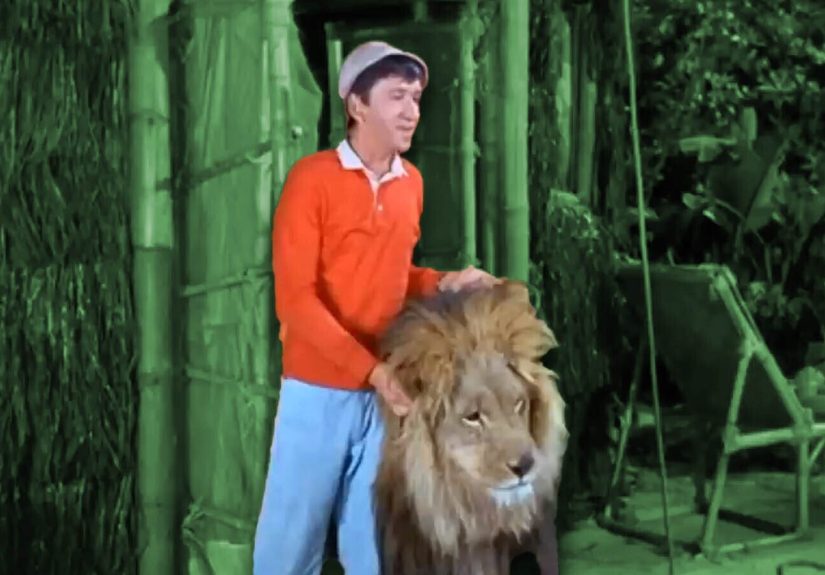
The episode in question was “Feed the Kitty”, a Season 2 outing that first aired in March 1966. On paper, it sounds like classic Gilligan’s Island nonsense: a lion washes ashore, the castaways panic, Gilligan somehow bonds with the giant cat, and chaos follows. In reality, one scene nearly became the kind of behind-the-scenes Hollywood story that stops being “trivia” and starts being “how on earth did everyone survive that?”
And that is exactly why this story still fascinates fans. It is funny, bizarre, deeply old-school, and just dangerous enough to remind you that 1960s television occasionally looked at workplace safety and said, “Let’s circle back after the lion scene.”
The Quick Answer: Which Episode Was It?
If you are here for the headline answer, here it is: the near-disaster happened during “Feed the Kitty”, the 24th episode of Season 2 of Gilligan’s Island. The plot centers on a lion that washes up on the island in a crate intended for a zoo. While the rest of the castaways are understandably not thrilled about sharing real estate with a giant predator, Gilligan ends up bonding with the animal.
In the episode, the lion is called Leo. Off camera, the lion was a famous Hollywood animal performer named Zamba, trained by Ralph Helfer. Zamba had a long screen career and a reputation for being unusually responsive to Helfer’s “affection training” approach. That all sounds reassuring right up until you remember one important detail: even a well-trained lion is still, very much, a lion.
Bob Denver Was the Perfect Gilligan and Not Just Because He Could Trip Over Anything
Before he became television’s favorite little buddy, Bob Denver had already made a name for himself playing beatnik Maynard G. Krebs on The Many Loves of Dobie Gillis. He had that rare skill that looks effortless on screen and probably leaves bruises in real life: physical comedy. Denver could sell panic, confusion, innocence, and chaos in one movement. He was not just goofy; he was precise.
That mattered on Gilligan’s Island, because the series lived on timing. The whole machine depended on Denver’s ability to react half a second too late, fall in the wrong direction, grab the wrong object, and somehow make disaster feel charming rather than mean. Gilligan was frustrating, yes, but Denver’s performance made him endearing instead of exhausting. That is a hard trick to pull off, and he pulled it off for years.
He also loved the role. By later accounts from Denver’s own camp, he appreciated the contrast between the verbal comedy of Dobie Gillis and the physical comedy of Gilligan’s Island. That helps explain why he was so good at scenes that depended on movement, surprise, and full-body reaction. Unfortunately, those are also the exact qualities that can become a bad idea when your co-star has paws the size of dinner plates.
What Happened on the Set of “Feed the Kitty”?
The most famous behind-the-scenes version of the story comes from series creator Sherwood Schwartz, who later described the moment in his book about the show and in reunion discussions. The setup seemed simple enough. Denver had rehearsed a scene in which Gilligan discovers the lion inside a hut, reacts, and exits. The lion had reportedly remained in place during rehearsal. So far, so sitcom.
Then the cameras rolled.
Denver reached back, realized the furry presence on the bed was not a pillow, a blanket, or one of the Howells’ more eccentric decorating choices, and jolted in alarm. That quick movement startled the lion. Instead of staying put, the animal lunged toward him.
Here is the detail that makes the story so chilling: Schwartz later said the only thing that likely prevented the lion from landing on Denver was the fact that the bed was not bolted down. As the animal pushed off, the bed shifted backward, reducing the force of the jump. The lion came up short. The trainer moved in immediately. Denver was not scratched.
Which is the kind of sentence that sounds calm until you remember it translates to: “A 400-pound lion nearly hit the star of a network sitcom, but the furniture saved the day.” That is not a production strategy. That is a miracle with wood slats.
Why This Story Still Shocks Fans
Part of the reason this story lands so hard is tonal whiplash. Gilligan’s Island is not a grim backstage drama. It is one of the breeziest, silliest, most replayable sitcoms ever made. It lives in pop culture as comfort food. Even people who have never watched a full episode know the theme song, the character lineup, or the basic joke of seven castaways turning every rescue plan into a new problem.
So when you find out that one of the show’s best-known stars almost got taken out by a lion during the making of a comedy episode called “Feed the Kitty”, your brain does a double take. The title sounds cute. The actual production story sounds like a memo that should have begun with, “Effective immediately, maybe let’s not.”
There is also the Bob Denver factor. He was not known for tabloid mayhem or diva behavior. By most accounts, he was a thoughtful, professional performer who cared deeply about the work and about the people around him. The idea of him facing down a lion, escaping by inches, and then essentially being ready to go again fits the legend of the consummate pro while also making modern viewers want to wrap the entire cast in bubble wrap.
The Lion Was Famous Too
One of the strangest parts of the whole story is that Zamba was not some random animal pulled in at the last second. He was already a known Hollywood performer. Ralph Helfer, the trainer behind Zamba, became associated with an approach he called “affection training,” which emphasized bonding and positive reinforcement over the harsher methods that had long been common in exotic animal work.
That reputation likely made producers feel more confident about putting Zamba in front of cameras. And to be fair, Hollywood in that era was full of productions that used live animals in ways that would make today’s insurance departments faint onto a chaise lounge. Still, the Gilligan’s Island incident is an important reminder that “trained” does not mean “predictable.” Big cats are not props with whiskers. They are powerful animals reacting in real time to motion, sound, stress, and instinct.
There is also an odd bit of sitcom déjà vu here: reports about the story have noted that Denver had crossed paths with the same lion years earlier during his Dobie Gillis days. That makes the Gilligan’s Island close call feel even more surreal. Imagine working with a lion twice in your career and having one of those times nearly become your final take. That is the kind of résumé line no acting class prepares you for.
Why “Feed the Kitty” Is More Than Just a Wild Anecdote
It would be easy to treat this as nothing more than a juicy retro-TV factoid, but the story says something real about how classic television was made. Mid-century TV often moved fast, worked cheaply, and expected actors to do an incredible amount with very little fuss. Sets were reused, schedules were tight, and performers were expected to adapt on the fly. That system produced a lot of beloved television. It also produced some absolutely bananas working conditions.
Feed the Kitty captures both sides of that reality. On screen, it is a bright, goofy episode built on a simple comic premise: a dangerous animal becomes Gilligan’s unlikely pal. Underneath that silliness is a production that asked actors to perform slapstick opposite a live lion. The comedy works because the cast sells the panic. The behind-the-scenes story lingers because some of that panic was not acting.
And yet, the episode remains memorable for more than the danger. It is also a strong example of what made the series durable. Gilligan’s innocence turns fear into friendship. The lion does not just function as a threat; he becomes part of the episode’s emotional joke. That shift from danger to tenderness is pure Gilligan’s Island. The series was always about turning crisis into absurdity and absurdity into affection.
Bob Denver’s Reaction May Be the Most Bob Denver Part of the Story
According to later retellings, Denver did not respond like a melodramatic star. He responded like a working comic who wanted to finish the scene. That detail matters because it reveals the difference between Gilligan the character and Denver the actor. Gilligan panicked beautifully. Denver, when it counted, apparently did not.
That professionalism helps explain why his performance endured. The public often remembers Gilligan as a lovable screw-up, but Denver’s co-workers and later commentators frequently emphasized that he was smart, disciplined, and generous. The clowning was deliberate. The confusion was crafted. The physical looseness was built on control. Ironically, that control may have helped save the scene after everything went sideways.
It also adds a layer of admiration to rewatching the episode. You are no longer just seeing a sitcom star mugging for laughs. You are seeing a performer doing difficult physical work in an environment that could change instantly. Once you know the backstory, even the lightest moments in “Feed the Kitty” carry a strange little charge.
Watching the Episode Today Feels Different
If you watch “Feed the Kitty” now, knowing what happened, the episode changes shape. What once looked like broad family-friendly slapstick now comes with a backstage heartbeat. You notice the blocking. You notice the distance between actor and animal. You notice the trainer’s presence more than you used to. The comedy is still there, but so is the awareness that classic television sometimes got its laughs while standing much closer to danger than viewers realized.
That does not ruin the episode. If anything, it gives it more texture. It becomes a small time capsule of how television used to work ambitious, charming, under-protected, and occasionally one bad leap away from catastrophe. The magic of old TV is often tied to its handmade quality. This story is a reminder that “handmade” sometimes meant “held together by talent, nerve, and furniture that happened to slide backward.”
Related Experiences: When Classic TV Comedy Got Uncomfortably Real
To really understand why the Bob Denver lion story has lasted, it helps to think about the experience of everyone involved. For Denver, the scene was not just another gag. It was a physical-comedy setup built around movement, surprise, and rhythm the exact tools he used to make Gilligan funny. Under normal circumstances, that kind of reaction was his superpower. In a scene with a live lion, it suddenly became a risk factor. The same instinct that made the audience laugh also created the kind of fast, startled motion that could trigger an animal response. That tension is what makes the story so memorable. It was not a case of an actor doing something reckless for ego. He was doing the thing he had been hired to do: play Gilligan convincingly.
For the crew, the experience must have been a jolt. Sitcom production is built on repetition. Marks are hit, props are reset, laughs are timed, and scenes are repeated until they work. A live-animal scene breaks that rhythm because no one on set, no matter how experienced, fully controls the final variable. The lion can be trained. The lion can be prepared. The lion can even be calm. But the lion is still making decisions in the moment. One second you are shooting a comedy beat; the next second you are watching a trainer save the lead actor from disaster. That is not an ordinary production hiccup. That is the kind of event people probably replayed in their heads all night.
For the cast, it also says something about the working culture of Gilligan’s Island. Stories from the show often emphasize camaraderie, professionalism, and a willingness to lean into absurd material without apology. The lion incident fits that larger picture. It suggests a cast and crew who were dedicated enough to keep going, but it also highlights how much classic television quietly demanded from performers. Viewers saw tropical fluff. The actors sometimes experienced something closer to controlled chaos.
And for modern audiences, the experience of hearing this story changes the way old television feels. It reminds us that nostalgia can be soft around the edges while reality was not. Today, a production facing a similar situation would likely rely far more heavily on visual effects, stricter safety oversight, multiple barriers, and an army of legal approvals. Back then, a lot more depended on trust, instinct, and the belief that things would probably be fine. Most of the time, they were. Sometimes they were only fine by two feet.
That may be the lasting power of this story. It is not just about a lion almost hitting Bob Denver. It is about the thin line between illusion and reality in entertainment. Gilligan’s Island sold viewers an island where danger was always funny and consequences were always temporary. For one moment during “Feed the Kitty,” reality broke through the joke. Denver survived it, the episode got made, and television history gained one of its wildest behind-the-scenes stories.
Final Thoughts
A lion almost killed Bob Denver on Gilligan’s Island sounds like one of those exaggerated old-Hollywood stories that gets better every time somebody retells it. But the reason it has endured is that the core of it appears to be true: during the filming of “Feed the Kitty,” Denver was put in genuine danger, and only a split-second fluke plus a fast-acting trainer kept the situation from ending horribly.
At the same time, the story also captures why Bob Denver remains such an appealing figure in TV history. He was not just the guy in the bucket hat. He was a highly skilled comedian, a committed professional, and the kind of performer who could carry a silly premise without ever acting like he was above it. That balance is rare. It is why Gilligan stayed lovable, why the show stayed watchable, and why even the strangest stories from its production still matter.
So the next time someone hums the theme song, mentions the S.S. Minnow, or jokes about a three-hour tour, remember this: one of the show’s most unforgettable episodes involved a real lion, a very lucky bed, and a star who somehow walked away with one more incredible TV legend attached to his name.







 Close
Close