
Table of Contents >> Show >> Hide
- Why benches matter more than you think
- What makes a bench “creative” (and not just confusing)
- 92 of the most creative benches and seats ever
- Playful public art benches (1–14)
- Sculptural modern icons and gallery-worthy seats (15–26)
- Smart storage and multitaskers (27–38)
- Built-ins and banquettes that “hug” the room (39–50)
- DIY-friendly woodwork wonders (51–62)
- Upcycled and unexpected materials (63–72)
- Outdoor garden and trail favorites (73–82)
- Inclusive, human-friendly seating (83–92)
- How to borrow these ideas for your own space (without building a sculpture museum)
- of bench experiences (because benches are where life happens)
- Conclusion
Benches are the underrated overachievers of the design world. They don’t demand a spotlight like a sofa, and they don’t come with the emotional baggage of
“accent chairs” (why are they always watching you?). A bench just shows up, looks good, and says, “Sit down. Breathe. Pretend your phone isn’t at 3%.”
And when a bench gets creative? That’s when seating turns into storytelling. A great bench can make a park feel like a gallery, a mudroom feel like a
command center, and a dining nook feel like the coziest corner of the universe. The best part: creative benches don’t have to be complicatedthey just have to
be intentional, human-friendly, and a little bit brave.
Why benches matter more than you think
A bench is one of the few furniture pieces that can be simultaneously practical, sculptural, and social. It’s the “group text” of seating: it works best when
more than one person shows up. In homes, benches solve awkward spotsentryways, hallways, the end of the bed, under a windowwithout swallowing a room the way
bulky chairs can. In public spaces, benches do something even bigger: they create pause. They’re tiny permission slips that say, “This place is for people.”
But creativity isn’t just about looking wild on Instagram. It’s about how a bench changes behaviorencouraging conversation, offering rest, supporting different
body types, or turning dead space into a destination. Even the most artsy bench needs to pass the real-world test: comfort, durability, and safety.
What makes a bench “creative” (and not just confusing)
1) A clear idea
The best benches have a concept you can feel immediately: “This is a wave.” “This is a garden.” “This is storage disguised as furniture.” If the idea needs a
12-minute explanation, it’s not a benchit’s a lecture.
2) Human comfort, not human suffering
Yes, sculptural seating can be gorgeous. But if the only comfortable position is “perched like a suspicious bird,” it’s not seatingit’s a prank. Curves,
back support, and sensible seat depth matter, especially in spaces meant for longer hangs.
3) Materials that match the mission
Outdoor benches need weather resistance and low maintenance. Indoor benches can play with upholstery, wood, metal, or mixed textures. Upcycled benches can be
surprisingly strong if the structure is smart (and the fasteners are not “hope and vibes”).
4) Inclusive design
In public and commercial settings, thoughtful bench design considers accessibility and clear space around seatingnot just style. For example, U.S. accessibility
standards include specific guidance for bench dimensions in certain built environments, which influences how designers shape benches that welcome more users.
92 of the most creative benches and seats ever
Below is a curated gallery of real-world bench inspirations and highly buildable ideasorganized by vibeso you can steal the spirit (not the exact design).
Consider it a design buffet. Take what you love, leave what makes you say, “Wait… where do my legs go?”
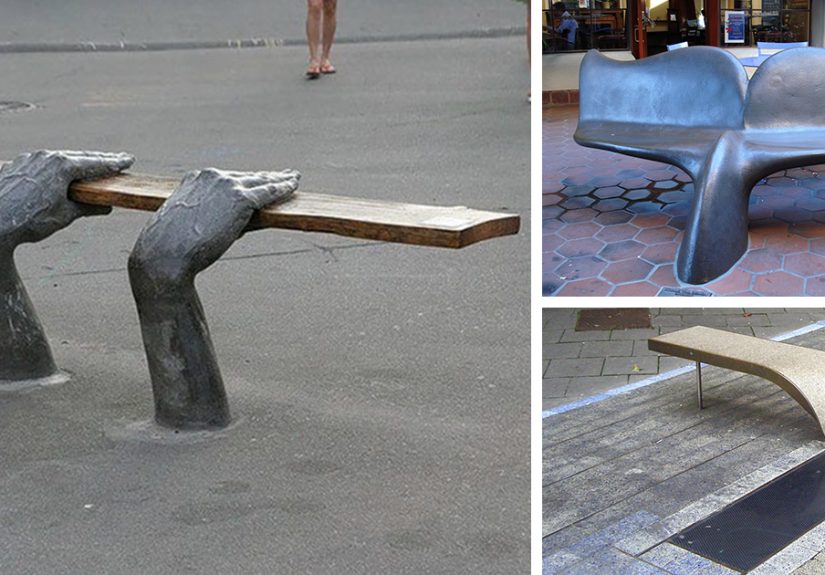
Playful public art benches (1–14)
- The “Wave” bench: A serpentine curve that creates multiple micro-zones for sitting, leaning, and chatting.
- Ribbon loop seating: A continuous band of material that becomes seat, back, and sculpture in one gesture.
- Oversized “letters” bench: Typography you can sit onperfect for plazas, campuses, and “meet me at the giant Y.”
- Bench-as-playground: A perch with gentle climbs, cutouts, and playful edgesinviting movement without becoming a jungle gym lawsuit.
- Color-block modular bench: Bright sections that can be rearranged for events, crowds, or spontaneous friend group mergers.
- Bench with a built-in “frame”: Seating that points toward a view like a picture windowinstant photo magnet.
- Folded-metal origami bench: Crisp angles that look sharp (but feel smooth) and resist weather like a champ.
- Bench + planter combo: Seating wrapped around greenery, so the bench feels like it grew there.
- “Conversation” bench: Curved inward so strangers naturally face each otherawkward at first, then surprisingly wholesome.
- Bench with integrated lighting: Subtle glow strips that make seating feel safe and cinematic at night.
- Storytelling mosaic bench: Tile scenes, community art, or local historydurable, meaningful, and nearly impossible to ignore.
- Shadow-casting slat bench: Spaced boards that paint patterns on the ground as the sun moves.
- “Sound bench” nook: Wood fins or curved forms that reduce noise and create a calmer pocket in loud places.
- Interactive street bench concept: Seating designed to adapt to users’ needs (a thoughtful alternative to “one-size-fits-none”).
Sculptural modern icons and gallery-worthy seats (15–26)
- The brutalist recamier bench: Heavy-looking forms that still feel invitingespecially with throws and pillows.
- Double-sided outdoor bench: Sit facing the view or facing your friendstwo moods, one object.
- Minimalist “pause” bench: A sculptural piece meant to slow a room down, like punctuation in furniture form.
- Layered plywood curve bench: Laminated wood that shows off its stripes like a design flex.
- Monolithic stone slab bench: Simple, ancient-feeling, and basically immortal.
- Floating cantilever bench: It looks like it shouldn’t work… and that’s exactly why it’s fun.
- Bench with a carved negative space: Cutouts that make a solid block feel airy and modern.
- Low “gallery plinth” bench: A long, clean line that doubles as display surface when not in use.
- Asymmetrical perch bench: Different heights for lounging, perching, and tossing a bag without drama.
- Concrete bench softened by textiles: The contrast between hard and cozy becomes the whole point.
- Bench with hand-shaped edges: Subtle scallops or finger holds that make it feel crafted, not manufactured.
- Bench that’s also a divider: Seating that defines a zone without building a wall.
Smart storage and multitaskers (27–38)
- Entryway cubby bench: Sit, stash shoes, and pretend your life is organized.
- Lift-top storage bench: Throws, games, dog leashesgone in seconds.
- Flip-seat patio storage bench: Outdoor cushions protected from weather (and from that one squirrel with opinions).
- Bench with drawer fronts: Clean look, hidden chaos.
- Bench + coat hooks wall system: A “landing strip” for daily lifebags, keys, jackets, sanity.
- Bench with slide-under bins: Flexible storage that doesn’t require a full cabinet build.
- Window bench with deep drawers: The reading nook that secretly runs your household logistics.
- Dining bench with hidden shelving: Great for small spaces where you need storage and seating.
- Bench with pull-out pet station: Food bowls slide away; your floor thanks you.
- Bench with integrated side tables: Seat plus surfacesno more balancing coffee like a circus act.
- Convertible bench-to-table: For tiny apartments where every object needs a second job.
- Charging bench: Built-in outlets/USB for modern life (because the bench knows you’re glued to your phone anyway).
Built-ins and banquettes that “hug” the room (39–50)
- Corner banquette: Turns dead corners into favorite seatsespecially in kitchens and breakfast nooks.
- Wraparound window bench: A panoramic perch that makes light feel like a feature.
- Booth-style dining nook: Restaurant energy, home comfortadd cushions and suddenly Tuesday feels fancy.
- Bay window bench with pillows: The classic “I live in a novel” setup.
- Hallway perch built-in: A slim bench that makes narrow spaces feel intentional, not accidental.
- Under-stair bench: Uses that weird triangle space for something lovable.
- Fireplace-side bench: Extra seating without blocking sightlines or stealing the room’s focus.
- Dining bench paired with chairs: Mix seating styles for a collected, not-catalog look.
- Banquette with storage base: A space-maximizer that feels custom even on a normal-human budget.
- Bench “ledge” along a wall: Great for partiespeople naturally line up, chat, and snack.
- Built-in bench with statement upholstery: The room’s personality, upholstered and confident.
- Outdoor built-in bench against a fence: Adds structure to a yard and saves space for everything else.
DIY-friendly woodwork wonders (51–62)
- Simple garden bench with chunky legs: A weekend project that looks timeless.
- Timber bench from landscape timbers: Fast, sturdy, and surprisingly stylish with the right finish.
- Live-edge slab bench: Let the wood’s natural edge do the design work for you.
- Trestle-base bench: Classic joinery vibes; looks great in modern homes too.
- Angled-leg rustic bench: A little mid-century, a little cabin, a lot of charm.
- Slatted outdoor bench: Lets water drain, stays cooler in sun, and looks clean.
- Bench with a stretcher rail: Adds stability (and a footrest bonus).
- Minimal “plank” bench: One board, strong legs, maximum simplicity.
- Mudroom bench with beadboard back: Built-in energy without needing a full remodel.
- Bench with shoe shelf below: Practical, tidy, and keeps shoes from turning into a pile of mysteries.
- Composite-decking bench: Low maintenance for outdoor seating that doesn’t want constant babysitting.
- Potting bench that doubles as seating: The gardener’s multitoolwork surface, storage, and perch.
Upcycled and unexpected materials (63–72)
- Propane tank “art seats”: Repurposed metal forms turned into functional sculpture.
- Old headboard bench: Vintage charm, especially with a fresh coat of paint.
- Suitcase-seat bench: Storage meets storygreat for travel-themed decor without being cheesy.
- Skateboard-deck bench: Colorful layers, curved shapes, and built-in nostalgia.
- Concrete-block modular bench: Industrial, inexpensive, and surprisingly customizable with cushions.
- Reclaimed barn-wood bench: Texture for daysjust make sure it’s structurally sound.
- Pipe-and-wood bench: A workshop look that works in entryways, kitchens, and loft-style spaces.
- Old door bench: Solid wood, great proportions, and a built-in conversation starter.
- Stone + timber hybrid bench: A rugged base with a warm seatperfect balance of tough and cozy.
- Metal grate bench with wood cap: Light, airy, and great where you want an industrial touch.
Outdoor garden and trail favorites (73–82)
- Classic garden bench with arms: Comfortable for longer sits, especially near flowers or water.
- Backless path bench: Easy access from either sidegreat for garden edges and walkways.
- Tree-wrapping circular bench: Turns shade into a seating destination.
- Corner garden bench with chaise vibe: A lounge moment in a small footprint.
- Bench with built-in planters: Seating framed by greeneryseasonal swaps keep it fresh.
- Stone bench along a retaining wall: Built-in look, super durable, and low maintenance.
- Porch swing bench: Not technically a bench? Tell that to everyone fighting over it.
- Picnic-table bench swap: Replace fixed seats with movable benches for flexibility.
- Bench tucked into a “secret” corner: The best benches feel discovered, not placed.
- Weatherproof bench with breathable cushions: Comfort without turning into a soggy sponge after rain.
Inclusive, human-friendly seating (83–92)
- Bench with back support and armrests: Helps more people sit and stand comfortablyespecially in public settings.
- Mixed-height seating: Standard seat plus a slightly taller perch for easier standing.
- Bench with clear adjacent space: Designed so mobility devices can pull up alongside (comfort and dignity matter).
- Shade-first bench placement: The most inclusive “feature” can be as simple as not roasting people in direct sun.
- Non-slip seat surfaces: Especially outdoorsbeauty is great; not sliding off is greater.
- Rounded edges and safe corners: Friendly to kids, hips, and anyone moving through tight spaces.
- Quiet-zone bench: Positioned away from loud traffic and chaos for calmer breaks.
- Companion seating alignment: Thoughtful layouts that keep groups together, not separated by design.
- Anti-hostile design choices: Avoid features that punish resting; good public seating welcomes people.
- “Pause points” in long routes: Benches placed like breadcrumbs along paths for comfort and endurance.
How to borrow these ideas for your own space (without building a sculpture museum)
Start with the job your bench needs to do
Is it an entryway “drop zone”? A dining bench for extra guests? A garden seat for morning coffee? The function will tell you the right shape, material, and
sizethen creativity can show up as a detail: a curve, a color, a material swap, or a clever storage move.
Choose comfort features on purpose
If people will sit for more than a minute, think about a supportive back, a slightly angled seat, and enough depth so it feels stablenot like a narrow ledge.
And for public or commercial spaces, remember that accessibility and clearances aren’t “extra,” they’re part of good design.
Let one bold element do the talking
A bench doesn’t have to be loud in every way. Pick one: dramatic curve, unexpected material, color-blocking, integrated planters, or sculptural legs. Too many
“look at me!” details and the bench starts feeling like it’s trying out for a reality show.
of bench experiences (because benches are where life happens)
Think about the last time a bench genuinely improved your day. Not “I sat down because my feet were mad,” but “Oh wow, this spot is perfect.” That’s the
magic of a well-placed, creative seat: it turns regular moments into tiny highlights. A bench catches you between errands, between conversations, between the
rush and the next thing. It’s the rare design object that’s basically an invitation.
In a home, the bench experience often starts at the entryway. You come in with bags, shoes, keys, and whatever emotional weather the day brought. A bench says,
“Drop it here. Sit. Untangle yourself.” If it has cubbies or baskets underneath, it’s even bettersuddenly clutter has a designated habitat. If it’s upholstered,
it softens the transition from outside-world chaos to inside-world calm. If it’s wood, it brings a warm, grounding feel. Either way, the experience is the
same: the bench absorbs the messy middle of life.
In kitchens and dining areas, benches create a different kind of comfortmore social, less formal. People slide in, lean closer, pass plates, and linger longer.
A banquette bench turns a meal into a hangout. Kids can squeeze in. Friends can “just for a minute” sit down and somehow end up staying an hour. And because a
bench shares space instead of separating it, the whole table feels like one group instead of a collection of individual chairs with personal boundaries.
Outdoors, the best bench experiences feel like discovering a secret. A garden bench tucked near a flowering shrub becomes the unofficial “morning coffee seat.”
A bench facing a view makes you pause longer than you planned, because the angle is right and the breeze is doing that perfect thing. Even a simple bench can
feel luxurious if it’s shaded, stable, and dry. Add a planter or a curve that cradles the body, and now the bench becomes a destinationpeople don’t just sit
there, they choose it.
In public spaces, benches shape how welcome a place feels. A comfortable bench encourages people to rest, talk, watch, and exist without needing to buy
something. A creative benchone with a playful form or bright colorsignals joy and care. The experience becomes “This city thought about me,” instead of “This
city tolerates me.” And once you start noticing benches, you realize they’re a quiet kind of hospitality. They’re design with manners.
Conclusion
Creative benches and seats are proof that “practical” doesn’t have to be boring. The most memorable benches combine a strong idea with real comfort, materials
that fit the setting, and a human-first approach that welcomes more people. Whether you’re styling an entryway, planning a breakfast nook, upgrading a patio,
or imagining better public spaces, the right bench doesn’t just fill a gapit creates a moment.







 Close
Close