
Table of Contents >> Show >> Hide
Traveling is basically a love story between you and fooduntil the English menu shows up looking like it was translated by a sleep-deprived robot with a spicy imagination. One minute you’re craving noodles, the next you’re considering whether you’re emotionally ready for “Hot Bowel” or a beverage simply labeled “Whatever.”
This is the joyful chaos of menu translation fails: the kind that turn innocent dishes into accidental threats, romantic invitations, or anatomy lessons you didn’t sign up for. And the best part? Most of these aren’t “bad English” so much as word-for-word translation colliding with slang, homonyms, missing cultural context, and the occasional typo that chooses violence.
Below you’ll find 80 of the funniest menu mistranslations (plus a traveler’s survival guide so you can laugh and still eat well). If you’re looking for funny menu translations, bad menu translations, and classic lost-in-translation menus, you’re in the right place.
Why Menu Translations Go Hilariously Wrong
1) Word-for-word translation is a trap
Many languages build meaning through context, word order, and idioms. Translation tools (or non-specialists) often take each word literally, producing English that’s technically “a translation” but functionally a comedy sketch.
2) One letter can turn dinner into a crisis
Menus are short, edited quickly, and reprinted often. That’s the perfect habitat for typosespecially when a single swapped vowel turns a fish into a swear word or a regional cuisine into “human taste.”
3) Slang and “false friends” do the most damage
Slang terms don’t map cleanly across languages, and “false friends” (words that look similar but mean different things) can push a translation into awkward, risky, or unintentionally hilarious territory.
4) Cultural shorthand doesn’t travel well
Some dishes have poetic names that locals instantly understand. In English, they can sound like a dare: dramatic, mysterious, and mildly concerningespecially when printed with zero explanation.
80 Of The Funniest Menu Translation Fails Ever
These entries are presented the way travelers commonly encounter them: short, blunt, and wildly confident. In many cases, the intended dish is deliciousthe English just took a scenic route through chaos.
When the Translation Tool Chooses Violence
- Deep Fried Baby Almost certainly “fried chicken” in sweet-and-sour sauce, but the menu went full fairy tale villain.
- Our Sweet Ass A dish name that sounds like a slogan. You came for noodles; you left with emotional baggage.
- It Rotates of Smokey A “smoked platter” that somehow became a physics experiment.
- Whatever A drink for the indecisive… or the brave. Ordering it feels like signing a waiver.
- I Can’t Find on Google but It’s Delicious Honest marketing, but also a wild thing to print on paper and hand to strangers.
- Stir-Fried Wikipedia When you wanted “mixed vegetables” and got the entire internet sautéed.
- Steamed Eggs with Wikipedia A softer, fluffier version of online research.
- Mermaid in Deep Sea Sounds magical. Also sounds like you should ask follow-up questions.
- McDonald’s Best Friend Who is it? Why are they on the menu? Is there lore?
- Knives to the Natural One A razor clam dish that accidentally became an action-movie title.
- Sepia to the Iron with Ali Smelt “Grilled cuttlefish with garlic mayo” deserves better than whatever this sentence is doing.
- Sweater Gives Trout The fish is cold, apparently. Please offer it a cardigan.
- Table of Iberian A charcuterie board that sounds like a geography lesson.
- Six Times A famous mistranslation for beef tartare that makes the dish sound like a workout plan.
- Bear Tang Beef bone soup that accidentally suggests you’re about to drink something from a fantasy tavern.
- Dynamic Stew Pollack stew with enough energy to start a tech startup.
- Lifestyle Meat “Raw meat,” but make it a personal brand.
- Chicken A–hole House A mistranslation so bold it needs its own warning label.
- Cock Skin Juice Pressed from a Bitter Orange A citrus drink description that took a hard left into “please don’t.”
- The Sushi Is Thrown on the Lane Conveyor-belt sushi, described like a food fight with rules.
Typos That Turn a Menu Into Stand-Up Comedy
- Human Taste A typo for “Hunan” that immediately makes everyone reconsider dinner.
- Chicken vs. Real Chicken The price difference is doing a lot of storytelling here.
- Best Sh*t A menu that’s oddly confident in its… review section.
- Hot Bowel Rice that sounds like a medical emergency waiting to happen.
- Served Pooping Hot A temperature description no one needs, ever.
- Acnetizer The anti-appetizer nobody asked for, now available as a “special price.”
- Anti-Appetizer Refreshing honesty: this dish is here to lower your expectations.
- Mire High Crub “Meal” plus “flight” plus “keyboard panic” equals… this.
- Deep Flying Sounds like a mindfulness retreat. Might also be fried rice.
- Deep Gliding The sequel to Deep Flying. Same confusion, more altitude.
When the Menu Gets Weirdly Anatomical
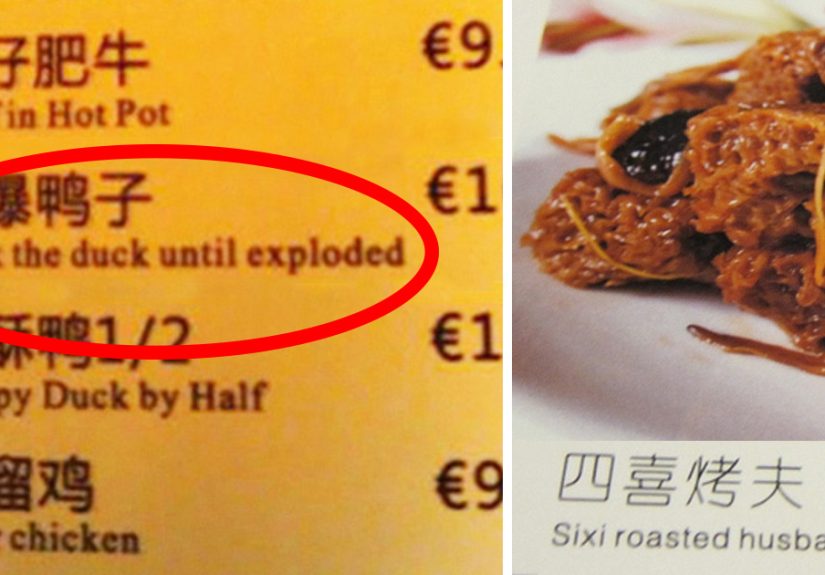
- Roasted Husband A dish name that instantly turns a restaurant into a crime scene.
- Lung Slice Likely a literal translation of a classic name, but it still lands like a pop quiz in biology.
- Needle Disposal A dish that sounds like it belongs in a clinic, not next to the dumplings.
- Bottle of Bears Probably meant “pear” or “beer,” but now you’re ordering wildlife in a jar.
- Whole Groin Goodness If you need a moment before ordering, that’s normal.
- Waiter, There’s a Fly on My Sphincter You can’t unread it. You can’t unthink it. You can only move on.
- Additional Finger Extra side item? Extra digit? Nobody knows, and that’s the problem.
- Something in My A–hole A complaint, a prophecy, or a menu item? The world may never know.
- Sorry for the Incontinence, Sir Customer service, but make it horrifyingly specific.
- Spicy Crap “Carp” got ambushed by a typo and your appetite got caught in the crossfire.
- Fried Crap Is Extra Somehow, the upcharge makes it funnier.
- Crisp Skin Soup Could be delicious. Still sounds like skincare with a ladle.
- Cream of Sebum Soup A phrase that should not exist outside a dermatologist’s office.
- Chicken Cube Explodes the Temple The menu escalated from dinner to ancient prophecy in six words.
- Raping Mushrooms A translation that should have been stopped by literally anyone with spellcheck.
When the Menu Starts Flirting
- Our House Bear Thang A legendary entry that sounds like a romantic nickname for soup.
- Jean Germ Fish The fish has germs and great denim. A full lifestyle brand.
- Gives You an Organism What organism? Why? Is it a gift with purchase?
- Top Soup Hour Vegetable, Seasoned with Time Poetic, confusing, and somehow still a flex.
- Four Treasure Melon Pre-Custard Dessert? Prop? A Victorian-era insult? Unclear.
- Living Merely to Explode A mood, a diary entry, and apparently a side dish.
- Only into Beets The menu just friend-zoned every other vegetable.
- Deep Frozen Carrot Juice Sounds healthy until you say it out loud and realize it sounds like a dare.
- Duck Duck Cooked Goose Like “Duck Duck Goose,” but with consequences.
- In the Chicken’s Defense, He Was a Vegetarian A tofu dish description that reads like courtroom drama.
“Technically Correct,” Still Unhinged
Sometimes the translation isn’t wrongit’s just missing the cultural explanation that makes it sound normal. These are the kinds of literal dish names that can appear on English menus and make tourists freeze mid-bite.
- Old Clothes A literal translation of ropa vieja, which is actually a beloved shredded beef dish.
- Century Egg Not a time-travel egg, just a preserved egg with a dramatic PR team.
- Stinky Tofu Honest and accurate. Also a sentence that scares people who haven’t met it yet.
- Ants Climbing a Tree A classic noodle dish name; no ants, but the imagery does not relax anyone.
- Buddha Jumps Over the Wall A famous soup name that sounds like a spiritual parkour event.
- Lion’s Head Meatballs, not wildlife. Still a bold move on a menu.
- Fish-Fragrant Eggplant “Fish-fragrant” is a seasoning style, but English readers hear betrayal.
- Three Cup Chicken A dish measured by “cups” that makes you ask, “Cups of what?”
- Drunken Chicken Usually wine-infused and delicious, yet it reads like a chicken made bad choices.
- Blood Cake A real dish in several cuisines, but the name is doing zero favors.
- Pork Floss Savory and tasty; sounds like dental hygiene.
- Husband-and-Wife Lung Slices A literal name for a Sichuan-style cold beef dish that rarely involves actual lungs anymore.
- Eight-Treasure Rice A dessert that sounds like you’re about to eat jewelry.
- Buddha’s Delight Vegetarian, classic, and suspiciously like a scented candle name.
- Dragon Beard Candy Sweet, delicate, and guaranteed to make you picture a wizard.
Bonus Round: “Wait, That’s on the Menu?”
- Fried Rice with Drugs A mistranslation that turns lunch into a plot twist.
- Octopus Formality Sounds like the octopus is wearing a tuxedo and judging your posture.
- Cooked Grandma Meat Almost certainly meant “grandma-style cooking,” but the menu went full horror movie.
- Mother’s Hand Tasty Blue Director of a Bureau A legendary machine-translation sentence that should be framed in a museum of bad menus.
- House Best Thang Likely “house special,” but it reads like a hip-hop catchphrase.
- Hot-and-Sour Confusion When a dish name translates as a full emotional state instead of soup.
- Chef’s Recommendation (No Explanation) Not a mistranslation, but still a psychological thriller.
- Trust Me, It Tastes Like Crap Possibly sarcasm, possibly honesty. Either way, bold strategy.
- Please Eat Carefully A polite note that makes you wonder what happened to the last customer.
- Today’s Special: Mystery The menu version of “close your eyes and open your mouth.”
How to Decode a Badly Translated Menu (Without Missing the Good Stuff)
Use context clues, not panic
Look for familiar ingredients (chicken, rice, tofu, noodles), cooking methods (fried, steamed, grilled), and prices (the “real chicken” usually costs more, for reasons known only to the menu).
Ask for the original-language name
A server can often point to the local name or a picture. Even if you don’t speak the language, the original name helps you search or compare dishes at nearby tables.
When in doubt, order the crowd favorite
If half the restaurant is eating the same thing, you’ve found the safe patheven if the English calls it “dynamic stew” or “octopus formality.”
Restaurants: how to avoid becoming a meme
If you run a restaurant, professional translation is cheaper than viral embarrassment. Short descriptions, consistent terminology, and a quick proofread prevent 90% of the classic English menu fails.
The Traveler Experience: Laughing Through the Chaos (and Still Eating Well)
If you’ve ever eaten abroad with a phone in one hand and a fork in the other, you already know the emotional arc: confidence, curiosity, suspicion, then a weird kind of gratitude. There’s something charming about a menu that tries its bestbecause even when the English goes off the rails, the kitchen usually knows exactly what it’s doing.
The most memorable moments often happen before the food even arrives. You sit down hungry and optimistic, then the translated menu presents you with choices that read like rejected band names: “Bear Tang,” “Dynamic Stew,” andbecause the universe loves comedy“I can’t find on Google but it’s delicious.” Suddenly, ordering isn’t just selecting dinner; it’s an improv exercise. You start developing strategies: circle anything that sounds normal, underline anything that seems like a dare, and star anything that’s clearly a mistranslation but probably tasty.
Then comes the social side. Bad translations are icebreakers. They turn a quiet table into a shared event, because everyone has to read the weird line out loud to confirm they saw it correctly. It’s the kind of humor that doesn’t require a punchlinejust the straight-faced confidence of a menu describing conveyor-belt sushi as “thrown on the lane.” Even better, these moments often lead to the best local recommendations: the server smiles, realizes you’re lost, and points you to the house specialty with a look that says, “Ignore the English. Trust the food.”
Over time, you learn that many “fails” aren’t insults to the languagethey’re symptoms of speed, budget, and cultural distance. A family-run place might translate the menu once and never touch it again. A larger restaurant might copy-paste translations from an app because it’s fast. And poetic dish names that sound totally normal to locals can land in English like a riddle. That’s why the smartest traveler move is to treat the English text as a hint, not a contract. Pair it with photos, point at what someone else is eating, ask simple questions (“Spicy? Soup? Chicken?”), and you’ll usually land on something great.
Finally, there’s the surprising upside: translation chaos can pull you out of your routine ordering. At home, you might default to the same safe dishes. Abroad, the menu forces you to exploresometimes because you literally don’t know what anything is. That’s how people discover new favorites. You order what you think is “noodles with vegetables,” it arrives as something completely different, and it’s fantastic. The menu may have failed the grammar test, but it succeeded at the mission: feeding you well and giving you a story you’ll tell forever.







 Close
Close