
Table of Contents >> Show >> Hide
- Why Loft Beds Work So Well in Small Rooms
- Before You Loft Anything: A Quick Planning Checklist
- 8 Space-Saving Loft Bed Ideas for Cramped Quarters
- 1) Low-Cost Lofting: The “Start Here” Budget Build
- 2) Concealed Closet Under the Loft: Fake a Wardrobe Like a Pro
- 3) Drop-Ceiling / Suspended Loft: Airy, Open, and (Yes) Very Cool
- 4) Lofted Bunk / Triple-Sleep Setup: Maximum Beds, Minimum Footprint
- 5) Tucked-Away Loft Above a “Utility Zone”: Sleep Where You Don’t Hang Out
- 6) Every-Inch-Counts Storage Loft: Drawers, Shelves, and Pull-Out Everything
- 7) Gamer Lair / Workstation Loft: Desk Below, Sleep Above, Sanity Preserved
- 8) Additional Living Space Loft: Create a Mini Lounge Under Your Bed
- Safety & Comfort: The Part You Shouldn’t “Get To Later”
- Small-Space Styling Tips That Make Loft Beds Look Intentional
- of Real-World Loft Bed Experience (What People Learn Fast)
- Conclusion
If your bedroom is basically “a place where you store a bed” (and not, you know, a place where you live), a loft bed can feel like a cheat code.
By lifting your mattress into the vertical space you already have, you reclaim precious square footage for the things that make a room functional:
storage, a desk, a hangout spot, even a mini-closet that doesn’t require you to become a minimalist overnight.
This guide breaks down eight smart, space-saving loft bed ideas inspired by real-world small-space solutions (including the kinds you’d spot in dorms,
studios, and tight city apartments). You’ll get design variations, practical pros/cons, and a few “learn-from-other-people’s-mistakes” tips so your
loft doesn’t turn into a wobbly regret platform.
Why Loft Beds Work So Well in Small Rooms
A bed is the biggest space hog in most bedrooms. Lofting it frees the footprint below for a second functionsometimes two.
That’s the magic: you’re not adding furniture, you’re stacking functions.
- Better zoning: Sleep up top, work/lounge/store belowespecially helpful in studios.
- Cleaner visual lines: When the floor is open, a room looks bigger (even when it’s not).
- More storage options: Under-bed space becomes shelves, drawers, wardrobes, or hidden bins.
Before You Loft Anything: A Quick Planning Checklist
Loft beds are awesomeuntil you bonk your head on the ceiling every morning or discover your ladder is basically a vertical plank of fear.
Measure first, dream second.
1) Check your ceiling height (comfort matters)
For adults and teens, aim for enough clearance above the mattress to sit up without doing an impression of a cartoon character hitting a ceiling.
If your ceiling is standard-height and your loft frame is tall, consider a lower loft design or a platform-style loft that trades under-bed standing
room for top-bed comfort.
2) Confirm stability and weight rating
Loft beds take real loads: the sleeper, the mattress, plus movement (turning, climbing, flopping dramatically after a long day).
If you’re buying, follow the manufacturer’s limits. If you’re building, overbuild and anchor where appropriateespecially in small spaces where the
bed may sit close to walls.
3) Don’t skip safety basics
Even for adult lofts, the safest designs borrow from bunk bed safety logic: secure guardrails, safe ladder/stair access, and no weird gaps that can
trap limbs or allow falls. If kids will use the loft, be extra conservative with rails and access.
8 Space-Saving Loft Bed Ideas for Cramped Quarters
1) Low-Cost Lofting: The “Start Here” Budget Build
Want the loft life without the custom-build price tag? Start with a simple, ready-made loft frame and treat the area underneath like a blank canvas.
This is the most flexible approach: you can swap what goes below as your life changes (new roommate, new job, new hobby you swear will “totally stick”).
Best under-bed pairings: a compact loveseat, a clothing rack behind curtains, rolling drawers, or cube shelving that acts like a room divider.
The key is to keep the footprint visually lightthin legs, open shelves, and a consistent color palette help a small room feel calmer.
- Pros: affordable, fast setup, easy to reconfigure.
- Watch-outs: tall loft frames can feel tight near the ceilingmeasure headroom carefully.
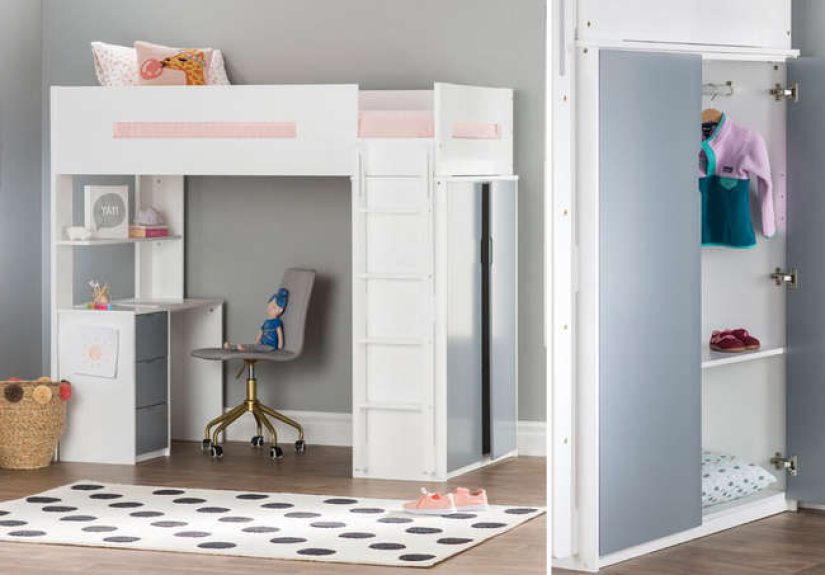
2) Concealed Closet Under the Loft: Fake a Wardrobe Like a Pro
If your apartment’s idea of a closet is “a single sad bar and a dream,” use the space under your loft bed to create a real wardrobe zone.
Add a hanging rod, shelves, and either curtains or sliding panels to keep it looking tidy.
Design tip: Curtains are the easiest “door” in a tight room. Choose a heavier fabric if you want a cleaner silhouette and less visual clutter.
If you prefer a sleeker look, lightweight sliding panels can create a built-in vibe without permanently changing the space.
- Pros: massive storage gain; the room instantly feels more functional.
- Watch-outs: allow enough depth for hangers and walking space, or you’ll create a closet you hate using.
3) Drop-Ceiling / Suspended Loft: Airy, Open, and (Yes) Very Cool
Traditional loft beds rely on posts down to the floor. A suspended or ceiling-supported look can feel lighter because the space below stays open
and unobstructedgreat for tiny rooms where every inch counts.
This style can be done as a true suspension design (engineered and securely attached to structural framing) or as a “floating look” that’s still
wall-supported. Either way, treat this as a serious project: loads, connections, and anchors matter here more than aesthetics.
- Pros: open floor space; modern visual impact; easier layout underneath.
- Watch-outs: higher complexity; may require professional input depending on structure and building rules.
4) Lofted Bunk / Triple-Sleep Setup: Maximum Beds, Minimum Footprint
If multiple sleepers need to fit in one room (siblings, guests, or a small rental setup), a lofted bunk configuration can stack sleeping surfaces
without turning the floor into a mattress obstacle course.
Consider stairs instead of a ladder when possibleespecially for frequent use. Stairs can also double as storage: each step becomes a drawer or cubby,
which is the kind of multitasking small spaces demand.
- Pros: fits 2–3 sleepers in the footprint of one bed.
- Watch-outs: safety requirements are non-negotiableguardrails and secure access are mandatory.
5) Tucked-Away Loft Above a “Utility Zone”: Sleep Where You Don’t Hang Out
In studios and micro-apartments, the smartest trick is often placement. Instead of lofting over your main living zone, loft above a utility area
like the kitchen edge, entry zone, or storage wallso your bed is visually tucked away.
This creates natural separation: your living space stays “public,” your bed stays “private-ish,” and you’re less likely to feel like you’re hosting
guests in your sleep habitat (always a win).
- Pros: better zoning; the room feels more intentional.
- Watch-outs: headroom on top may be limited depending on ceiling height and loft thickness.
6) Every-Inch-Counts Storage Loft: Drawers, Shelves, and Pull-Out Everything
If your problem is not just “small room” but “small room plus too much stuff,” go for a loft bed designed like a storage headquarters.
Think built-in drawers, shelving towers, under-platform cabinets, and pull-out units.
Small-space styling tip: Use closed storage for messy items (clothes, gear, random cables that breed at night), and reserve open shelves
for a few intentional display pieces. Too much open storage can make a small room look busy.
- Pros: big decluttering impact; fewer separate furniture pieces needed.
- Watch-outs: heavier builds require stronger frames and often cost more.
7) Gamer Lair / Workstation Loft: Desk Below, Sleep Above, Sanity Preserved
A loft bed over a desk is a classic for a reason: it turns one footprint into a full sleep-work setup. Add shelves above the desk for books,
accessories, or display items, and you’ve got a compact command center.
Make it comfortable: add task lighting, manage cables (a simple under-desk tray helps), and consider a chair that fits without banging into the ladder.
If you’re gaming, add ambient lighting so your desk cave doesn’t feel like a basementeven if it kind of is.
- Pros: ideal for students, remote workers, and small bedrooms without office space.
- Watch-outs: desk depth matters; cramped desks become clutter magnets.
8) Additional Living Space Loft: Create a Mini Lounge Under Your Bed
Not everyone needs more storage. Sometimes you need a place to sit that isn’t your bedespecially in a studio where the “living room” is also your
“bedroom” is also your “everything room.”
Use the under-bed area as a small lounge: a compact chair or loveseat, a slim coffee table, a rug to anchor the zone, and a wall-mounted TV or art.
The result feels like you’ve added an entire room without adding any square footage. Which is basically wizardry, but legal.
- Pros: improves comfort and daily life; makes a studio feel like a real home.
- Watch-outs: keep furniture scale smalloversized seating will swallow the space.
Safety & Comfort: The Part You Shouldn’t “Get To Later”
Loft beds are not the place to freestyle. Whether you’re buying or building, treat these points as essentials:
-
Guardrails: Use rails on open sides, and keep them high enough above the mattress to reduce the risk of rolling out.
(Also: don’t use an extra-thick mattress that defeats the guardrail height.) - Ladder or stairs: Ensure secure attachment and comfortable footing. If it feels sketchy on day one, it will feel worse at 2:00 a.m.
- Wall proximity: Avoid gaps where someone could get wedged between the mattress and a wall. Tight spaces need thoughtful spacing.
- Lighting: Add a small reading light up top and a night light below. Midnight climbing should not be a horror film.
- Ventilation: Hot air rises. If your loft feels warmer, a small fan can make a huge difference.
Small-Space Styling Tips That Make Loft Beds Look Intentional
Use one “visual anchor” under the loft
A rug, a desk, or a curtain wall helps define the lower zone. Without an anchor, the under-bed space can look like a storage afterthought.
Choose a cohesive palette
Matching woods or repeating a neutral color across the frame, shelves, and curtains makes the whole setup feel built-in rather than pieced together.
Go vertical with lighting and decor
Wall sconces, plug-in lights, and slim shelves keep the floor open. In small rooms, floor clutter is the enemy of calm.
of Real-World Loft Bed Experience (What People Learn Fast)
People who switch to a loft bed usually have the same first reaction: “Wait… why didn’t I do this sooner?” The second reaction often arrives later,
usually after the first sheet-changing session, when they realize making an elevated bed is a full-body activity.
The good news: once you know what’s coming, you can design around it.
The most common lesson is that measurements beat vibes. Many small-space dwellers choose a loft frame based on the footprint, then forget
the vertical math: mattress thickness plus frame height plus ceiling height. The result can be a top bunk that’s technically sleepable but not
sit-up-and-read friendly. That’s why experienced loft users often recommend prioritizing top-bed comfort over under-bed standing heightespecially
if you spend time in bed working, reading, or doomscrolling like it’s your part-time job.
Another frequent “aha” moment: access matters more than you think. A ladder that looks sleek in photos may feel rough in real life,
particularly for adults climbing daily. People who love their loft setups tend to upgrade the climb: wider steps, better grip, a sturdier handhold,
or even storage stairs that turn the climb into something safer and more pleasant. If kids use the loft, parents often prefer stairs outrightless
slipping, less drama, fewer heart attacks.
Noise is also a sleeper issue (pun absolutely intended). A loft bed can amplify movement if it’s not solidly built or assembled correctly.
Users who report the best comfort usually do two things: they tighten hardware regularly (especially after the first few weeks) and
they reduce squeaks with felt pads, proper slats, or manufacturer-recommended support systems. In rentals, some people add a rug under the frame
to reduce vibration transfer and keep the space quieter.
On the lifestyle side, the under-bed zone can become either a dream workspaceor a clutter cave. People who stay happy long-term tend to
assign the space a job: office, closet, lounge, or storage. The moment it becomes “miscellaneous,” it fills with everything
you don’t want to deal with. Simple systems help: bins that match, a curtain that hides visual chaos, or a shelf layout that forces you to keep
items grouped. In tiny rooms, hiding clutter is not cheatingit’s strategy.
Finally, there’s temperature and light. Hot air rises, so many loft sleepers notice it’s warmer up top. A small fan (or better airflow) fixes
this fast. And because climbing down in the dark is a terrible hobby, experienced loft users usually add a small clip light or wall sconce up top,
plus a dim night light below. The goal is not just to save spaceit’s to make the space feel easy to live in.
Conclusion
A loft bed isn’t just for dorm roomsit’s one of the most effective ways to reclaim floor space in a small bedroom, studio, or shared room.
The best loft setups do two things: they make the top safe and comfortable, and they give the space underneath a clear purposecloset, desk,
lounge, storage, or a combination. Choose the idea that solves your biggest pain point, measure carefully, and design the under-bed zone like it’s
its own mini-room. Your square footage may be limited, but your layout options don’t have to be.







 Close
Close