
Table of Contents >> Show >> Hide
Great escape room puzzle ideas do more than stall a group for sixty sweaty minutes while one cousin yells, “Try the key again!” A smart puzzle makes players feel clever, keeps the story moving, and gives everyone in the room a chance to contribute. The best escape rooms mix observation, logic, teamwork, and a tiny bit of theatrical nonsense. In other words, they are part puzzle box, part improv comedy, part mission briefing, and part controlled chaos.
If you are designing a commercial room, a party game, a classroom challenge, or a DIY adventure in your living room, variety matters. Some players love ciphers. Others spot visual clues from across the room like puzzle-hunting hawks. Someone always becomes the lock whisperer. And there is nearly always one player whose main skill is opening drawers with suspicious confidence. That is why a strong puzzle lineup uses different formats, escalates naturally, and ties every task to the story.
Below, you will find 75 escape room puzzle ideas grouped by style, difficulty, and player experience. Use them as written, remix them for your theme, or combine several into layered sequences. Whether you want DIY escape room puzzles, clever clue paths, family-friendly challenges, or immersive room mechanics, these ideas will help you build a game that feels satisfying instead of random.
What Makes an Escape Room Puzzle Actually Good?
1. It fits the story
A pirate room should not suddenly ask players to solve a puzzle about office staplers unless your pirate is also an accountant, which would honestly be memorable. Theme matters. The puzzle should feel like something that belongs in the world of the room.
2. It rewards observation and logic
The strongest escape room clues make players connect dots, not guess wildly. A good puzzle says, “You had everything you needed,” not, “Surprise, the answer was pineapple.”
3. It creates different hero moments
Mix wordplay, physical interaction, pattern recognition, sound, light, and teamwork. When a room offers only one kind of challenge, half the group becomes decorative furniture.
4. It controls pacing
Some puzzles should pop quickly to build momentum. Others can be slower, layered, and satisfying. A room full of brutal brain-benders feels like homework in dramatic lighting.
75 Escape Room Puzzle Ideas
Search, Discovery, and Hidden-Clue Puzzles
- The Obvious Object That Nobody Notices. Hide a key clue in plain sight, but disguise its importance with clever decor. Players love realizing the answer was staring at them the whole time.
- Book Spine Code. Arrange books on a shelf so their titles, highlighted letters, or publication years reveal a word or lock combination.
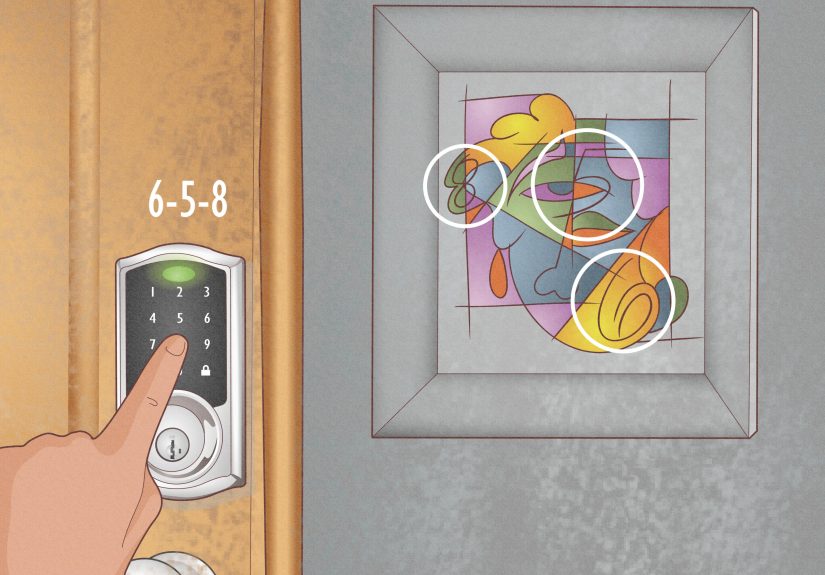
- Painting Reveal. Hang artwork with symbols hidden in the brushwork. A magnifier or clue sheet helps players spot the meaningful details.
- False Drawer Bottom. A desk or chest contains a hidden compartment that reveals a map fragment, key, or cipher strip.
- UV Message Hunt. Invisible ink reveals words, arrows, or numbers when players shine a blacklight on walls, props, or objects.
- Mirror Message. Write a clue backward so it only makes sense when viewed in a mirror. It is simple, classic, and still gets a satisfying grin.
- Magnet Fishing. A clue falls into a grate or narrow pipe, and players must retrieve it with a magnet tool.
- Map Pin Trail. A wall map includes marked locations; the order of the pins leads to numbers, letters, or a route-based code.
- Label Mismatch. Several jars, files, or vials are mislabeled. The correct arrangement reveals the next clue.
- Hidden in Costume. A coat pocket, pirate hat lining, or mannequin sleeve hides an essential item players must think to check.
- Layered Envelope Search. Players find one envelope that points to a second hidden container, then a third, building a breadcrumb trail.
- Dust Pattern Discovery. A clean shape in a dusty area shows that an object is missing, sending players to search for the missing piece.
- Window Message. A transparent overlay placed against a window or image lines up to reveal letters, symbols, or coordinates.
- Jigsaw Clue Card. Small puzzle pieces hidden around the room form a complete instruction or image when assembled.
- Nested Boxes. One unlocked box contains a smaller locked box, creating anticipation and delightful paranoia.
Codes, Ciphers, and Language-Based Puzzles
- Caesar Shift Cipher. Players find a wheel or clue indicating the alphabet shift needed to decode a secret message.
- Morse Code Flash. A blinking lantern, radio pulse, or tapped sequence communicates a word or number string.
- Acrostic Clue. The first letter of each line in a poem, manifesto, or diary entry spells the instruction players need.
- Phone Keypad Puzzle. Words convert into numbers using an old-school phone keypad chart, producing a lock code.
- Riddle Chain. Solving one riddle reveals an object in the room, and that object leads to the next riddle.
- Crossword Lock. A mini crossword fills in a final answer word that opens a directional or word lock.
- Synonym Swap Message. A note uses unusual wording, and players must match synonyms from a clue list to identify the real instruction.
- Codebook Puzzle. A page number, line number, and word number system pulls hidden text from a specific book or document.
- Anagram Cabinet. Rearranging scrambled letters reveals the proper object name or passphrase.
- Foreign Phrase Decoder. A simple translation key converts symbols or basic words into English, fitting a spy or museum theme.
- Homophone Trick. A spoken clue points to a word that sounds like another word, leading players toward the right prop.
- Pigpen Cipher Note. A symbol-based message feels mysterious without being impossible, especially with a hidden key nearby.
- Invisible Punctuation. Missing commas, periods, or pauses change the meaning of a message and reveal the real answer.
- Typewriter Imprint. Pressure marks left on paper reveal text from a previously typed message when players shade over it with pencil.
- Mad Libs Logic. Fill-in-the-blank clues solved from context produce a final phrase or code.
Logic, Sequencing, and Pattern Puzzles
- Chessboard Coordinates. A puzzle references board positions that translate into letters, symbols, or drawer numbers.
- Color Order Challenge. Players identify the correct sequence of colored objects based on a clue story or visual hierarchy.
- Domino Match. Domino values must be matched to another clue source to reveal a numerical combination.
- Sudoku Shortcut. A mini grid puzzle hides a lock code in specific highlighted squares.
- Pattern Tile Wall. Missing or movable tiles must be arranged to complete a symbol pattern.
- Logic Grid Mystery. Players solve a compact who-did-what puzzle, and the result indicates the correct key, drawer, or suspect file.
- Calendar Calculation. Dates, weekdays, and recurring events combine to generate a meaningful number.
- Sequence of Sizes. Arrange props from shortest to tallest, lightest to heaviest, or oldest to newest to get the answer.
- Constellation Connection. Dots on the wall connect into a star pattern that points players toward letters or a hidden latch.
- Musical Notes to Numbers. Basic note positions on a staff correspond to a code once players locate the reference chart.
- Shadow Alignment. A light source and object placement create a shadow that forms a symbol or arrow.
- Tangram Figure. Reassemble shapes into a silhouette matching something in the room, which then reveals the next target.
- Weight-Balance Puzzle. Place the right objects on a scale to unlock a compartment or reveal a clue.
- Directional Maze. A tabletop maze or map route spells out letters depending on left-right turns.
- Prime Number Choice. Only certain numbered drawers, lockers, or switches matter, based on a math clue that stays simple and fair.
Physical, Sensory, and Interactive Puzzles
- Magnetic Key Maze. Players guide a hidden metal piece through a maze from outside the box.
- Pressure Plate Team Puzzle. Multiple players must stand on marked spots at the same time to trigger the next step.
- Water Reflection Clue. A message is only readable when reflected on water or seen through a transparent container.
- Sound Matching. Players hear several tones and must reproduce the pattern on bells, buttons, or pipes.
- Scent Identification. Carefully labeled fragrance jars correspond to clues elsewhere in the room. Keep it mild, safe, and optional.
- Texture Recognition. Players reach into mystery boxes to identify shapes or objects by touch alone.
- Laser and Mirror Redirect. A beam must be bounced onto a target to reveal a clue or activate a mechanism.
- Cryptex Finale. A dramatic cylindrical lock opens only when players discover the correct word or phrase.
- Slide Puzzle Panel. Rearranging tiles reveals a hidden image, message, or keyhole.
- Mechanical Gear Puzzle. Interlocking gears must be placed in the right order to rotate a mechanism and open a compartment.
- Periscope Peek. Players use a viewing device to see a clue hidden above eye level or around a corner.
- Fishing Pole Retrieval. A small object in a narrow gap can only be lifted with a hook tool and steady teamwork.
- Temperature Trick. A clue appears when a metal plate is warmed by hand or chilled safely with a prop pack.
- Balance Board Code. Players tilt a board to guide a ball toward holes marked with numbers in the correct sequence.
- Soundproof Split-Team Puzzle. One player sees symbols while another hears instructions, forcing communication to bridge the gap.
Meta Puzzles, Teamwork Challenges, and Big Finishers
- Collect-and-Combine Puzzle. Several earlier puzzle answers combine into one final code, rewarding players for staying organized.
- Role-Specific Clues. Different players receive different pieces of information at the start, so collaboration becomes mandatory.
- Timed Reset Decision. Players must choose one of several actions before a countdown ends, adding pressure without adding unfairness.
- Villain Diary Meta. Random diary pages gathered throughout the game reveal one hidden instruction when ordered correctly.
- Symbol Translation Wall. Symbols found across the room finally map to letters on one master board.
- Passphrase Call-and-Response. One clue gives the question, another gives the answer, and speaking both unlocks a theatrical response.
- Team Assembly Mechanism. Players must physically combine separate puzzle pieces from around the room into one operating machine.
- Mismatched Evidence Board. Players link photos, receipts, names, and strings to identify the culprit or target location.
- Puzzle Within a Puzzle. A solved puzzle reveals that the arrangement of its solution is itself another clue.
- Light-Up Constellation Finale. Insert correct pegs or bulbs into a panel to activate a satisfying endgame effect.
- Hidden Message from First Answers. The first letters of earlier solutions form a secret final word.
- Cooperative Lock Turn. Two or three locks must be opened in the right sequence by different players working together.
- Story Choice Ending. Players decide which final object or code to use, and the “right” narrative choice determines success.
- Map Overlay Meta. Transparent clue sheets gathered throughout the room stack together to reveal a final target.
- The Fake Ending. Players think they have escaped, then discover one last hidden puzzle that produces the real finale and the loudest laugh in the room.
How to Choose the Right Puzzle Ideas for Your Room
Not every clever idea belongs in every game. If you are building an escape room for families, use intuitive puzzles, tactile props, and quick wins early. If your audience is more experienced, add layered metas, decoy information, and multi-step connections. A horror room may lean into darkness, audio cues, and tension. A classroom room might favor vocabulary, sequencing, and clue trails over lock-heavy mechanics. A party room should keep the energy high and the dead ends low.
A useful rule is this: every puzzle should answer one of three questions. What do we know? What do we need? What can we interact with right now? If players cannot answer any of those, the room feels muddy. If they can answer all three, the game feels fair, even when the puzzle is tough.
Also, do not underestimate presentation. The same basic lock code becomes far more memorable when hidden in a captain’s log, projected through a lantern, or triggered by aligning star charts. In escape room game design, props and story are not decorations sitting politely in the corner. They are part of the puzzle language.
Common Mistakes to Avoid
- Too many similar puzzles: Five number locks in a row feels like paying taxes in costume.
- Outside knowledge requirements: Players should not need a chemistry degree, ancient Latin, or an unhealthy relationship with Roman emperors.
- Poor clue visibility: If the puzzle is clever but no one can see it, it becomes furniture.
- No payoff: A difficult puzzle should unlock something emotionally or physically satisfying.
- Broken pacing: Scatter easy, medium, and hard moments so the room breathes.
Final Thoughts
The best escape room puzzle ideas challenge players without making them miserable, surprise them without confusing them, and create memorable teamwork moments that people talk about all the way home. A strong room is not just a bundle of riddles and locks. It is a guided adventure where every clue feels intentional and every solution feels earned.
So whether you are building a pirate treasure hunt, a haunted manor mission, a spy thriller, or a goofy at-home game involving suspiciously important soup cans, start with variety, keep the logic clear, and let the story steer the design. If your players laugh, argue, high-five, and dramatically whisper, “Wait, I think I’ve got it,” you are doing something right.
Experience Notes: What These Puzzle Ideas Feel Like in Real Play
There is a huge difference between reading a list of puzzle ideas and watching those ideas come alive when real players enter a room. On paper, a hidden-compartment desk or Morse-code lantern seems straightforward. In actual play, those moments become tiny emotional events. Someone spots a strange scratch mark on the wood. Another person says the drawer sounds hollow. A third person accidentally becomes the hero by pressing the one object everyone else ignored. Suddenly the room has energy. That is why escape rooms are so addictive: every puzzle is also a social scene.
One of the most satisfying experiences is seeing a team realize that the room is fair. At first, players tend to poke everything like raccoons with a deadline. Then they begin to understand the design language. They notice repeated symbols, consistent color coding, and the fact that the weird poem on the wall is not there because the designer recently fell in love with rhyming. Once that trust clicks into place, the entire experience changes. Players stop guessing and start thinking. The room becomes less about panic and more about momentum.
Physical puzzles create a special kind of excitement because they are visible and theatrical. A mirror alignment, gear mechanism, or laser-and-mirror challenge gives the room movement. People gather around. They shout directions. They argue about angles with the confidence of people who absolutely do not know what angle they mean. Then the beam finally hits the target and the mechanism responds. That payoff feels bigger than the puzzle itself because the whole team sees it happen at once.
Word and logic puzzles deliver a different pleasure. They are quieter, often solved by one or two people who suddenly go from confused to triumphant in the span of five seconds. You can almost hear the mental click. A codebook message, acrostic, or logic grid rarely looks flashy, but these puzzles give smart players a chance to shine. In well-balanced rooms, that matters. The strongest experiences spread victory around the table, so the observant player, the riddle-lover, the prop tinkerer, and the chaos goblin all get at least one glorious moment.
For DIY creators, the most memorable lesson is that players care less about expensive materials than about clean design. A cheap lockbox with a brilliant clue path beats a fancy prop with muddy logic every time. Household items can become surprisingly immersive when they are framed by story. A tea tin becomes contraband. A bookshelf becomes an archive. A child’s puzzle box becomes a cursed artifact. Theme does heavy lifting, and imagination is much cheaper than custom carpentry.
The biggest thrill, though, comes from the final minutes. That is when puzzle ideas stop feeling separate and start feeling connected. Players gather loose answers, combine symbols, re-read strange notes, and realize the room has been building toward one larger reveal. When that final lock opens, it is not just relief. It is closure. It feels like the room kept a promise. And when a room can make players feel smart, amused, slightly dramatic, and deeply invested in a made-up mission involving spies, ghosts, or stolen jewels, that is not just good puzzle design. That is excellent entertainment.





 Close
Close