
Table of Contents >> Show >> Hide
- Before You Pick a Plan: Three Fast Decisions That Save Your Season
- Plan #1: The “Beginner’s Win” 4×8 Raised Bed (Fresh Meals, Low Drama)
- Plan #2: The 4×4 Square-Foot “Salad Bar” Garden (Maximum Output, Minimum Space)
- Plan #3: The Patio & Balcony Container Plan (No Yard, No Problem)
- Plan #4: The 10×20 “Family Staples” Row Garden (Feed People, Not Just Your Instagram)
- Plan #5: The “Spring + Fall Bonus” Cool-Season Intensive Bed (Harvest Twice, Brag Forever)
- Plan #6: The “Three Sisters + Pollinator Border” Garden (Classic Companion Planting, Modern Results)
- Universal Upgrades That Make Any Plan Work Better
- Conclusion: Pick One Plan and Start This Week
- +: The “Real-Life” Experience of Growing Your Own Food
If you’ve ever bought a $6 “organic” bunch of basil that turned into green slime by the time you got home, welcome. A vegetable garden is basically a tiny, polite rebellion: fresher food, fewer grocery trips, and the smug satisfaction of saying, “Oh this? I grew it.”
The trick is that gardens don’t fail because you picked the “wrong” tomato variety. They fail because the plan was basically: “I’ll put stuff… somewhere… and nature will do the rest.” (Nature heard that and laughed.) So let’s give you real, workable layoutssix of themranging from a simple raised bed to a full-on “feed the household” rotation plan, with enough flexibility to fit most U.S. climates.
Before You Pick a Plan: Three Fast Decisions That Save Your Season
1) Start smaller than your ambition
New gardeners tend to build the agricultural equivalent of a marathon plan that starts with “run 26.2 miles tomorrow.” A compact garden (even one 4×8 bed) is easier to water, weed, and actually enjoy. You can always expand next year and you’ll expand smarter after you learn what you truly eat (and what you only think you eat).
2) Put the garden where you’ll actually care for it
Full sun is ideal for most vegetables, but “full sun” doesn’t matter if the garden is tucked behind the shed where you forget it exists. Choose a spot with easy water access, good drainage, and enough space to move around comfortably. If you’re building multiple beds, plan paths that are wide enough for humans, hoses, and the occasional wheelbarrow that you will definitely overfill.
3) Know your timing (zone helps, but frost dates run the show)
USDA hardiness zones are great for understanding cold limits and planning perennials, but most vegetables are annuals that revolve around frost dates and seasonal temperature swings. Use your local last/first frost as your “go” signal for warm-season crops (tomatoes, peppers, squash), and lean on cool-season windows for greens and roots (lettuce, peas, carrots). When in doubt: plant cool-season earlier, warm-season later.
Plan #1: The “Beginner’s Win” 4×8 Raised Bed (Fresh Meals, Low Drama)
Best for: First-time gardeners who want reliable harvests and minimal decision fatigue.
Space: One 4×8 raised bed (or an in-ground rectangle the same size).
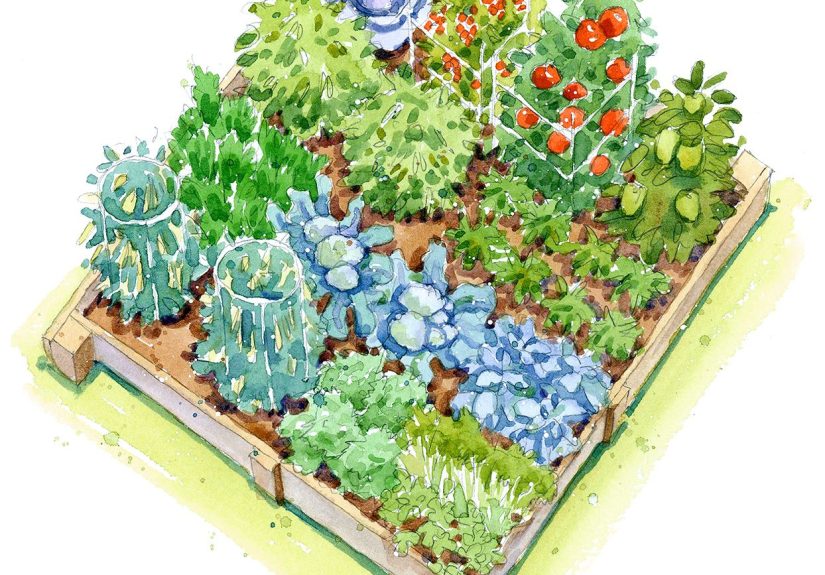
Layout idea (divide into 8 one-foot columns x 4 one-foot rows)
Key: T = tomato (staked/caged), B = basil, P = pepper, O = onion/scallion, L = lettuce (succession), C = carrot, H = herb mix (parsley/cilantro), R = radish (quick filler).
How it works
- Top row: Fruiting crops (tomatoes/peppers) at the back/north side so they don’t shade everything.
- Middle: Salad and root crops that like steady moisture and can be replanted.
- Edges: Herbs and quick growers to keep the bed “productive” even while bigger plants mature.
Planting notes (aka how to avoid rookie heartbreak)
- Give tomatoes support on day one. Waiting until “they get big” is how you end up wrestling a leafy octopus.
- Plant lettuce and radishes in small batches every 1–2 weeks for a steady harvest (hello, succession planting).
- Carrots prefer consistent moisture early on; a light mulch layer helps keep the surface from crusting.
What you’ll harvest: A steady mix for weeknight mealssalads, tacos, pasta sauces, and the sacred summer BLT.
Plan #2: The 4×4 Square-Foot “Salad Bar” Garden (Maximum Output, Minimum Space)
Best for: Small yards, urban homes, and anyone who loves order, grids, and the feeling of being a garden engineer.
Space: One 4×4 raised bed (16 squares).
Layout idea (16 one-foot squares)
Why this plan is sneaky-good
Square-foot style encourages proper spacing and makes succession planting ridiculously easy: when a square finishes, it gets replanted. You’re basically running a tiny, delicious conveyor belt.
Succession strategy
- Early season: lettuce, spinach, arugula, radishes, carrots, beets.
- As it warms up: swap bolting greens for beans, basil, or compact cucumbers on a trellis.
- Late summer/fall: re-seed cool-season greens for a second wave of harvest.
Pro tip: Take a photo of the bed the day you plant. It becomes your “what on earth is this?” reference two weeks later when everything sprouts and looks identical.
Plan #3: The Patio & Balcony Container Plan (No Yard, No Problem)
Best for: Apartments, patios, renters, and anyone who wants fresh food without negotiating with a lawn.
Space: 6–10 containers + optional vertical trellis.
Container shopping list (practical sizes)
- 1–2 large fruiting containers: 5-gallon minimum (bigger is better) for tomatoes or peppers.
- 2 medium containers: 3–5 gallons for herbs, green onions, or compact eggplant.
- 2–4 window boxes or shallow pots: lettuce, arugula, spinach (cool-season favorites).
- 1 trellised container: cucumbers or pole beans if you can go vertical.
A simple “bistro garden” planting plan
- Tomato pot: one dwarf/cherry tomato + basil tucked at the edge.
- Pepper pot: one pepper plant + a couple scallions around the rim.
- Greens boxes: mixed lettuces + arugula (seed a small strip every 10–14 days).
- Herb pot: parsley + cilantro (and accept that cilantro has a dramatic relationship with heat).
- Trellis pot: cucumber or pole beans for steady snacking.
Container reality (the good and the spicy)
Containers dry out faster than in-ground bedsespecially in summer. The upside is you can control soil quality and move pots for better sun. The “spicy” part is watering. If you travel a lot, a simple drip line or self-watering setup is basically marriage counseling for you and your plants.
Plan #4: The 10×20 “Family Staples” Row Garden (Feed People, Not Just Your Instagram)
Best for: Bigger yards and gardeners who want storage crops, real volume, and the option to preserve food.
Space: About 200 square feet (10×20), in rows or wide rows.
Core crops (high return on effort)
- Potatoes or sweet potatoes: bulk calories, satisfying harvest.
- Beans: reliable producers and great for succession planting.
- Summer squash + cucumbers: fast yield (also fast to take over your life if not trellised).
- Onions/garlic: pantry staples that feel like wizardry when homegrown.
- Tomatoes/peppers: because summer tastes like tomatoes.
A simple 4-block layout (rotate each year)
Why rotation matters
Rotating plant families helps reduce the buildup of pests and diseases and can balance nutrient demands over time. You don’t need a perfect four-year spreadsheet (unless that’s your love language), but you should avoid planting the same family in the same spot year after year.
Bonus move: Keep a simple garden map on your phone. Future-you will thank present-you. Present-you will ignore this advice once. Future-you will then become very persuasive.
Plan #5: The “Spring + Fall Bonus” Cool-Season Intensive Bed (Harvest Twice, Brag Forever)
Best for: Gardeners who want long seasons, steady greens, and fewer “melted lettuce” tragedies.
Space: One 4×8 bed (or equivalent), focused on cool-season crops and quick turnover.
Layout idea (cool-season mix with repeat sowing)
- Section 1: Spinach + leaf lettuce (succession sow every 1–2 weeks).
- Section 2: Carrots + beets (thin for baby roots; replant gaps with radishes).
- Section 3: Kale or chard (long producers that anchor the bed).
- Section 4: Snap peas on a trellis early; replace with bush beans as heat arrives.
How to make it work in most U.S. regions
- Plant as soon as soil can be worked for spring greens and peas.
- When summer heat starts pushing greens to bolt, swap sections to beans, basil, or compact cucumbers.
- Late summer, reseed greens for fall harvest. Fall gardens are often easier: fewer pests and happier lettuce.
Why this plan feels magical: It turns one bed into multiple seasons of food. You’re not growing “a garden.” You’re running a schedule.
Plan #6: The “Three Sisters + Pollinator Border” Garden (Classic Companion Planting, Modern Results)
Best for: Gardeners who like traditional systems, natural trellises, and a garden that looks alive.
Space: A 10×10 area (or one large bed) plus a small border strip.
The Three Sisters mound pattern
- Corn goes in first as the central support.
- Pole beans follow once corn is established (they climb and contribute nitrogen).
- Squash goes around the base (big leaves shade soil and suppress weeds).
Pollinator border (the “garden bodyguards” strip)
Along one edge, plant a narrow band of flowers and herbs: marigolds, zinnias, dill, basil, and chives. The goal isn’t magic plant spellsit’s diversity. A variety of plants can support beneficial insects and make pest outbreaks less of a single-crop buffet.
Keep companion planting realistic
Companion planting has real benefits (habitat for beneficial insects, better ground cover, smarter use of space), but it’s not a force field. Think of it as “stacking the odds,” not “banishing all pests forever.”
Universal Upgrades That Make Any Plan Work Better
Go vertical whenever you can
Trellises are basically free real estate. Cucumbers, pole beans, and peas love climbing. Vertical growth improves air circulation, saves space, and makes harvest feel less like a scavenger hunt.
Feed the soil, not just the plants
Mix in compost, avoid compacting beds by stepping in them, and mulch to reduce moisture loss. Healthy soil is the one “ingredient” you can’t fake later.
Plan for water like you plan for Wi-Fi
Inconsistent watering causes bitter lettuce, split tomatoes, and general plant angst. Use mulch, water early, and if possible, set up drip irrigation. Your future harvest is basically a hydration subscription.
Make a tiny calendar
Write down three dates: “cool-season start,” “warm-season after frost,” and “fall re-seed.” That’s it. You don’t need a 47-tab spreadsheetunless you enjoy that, in which case I respect your power.
Conclusion: Pick One Plan and Start This Week
The best vegetable garden plan isn’t the one with the most clever diagramit’s the one you’ll actually plant, water, and keep harvesting from. Choose a plan that matches your space and your eating habits, start small, and use simple upgrades like succession planting, trellising, and basic rotation to keep the garden productive.
In a few months, you’ll be making a salad from your own lettuce and acting like you invented agriculture. Honestly? You’ve earned it.
+: The “Real-Life” Experience of Growing Your Own Food
Here’s what most people don’t tell you: the first big harvest feels less like “I grew vegetables” and more like “I accidentally joined a produce-of-the-month club… and I’m the supplier.”
Week one is pure optimism. You lovingly plant seeds, pat soil like it’s a baby’s forehead, and promise yourself you’ll water consistently. Then week two arrives with its plot twist: everything sprouts at once, and suddenly you’re staring at a bed of tiny green threads wondering which are carrots and which are weeds that just earned tenancy rights. (Pro tip: take that planting-day photo. Your memory will betray you.)
Somewhere in week three, you’ll discover the garden’s favorite hobby: growing while you aren’t looking. You’ll check in the morning and think, “Nice, the tomatoes are doing fine,” then return after a long weekend and find a plant that has doubled in size and is now leaning aggressively into the path like it pays rent.
This is also when you learn that watering isn’t just about “more water = more happy.” Too much water turns soil into a swampy soap opera. Too little water makes lettuce bitter and basil dramatic. The sweet spot is consistency: deep watering, mulch to keep moisture stable, and the humility to admit that July heat doesn’t care about your schedule. Container gardeners learn this lesson fastestbecause containers will politely dry out and then immediately stop being polite.
Then come the pests. Not always the cinematic kind, either. Sometimes it’s one hornworm that looks like it could bench-press a small dog. Sometimes it’s aphids throwing a house party on your kale. And sometimes it’s a squirrel that waits until your tomato is perfectly ripe, takes one bite, and leaves it behind like a tiny food critic. This is where diversity helps: mixing plants, planting herbs and flowers, and rotating families next year makes your garden less predictable to pests. It doesn’t make it invinciblebut it does make it less of an open buffet.
The emotional roller coaster continues with “bolting”the moment your lettuce decides it’s too hot and rushes into flowering like it has someplace better to be. The first time, it feels personal. The second time, you plan for it: you sow smaller batches, you harvest earlier, and you swap in warm-season crops when the weather flips. Succession planting stops being “extra” and becomes your secret weapon. It’s the difference between one big harvest that overwhelms you and a steady stream that actually matches how you eat.
And then, the payoff: the first meal built around what you grew. You wash a handful of greens, slice a tomato that actually smells like a tomato, and realize grocery-store produce has been gaslighting you for years. You’ll stand there in the kitchen thinking, “So this is what it’s supposed to taste like.”
The most experienced gardeners aren’t the ones who never failthey’re the ones who adjust. They keep a simple map, note what worked, rotate crops, and tweak the plan. Your garden becomes less of a one-time project and more of a relationship: you learn each other’s quirks, you compromise, and sometimes you accept that cilantro is going to do what cilantro does. Next season, you’ll plant smarter, waste less space, and harvest more. That’s the real magicprogress, not perfection.






 Close
Close