
Table of Contents >> Show >> Hide
- Before You Build: The 60-Second Plant Stand Reality Check
- Idea #1: Mid-Century Round Stand (Tapered Legs or Hairpin Legs)
- Idea #2: Leaning Ladder Plant Stand (Vertical, Space-Saving, and Dramatic)
- Idea #3: Modular Cinder Block + Wood Plank Stand (Indestructible, Adjustable, Weirdly Chic)
- Idea #4: Stacked Wooden Crate Plant Stand (Flip, Screw, Repeat)
- Idea #5: Tomato-Cage Column Stand (or Stone-Filled “Gabion” Look)
- Idea #6: Copper Pipe + Wood Shelf Stand (Modern, Lightweight, and Customizable)
- Styling Your Plant Stands Like a Pro (No Fancy Budget Required)
- Maintenance & Safety: Keep Your Stand (and Your Plants) Going Strong
- FAQ: Quick Answers for DIY Plant Stand Builders
- DIY Plant Stand Experiences: 10 Things I Learned the Fun Way (Extra )
- 1) “Level” is not a vibe, it’s a measurement
- 2) Wet soil is heavier than your optimism
- 3) Drip trays are cheaper than regret
- 4) Tall stands need anchorsespecially with pets
- 5) Sanding is the difference between “handmade” and “ouch”
- 6) Paint hides crimes; stain reveals them
- 7) Modular stands are a kindness to your future layout changes
- 8) The best plant stand is the one you can actually reach
- 9) A “test push” saves disasters
- 10) Your plants don’t care if the stand is trendybut you will
- Conclusion
- SEO Tags
If your plants are currently living the “on the floor, near the outlet, next to the sad dust bunny” lifestyle,
it’s time for an upgrade. A good DIY plant stand does three things: lifts your greenery into better light,
makes your space look intentionally styled (even if your laundry chair says otherwise), and keeps pots away from
curious pets, clumsy feet, and the occasional “oops, I overwatered” situation.
Below are six creative DIY plant stand ideaseach with practical build notes, styling tips, and small reality checks
so your finished stand looks like a designer piece, not a wobbly science project. These projects range from beginner-friendly
weekend wins to “I own a drill and I’m not afraid to use it.”
Before You Build: The 60-Second Plant Stand Reality Check
1) Weight and stability beat aesthetics (every time)
A plant stand is basically a tiny stage. The star (your pot) is heavy, top-heavy when watered, and occasionally dramatic.
Choose a base that won’t tip if the pot gets nudged or the soil shifts. If you’re displaying a large ceramic planter,
prioritize a wider footprint or add weight low on the stand.
2) Plan for waterbecause plants do plant things
Use trays, saucers, or a waterproof top if you’re going indoors. If you’re building a wood plant stand, sealing it
(polyurethane, outdoor spar varnish, or a water-resistant finish) helps prevent rings, swelling, and “mystery stains.”
3) Match the stand to the plant’s growth habit
Upright plants (snake plant, rubber tree) look great elevated. Trailing plants (pothos, philodendron) shine when the stand
lets vines spill. And thirsty plants? Put them where you can reach themfuture you will be grateful.
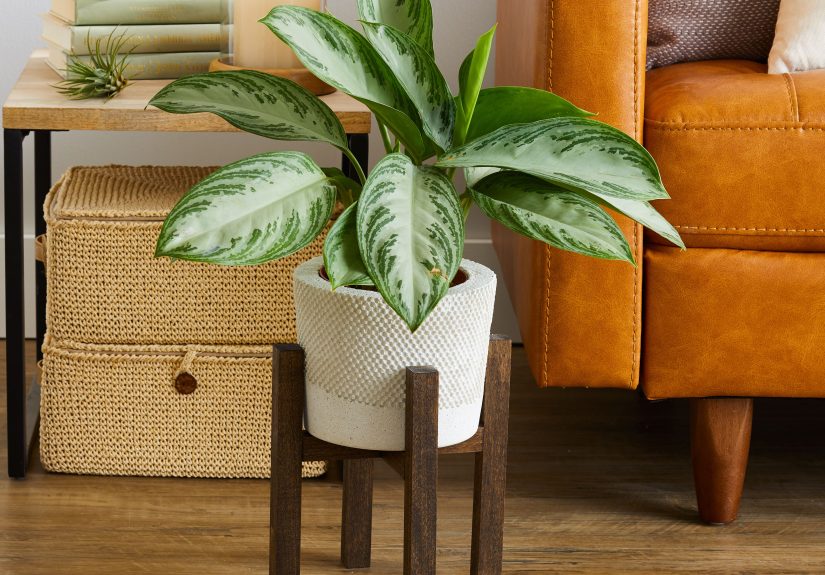
Idea #1: Mid-Century Round Stand (Tapered Legs or Hairpin Legs)
This is the classic “I bought this at a boutique” lookexcept you built it in your own home while wearing socks that don’t match.
A simple round top plus three or four legs creates a clean, modern indoor plant stand that works in nearly any room.
Why it works
- Minimal materials, maximum style.
- Easy to customize: stain for warm wood tones or paint for a modern pop.
- Perfect for corners, windows, and awkward “what goes here?” spots.
Materials
- Wood round (or cut a circle from plywood)
- 3 or 4 furniture legs (tapered or hairpin legs)
- Screws + mounting plates (often included with legs)
- Sandpaper, wood stain/paint, and a sealer
- Optional: rubber feet or felt pads
Build steps
- Size the top: Make the circle about 4–5 inches wider than your pot’s base for a balanced look.
- Sand and finish: Smooth edges and apply stain/paint. Seal it if the plant will be watered on the stand.
- Mark leg placement: Keep legs evenly spaced and set in from the edge for stability.
- Attach legs: Use mounting plates and screws. Tighten everything like you mean it.
- Test stability: Push gently from different angles. If it rocks, adjust or add rubber feet.
Pro tips
- Three legs won’t wobble on uneven floors as easily, but four legs can hold heavier pots if the base is sturdy.
- If you choose hairpin legs, add a non-slip pad under the pot to prevent sliding.
- For a designer look, pick a matte finish and keep hardware hidden.
Idea #2: Leaning Ladder Plant Stand (Vertical, Space-Saving, and Dramatic)
A ladder plant stand is basically a multi-tier plant stand that pretends it’s casual. It’s great for small spaces because
it uses vertical real estate instead of hogging floor space. Plus, your plants get a “tiered concert seating” arrangementeveryone can be seen.
Why it works
- Ideal for apartments and narrow walls.
- Creates instant height variation for a styled plant display.
- Can be built from basic lumber or repurposed from an old ladder.
Materials
- Two long boards for side rails (or an existing wooden ladder)
- Shelf boards (2–4 tiers depending on height)
- Screws, drill, level
- Wall anchor/anti-tip strap (strongly recommended)
- Finish: paint/stain + sealer
Build steps
- Decide your height: Taller looks dramatic, but keep the base footprint wide enough.
- Cut shelves: Make shelves deeper at the bottom and narrower near the top for visual balance.
- Attach shelves: Screw into side rails, checking level as you go.
- Sand and finish: Seal if it’s near a humid window or outdoors.
- Secure the top: Use an anti-tip strap or anchor to a studespecially if pets or kids are around.
Styling move
Put the biggest pot on the lowest tier, medium plants in the middle, and trailing plants on the top tiers so vines can spill down.
This makes the whole piece look “intentional” instead of “I stacked plants like groceries.”
Idea #3: Modular Cinder Block + Wood Plank Stand (Indestructible, Adjustable, Weirdly Chic)
Cinder blocks aren’t just for building things that look like they belong behind a warehouse. With paint (or left raw for an industrial vibe),
they become a sturdy, modular plant shelf system. This is an excellent DIY outdoor plant stand idea, but it works indoors too if you add floor protection.
Why it works
- Holds heavy pots without flinching.
- Adjustable layout: stack, rotate, and rearrange whenever your plant collection multiplies (it will).
- Budget-friendly and fast to assemble.
Materials
- Cinder blocks (quantity depends on design)
- Wood planks (sanded boards or finished shelves)
- Optional: masonry paint, sealant, and non-slip shelf liner
- Felt pads or rubber matting for indoor floors
Build steps
- Sketch your layout: Decide how many tiers and how wide you want it.
- Protect surfaces: Add pads under blocks if indoors.
- Stack blocks: Orient holes horizontally to “cradle” boards, or vertically for a column look.
- Slide in boards: Use thicker boards if you’re spanning a long distance.
- Finish (optional): Paint blocks for a modern look and seal wood for water resistance.
Pro tips
- Keep the heaviest plants low for a stable center of gravity.
- Add a thin rubber mat under pots to prevent sliding and catch minor drips.
- Try a single corner configuration for a corner plant stand that looks custom-built.
Idea #4: Stacked Wooden Crate Plant Stand (Flip, Screw, Repeat)
If you like the cozy “farmhouse meets greenhouse” aesthetic, crates are your best friend. This stand can be one tall column,
a stepped arrangement, or a wall of cubbies for plants, books, and “I swear I’m going to propagate these someday” jars.
Why it works
- Easy to build and easy to expand.
- Perfect for grouping plants by light needs.
- Looks great painted, stained, or left natural.
Materials
- Wooden crates (new or repurposed)
- Screws + drill (or brackets for extra strength)
- Sandpaper, paint/stain, optional casters
- Plastic liners or trays (for indoor drip control)
Build steps
- Pick your orientation: Turn crates sideways for shelves or upright for cubbies.
- Sand rough spots: Save your hands from splinters and your sweaters from snagging.
- Stack and test: Arrange until it looks balanced and stable.
- Attach securely: Screw crates together from inside corners or use small brackets.
- Add mobility (optional): Casters make it easy to rotate plants toward light.
Pro tips
- Line shelves with removable trays so you can water plants in place without panic.
- Mix in a few decorative objects so it looks stylednot like a plant store aisle (unless that’s your dream).
Idea #5: Tomato-Cage Column Stand (or Stone-Filled “Gabion” Look)
This one is fun because it’s an upcycled plant stand idea with real visual punch. A sturdy wire tomato cage can become
a tall stand, and if you want a dramatic outdoor look, you can fill the cage with stones (a gabion-inspired style) for weight and texture.
Either way, it’s fast, surprisingly sturdy, and looks like something you “found at a fancy garden center.”
Why it works
- Quick build, minimal tools.
- Great for porches and patiosespecially when you want height.
- Stone-filled versions are wind-resistant and stable outdoors.
Materials
- Wire tomato cage (heavy-duty if possible)
- Wire cutters (for reshaping), pliers
- Rust-resistant spray paint
- Optional: rope wrap for a rustic look
- Optional: stones + a paver/top plate for a gabion-style build
Build steps
- Shape the cage: Flip it upside down or trim it to your desired height.
- Smooth sharp ends: Bend or file cut wire edges to avoid snags and scratches.
- Paint: Use rust-resistant paint for outdoor durability.
- Add a top: Set a paver, a round board, or a sturdy tray on top as the plant platform.
- Optional upgrade: Fill the cage with stones for weight and a sculptural look.
Where it shines
Use this stand for statement pots near an entryway, or cluster two or three at different heights for a layered outdoor plant display.
It’s especially good for plants that like bright lightbecause porch corners can be surprisingly sunny.
Idea #6: Copper Pipe + Wood Shelf Stand (Modern, Lightweight, and Customizable)
Copper pipe plant stands bring a sleek, modern vibe without needing advanced woodworking. You can build a single stand for one pot,
or create a small frame that supports a shelf. Over time, copper can develop a patinameaning it gets prettier while you do nothing.
(Finally, a DIY project that respects your schedule.)
Why it works
- Clean, modern lines for contemporary spaces.
- Easy to size precisely for your pot and location.
- Looks high-end, especially paired with a simple wood top.
Materials
- Copper pipe + fittings (tees, elbows) sized for your design
- Pipe cutter
- Wood top (optional) or a round tray
- Epoxy/adhesive (optional) and rubber feet
- Optional: clear coat to slow patina
Build steps
- Measure your pot: Build the frame slightly wider than the base for stability.
- Cut pipe pieces: Keep cuts clean and consistent for a professional look.
- Dry-fit first: Assemble without glue to confirm sizing and squareness.
- Secure joints: Some designs rely on tight friction fits; for a permanent stand, use adhesive where appropriate.
- Add the top: Set a wood round or small shelf on top (and seal it if water might touch it).
Pro tips
- Use felt or rubber feet to protect floors and reduce sliding.
- If you want the copper to stay shiny, add a clear coat. If you want it to age naturally, let it live its best life.
Styling Your Plant Stands Like a Pro (No Fancy Budget Required)
Use the “triangle rule” for instant visual balance
Group plants in threes with different heights. For example: a tall plant on a floor stand, a medium plant on a small stool stand,
and a trailing plant on a shelf. This creates a natural, designer-like rhythm without feeling cluttered.
Match materials to your room’s vibe
- Modern: black metal, hairpin legs, clean white pots
- Boho: warm wood, woven baskets, trailing vines
- Farmhouse: crate stands, muted paints, terra-cotta
- Industrial: cinder blocks, raw wood, dark hardware
Don’t forget the light
A plant stand doesn’t create sunlightit just puts your plant closer to it. Before you commit to a “plant throne,”
check the window direction and how far from the glass you’ll be placing the stand.
Maintenance & Safety: Keep Your Stand (and Your Plants) Going Strong
- Seal wood tops: even “careful waterers” spill sometimes.
- Re-tighten screws: wood can shift with humidity; a quick check every few months helps.
- Use anti-tip anchors: especially for tall ladder stands or multi-tier shelves.
- Protect floors: felt pads and drip trays prevent scratches and water stains.
- Mind the load: wet soil weighs more than you think. If it feels sketchy, reinforce it.
FAQ: Quick Answers for DIY Plant Stand Builders
What’s the easiest DIY plant stand for beginners?
A simple mid-century round stand (wood top + legs) or a crate plant stand are beginner-friendly because they require minimal cuts
and straightforward assembly.
What’s the best DIY plant stand for heavy pots?
Cinder block + wood plank stands are excellent for heavy planters. Stone-filled wire/gabion-style stands also offer great stability outdoors.
How do I make an indoor plant stand more water-resistant?
Seal the top surface, use a saucer or tray under pots, and consider a removable waterproof liner. Small habits (like watering in the sink)
also keep stands looking new longer.
DIY Plant Stand Experiences: 10 Things I Learned the Fun Way (Extra )
I used to think DIY plant stands were mostly about aestheticsuntil I watched a perfectly healthy plant do a slow-motion wobble because I
“eyeballed” the leg spacing. Plants are peaceful, but gravity is not. Here are ten real-world lessons that make the difference between a plant
stand you proudly show off and one you quietly rotate to face the wall when company arrives.
1) “Level” is not a vibe, it’s a measurement
A stand can look perfectly straight and still be slightly offespecially if your floors aren’t level (old homes love this prank).
Using a small level while attaching shelves saves you from the “why does every pot lean left?” mystery.
2) Wet soil is heavier than your optimism
The first time I placed a freshly watered plant on a delicate-looking stand, I learned an important truth: water adds weight, and a lot of it.
If your design feels “light,” reinforce it. Add brackets. Use thicker boards. Choose sturdier legs. Your future self will thank you.
3) Drip trays are cheaper than regret
Even if you’re careful, water finds a way. It drips down the side of the pot, it runs off leaves, it sneaks under the base.
A simple tray keeps wood tops from swelling and floors from getting that “why is this sticky?” surprise.
4) Tall stands need anchorsespecially with pets
A ladder plant stand looks amazing until a cat decides it’s a climbing wall or a dog tail sweeps by like a windshield wiper.
Anti-tip straps aren’t overkill; they’re peace of mind.
5) Sanding is the difference between “handmade” and “ouch”
Rough edges catch sleeves, snag towels, and occasionally bite fingers. A quick sanding pass makes your project look more professional
and feel better to use. Also, nobody wants to bleed for a fern.
6) Paint hides crimes; stain reveals them
If your cuts are slightly uneven or your wood has patches, paint is forgiving. Stain is honestsometimes brutally so.
When in doubt, test your finish on scrap first.
7) Modular stands are a kindness to your future layout changes
Today your plants might live by the window. Next month you might rearrange furniture, discover better light, or adopt more plants
(because that’s what happens). Cinder block systems and crate stands adapt easily without requiring a full rebuild.
8) The best plant stand is the one you can actually reach
A stunning corner plant stand is pointless if you avoid watering because it’s awkward to access. Make sure you can lift the pot,
remove a tray, and wipe spills without doing yoga.
9) A “test push” saves disasters
Before placing a plant, I now give every new stand a gentle push from multiple angles. If it rocks, I fix it before adding weight.
It’s a tiny habit that prevents big messes.
10) Your plants don’t care if the stand is trendybut you will
The plant will photosynthesize on a crate, a stool, or a fancy copper frame. The stand is for you: it helps your home feel curated,
cozy, and alive. Pick a style you genuinely like, build it sturdily, and then enjoy the best partwatching your plants thrive on their new stage.
Conclusion
DIY plant stands are one of the fastest ways to make a home feel more designedwithout buying expensive furniture. Whether you go for
a sleek mid-century modern plant stand, a space-saving ladder shelf, a modular cinder block setup, or an upcycled tomato-cage column,
the winning formula is the same: build for stability, plan for water, and style with height variation. Start with one stand, and don’t be surprised
if it turns into three. Plants have a way of recruiting new friends.






 Close
Close