
Table of Contents >> Show >> Hide
You wanted extra pickles. You got extra pancakes. You asked for “dressing on the side,” and your salad arrived looking like it had survived a monsoon anyway. If that feels familiar, welcome to the deliciously chaotic world of misunderstood restaurant orders.
This guide explores the funniest, strangest, and most painfully relatable food order mix-upswhile also unpacking why these mistakes happen in the first place. From drive-thru static and rushed lunch-hour shorthand to app glitches and unclear allergy notes, even a simple meal can become a communication obstacle course. The good news? Most restaurant order mistakes are preventable.
In this article, you’ll get 50 entertaining examples of food orders gone wrong, plus practical food allergy ordering tips, clearer phrasing strategies, and better habits for both diners and restaurants. Whether you’re a customer trying to avoid online food ordering mistakes or a restaurant team reducing drive-thru order errors, this is your playbook for fewer surprises and better bites.
Why “Simple” Orders Get Misunderstood
1) Menu miscommunication is usually tiny, not dramatic
Most ordering problems don’t come from huge mistakes. They come from tiny language gaps: one missing word, one fast mumble, one unclear abbreviation, one modifier buried in a long sentence. “No onions, add mushrooms, sauce on side, gluten-friendly, and half portion” can sound clear in your head and confusing in a noisy kitchen.
2) Speed creates shorthand, and shorthand creates chaos
During rush hours, everyone communicates in compressed code. That shorthand is efficientuntil it isn’t. “No sub” might mean no substitution to one person, and no submarine sandwich to another. “Light ice” can become “no ice” or “extra ice” if a single syllable gets swallowed by headset static.
3) Digital ordering fixed some problems and introduced new ones
Online systems reduce handwriting issues but create new friction: stale menu options, conflicting modifiers, auto-corrections, and out-of-stock items that still appear selectable. Add third-party delivery layers, and your perfectly clear order can be rewritten by three systems before it reaches the kitchen.
4) Safety-related misunderstandings are never funny
Allergy notes, undercooked preferences, and cross-contact concerns require crystal-clear communication. When these details are vague, buried, or misread, the risk jumps. Humor belongs in storytellingnot in safety instructions.
50 Food Orders That Went Spectacularly Sideways
Counter and Table Mix-Ups (1–20)
- Ordered: “Hold the mayo.” Arrived: Extra mayo, plus a pep talk about “staying moisturized.”
- Ordered: “No onions, please.” Arrived: A proud onion mountain with one tomato for moral support.
- Ordered: “Dressing on the side.” Arrived: Dressing on the side… of your shirt, somehow.
- Ordered: “Medium burger.” Arrived: A burger so well done it had retirement plans.
- Ordered: “Light cheese.” Arrived: A mozzarella blizzard visible from space.
- Ordered: “No croutons.” Arrived: Croutons, plus bonus garlic bread confetti.
- Ordered: “Soup and salad combo.” Arrived: Two soups and emotional confusion.
- Ordered: “Sparkling water.” Arrived: Flat water with three cubes and confidence.
- Ordered: “Fries well done.” Arrived: Fries that tasted like toasted bookmarks.
- Ordered: “Eggs over easy.” Arrived: Eggs over hard, overachieving, and overcooked.
- Ordered: “Extra crispy wings.” Arrived: Wings at “archaeological artifact” texture.
- Ordered: “No cilantro.” Arrived: Cilantro in garnish, sauce, and garnish’s garnish.
- Ordered: “Side salad.” Arrived: A full entrée salad large enough to pay rent.
- Ordered: “Chicken sandwich, no bun.” Arrived: Bun, no chicken. Technically symmetrical.
- Ordered: “Pasta al dente.” Arrived: Pasta al “we forgot to boil it all the way.”
- Ordered: “Tacos, corn tortillas.” Arrived: Flour tortillas with confident eye contact.
- Ordered: “Half sweet, half unsweet tea.” Arrived: One fully sweet tea and a shrug.
- Ordered: “Side of ranch.” Arrived: Enough ranch to refinish a deck.
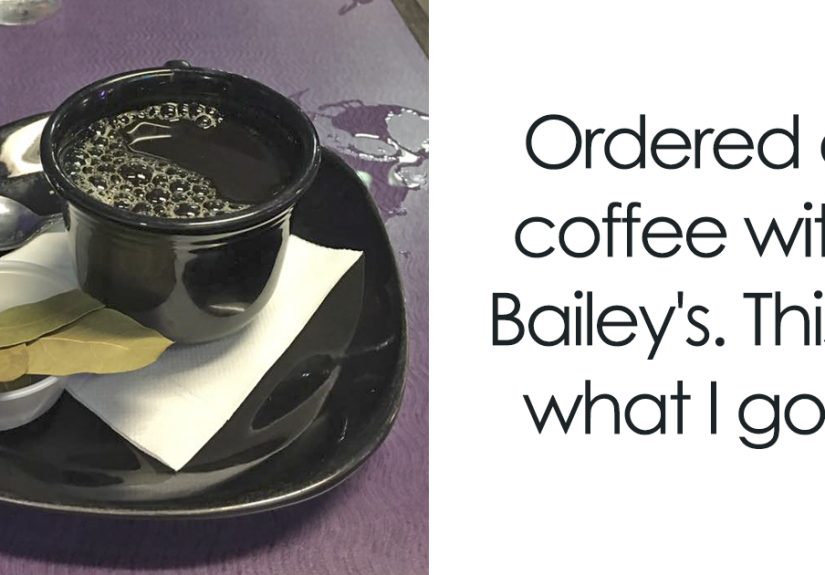
- Ordered: “Decaf coffee.” Arrived: Caffeinated coffee and sudden life clarity.
- Ordered: “Extra napkins.” Arrived: Exactly one napkin folded like origami art.
Drive-Thru and Phone Chaos (21–35)
- Ordered: “Two fish sandwiches.” Arrived: “Two fist sandwiches?” Nobody knew what that meant.
- Ordered: “No pickles.” Arrived: Triple pickles. Possibly a philosophy statement.
- Ordered: “Large fries, no salt.” Arrived: Medium fries, all salt, no apologies.
- Ordered: “Kids meal with apple slices.” Arrived: Kids meal with extra fries and a tiny toy trumpet.
- Ordered: “Iced latte, oat milk.” Arrived: Hot latte, whole milk, and deep irony.
- Ordered: “Combo number six.” Arrived: Number nine because static ate the six.
- Ordered: “Three tacos, no sour cream.” Arrived: Three tacos plus a dairy avalanche.
- Ordered: “Unsweet tea.” Arrived: Sweet tea that could be marketed as syrup.
- Ordered: “A side of gravy.” Arrived: A side of jelly. Breakfast improv edition.
- Ordered: “No whipped cream.” Arrived: Whipped cream tower with architectural integrity.
- Ordered: “Double cheeseburger, plain.” Arrived: Everything on it, including menu optimism.
- Ordered: “Diet soda.” Arrived: Regular soda and a complimentary existential crisis.
- Ordered: “Sauce in the bag.” Arrived: No sauce in bag, all sauce on receipt.
- Ordered: “Please repeat the order.” Arrived: “Pull forward.” A classic cliffhanger ending.
- Ordered: “No ice cream in the shake (allergy).” Arrived: Ice cream shake with a smiley sticker.
App, Delivery, and Allergy Misfires (36–50)
- Ordered: “Extra spicy ramen.” Arrived: Mild broth and an apology from your taste buds.
- Ordered: “Mild curry.” Arrived: Fire alarm-level curry with emotional smoke.
- Ordered: “Add avocado.” Arrived: Avocado charge, no avocado evidence.
- Ordered: “No nuts (allergy).” Arrived: Nuts in garnish because note got truncated.
- Ordered: “Gluten-free crust.” Arrived: Regular crust and a very polite refund email.
- Ordered: “Sauce on side.” Arrived: Sauce integrated into every molecular layer.
- Ordered: “No sesame.” Arrived: Sesame-studded bun that sparkled like confetti.
- Ordered: “Substitute tofu for chicken.” Arrived: Tofu and chicken because system accepted both.
- Ordered: “Family meal, no shellfish.” Arrived: Shrimp side accidentally auto-added from prior order.
- Ordered: “Pickup at 7:30.” Arrived: Ready at 6:45, retired by 7:20.
- Ordered: “Leave at door.” Arrived: Handed to your neighbor’s potted plant.
- Ordered: “No contact delivery.” Arrived: Five phone calls and one doorbell symphony.
- Ordered: “Side of kimchi.” Arrived: Three sides, zero chopsticks, maximum fermentation confidence.
- Ordered: “Vegan burrito.” Arrived: Cheese added by default unless unticked twice.
- Ordered: “Allergy: no dairy, no egg.” Arrived: Correct entrée, unsafe dessert auto-bundled.
How to Avoid Restaurant Order Mistakes
For Diners
- Lead with safety first: If you have an allergy, say it first, then repeat it in plain language.
- Use short modifier blocks: “No onions. Sauce on side. Oat milk.” Three short lines beat one long paragraph.
- Confirm the read-back: Ask the server or cashier to repeat your order before payment.
- Avoid contradictory options: Don’t select “extra sauce” and “sauce on side” unless you truly want both.
- Use order notes carefully: Put critical details in both item-level and overall notes when possible.
- Check before leaving: A 20-second bag check can prevent a 40-minute disappointment.
For Restaurants
- Standardize modifier language: Keep shorthand consistent between front-of-house, kitchen, and apps.
- Separate safety flags: Allergy notes should be visually distinct from preference notes.
- Train for repeat-back: Confirmation scripts reduce menu miscommunication dramatically.
- Audit digital menus weekly: Remove unavailable items and test modifier logic often.
- Use checklist packing: Bagging stations with tick-box receipts reduce missing items.
- Build a recovery protocol: Quick remake + clear apology + safe handling turns chaos into loyalty.
Final Bite
Misunderstood food orders are funnyuntil they’re expensive, time-consuming, or unsafe. The biggest lesson is simple: clarity beats cleverness. The best orders are brief, specific, and confirmed. For diners, that means speaking in clean phrases and double-checking key details. For restaurants, that means better training, cleaner digital flows, and safety-first communication. Fix those, and your next meal will be memorable for the flavornot for the plot twist.
Bonus: 500-Word Experience Journal from the Order Chaos Frontline
I once watched three misunderstood orders happen in six minutes at a busy lunch spot, and it felt like observing a tiny documentary about modern communication. The first customer asked for “a burger, no onions, add grilled onions.” The cashier paused, blinked, and typed with heroic confidence. What arrived was onion-free in theory and onion-heavy in practice, because one note got attached to the bun and the other to the patty. Nobody was wrong on purpose; everyone was moving too fast for nuance.
The second moment was a classic technology trap. A customer placed a pickup order through an app, selected “gluten-free,” and added “extra crispy” in the notes. The kitchen saw the note but not the crust setting because the ticket printer collapsed modifiers into one line. The pizza came out beautiful, wrong, and expensive. The guest stayed calm, the manager remade it, and the team used the mistake as a quick training huddle. I remember that because it showed what good recovery looks like: no blaming, no defensiveness, just fix it fast and fix the workflow afterward.
My favorite story is from a drive-thru lane where a friend asked for “one small iced coffee, no sugar, extra ice.” Between traffic noise and headset crackle, the staff heard “two small hot coffees, extra sugar.” At the window, both sides laughed, corrected it, and moved on. That tiny exchange showed the secret ingredient in service: tone. If either side had gone sharp, a 30-second correction could have become a 10-minute standoff.
I’ve also seen how allergy communication changes the entire rhythm of ordering. One parent at a family restaurant started with, “Hi, my child has a sesame allergy. Could we check the bun and sauce first?” That single sentence was clear, respectful, and specific. The server brought a manager immediately, they reviewed ingredients, and they found a safe option without drama. It took two extra minutes and saved a lot of risk.
Over time, these experiences taught me that misunderstood food orders are rarely about intelligence and almost always about system design. People assume the other person heard every word. They assume software passes every note. They assume “obvious” means universal. In reality, noisy environments, rushed language, and fragmented tech stacks make assumptions dangerous.
My personal rule now is simple: say less, mean more, confirm once. I place one request at a time, in plain language, and I listen for the read-back. If there’s an allergy concern, I say it first and repeat it before checkout. Since doing that, my order accuracy has improved dramatically, and the weirdest thing in my takeout bag is once again just an extra napkin. Honestly, that’s the kind of surprise I can live with.






 Close
Close