
Table of Contents >> Show >> Hide
Old houses are basically history books with floorboards. Peel back one layer of wallpaper, pry up one suspicious plank, or poke around one dusty crawl space, and suddenly you are face-to-face with somebody else’s everyday life from 50, 100, or 200 years ago. That is the irresistible magic of an old home: it never quite finishes telling its story.
And no, the story is not always “you found buried treasure and can now retire to a porch with lemonade.” More often, it is “Congratulations, you found a rusty coal chute, a shoe in the wall, and a note from a previous owner who had better handwriting than you.” Still, those discoveries are exactly what make old houses so captivating. They reveal how people lived, what they feared, what they saved, and what they hid from future generations.
This list rounds up 50 fascinating things people have discovered hidden in old houses, from charming architectural leftovers to downright spooky objects. Some are practical. Some are beautiful. Some are weird enough to make you slowly step away from the plaster. Together, they show that an old house is not just a structure. It is a time capsule with plumbing.
50 Fascinating Hidden Discoveries In Old Houses
Architectural secrets that were hiding in plain sight
- Covered-over fireplaces: Many old homes once had fireplaces in nearly every major room. Renovations often sealed them up, only for homeowners to rediscover brick fireboxes and mantels decades later.
- Original wood floors under carpet: Rip up enough shag carpeting and you may uncover beautifully aged hardwood that has been hiding like a design miracle since the Eisenhower era.
- Conversation pits: Some mid-century homes hid sunken seating areas under later flooring, proving that yesterday’s “dated” feature can become today’s renovation flex.
- Indoor wells: Yes, actual wells. Some older houses were built around or above early water sources, which explains why certain basements feel one part utility room, one part medieval plot twist.
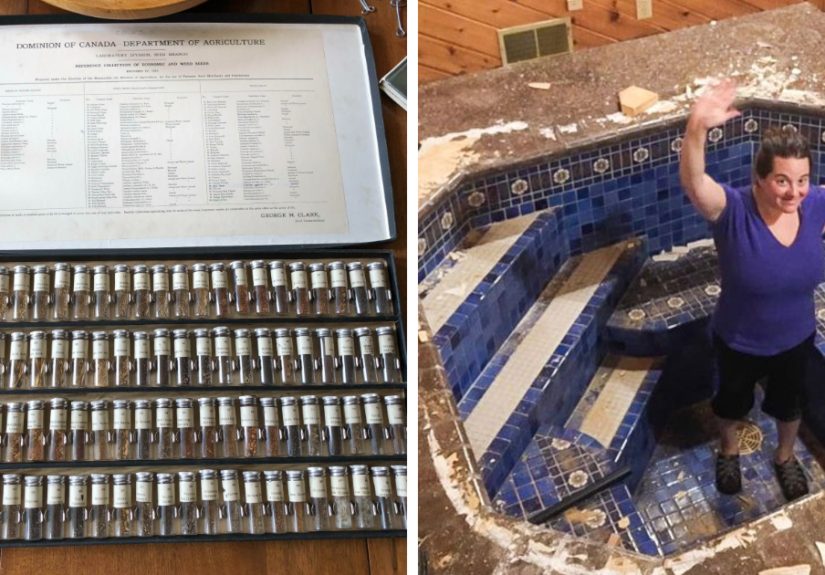
- Covered indoor pools: Every now and then, a homeowner pulls up floorboards and discovers a forgotten pool below. That is not a renovation surprise; that is a full-blown cinematic reveal.
- Hidden staircases: Service stairs, attic stairs, and narrow back staircases were often closed off over time, then rediscovered when walls came down.
- Original dormer framing: During attic renovations, some owners find the bones of earlier rooflines or dormers, showing how the home once looked before later alterations.
- Bricked-up doorways: These ghost doors often mark changes in room layout, additions, or older circulation patterns that no longer made sense to later owners.
- Pocket doors inside walls: Pocket doors vanish so neatly that owners sometimes forget they ever existed until a renovation uncovers the hidden tracks and frames.
- Transom windows: Little panes above doors once helped move air and light through homes long before central air became the household hero.
Functional features that feel oddly genius today
- Milk doors: These tiny wall-access cubbies once allowed deliveries without opening the whole house. Basically, they were the original secure drop box.
- Laundry chutes: Some old homes hid built-in shafts that sent dirty clothes straight downstairs, which feels both practical and unfair to anyone still hauling hampers by hand.
- Dumbwaiters: In larger historic homes, small lift systems moved food, dishes, or supplies between floors. Discovering one is like finding a miniature freight elevator for roast chicken.
- Coal chutes: These exterior or basement-access openings are leftovers from the age when heating a house meant regularly feeding it black rocks.
- Root cellars: Beneath porches, behind basement doors, or tucked into outbuildings, root cellars were old-school refrigeration before refrigerators took over the job.
- Servant bells and call systems: Some houses still conceal wires, labels, or bell panels that once let one room summon help from another.
- Built-in ironing boards: These fold-out wall compartments appear in older kitchens and hallways, ready to remind modern homeowners that everything used to be more compact and more dangerous.
- Boot scrapers by exterior doors: Small iron fixtures near thresholds are easy to miss until you realize they were there to save floors from muddy boots.
- Picture rails: These trim bands near ceilings let homeowners hang artwork without driving nails into plaster, which was both elegant and incredibly smart.
- Hidden storage drawers: False bottoms, under-stair cubbies, toe-kick compartments, and shallow cabinets often turn up in old houses built by people who respected every spare inch.
Objects that turned walls into time capsules
- Newspapers used as insulation: Old papers were often stuffed into walls for insulation or draft control, giving renovators an accidental archive of local news and grocery prices.
- Letters tucked behind trim: Private notes, love letters, and everyday correspondence sometimes slip into cracks and stay there for generations.
- Photographs: Family portraits and snapshots can emerge from attics, wall cavities, or forgotten trunks, bringing long-vanished residents back into view.
- Children’s marbles: Small toys regularly surface behind walls and under floorboards, because children have always been experts at losing things in impossible places.
- Pencils and school supplies: These humble finds are often the most touching because they preserve ordinary life, not just dramatic moments.
- Old calendars: A calendar frozen on one month and one year can instantly date a room’s last major alteration.
- Wallpaper beneath wallpaper beneath wallpaper: Peel back enough layers and you get a design history of the house, from delicate florals to bold geometrics to “who approved this?”
- Receipts and invoices: Homeowners sometimes uncover old bills for coal, furniture, groceries, or hardware, which reveal how daily life was actually priced.
- Handwritten directions or messages: Contractors, owners, and tenants have been leaving notes in walls for generations, sometimes practical, sometimes funny, sometimes mildly threatening.
- Original artwork: In rare cases, restorers have found drawings or finished works hidden behind insulation or wall coverings, turning a simple renovation into a museum-grade surprise.
Valuables, keepsakes, and things people definitely meant to hide
- Coins: Single coins and full stashes alike turn up in old flooring, wall cavities, and foundations, often dropped accidentally or hidden intentionally.
- Jewelry: Rings, brooches, and necklaces sometimes reappear after decades in vents, underboards, or behind built-ins.
- Safes behind walls: Hidden safes are a classic old-house discovery, especially in homes with libraries, studies, or custom millwork.
- Locked trunks: A dusty trunk in the attic is the old-house equivalent of a season finale cliffhanger.
- Silverware wrapped in cloth: Families frequently hid valuables during unstable times, and some of those emergency stashes were never recovered.
- Cash bundles: Before everyone trusted banks, some people trusted floorboards. Honestly, that relationship did age surprisingly well.
- Vintage liquor bottles: Prohibition-era bottles and hidden bars still pop up in basements and wall niches, reminding us that people have always been resourceful.
- Chess pieces and lucky tokens: Small objects were sometimes hidden deliberately as symbolic protectors, not just misplaced game pieces.
- Religious medals or charms: These items may have been tucked away for blessing, protection, or comfort rather than storage.
- Time capsules: Whether official or homemade, these collections often include coins, notes, photos, and tiny clues about what mattered to one household at one moment.
The eerie, the unsettling, and the “maybe close that wall back up” category
- Concealed shoes in the walls: This is one of the strangest real traditions linked to old buildings. In some places, shoes were hidden to ward off evil or bad luck.
- Dolls: A doll head in an attic is never “quirky.” It is always “absolutely not.”
- Animal bones: These may reflect old meals, construction fill, pest issues, or ritual practices, depending on the context.
- Taxidermy: Because apparently some previous owners wanted the basement to double as a frontier fever dream.
- Medicine bottles: Old remedies, tonics, and apothecary bottles often show up in walls and privy-adjacent soil, revealing how households handled illness.
- Ammunition: Historic homes sometimes yield bullets, shell casings, or old gun cabinets, especially in rural properties.
- Trap doors: These can lead to crawl spaces, storage pits, cellar access, or one very dusty reason to call a contractor.
- Secret rooms: Some houses genuinely contain concealed rooms behind bookcases, wardrobes, or false walls, built for privacy, security, or pure architectural drama.
- Buried cisterns: Older properties occasionally conceal water-storage systems below floors or yards, which can be hazardous if discovered the hard way.
- Forgotten family memorial items: Mourning jewelry, hair art, or boxed keepsakes can seem haunting at first, but they are often deeply human reminders of grief and remembrance.
Why Old Houses Hide So Much Stuff
There are a few reasons these discoveries happen so often. First, houses change constantly. Rooms get divided, staircases get closed off, fireplaces get capped, and “modern updates” cover anything that looks inconvenient, old-fashioned, or too expensive to fix. A hidden feature is not always a mystery. Sometimes it is just yesterday’s remodel buried under today’s drywall.
Second, people used houses differently in the past. Before refrigeration, air conditioning, package lockers, and giant walk-in closets, homes needed clever built-in solutions. That is why milk doors, transoms, root cellars, and laundry chutes appear in old properties. These features were not quirky at the time. They were just practical.
Third, people really did hide things on purpose. They hid valuables for security. They tucked away objects for luck, blessing, or superstition. They saved papers, photos, and toys without realizing those items would one day become priceless windows into ordinary life. In that sense, an old house does not merely hide objects. It preserves habits.
What These Discoveries Tell Us About The Past
The best finds are not always the most expensive ones. A stack of newspapers can tell you how a neighborhood saw the world. A child’s marble can suggest who once played in that room. A sealed transom window reveals how families handled heat before HVAC. Even a shoe hidden in a wall says something powerful: people have always tried to make home feel safe, even if the method sounds wonderfully bizarre to us now.
That is why old-house discoveries are so irresistible online and in real life. They give architecture a pulse. The house stops being a pretty shell and becomes a record of everyday people improvising, renovating, worrying, celebrating, and stashing stuff where they hoped it would stay put.
Experiences People Often Have When Discovering Hidden Things In Old Houses
Ask almost anyone who has renovated an old house, and they will tell you the experience is rarely neat, calm, or predictable. It usually begins with a tiny clue: a strange draft, a hollow sound in the wall, an oddly placed patch of flooring, or a doorframe that seems just a little too thick. Then comes the dangerous sentence every old-house owner eventually says: “I wonder what’s behind this.”
At first, the feeling is pure curiosity. There is excitement in realizing your home may know something you do not. A simple demolition day can suddenly turn into an archaeological dig with better snacks. Homeowners describe the adrenaline rush of pulling up boards and spotting old brick, a hidden compartment, or a layer of wallpaper that instantly dates the room. For a few glorious minutes, everyone becomes part contractor, part detective, part amateur historian.
Then comes the emotional whiplash. Some discoveries are delightful, like original woodwork, stained glass, or a forgotten built-in that makes you feel as though the house just handed you a gift basket. Others are complicated. You may uncover a beautiful old fireplace that also needs expensive restoration, or a charming root cellar that doubles as a moisture nightmare. Old houses love to give with one hand and send an invoice with the other.
There is also a very specific kind of intimacy that comes with these finds. Uncovering a child’s toy, a handwritten note, or an old photograph can feel strangely personal. You are no longer renovating a property in the abstract. You are touching evidence that real people cooked here, argued here, raised kids here, worried about money here, and probably hid a few objects here because they did not trust the bank, the weather, or the neighbors. The distance between past and present gets very small, very quickly.
Of course, not every experience is heartwarming. Sometimes people find mold, pests, structural damage, or something so creepy it deserves its own horror soundtrack. Hidden dolls, bones, sealed crawl spaces, and mysterious stains have a way of turning home improvement into emotional cardio. But even the unsettling finds become part of the story people tell later. The house becomes memorable not because it was perfect, but because it had secrets.
That may be the real reason these discoveries fascinate us so much. They transform renovation from a checklist into a conversation across time. Every hidden object asks a question: Why was this here? Who left it? What were they thinking? And every answer, even an incomplete one, makes the house feel more alive. In the end, that is the strange charm of old homes. They are never just bought. They are gradually uncovered.
Conclusion
The next time someone says an old house has “good bones,” remember that it may also have hidden stairs, secret storage, abandoned hardware, a 1940s note in the wall, and possibly one deeply suspicious shoe. That is the joy of these places. They are layered, unpredictable, and gloriously human.
Not every discovery will make you rich, but almost all of them make a house more interesting. And in a world full of fast flips and copy-paste interiors, that kind of character is worth a lot. Old houses do not just shelter people. They keep receipts.







 Close
Close