
Table of Contents >> Show >> Hide
- 1. Stay calm, keep driving only if the situation is safe, and watch for other warning signs
- 2. Turn off nonessential electrical loads to stretch the remaining charge
- 3. Inspect the battery terminals, cables, belt, and any obvious damage
- 4. Test the battery and charging system as soon as possible
- 5. Decide whether to drive a short distance, call for help, or tow the car
- Why the battery light is often an alternator story
- Real-world lessons from drivers who ignore the light, and from the ones who do not
- Conclusion
The battery light is one of those dashboard warnings that tries very hard to look simple while actually pointing to a much bigger story. In guides from AutoZone, Firestone, Jiffy Lube, Kelley Blue Book, Pep Boys, Edmunds, and others, that little battery-shaped icon is usually treated as a charging-system warning, not just a “replace the battery” notice. The usual suspects include the alternator, voltage regulator, battery cables, belt, wiring, or an aging battery that cannot hold a charge the way it should.
That matters because the car may still run for a while after the light appears, but it is often running on borrowed time. Several automotive guides note that if charging power drops far enough, the vehicle can lose electrical accessories first and then shut down altogether. In other words, the battery light is not being dramatic. It is doing its job.
1. Stay calm, keep driving only if the situation is safe, and watch for other warning signs
The first response is not panic. It is observation. If the battery light comes on but the car still feels normal, the engine is running, and the road situation is safe, your goal is to get to a secure place or a repair shop without making the problem worse. AutoZone specifically advises keeping the engine running, avoiding unnecessary shutdowns, and heading to a mechanic or home before the battery drains completely.
Watch for clues that the charging system is losing the battle: dim headlights, flickering dash lights, a slow crank when you start the car, weak accessories, whining sounds, or a burning rubber smell. Firestone, Pep Boys, Meineke, and Interstate Batteries all point to those signs as common red flags for alternator or battery trouble.
What to look for in the first minute
If the battery light is on by itself, you may have a window of time. If it comes with power loss, odd noises, or flickering lights, treat the issue as urgent. Car and Driver’s general warning-light guidance and several battery-system articles agree on a simple rule: a dashboard light that stays on is not a souvenir. It is a message.
2. Turn off nonessential electrical loads to stretch the remaining charge
Once you know the car is still moving safely, reduce the electrical load. Turn off seat heaters, the rear defroster, extra charging cables, strong climate-control settings, and anything else you do not need immediately. AutoZone and Jiffy Lube both recommend cutting nonessential accessories so the battery can devote more of its remaining power to the engine and critical systems.
This is not about babying the car for fun. It is about buying time. If the alternator is failing, the battery becomes the emergency reservoir for the whole vehicle. The fewer extras you ask it to support, the longer the car may stay alive long enough to reach help. That can be the difference between a controlled stop and a roadside problem with no power, no patience, and no phone charger.
3. Inspect the battery terminals, cables, belt, and any obvious damage
When it is safe to pop the hood, look for the easy-to-miss stuff first. Firestone, Jiffy Lube, AutoZone, and Pep Boys all note that loose or corroded battery cables can trigger the warning light and stop the battery from charging properly. White, blue, or crusty buildup at the terminals is a classic clue, as are cables that seem loose or damaged.
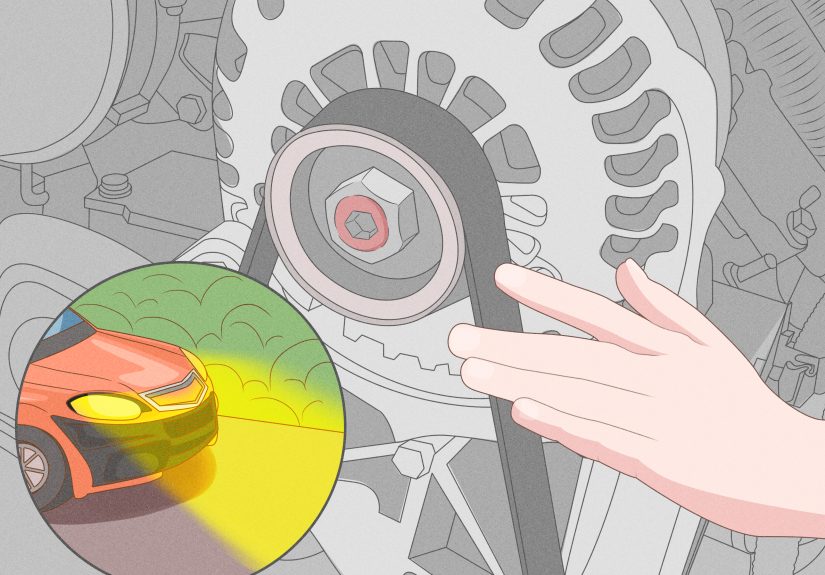
Also glance at the serpentine belt if you can see it. A worn, broken, or slipping belt can keep the alternator from spinning correctly, which means the battery does not get charged while the engine runs. AutoZone, Meineke, and Firestone all identify belt trouble as a major reason the battery light comes on.
If you notice swollen battery casing, a strong rotten-egg smell, melted-looking insulation, or obvious fraying, stop treating the problem like a casual inconvenience. Those are signs that the battery or charging system may be in rough shape, and the fix may be more than a quick jump-start. Interstate Batteries and Pep Boys both list smell, swelling, and electrical issues among the warnings that should not be ignored.
4. Test the battery and charging system as soon as possible
A battery light can mean the battery is weak, but it can also mean the alternator is failing, the regulator is off, or the wiring is not doing its job. That is why a proper test matters more than guesswork. Edmunds, KBB, AutoZone, and Firestone all recommend checking the charging system with a tester or multimeter so you can separate a battery problem from an alternator problem.
On many vehicles, a healthy charging system should produce more than the battery’s resting voltage when the engine is running. KBB notes that around 13.5 to 15 volts is a common charging range, while AutoZone explains that alternator output is often checked with a voltage meter and may be displayed on some vehicles. If you do not have the tools or the confidence to test it yourself, a shop can usually diagnose the issue quickly.
This is the part where many drivers lose money by guessing. A dead battery can be caused by age, heat, cold, vibration, or parasitic drain, but the battery light itself often points farther upstream into the charging system. Consumer Reports, Interstate Batteries, and Firestone all stress that the warning light should prompt testing, not assumptions.
5. Decide whether to drive a short distance, call for help, or tow the car
If the light stays on and the car still behaves normally, you may be able to drive a short, direct route to a repair shop. If the headlights are dimming, the steering feels strange, accessories are failing, or the engine is stalling, the safer choice is to stop driving and arrange help. Firestone, AutoZone, and Meineke all note that a failing alternator can leave the vehicle stranded once the battery is drained.
One of the worst habits is turning the engine off at the wrong time. AutoZone warns against shutting the car down until you are ready to fix the problem or are already in a safe place, because a weak battery may not restart the vehicle. That advice sounds boring right up until you are sitting in a parking lot with a silent dashboard and a growing appreciation for boring advice.
If you have to choose between pushing your luck and calling for assistance, choose the option that preserves the vehicle and your schedule. A tow may feel like overkill, but so does replacing an alternator, battery, or wiring harness after the car dies in the middle of traffic. KBB, Firestone, and Pep Boys all frame the battery light as a prompt for prompt diagnosis, not a “see what happens” situation.
Why the battery light is often an alternator story
The battery itself gets blamed a lot, but many charging-system failures begin with the alternator. That part keeps the car powered while the engine is running and recharges the battery at the same time. When it weakens, the battery light may come on, the headlights may dim, and the electrical accessories may start acting tired in the most inconvenient way possible. Firestone, Jiffy Lube, Pep Boys, and AutoZone all describe this pattern clearly.
Some vehicles may also show alternator-related clues as overbright lights, flickering lights, slow accessories, or repeated dead batteries. That is why one warning light can have several real causes. The job is not to guess the cause from the couch. The job is to read the clues and narrow the field before the problem turns into a breakdown.
Real-world lessons from drivers who ignore the light, and from the ones who do not
In real driving life, the battery light often starts with a small hint that feels easy to dismiss. The radio cuts out for a moment. The headlights look a little weak at night. The engine cranks slower than usual on a cold morning. Then the battery light arrives, and suddenly the car is not being “a little quirky” anymore. Interstate Batteries, Jiffy Lube, and Consumer Reports all connect those early symptoms with a weakening battery or a charging system that is no longer keeping up.
The drivers who handle this well usually do three things fast: they reduce electrical load, they avoid unnecessary shutdowns, and they get the car tested before the problem spreads. That simple pattern is echoed across AutoZone, Firestone, and Pep Boys resources. It is also the reason a tiny battery icon can save a person from a tow truck bill, a missed appointment, or an embarrassing roadside text that begins with, “So, funny story…”
Another practical lesson is that not every battery light means the battery is the villain. A loose cable can interrupt charging. A worn belt can keep the alternator from doing its job. A regulator or wiring issue can create symptoms that look like battery failure even when the battery is still serviceable. Edmunds, KBB, AutoZone, and Firestone all point to that bigger electrical-system picture. So the smart move is not to throw parts at the car. It is to diagnose the system.
There is also a timing lesson. A vehicle that still starts today can become a no-start tomorrow if the charging system is collapsing. That is why mechanics and parts experts keep repeating the same message in different words: treat the battery light as early warning, not late-breaking news. If you act while the car still has power, you give yourself options. If you wait until the engine stalls, the options shrink fast.
And finally, experience teaches a useful bit of humility: modern cars can keep running just long enough to fool you. Electrical systems may behave normally for a few miles, then wobble, then fail without much drama. That is why the safest response is a calm, efficient one. Reduce load, inspect the obvious, test the charging system, and get professional help before the dashboard turns into a light show nobody ordered.
Conclusion
The battery light is not telling you to panic; it is telling you to pay attention. In most cases, it points to the charging system, which means the alternator, battery, cables, belt, or wiring may need a closer look. If you keep the engine running when safe, turn off nonessential accessories, check the obvious connections, test the system, and choose help before the car quits, you give yourself the best chance of avoiding a roadside headache.
Note: This guide is written for standard gasoline vehicles. Hybrid and EV charging warnings can behave differently, so the exact meaning of the light may vary by model.







 Close
Close