
Table of Contents >> Show >> Hide
- 1. The Mission Began With a Submarine the Soviets Could Not Find
- 2. Howard Hughes Was the Perfect Cover Story
- 3. The Engineering Challenge Was Almost Absurd
- 4. The Lift WorkedUntil It Partly Didn’t
- 5. The Cover Blown, the “Glomar Response” Was Born
- Why Project Azorian Still Fascinates Readers Today
- Experience Lessons From the Daredevil Salvage Mission
- Conclusion
During the Cold War, the United States did not merely spy with satellites, codebreakers, and diplomats wearing expressions as blank as hotel wallpaper. Sometimes, it built a secret ship the size of a floating factory, pretended it was hunting for minerals, sailed into the Pacific, and tried to steal a sunken Soviet nuclear submarine from more than three miles below the surface. Subtle? Absolutely not. Brilliant? Surprisingly, yes.
The mission was called Project Azorian, and its target was K-129, a Soviet Golf II-class ballistic missile submarine that disappeared in 1968 northwest of Hawaii. The CIA, with support from the Department of Defense, believed the wreck might contain nuclear missiles, cryptographic equipment, code materials, sonar systems, and other intelligence treasures. In other words, it was not just a submarine. It was a Cold War filing cabinet with torpedoes.
By 1974, the U.S. had created the Hughes Glomar Explorer, a specially designed ship publicly described as a deep-sea mining vessel backed by billionaire Howard Hughes. In reality, it was a covert recovery platform equipped with a giant claw, a moon pool, and enough engineering audacity to make a Hollywood producer say, “Tone it down.” Here are five things that make America’s daredevil mission to salvage a Soviet nuclear sub one of the boldest intelligence operations in modern history.
1. The Mission Began With a Submarine the Soviets Could Not Find
K-129 left the Soviet naval base near Petropavlovsk on the Kamchatka Peninsula in February 1968. It carried nuclear-armed ballistic missiles and was heading toward a patrol area in the Pacific. Then it vanished. No distress signal saved the crew. No Soviet search party recovered the vessel. For Moscow, the submarine was gone into the blue-black mystery of the ocean.
The United States, however, had a better starting point. Using underwater detection and intelligence assets, American forces narrowed down the location of the wreck. The submarine was eventually found on the Pacific seabed, roughly 16,500 feet down. That depth matters. This was not a fishing boat in shallow water. This was a shattered nuclear-armed submarine lying farther below the waves than Mount Rainier is tall above sea level.
The intelligence opportunity was enormous. If the U.S. could recover meaningful parts of K-129, analysts might gain insight into Soviet missile technology, submarine construction, communications systems, cryptographic devices, and nuclear deterrence strategy. During the Cold War, that kind of information was not merely useful; it could influence how military planners understood the balance of power.
There was just one small problem: nobody had ever secretly lifted a massive submarine section from that depth before. Other than that, easy afternoon project.
2. Howard Hughes Was the Perfect Cover Story
The CIA needed a believable reason to build a huge, strange-looking ship capable of performing an unprecedented deep-ocean lift. The answer came in the form of Howard Hughes, the reclusive billionaire whose reputation was already larger than life. If Hughes wanted to build an eccentric vessel for deep-sea mining, the public could believe it. Honestly, if Hughes had announced a plan to mine cheese from the moon, many people might have just nodded and said, “Sounds like Howard.”
The official story was that the Hughes Glomar Explorer would mine manganese nodules from the ocean floor. These potato-shaped mineral deposits were a genuine topic of commercial and scientific interest, which made the cover plausible. Trade publications and media coverage helped reinforce the idea that this was a futuristic mining venture, not a CIA operation designed to lift a Soviet submarine like a claw machine prize from the abyss.
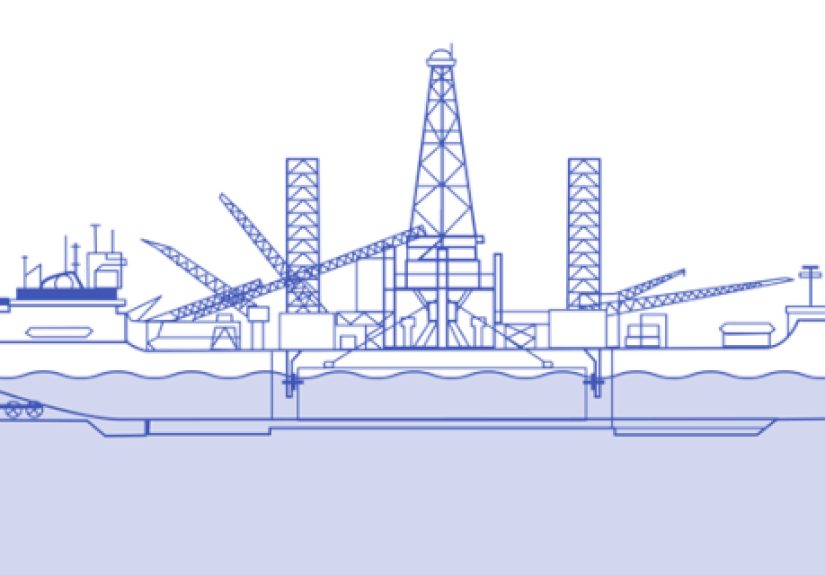
The ship itself was an engineering masterpiece. It included a tall derrick, pipe-handling systems, a huge internal docking area known as the moon pool, and a massive capture vehicle designed to grab the submarine wreck. The most sensitive equipment could be hidden from outside view. The ship could open doors beneath its hull, lower the capture vehicle through the center, and conduct the recovery underwater where passing ships, aircraft, and satellites could not easily see what was happening.
That cover story was not just decoration. It was mission-critical. If the Soviet Union realized what the Glomar Explorer was actually doing, the operation could trigger a diplomatic crisis, a military confrontation, or both. The project depended on a strange combination of engineering, secrecy, corporate theater, and nerves of steel.
3. The Engineering Challenge Was Almost Absurd
Project Azorian was daring because it asked engineers to do something that sounded less like a government assignment and more like a bar bet among overcaffeinated naval architects. The CIA wanted to lift a 132-foot, roughly 1,750-ton section of wreckage from the ocean floor while keeping a massive ship steady above the target in winds, waves, and currents.
The recovery system worked by lowering a capture vehicle on a long string of heavy pipe sections. Each 60-foot section had to be added one at a time as the equipment descended. Once the capture vehicle reached the wreck, it needed to straddle the submarine, close its mechanical arms around the hull, and then reverse the entire process. The crew would raise the load by removing pipe sections one by one until the captured wreckage entered the ship’s moon pool.
Think of it as performing surgery through a drinking straw while standing on a trampoline in a hurricane, except the patient is a Soviet submarine and the hospital is pretending to be a mining company.
The operation also required secrecy at every stage. The capture vehicle had to be built and loaded in ways that concealed its true purpose. The ship had to appear consistent with deep-sea mining tests. Crews had to follow procedures that protected both the mission and themselves. Radiation risk, structural failure, weather, mechanical breakdown, and Soviet observation all had to be considered.
This is why Project Azorian remains important in discussions of Cold War technology. It was not only an espionage operation. It was a leap in deep-ocean heavy-lift engineering. Even though the mission did not fully achieve all its goals, the fact that the system worked at all was remarkable.
4. The Lift WorkedUntil It Partly Didn’t
In July 1974, the Hughes Glomar Explorer arrived over the recovery site and began salvage operations. Soviet ships monitored the area at times, but the cover story held long enough for the mission to proceed. The crew lowered the capture vehicle thousands of feet into the darkness, aligned it with the wreck, grabbed the target, and began the long, tense lift toward the surface.
For a while, the operation seemed to be working. Then came the heartbreak. As the captured section rose from the deep, part of the submarine broke away and fell back to the ocean floor. The mission had not failed completely, but it had lost a significant portion of what it hoped to recover. The remaining section was brought into the Glomar Explorer’s moon pool and taken for examination.
Among the recovered material were the remains of six Soviet submariners. They were given a formal military burial at sea. Years later, the United States provided Russia with film of the ceremony, a rare human gesture in a story otherwise dominated by secrecy, nuclear strategy, and Cold War rivalry.
Whether Project Azorian produced all the intelligence value its planners hoped for remains partly unclear. Some details are still classified or disputed. What is clear is that the mission recovered part of K-129 and demonstrated that the United States could design and execute a deep-sea operation previously considered close to impossible.
5. The Cover Blown, the “Glomar Response” Was Born
After the partial recovery, planners considered a second mission to retrieve more of K-129. But history has a sense of humor, and in this case it arrived wearing burglar gloves. A break-in at a Hughes-related office exposed documents linking the CIA, Hughes, and the Glomar Explorer. Reporters began chasing the story. By 1975, the secret was leaking into public view.
The Ford administration and the CIA faced a dilemma. Confirming the operation could inflame tensions with the Soviet Union. Denying it could be false. The solution became famous: officials would neither confirm nor deny the existence of records or involvement. This phrasing became known as the Glomar response, a term still used in Freedom of Information Act practice when an agency argues that even admitting whether records exist would reveal protected information.
That may be Project Azorian’s strangest legacy. A mission built to recover a Soviet submarine also gave American bureaucracy one of its most famous phrases. The giant claw may have grabbed only part of K-129, but the legal language grabbed a permanent place in government transparency debates.
Why Project Azorian Still Fascinates Readers Today
Project Azorian has everything: nuclear submarines, secret technology, Cold War stakes, Howard Hughes, a giant claw, and a cover story involving undersea rocks. It is the rare historical episode that sounds exaggerated until the official documents make it even stranger. The mission sits at the intersection of military intelligence, ocean engineering, geopolitics, and human risk.
It also shows how far nations were willing to go during the Cold War to reduce uncertainty. The U.S. did not simply want to know what the Soviet Union had. It wanted to touch the hardware, study it, measure it, and learn from it. In an age before digital surveillance dominated intelligence work, physical access to enemy technology was priceless.
At the same time, the mission reveals the limits of ambition. The ocean is not a passive stage. It is pressure, darkness, corrosion, movement, and surprise. The partial failure of the lift was not just bad luck. It was a reminder that even the best-funded secret project must obey physics.
Experience Lessons From the Daredevil Salvage Mission
Although most of us will never stand on a covert recovery ship above a Soviet submarine, Project Azorian offers surprisingly practical lessons about risk, preparation, teamwork, and decision-making under pressure. The first lesson is that bold goals require boring groundwork. The public saw the dramatic image of a giant claw reaching into the deep, but the real mission was built on years of planning, testing, fabrication, logistics, and cover management. Big achievements often look sudden only because the preparation is hidden.
The second experience-related lesson is that a good cover story needs details. The deep-sea mining explanation worked because it was not random. Manganese nodules were real. Ocean mining research was believable. The ship’s design could be explained in public without immediately screaming, “Hello, we are here for a submarine.” In everyday strategy, whether in business, research, or creative work, credibility comes from consistency. A weak story collapses when questioned. A strong one has enough reality inside it to stand upright.
The third lesson is about calm execution. The crew of the Glomar Explorer had to perform complex tasks in an environment where mistakes could be catastrophic. They were dealing with heavy machinery, secrecy, possible Soviet surveillance, and unknown conditions inside a wrecked submarine. That kind of pressure rewards disciplined teams, not heroic improvisers. Courage matters, but checklists matter too. Sometimes the bravest sentence in the room is, “Let’s verify the procedure again.”
The fourth lesson is that partial success can still change history. Project Azorian did not recover all of K-129. A major section fell back to the seabed. Yet the operation still advanced deep-ocean technology, recovered part of the submarine, influenced intelligence history, and created a term that remains embedded in FOIA law. In real life, outcomes are rarely clean trophies or total disasters. Many achievements arrive dented, incomplete, and still valuable.
The fifth lesson is humility. The mission’s planners had money, secrecy, technical talent, and presidential-level attention, but they could not control every variable. The ocean had a vote. The wreck had a vote. Politics and press exposure had a vote. That is useful to remember in any ambitious project. Planning does not eliminate uncertainty; it gives you a fighting chance when uncertainty arrives with muddy boots.
Finally, Project Azorian carries a human lesson. Beneath the espionage drama were sailors who died far from home. The burial at sea for six recovered Soviet crewmen reminds us that even rival nations are crewed by human beings. The Cold War encouraged both sides to think in systems, targets, codes, and capabilities. But inside every submarine were people with families, routines, fears, and duties. That human truth gives the story its weight. Without it, Project Azorian would be only a clever heist. With it, the mission becomes a complicated chapter in history: daring, secretive, technically astonishing, morally sobering, and unforgettable.
Conclusion
America’s mission to salvage the Soviet submarine K-129 remains one of the boldest covert operations of the Cold War. Project Azorian combined audacious intelligence goals with groundbreaking deep-ocean engineering and a cover story so strange it was almost perfect. The Hughes Glomar Explorer did not recover the entire submarine, but it proved that the United States could attempt the nearly impossible in secret, under pressure, and at the edge of technology.
The story endures because it is more than a spy tale. It is about ambition, risk, secrecy, innovation, and the uneasy human cost of superpower rivalry. The mission reached into the darkest part of the Pacific and pulled back not only wreckage, but also lessons about how nations compete when the stakes are nuclear and the truth lies three miles underwater.





 Close
Close